Lot 310, Auction 4/20/2026: William Draper Painting – Portrait of a Woman
$520.00
In stock
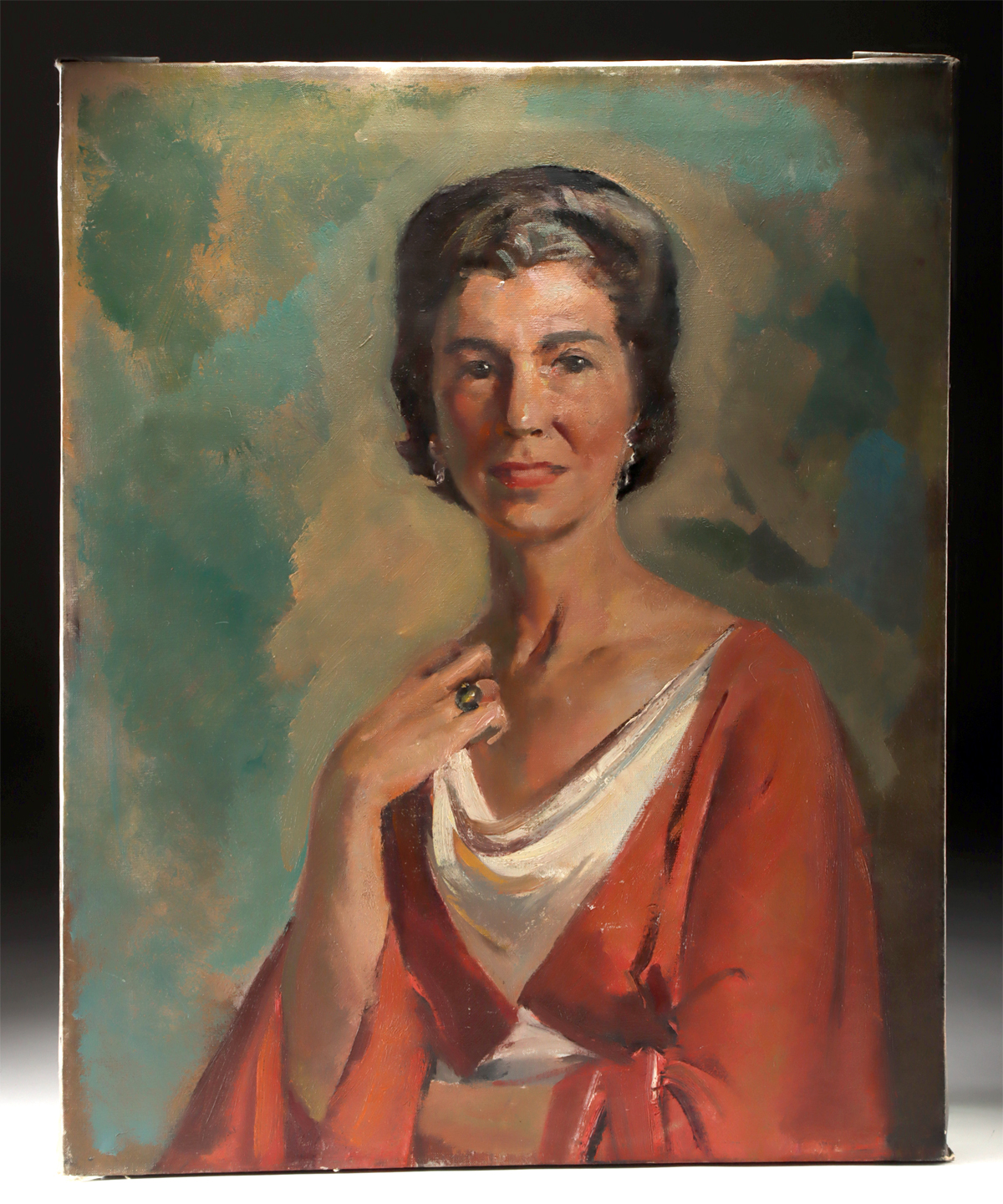
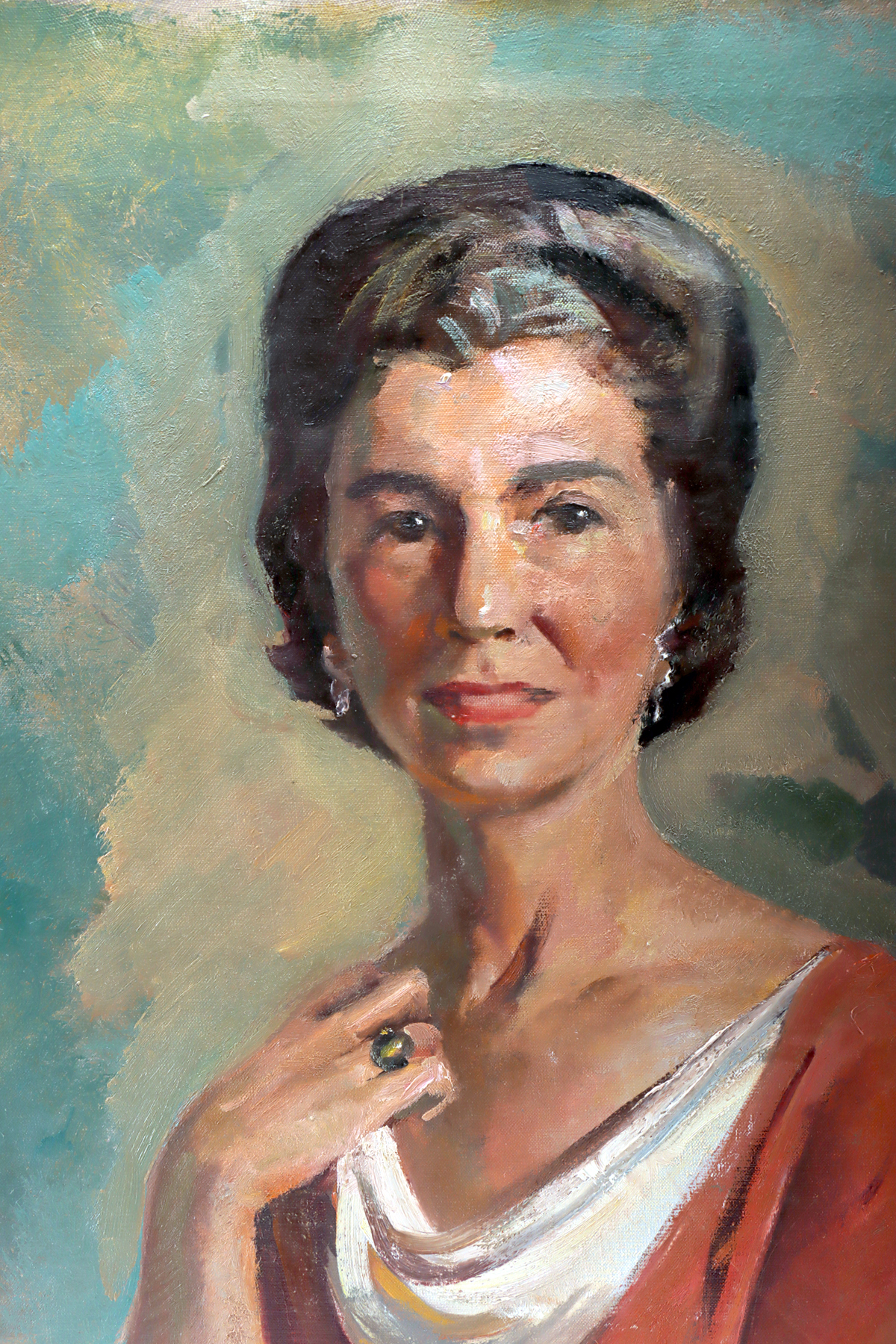
William Franklin Draper (American, 1912-2003). Portrait of a woman. Oil on canvas, n.d. Draper Estate stamp on verso. A poised and quietly luminous portrait, this painting presents a woman seated against a softly modulated ground of green and earth tones, her presence rendered with sensitivity rather than theatrical flourish. Draper focuses on stillness and restraint. The sitter meets the viewer with a calm, direct gaze, her expression thoughtful, composed, and faintly introspective. There is no overt narrative here, only the dignity of being observed with care. The artist employs a warm, naturalistic palette, allowing flesh tones to emerge gently from layered brushwork. Subtle transitions of light across the face and neck give the portrait its sense of life, while the loose handling of the background keeps attention anchored to the sitter herself. Draper’s brushwork balances control and softness, particularly in the modeling of the features, where edges dissolve just enough to suggest breath and movement beneath the surface. Size: 21″ W x 26″ H (53.3 cm x 66 cm)
The woman is dressed simply, her garment defined more by color and form than detail, reinforcing the timeless quality of the image. A small ring on her hand provides a quiet focal accent, hinting at personal history without overt symbolism. The overall composition favors intimacy over grandeur, inviting prolonged looking rather than immediate impact.
This work reflects Draper’s commitment to traditional portraiture infused with mid 20th century sensibility. The painting values observation, tonal harmony, and psychological presence, presenting its subject not as an idealized figure, but as a fully realized individual caught in a moment of quiet self possession.
In addition to being an exceptional portraitist, combat artist, and landscape/still life painter, William Draper was a respected teacher. In his Smithsonian Archives of American Art interview, William Draper described how his students were to sketch fast sketches from 9:00 to 10:00, “drawing five-minute sketches of the model.” Draper also mentioned that while it was natural to be more interested in the talented students, “I tried to be very fair, to go around and talk to each one!” Clearly, in addition to being an exceptional artist, William Draper was also a thoughtful mentor. One can just imagine all of the lessons Draper delivered when painting this demonstration piece.
Draper became known as the “Dean of American portraitists” and Boston MFA Director Emeritus Peter Rathbone compared Draper’s skill to that of master John Singer Sargent. Rathbone, whose portrait Draper also painted stated, “Nature endowed William F. Draper with enough talents to require him to choose among them before embarking on a professional career. Yet to those who know him, it is hard to imagine that any natural bent could rival his personal endowment as a painter of portraits … Draper’s painting belongs to the tradition of Sargent. Like Sargent’s, his style is fluid with virtuoso brushwork as the identifying characteristic. Like Sargent, the preparation of the painting by Draper is all in the artist’s eye. Unlike Sargent’s detachment, Draper’s understanding and love of people and his appreciations of physical subtleties are happily projected into his work. These traits are the source of the warmth and vitality of his portraiture. They are also the reasons why his portraits are fine likenesses. And it is not too much to say that something of his own vibrant personality is reflected in everything he paints.” (“Portraits Period” by Portrait Brokers of America, 1990, p. 46)
William Draper’s career spanned seven decades and his subjects included a portrait of John F. Kennedy that hangs in the National Portrait Gallery in Washington D.C. based upon an oil sketch for which the president sat in 1962. Draper was actually the only artist who painted JFK from life. Draper showed at Knoedler, the Graham Gallery, Portraits, Inc., the Far Gallery, The Findlay Galleries (New York, NY) and the Robert C. Vose Galleries (Boston, MA). His work has been included in shows at the National Portrait Gallery and the Corcoran Gallery of Art (Washington, D.C.), The National Academy of Design (New York, NY), The Boston Museum of Fine Arts, (Boston, MA) the Fogg Art Museum, (one of the Harvard Art Museums, Cambridge, MA), the National Gallery, (London), Salon de la Marine (Paris) and in museums in Australia. He also taught at the Art Students League of New York, and received a lifetime achievement award from the Portrait Society of America in 1999.
More on the artist’s background: William Franklin Draper was born in Hopedale, Massachusetts on December 24, 1912. A child prodigy, he studied classical piano at Harvard University. He later changed his focus to fine art and studied with Charles Webster Hawthorne and Henry Hensche in Provincetown, Rhode Island. Draper also attended the National Academy of Design in New York and the Cape Cod School of Art in Massachusetts. Then he traveled to Spain and studied with Harry Zimmerman, moved on to France and attended the Academie de la Grande Chaumiere. In 1937, he moved to Boston to study sculpture with George Demetrius and also studied with Jon Corbino in beautiful Rockport, Massachusetts. In 1942, Draper joined the Navy and served as a combat artist when stationed on the Aleutian Islands and in the South Pacific. He observed and painted battle scenes on Bougainville, Guam, Saipan, and other locations, as well as genre scenes of soldiers who were not engaged in combat but rather at work and at play. National Geographic magazine reproduced 25 of his war images in four issues in 1944. In 1945, the Corcoran Gallery of Art in Washington D.C. organized a group exhibition of works by five official war artists, including Draper. That same year the Metropolitan Museum of Art included Draper in an exhibition entitled, ”The War Against Japan.” Draper was also featured in a PBS television show about combat artists entitled, “They Drew Fire” in May of 2000. After the war, Draper opened a studio on Park Avenue in New York City and continued to not only paint, but also play classical and jazz piano.
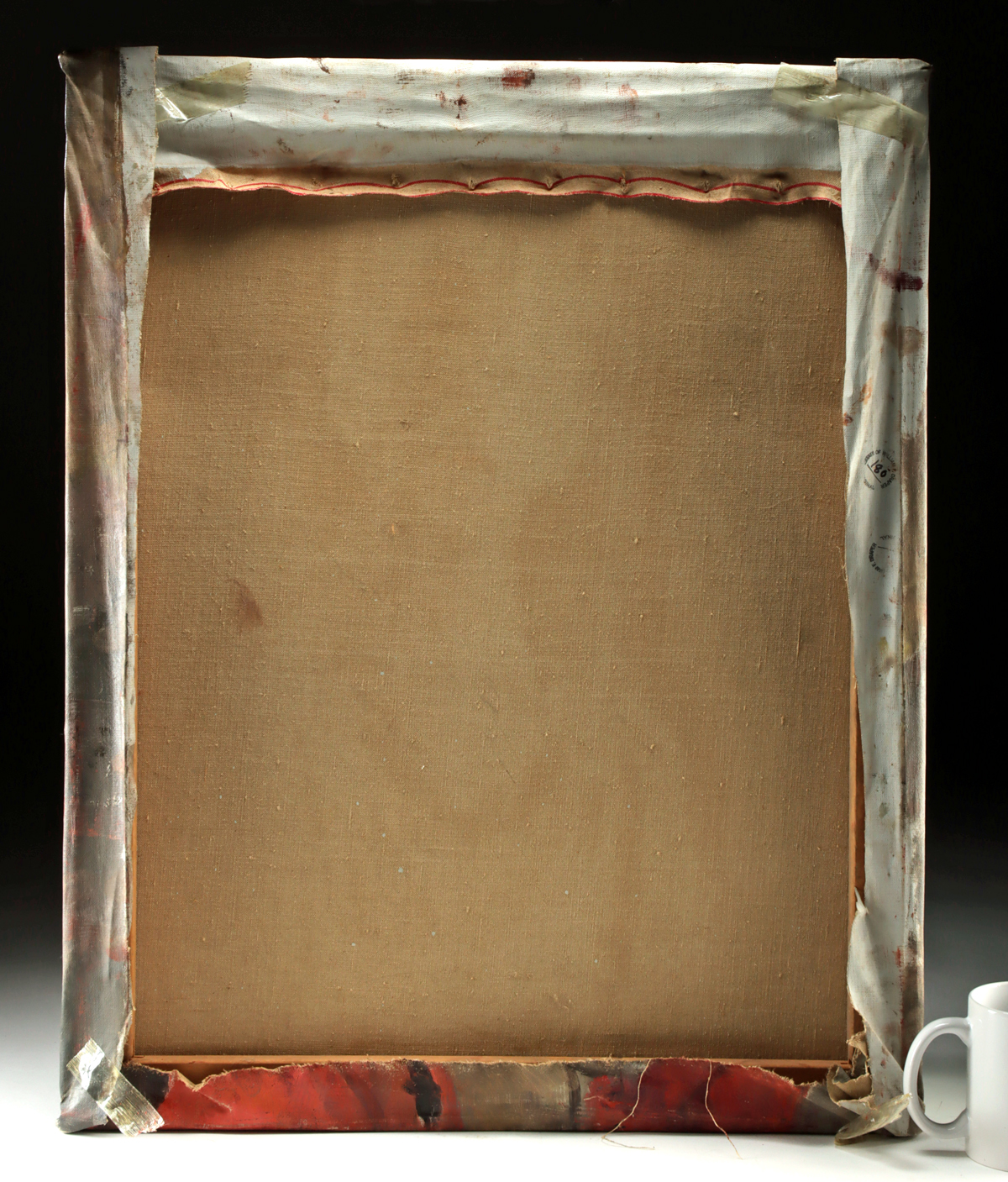
Condition: Unsigned; Draper Estate stamp on verso. Expected age wear to canvas, but, otherwise, painting is in excellent condition.
Provenance: The William F. Draper Collection, New York City, USA, acquired via descent from the late William Franklin Draper (1912-2003), an accomplished American artist whose career spanned seven decades. Known as the “Dean of American Portraiture,” William Draper was the only artist to paint President John F. Kennedy from life, and his oeuvre includes marvelous landscapes from his world travels, military paintings as he was one of only seventeen Combat Artists in WWII, and portraits of illustrious individuals.
All items legal to buy/sell under U.S. Statute covering cultural patrimony Code 2600, CHAPTER 14, and are guaranteed to be as described or your money back.
A Certificate of Authenticity will accompany all purchases.
We ship worldwide and handle all shipping in-house for your convenience.
Related Products
-


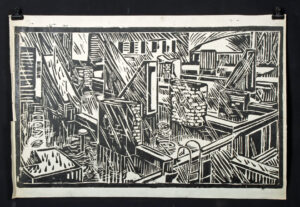
Lot 261, Auction 4/20/2026: Edith Kramer Woodblock – New York City Rooftops (1947)
Add to cart -

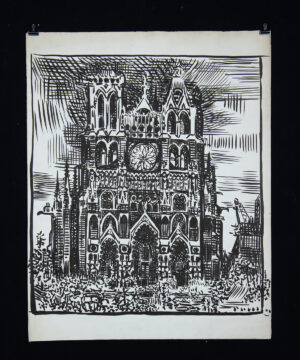
Lot 260, Auction 4/20/2026: Edith Kramer Ink Drawing – Amiens (1948)
Add to cart -


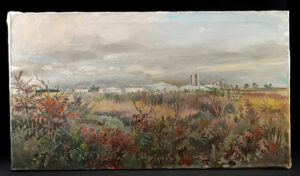
Lot 259, Auction 4/20/2026: Edith Kramer Painting “Jersey Landscape w/ Moon” (1988)
Add to cart -

Lot 239, Auction 4/20/2026: Three 19th C. Victorian & Swiss Miniature Paintings
Add to cart -


Lot 234, Auction 4/20/2026: 16th C. German Woodcuts – 11 Prints of Muenster & Ovid
Add to cart -


Lot 232, Auction 4/20/2026: Norwegian Cast Iron Stove Panel – Vivat Frideric, 1745
Add to cart -


Lot 225, Auction 4/20/2026: 1930s Revival Enameled Copper Sphinx-Leg Candlesticks
Add to cart -


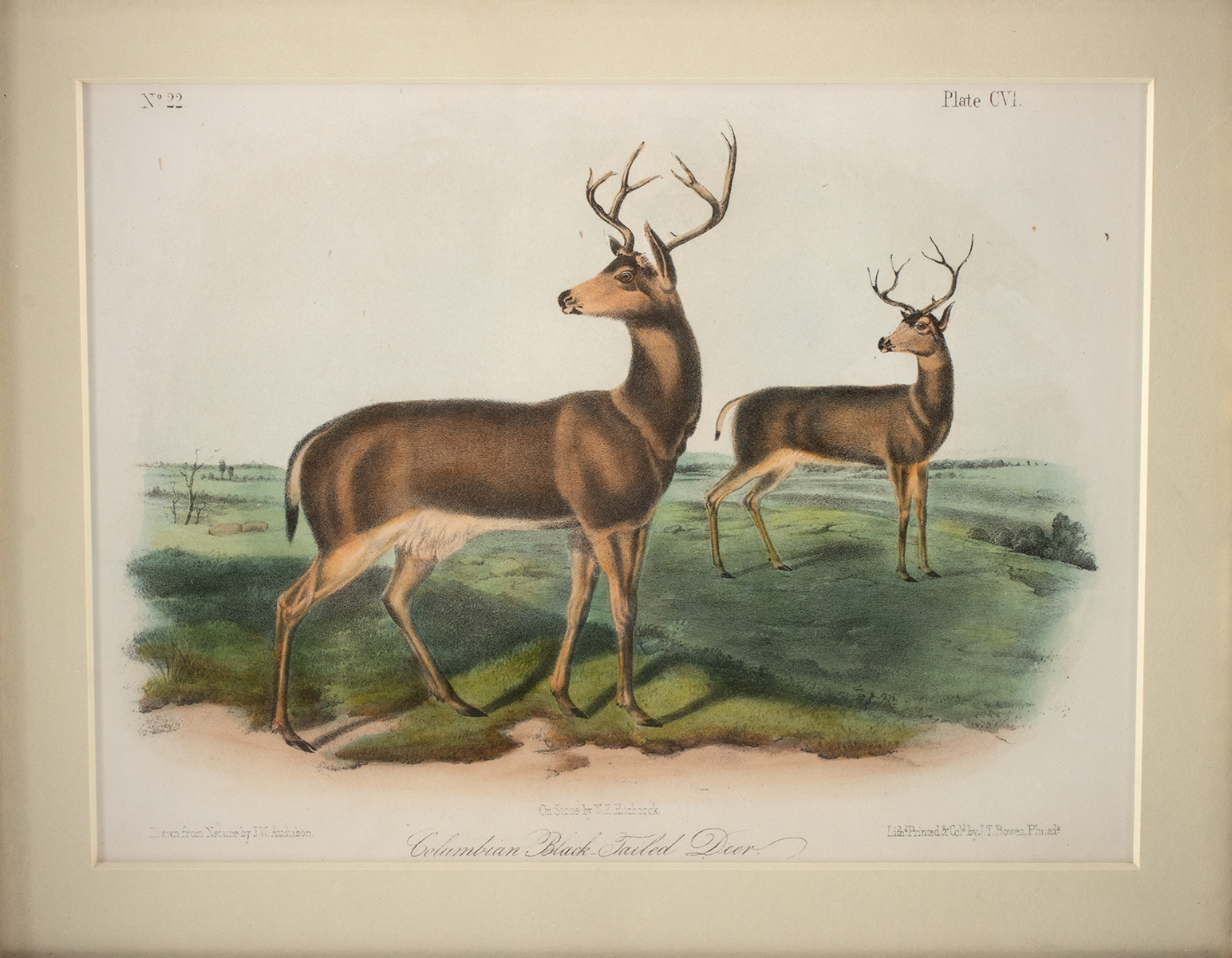
Lot 223a, Auction 4/20/2026: 19th C. Audubon Lithograph, Columbian Black-Tailed Deer
Add to cart -


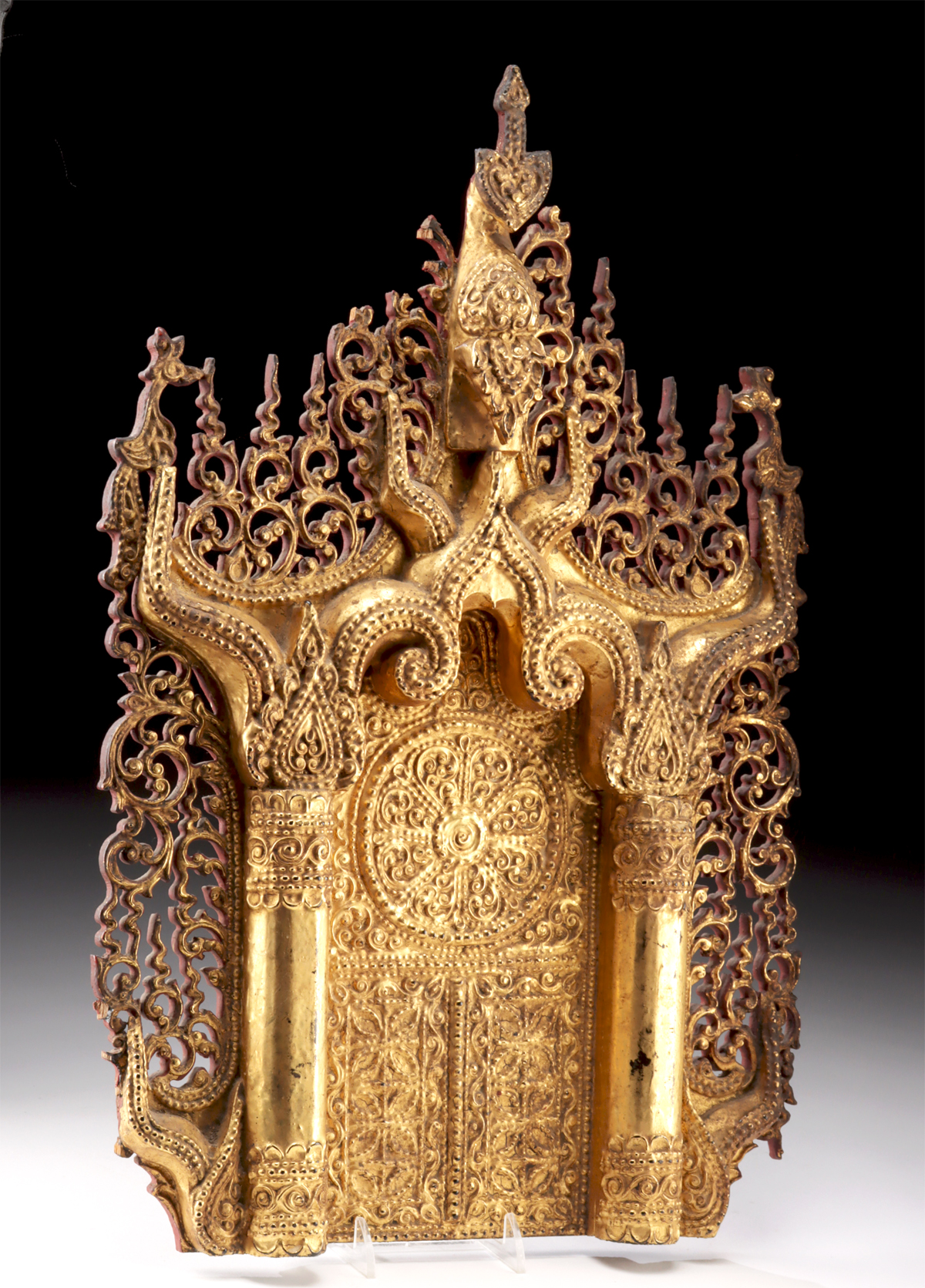
Lot 209, Auction 4/20/2026: 19th C. Burmese Gilt Wood Buddha Throne – Back Panel
Add to cart -


Lot 168, Auction 4/20/2026: 19th C. Tibetan Thangka – Eleven-Headed Avalokiteshvara
Add to cart