Lot 41, Auction 4/20/2026: Mezcala Maskette & Costa Rican Jade Frog Pendants
$520.00
In stock
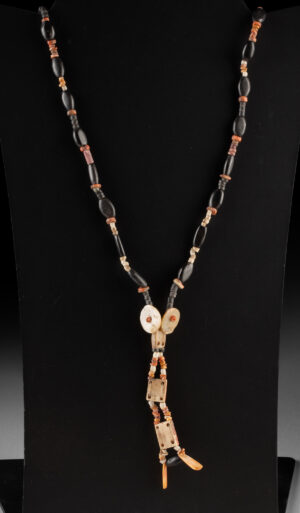
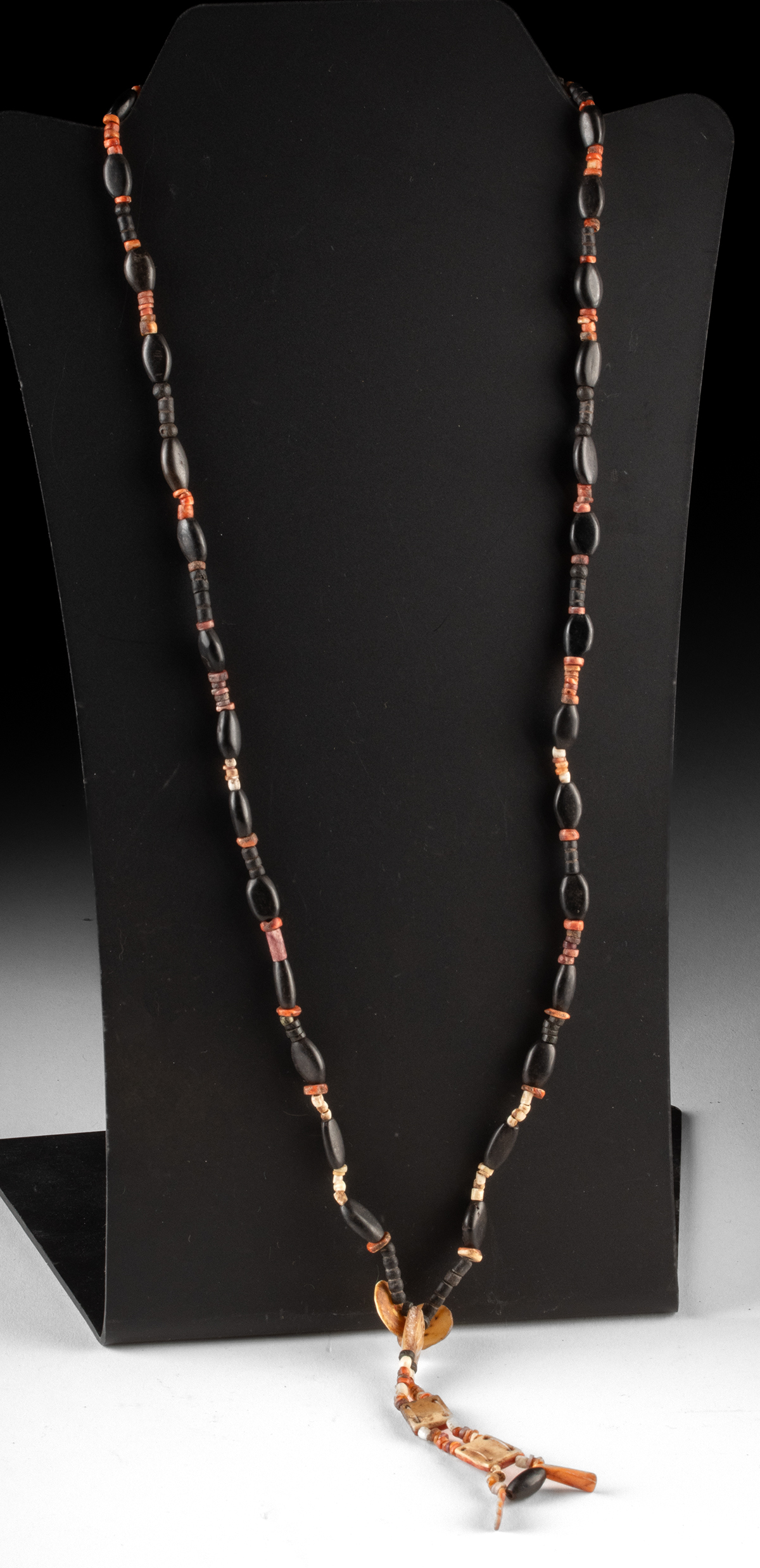
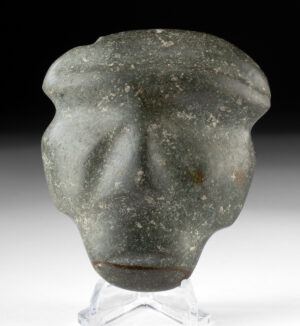
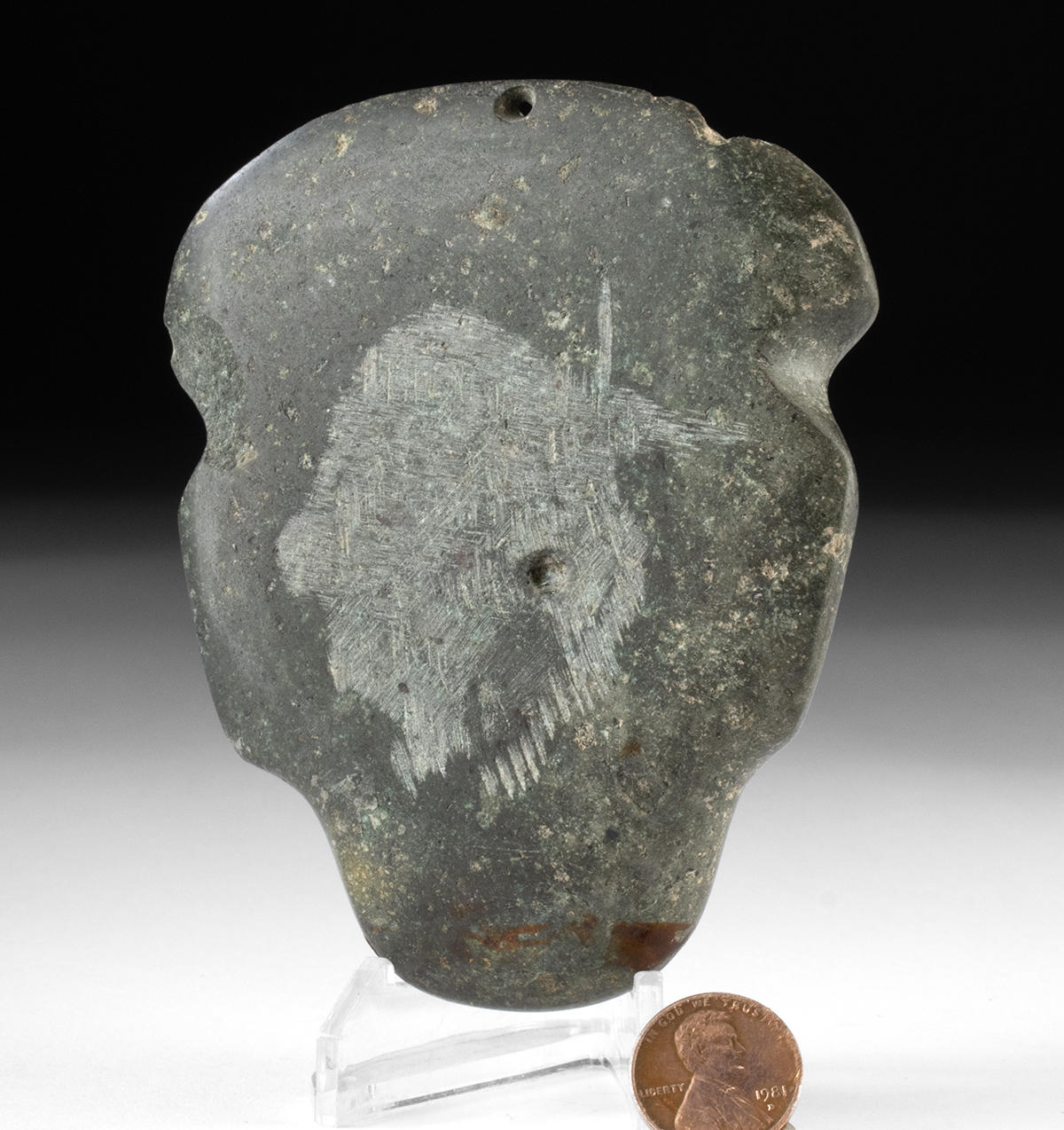
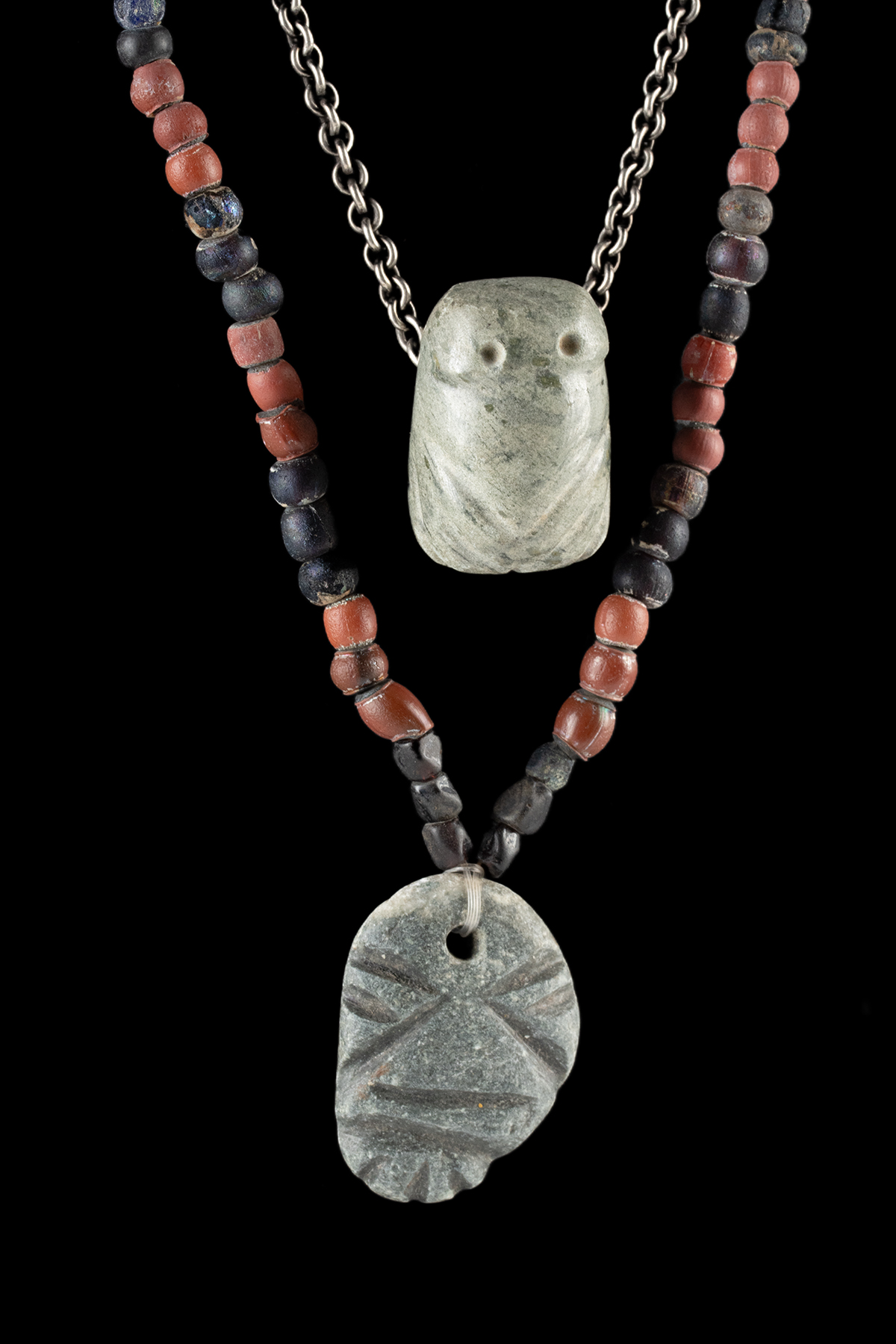
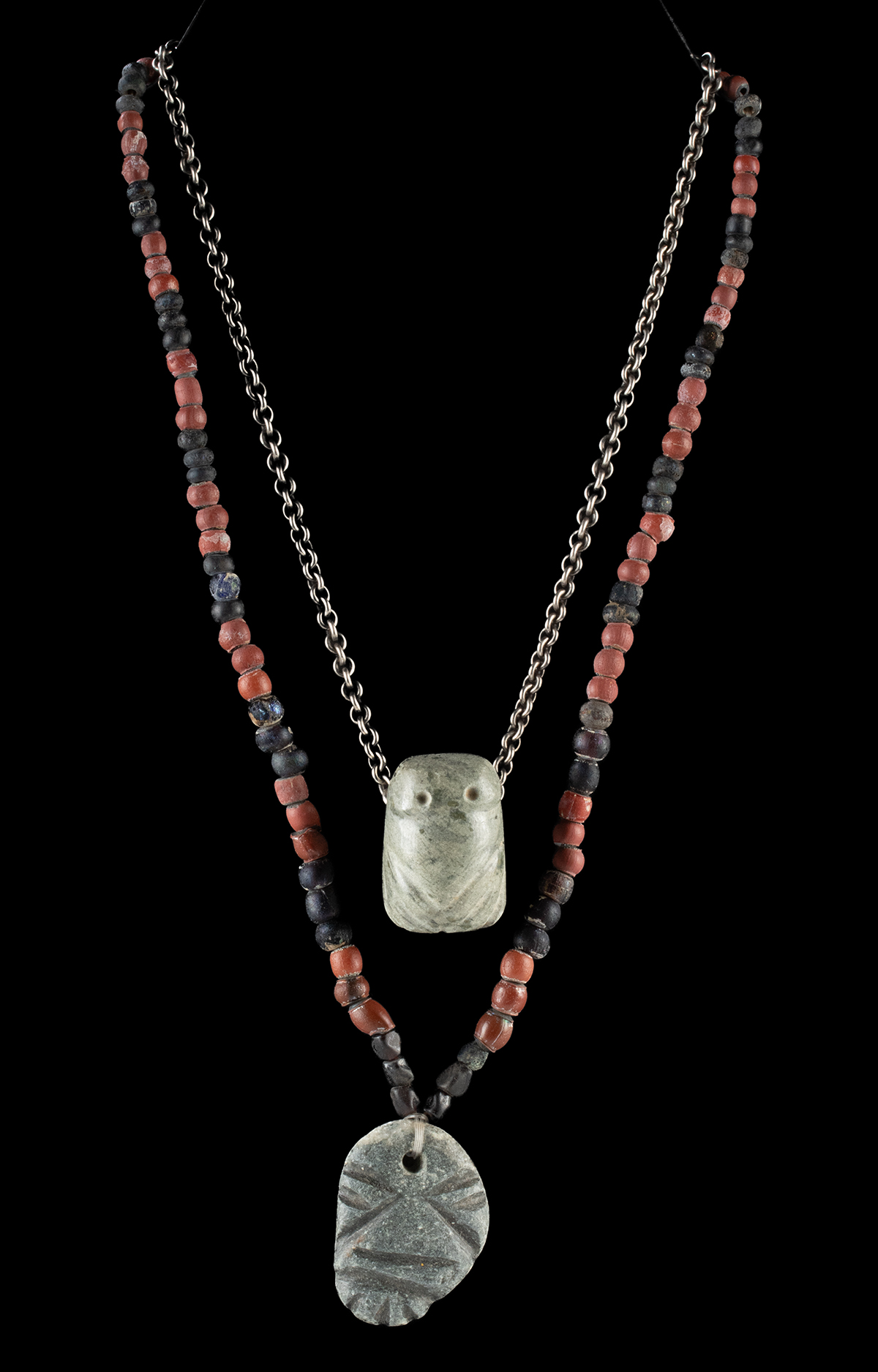
Pre-Columbian, Mesoamerica, Guerrero, Mezcala culture, ca. 300 BCE to 100 CE; Central America, Costa Rica, ca. 500 to 1000 CE. This wearable pair comprises a Guerrero Mezcala blackstone maskette pendant and a Costa Rican omphacite jade frog pendant, each mounted on modern strands for contemporary use. The Mezcala maskette, carved from a dark, fine-grained blackstone and polished to a restrained sheen, exemplifies the reductive aesthetic of the Guerrero region. The face is distilled into essential elements – drilled circular eyes, a gently modeled nose ridge, and a compact, columnar head. Mezcala artisans are known for their abstract treatment of the human form, favoring balanced proportions and quiet symmetry over naturalistic detail. Such maskettes are widely interpreted as votive or ancestral objects, their power residing in their concentrated, almost architectural presence. Size of larger pendant (face): 1.7″ L x 1.3″ W (4.3 cm x 3.3 cm); : 22″ L (55.9 cm)
This example is now strung on a modern necklace composed of pottery, stone, and glass beads from various cultures and time periods, and fitted with a modern magnetic clasp to ensure secure and practical wear.
The Costa Rican pendant is carved from omphacite jade, a dense green stone long associated with status, ritual, and spiritual vitality in ancient Central America. The frog is rendered in compact, rounded form, with subtly indicated limbs and softly raised eyes. Across the region, frogs were potent symbols of fertility and renewal, closely tied to seasonal rains and agricultural cycles. The use of jade reinforces the amuletic significance of the form, as the material was reserved for objects of prestige and ceremonial meaning. The pendant is suspended from a modern sterling silver chain, allowing the ancient carving to be worn with understated elegance. Together, these two pendants present a compelling contrast between geometric abstraction and organic symbolism, each reflecting the distinct visual language and cultural priorities of its respective tradition.
Condition: Ancient pendants and some ancient beads all strung on modern strands to be wearable. Expected age wear to pendants and beads, but, otherwise, nice presentations.
Provenance: ex-Moore collection, Houston, Texas, USA; Collection of Y. Kayvan, Los Angeles, California, USA, acquired from a Los Angeles, California, USA gallery acquisition dates range from the late 1990s to 2005
All items legal to buy/sell under U.S. Statute covering cultural patrimony Code 2600, CHAPTER 14, and are guaranteed to be as described or your money back.
A Certificate of Authenticity will accompany all purchases.
We ship worldwide and handle all shipping in-house for your convenience.
Related Products
-


Lot 57, Auction 4/20/2026: Pre-Columbian Stone Discoidal Bead Strand
Add to cart -


Lot 55, Auction 4/20/2026: Pre-Columbian Stone Face Pendant & Quartz Bead Necklace
Add to cart -


Lot 50a, Auction 4/20/2026: Pre-Columbian Bead Necklace, Spondylus Shells & Nacre
Add to cart -


Lot 40, Auction 4/20/2026: Large Mezcala Jade Maskette Pendant
Add to cart -


Lot 35, Auction 4/20/2026: Zuni Silver & Nacre Bolo by Ralph Lillie Kallestewa
Add to cart -


Lot 34a, Auction 4/20/2026: Silver Petroglyph Necklace by Mary & Doug Hancock
Add to cart -


Lot 34, Auction 4/20/2026: Zuni Nacre Inlaid & Silver Sunface Bolo by Abel Soseeah
Add to cart -


Lot 32, Auction 4/20/2026: Native American Blue Glass Padre Trade Bead Necklace
Add to cart -


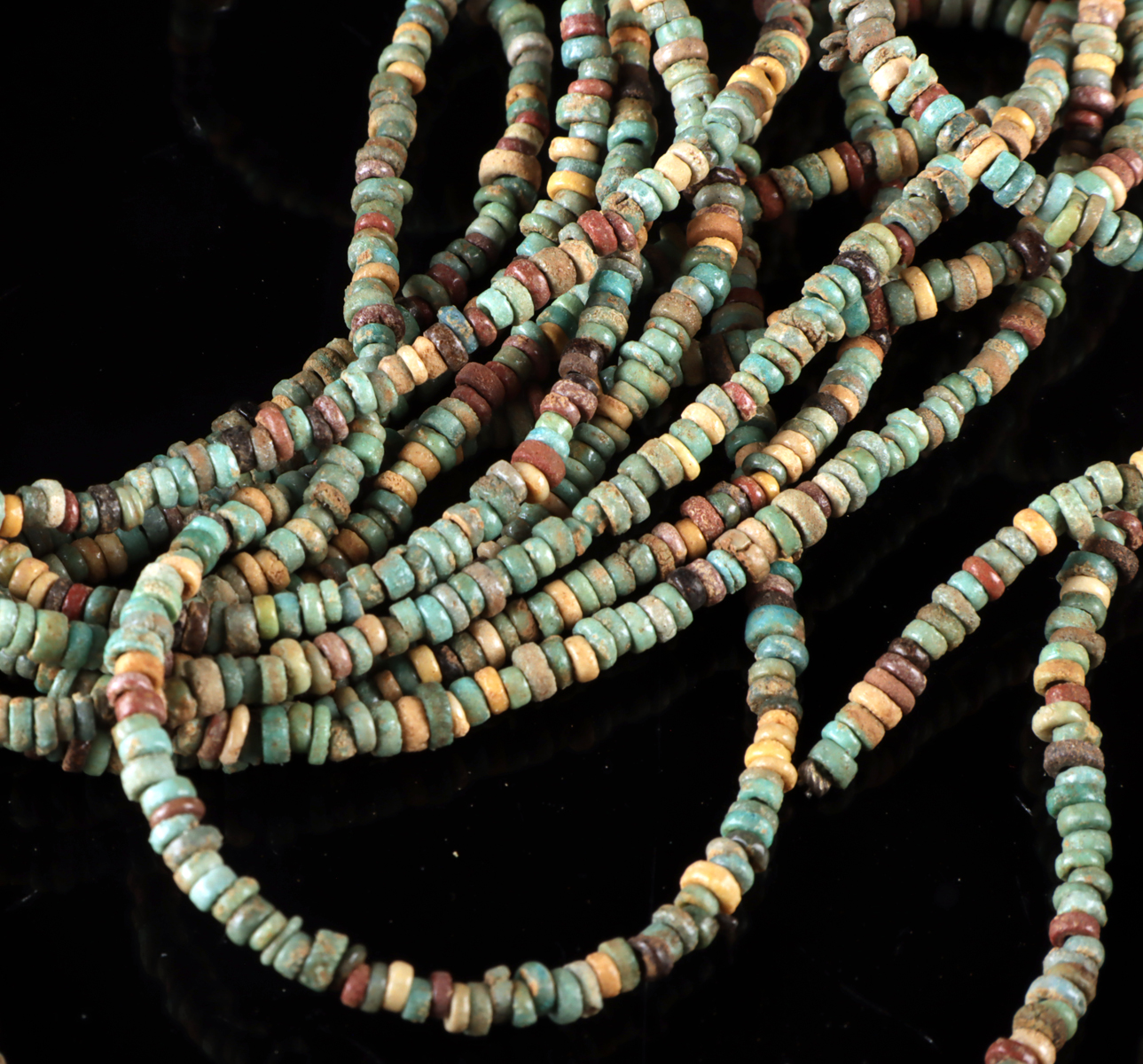
Lot 140, Auction 4/20/2026: 10 Ancient Egyptian Faience Bead Strands
Add to cart -


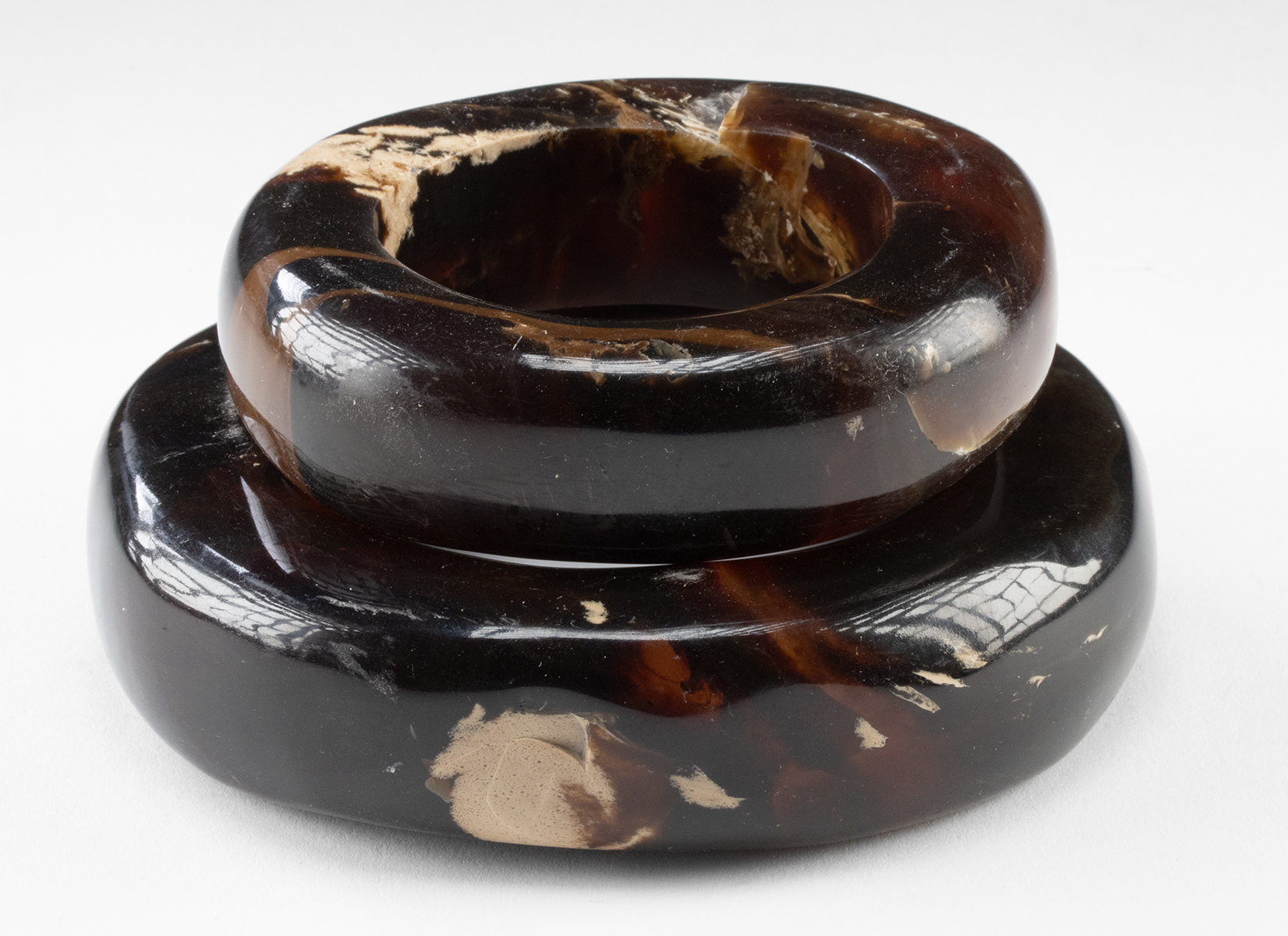
Lot 114, Auction 4/20/2026: Two Sumatran Polished Amber Bangle Bracelets
Add to cart