Lot 4a, Auction 3/19/2026: Toraja Painted Wood Rice Barn Gable Panel – Alang Para
$1,560.00
In stock
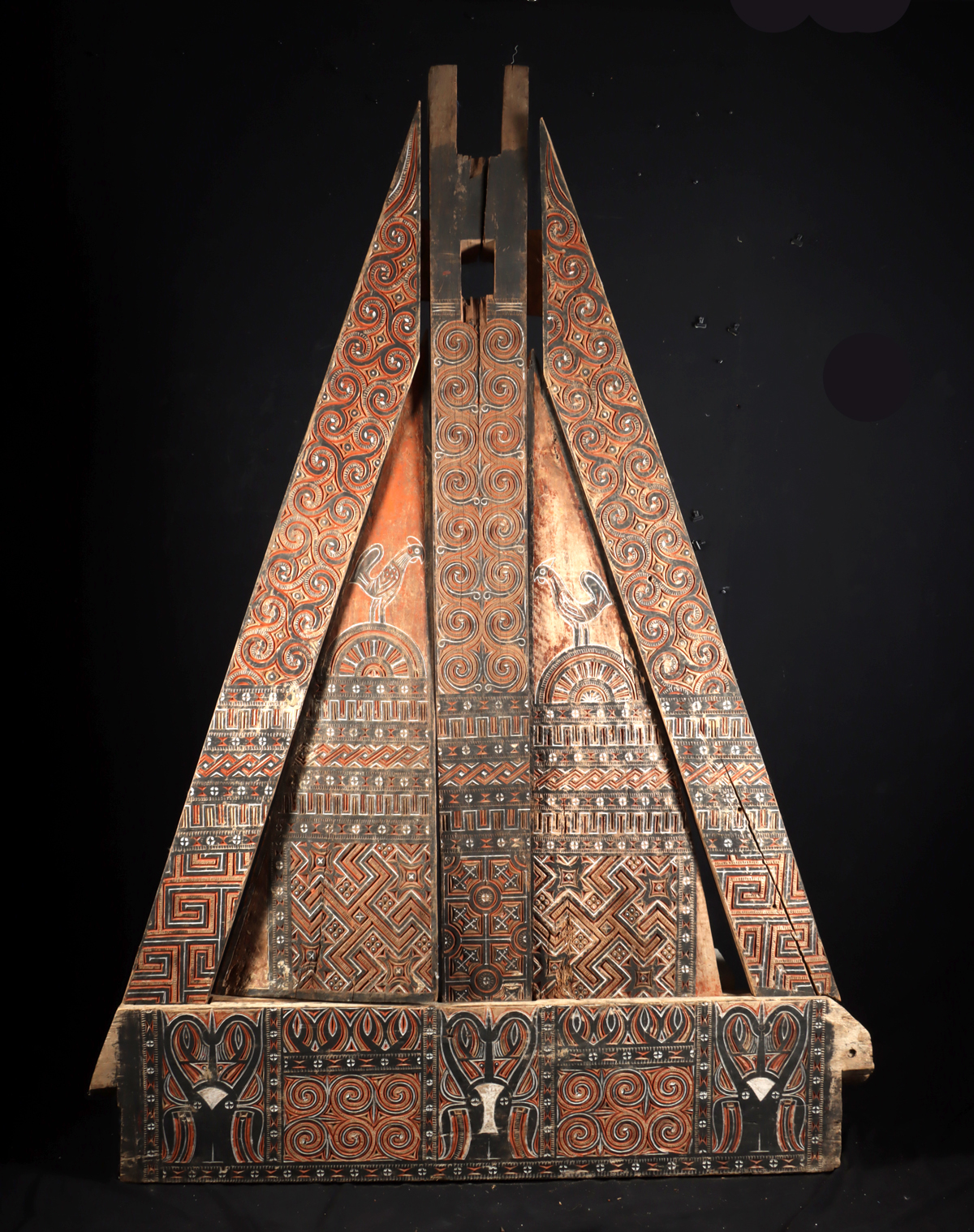
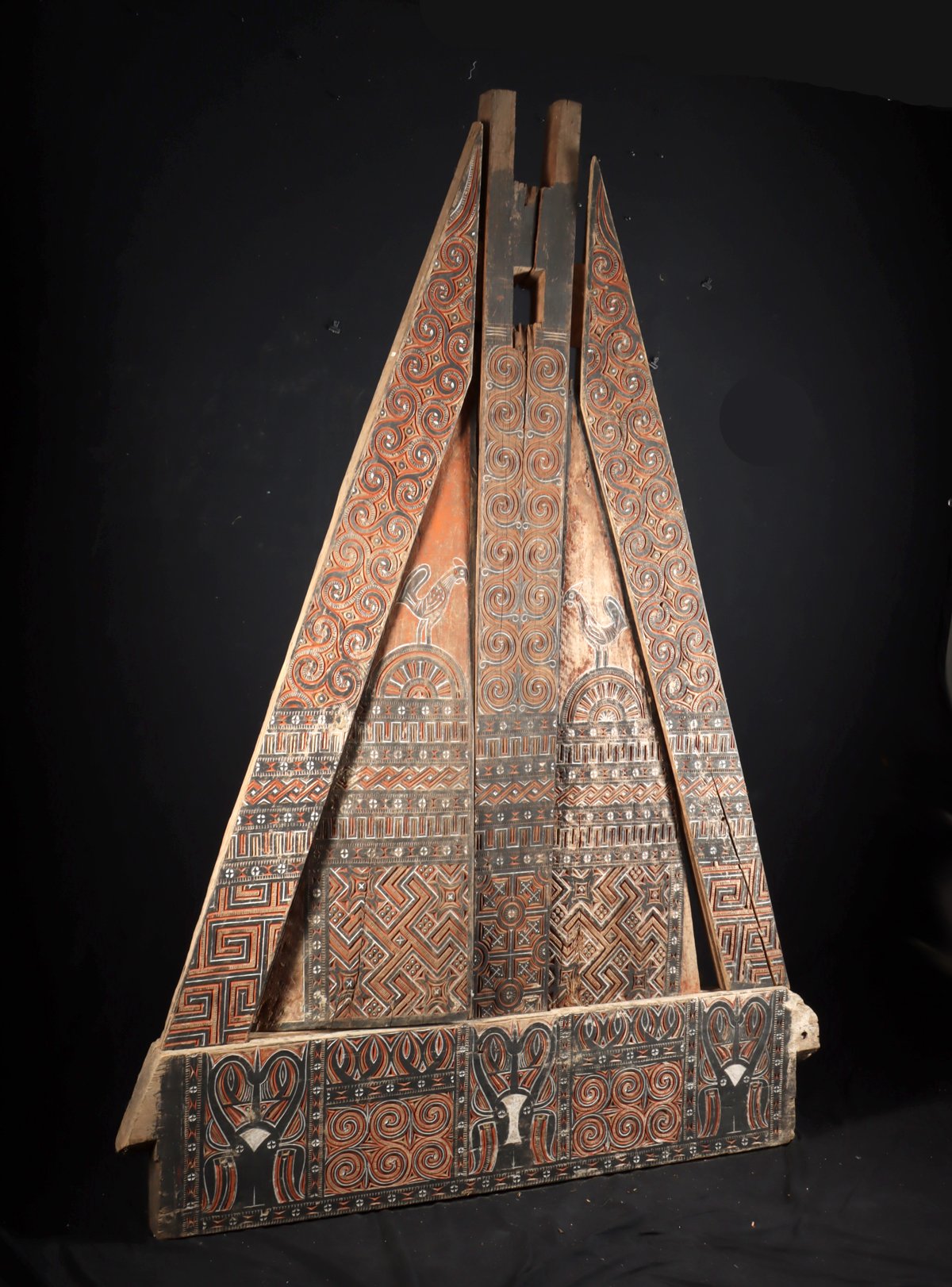
Southeast Asia, Indonesia, Sulawesi, Toraja, ca. mid to late 20th century CE. A monumental carved and painted wooden para, the triangular gable panel from a Toraja alang, or rice barn, comprised of six separate panels and richly adorned with symbolic motifs associated with prosperity, harmony, and ritual life. Rising in a steep triangular form and densely carved with spirals, geometric panels, birds, and buffalo imagery, the composition reflects the distinctive ornamental vocabulary that characterizes Toraja architectural carving. Executed in the traditional palette of red, black, and white pigments derived from natural materials, the panel embodies the Toraja tradition of pa’ssura, literally “writing,” in which carved ornament communicates cultural ideas, social status, and spiritual meaning. Size: 64″ W x 89.8″ H (162.6 cm x 228.1 cm)
The panel once formed part of the facade of an alang, the raised rice barn that stands opposite the tongkonan, the ancestral house of the Toraja people in South Sulawesi. In traditional settlements these structures face one another across the ceremonial space, with the tongkonan oriented north-south beneath its dramatic saddleback roof that rises like the hull of a boat. The alang functions as both a granary and a social structure. Rice is stored in the raised chamber above, while the shaded platform beneath serves as a place for sitting, working, meeting, and sleeping during ceremonial gatherings and funeral rites. Because rice symbolizes sustenance and security, the granary itself becomes a visible sign of wealth, and the richness of its carved decoration reflects the prosperity and prestige of the household.
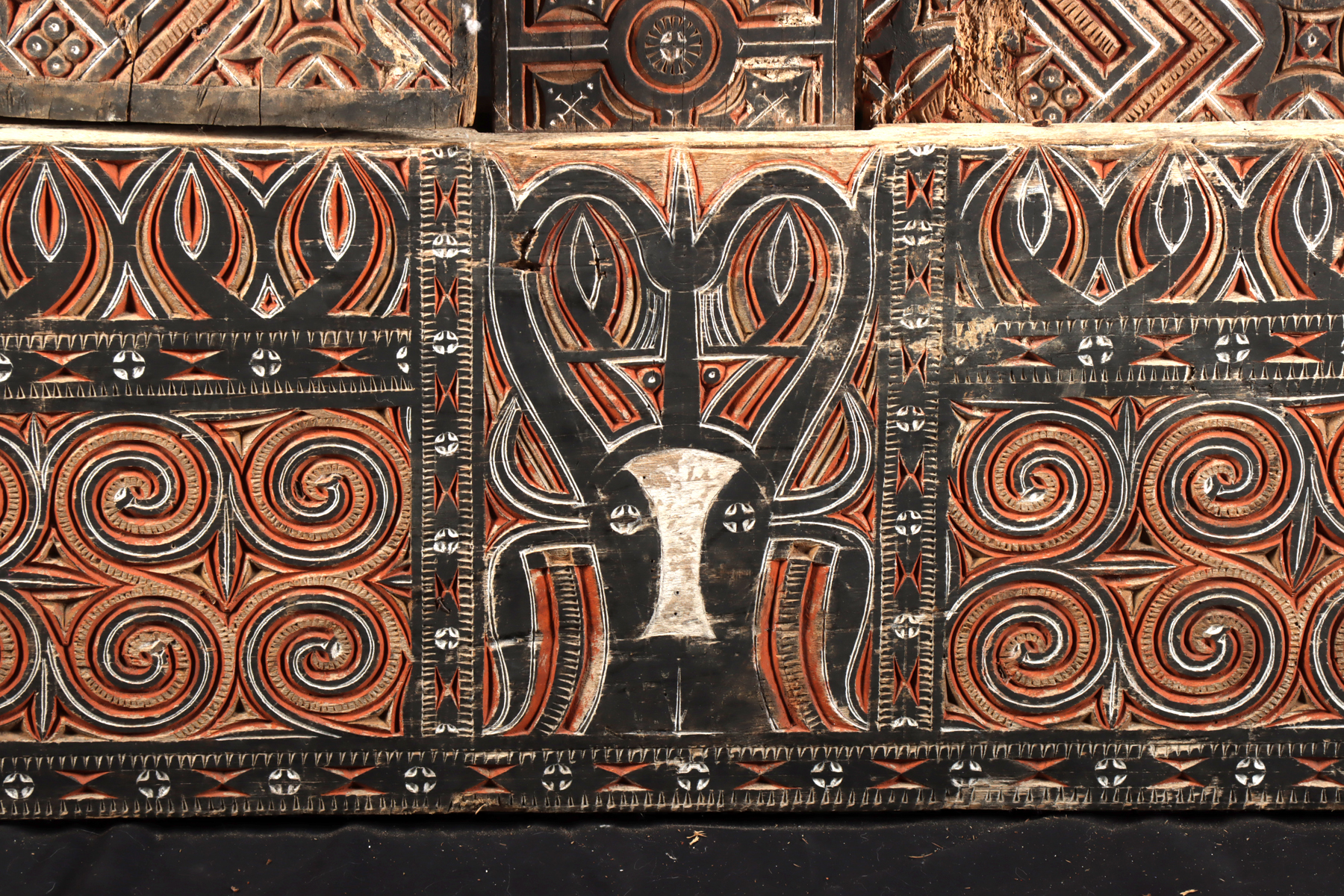
The decorative program of the panel integrates several traditional Toraja motifs, each with specific symbolic associations. Across the lower register appear repeated Pa’tedong motifs, stylized buffalo heads carved with bold horns and geometric symmetry. In Toraja culture the buffalo, or tedong, is the most valued animal and a primary symbol of wealth and life. Buffalo serve as dowry, sacrificial offering, and agricultural labor, and they are essential to funeral ceremonies that honor ancestors and affirm social status. The Pa’tedong motif therefore expresses a wish for prosperity and the ability to maintain these important rituals.
Between the buffalo heads are carved motifs identified as Pa’tanduk Re’pe, whose curling forms resemble the curved horns of a buffalo. This motif commemorates the importance of the animal and symbolizes the hope that in the struggle for survival one may gain peace and possessions as valuable as a buffalo. The horn imagery reinforces the broader association between buffalo, social standing, and ritual life.
Flanking the lower section are panels decorated with Pa’kadang Pao, a hooked geometric motif whose name refers to the mango hook tool used to pull fruit from trees. Symbolically, the motif conveys the importance of honest labor and cooperative effort. Just as the hook is useful only when guided by a hand, prosperity is understood to arise from mutual assistance and shared work within the community.
At the center of the lower register appears Pa’sepu’ Torong Kong, a motif whose pattern resembles the embroidered decoration of a betel bag from Rongkong, a region in Luwu Regency. The name itself combines the words for betel bag, person, and Rongkong. The design expresses the cultural connection between the Toraja and the Rongkong people, who are regarded as members of the same broader Toraja ethnic group. In this sense the motif affirms kinship, shared heritage, and the continuity of cultural traditions across related communities.
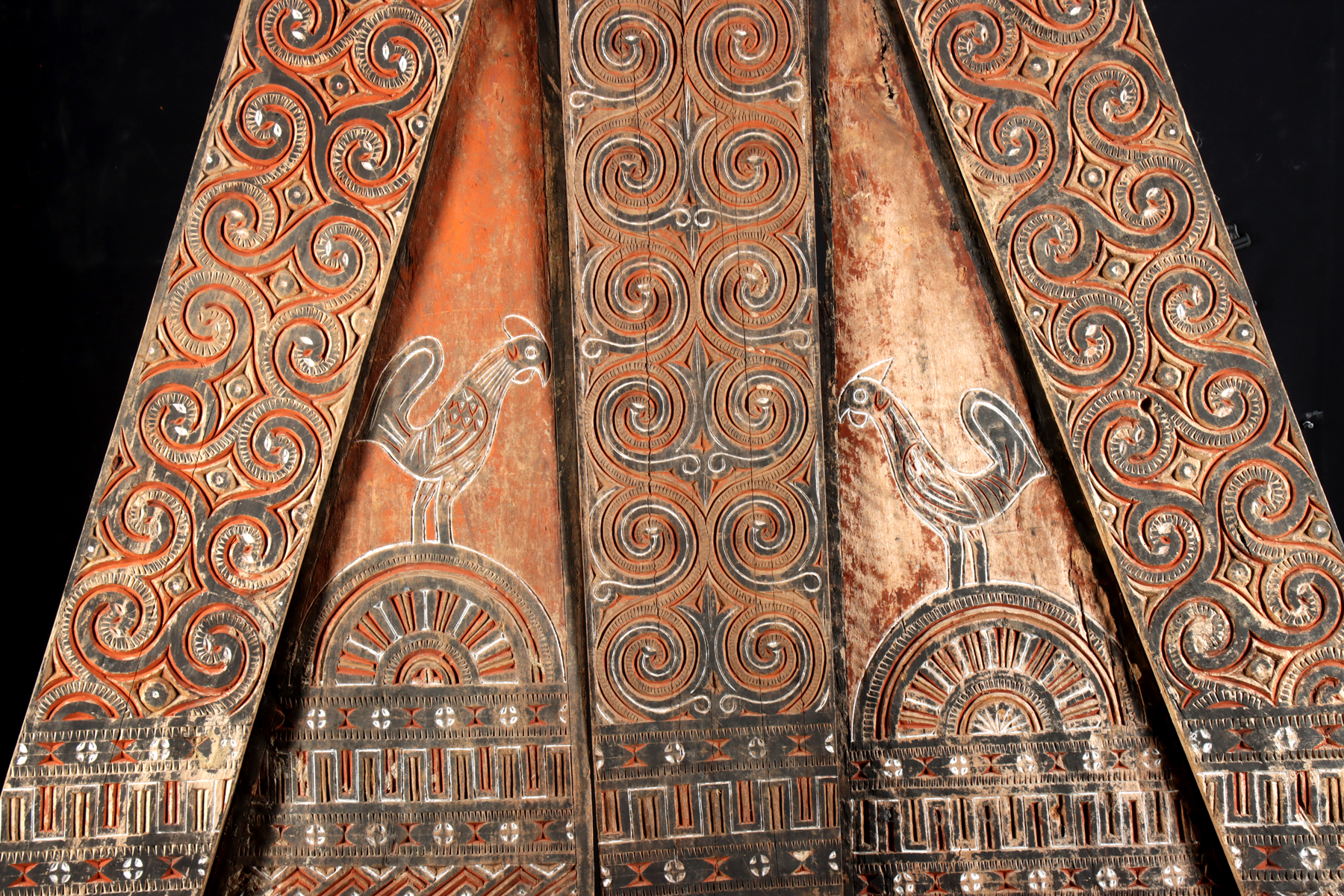
The upper section of the panel features large spiral panels identified as Pa’tangki’Pattung II, characterized by swirling circular forms arranged in balanced symmetry. This motif expresses unity and togetherness, reflecting the principle that members of a family or community should remain bound in cooperation and equality. Such motifs often appear in architectural carvings as a visual reminder of social harmony within the household.
Above the geometric panels appear bird figures standing atop radiating sun forms. The radiating disc represents Pa’barre Allo, the sun motif symbolizing vitality, power, and divine blessing. Perched above it is the bird motif Pa’manuk Londong, representing the rooster. In Toraja symbolism the rooster heralds the coming of dawn and encourages diligence and discipline. The image conveys the message that people should awaken before sunrise and work earnestly to sustain their lives and their families.
Throughout the panel, the swirling scrolls, interlocking geometries, and repeating motifs reveal the Toraja preference for rhythm, balance, and ordered design derived from observations of nature. Spirals echo water plants and organic growth, while symmetrical patterns express stability and continuity. Toraja artisans traditionally created these designs using simple geometric tools such as bamboo sticks, producing ornament that combines mathematical order with symbolic meaning.
The colors applied to the carving also carry cosmological significance within the indigenous Toraja belief system known as Aluk To Dolo, or “the Way of the Ancestors.” Black symbolizes darkness and the realm of death, white represents purity and the human body, red signifies blood and human life, and yellow represents divine blessing and sacred power. Together these colors reinforce the themes of vitality, protection, and prosperity embedded in the carved motifs.
Panels such as this transform the rice barn into more than a practical storage structure. Through carefully arranged carvings and symbolic imagery, the facade becomes a visual statement of wealth, ancestry, and communal values. The alang stands as both a granary and a cultural monument, and its carved para gable preserves the artistic language through which the Toraja people express their relationship to land, family, and tradition.
This item is oversized and requires special shipping.
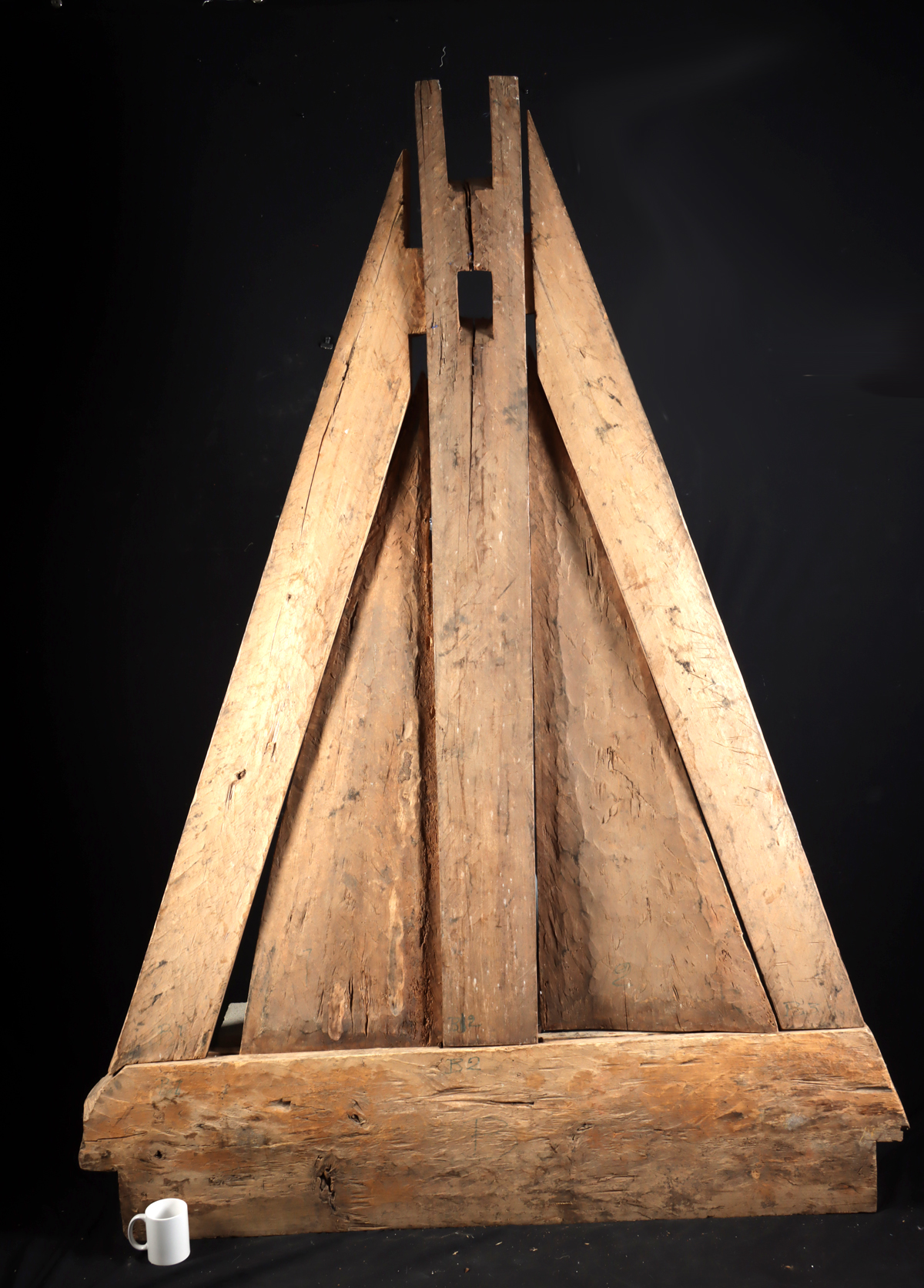
Condition: Comprised of six panels. Expected weathering and age wear with chipping, small losses, nicks, abrasions, and fissures to wood, all commensurate with age. Good remains of relief detail and pigments.
Provenance: private Johnson collection, Los Angeles, California, USA
All items legal to buy/sell under U.S. Statute covering cultural patrimony Code 2600, CHAPTER 14, and are guaranteed to be as described or your money back.
A Certificate of Authenticity will accompany all purchases.
We ship worldwide and handle all shipping in-house for your convenience.
Related Products
-


Lot 40, Auction 3/19/2026: Matching Pair 19th C. Chinese Wood Tabletop Screens
Add to cart -


Lot 38a, Auction 3/19/2026: Qing Dynasty Chinese Wood & Cane Stools / Side Tables
Add to cart -


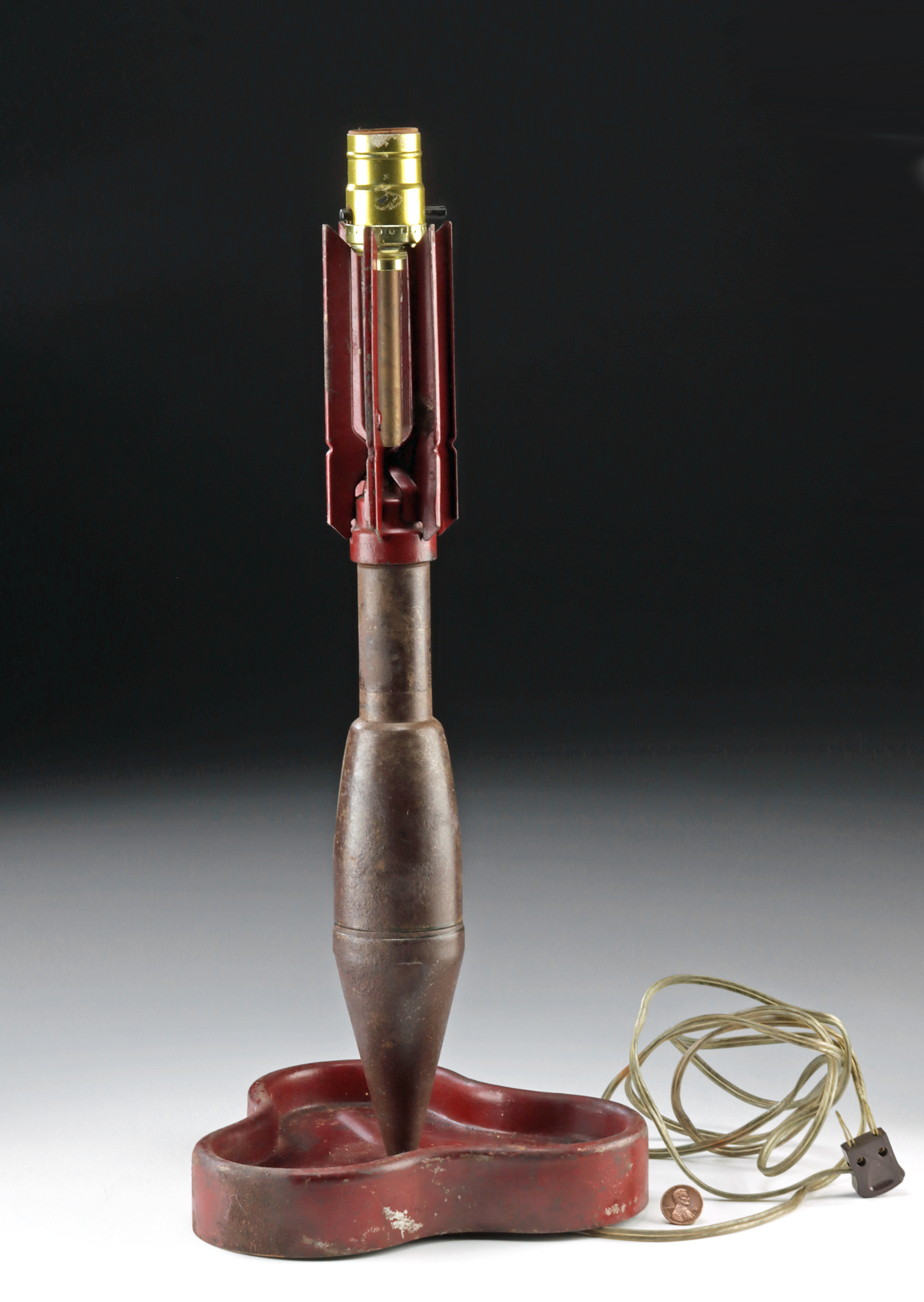
Lot 311b, Auction 3/19/2026: WWII USA SIMCO Bazooka Practice Rocket Lamp
Add to cart -

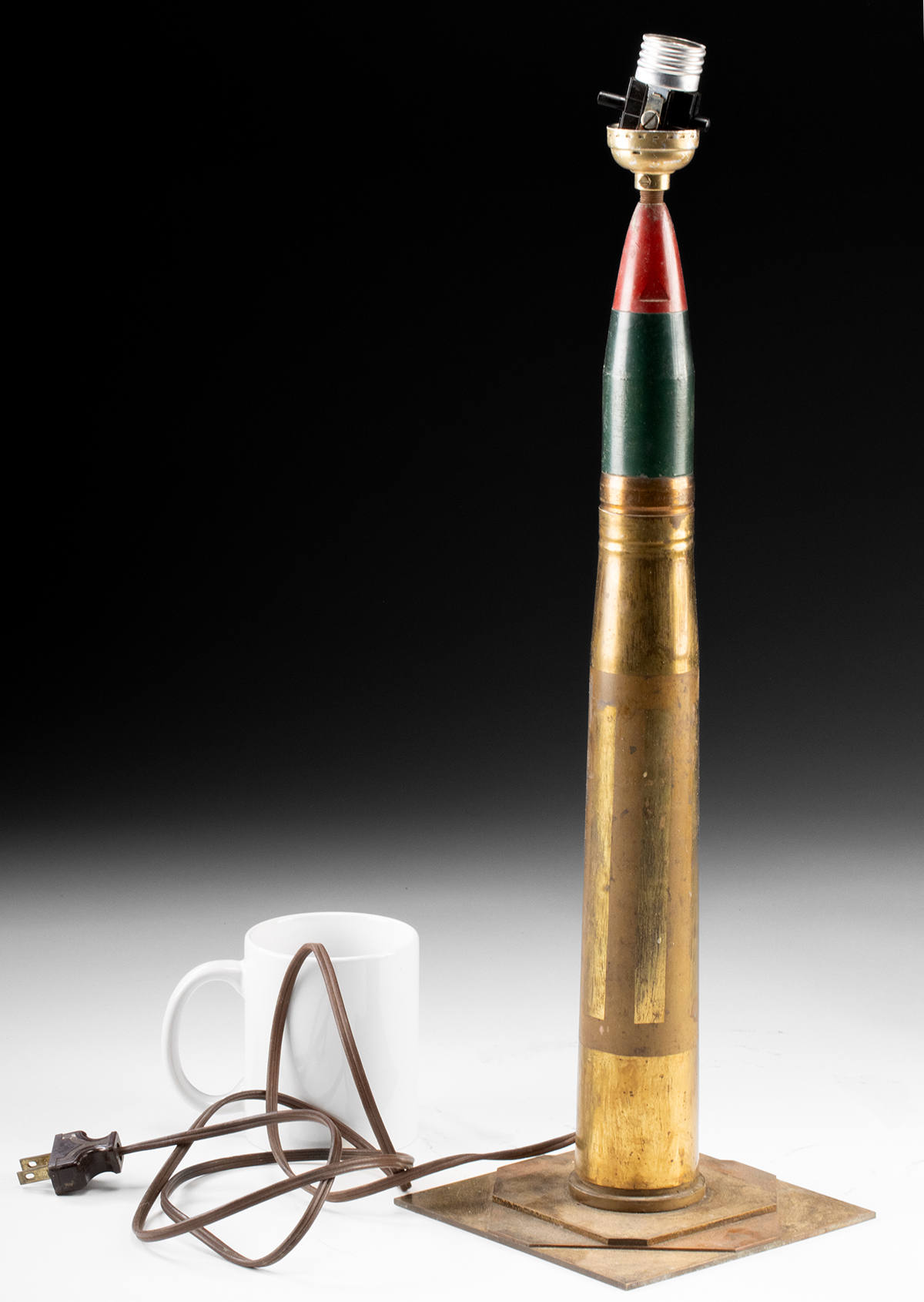
Lot 220a, Auction 4/3/2026: WWII Trench Art Artillery Shell Table Lamp
Add to cart -


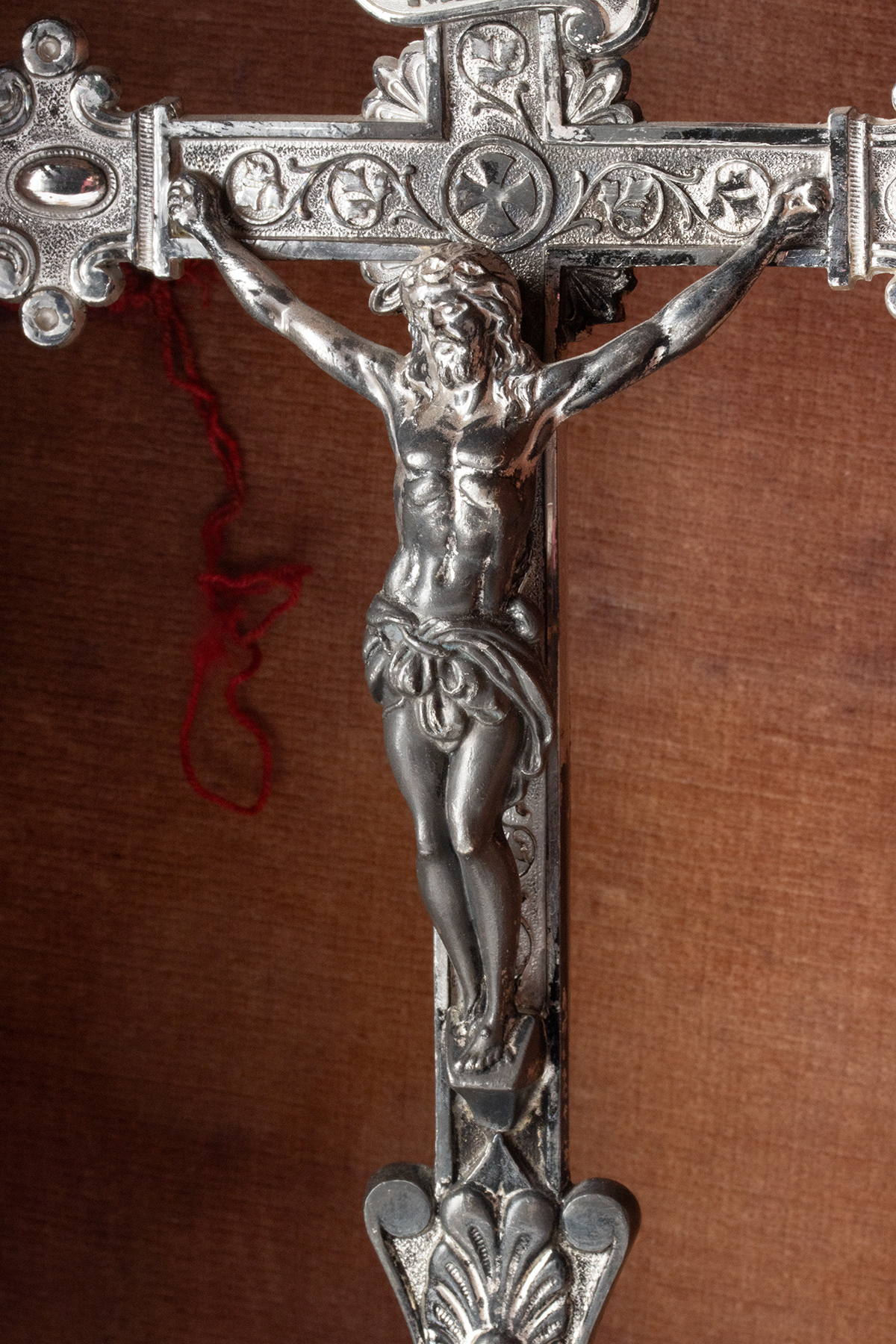
Lot 203, Auction 4/3/2026: 19th Century Last Rites Set Used in the Southwest
Add to cart -


Lot 18, Auction 3/19/2026: 8 Panel Chinese Qing Era Wood & Painted Marble Screens
Add to cart -


Lot 172, Auction 4/3/2026: Chinese Qing Dynasty Cinnabar Kang Bench / Table
Add to cart -


Lot 14a, Auction 3/19/2026: Japanese Meiji Era Gilt Wood Room Screen Takasago Scene
Add to cart -


Lot 112, Auction 4/3/2026: Two African Wood Nude Figures – Bembe & Chamba
Add to cart -


Lot 111, Auction 4/3/2026: West African Dogon Carved Wood Monkey Mask
Add to cart