Lot 46, Auction 4/20/2026: Colima Pottery Hunchback Jar & Zapotec Cocijo Urn
$292.50
In stock
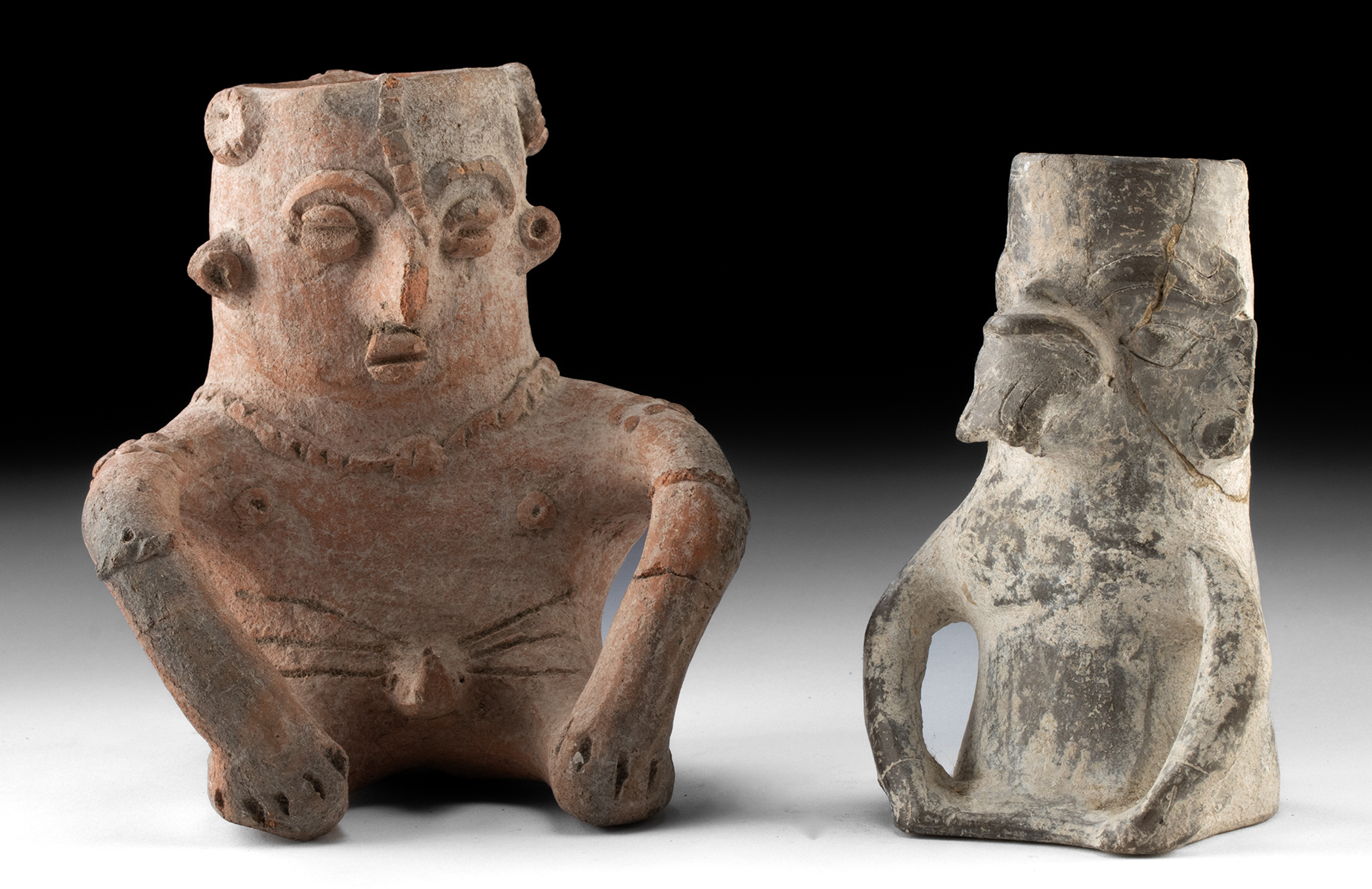
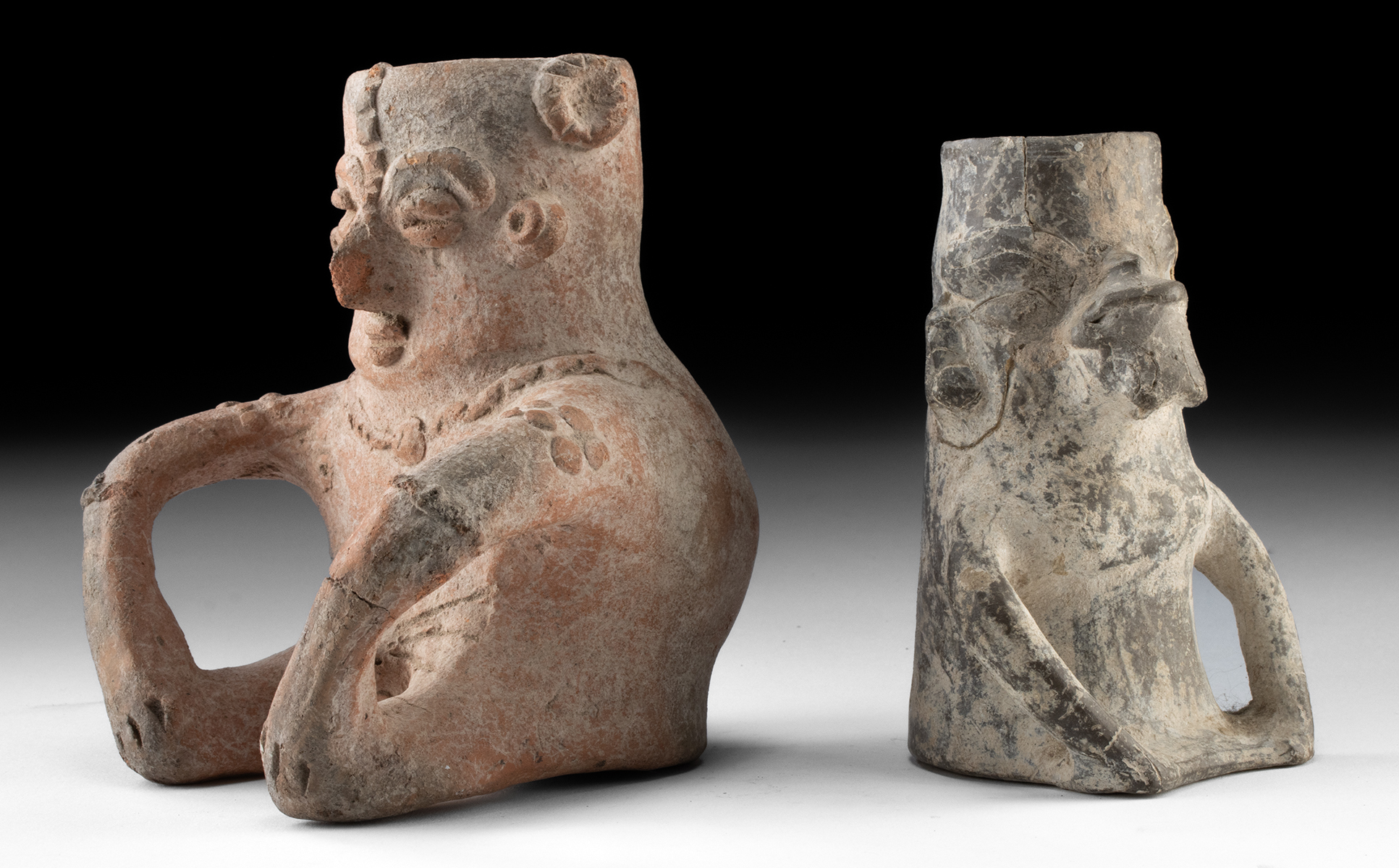
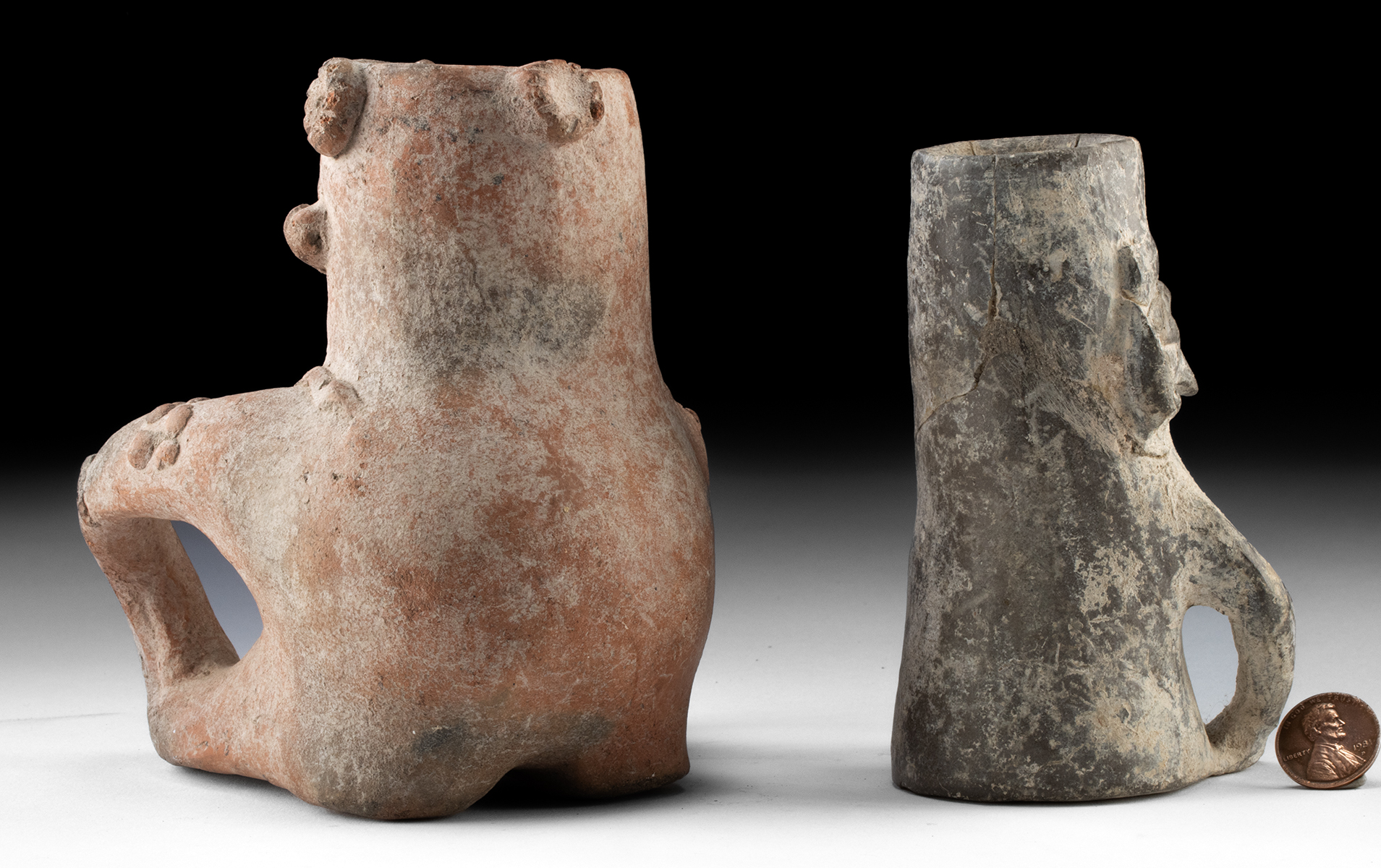
Pre-Columbian, Mexico, Oaxaca, Zapotec, Monte Alban, ca. 600 to 200 BCE; West Mexico, Colima, ca. 300 BCE to 300 CE. A compelling dialogue between flesh and storm, this pair of figural vessels – a Colima redware jar in the form of an ithyphallic hunchback and a Zapotec Monte Alban urn depicting Cocijo, the god of rain and lightning – embodies two distinct yet intertwined currents of ancient Mesoamerican belief. The larger vessel is a Colima redware jar modeled as a seated, ithyphallic hunchback with legs splayed and arms braced forward in a posture that feels both grounded and confrontational. The rounded torso swells outward, emphasizing the abdomen and chest, while the pronounced phallus underscores themes of virility and generative force. The face is broad and masklike, with heavy-lidded eyes, a prominent nose, and applied earspools. Incised detailing articulates the brow and central facial ridge, while small punctate marks animate the shoulders. Size of larger: 4.4″ L x 4.7″ W x 5.1″ H (11.2 cm x 11.9 cm x 13 cm)
Colima artists are renowned for their sculptural vessels that merge naturalism with bold stylization, often portraying figures marked by physical distinction. In West Mexican contexts, hunchback imagery is frequently associated with shamanic authority and liminality – bodies that diverge from the norm may have been understood as charged with supernatural potency. The jar opening at the crown integrates form and function, transforming the human body itself into a container.
In contrast, the more petite vessel is a Zapotec urn from Monte Alban representing Cocijo, the rain and lightning deity central to Zapotec cosmology. Its cylindrical body rises into a masklike face charged with inherited symbolism. The origin of Cocijo’s attributes can be traced to Olmec iconography, and those deep visual roots remain evident here. The pug-shaped nose projects prominently, flanked by tabular ears. The upper lip flares in the distinctive snarling jaguar form, with three large teeth protruding from the upper lip. Almond shaped eyes recall the Olmec rain baby, while flame-like eyebrows suggest flashes of lightning. The openwork arms curve downward to form handles, uniting sculptural presence with vessel function. The hollow interior once held offerings, perhaps water, maize, or other substances tied to agricultural renewal and divine appeasement.
Together, these vessels span regions and centuries yet share a profound investment in embodiment. The Colima figure channels fertility, corporeality, and possible shamanic transformation. The Zapotec Cocijo channels rain, thunder, and the celestial drama upon which crops and communities depended. One grounds power in the human body; the other lifts it into the storm filled sky. Both preserve in fired clay the forces that sustained ancient Mesoamerican life.
Condition: Zapotec jar has been repaired with restoration over some break lines and other break lines visible with infilll. Stress fissures to arms of Colima figure, but otherwise intact. Both have expected weathering to surfaces. Nice remaining detail and scattered earthen deposits throughout.
Provenance: private Colorado, USA collection; largest one: ex-private Los Angeles, California, USA collection; ex-major gallery, Beverly Hills, California, USA, primarily acquired between 1985 and 2005
All items legal to buy/sell under U.S. Statute covering cultural patrimony Code 2600, CHAPTER 14, and are guaranteed to be as described or your money back.
A Certificate of Authenticity will accompany all purchases.
We ship worldwide and handle all shipping in-house for your convenience.
Related Products
-


Lot 9, Auction 4/20/2026: Woodland Stone Platform Pipe – Engraved Bowl
Add to cart -


Lot 4, Auction 4/20/2026: Mississippian Stirrup Pottery Vessel – Arkansas
Add to cart -


Lot 3, Auction 4/20/2026: Mississippian Black Stone Pipe – Square Bowl
Add to cart -


Lot 17, Auction 4/20/2026: Large Mississippian Etched Pottery Jar w/ Flared Spout
Add to cart -


Lot 16a, Auction 4/20/2026: Mississippian Quapaw Painted Pottery Jar
Add to cart -


Lot 16, Auction 4/20/2026: Mississippian Pedestal Bottle – Pierced Foot
Add to cart -


Lot 15a, Auction 4/20/2026: Mississippian Grayware Vessel – Incised Body
Add to cart -


Lot 15, Auction 4/20/2026: Mississippian Pottery Bowl – Lug Handles
Add to cart -


Lot 14a, Auction 4/20/2026: Mississippian Grayware Bottle – Globular Form
Add to cart -


Lot 14, Auction 4/20/2026: Mississippian Etched Pottery Jar – Shell Tempered
Add to cart