Lot 200c, Auction 4/3/2026: Mexican Nahua Mask – Iron-Crowned Moorish King
$1,560.00
In stock
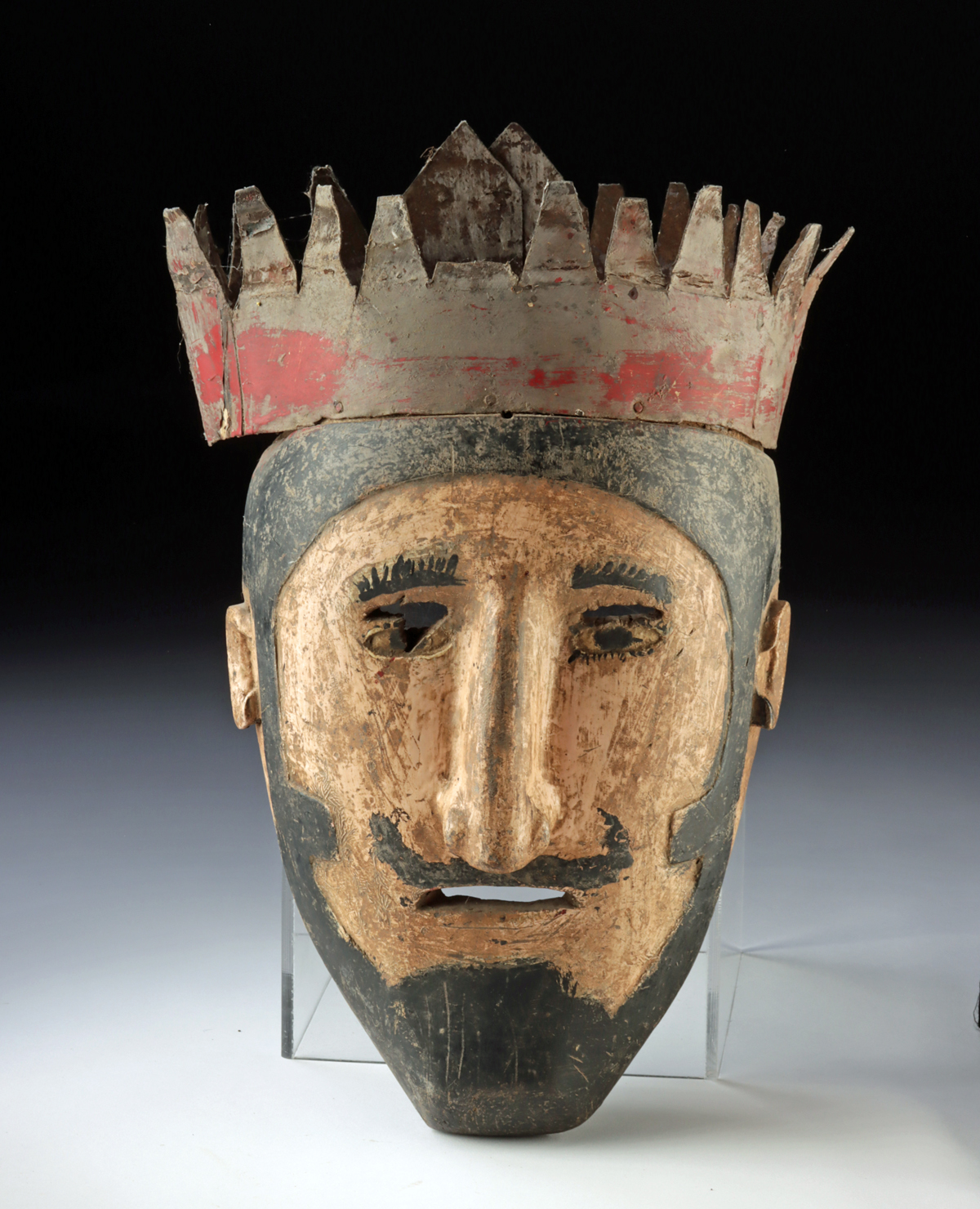
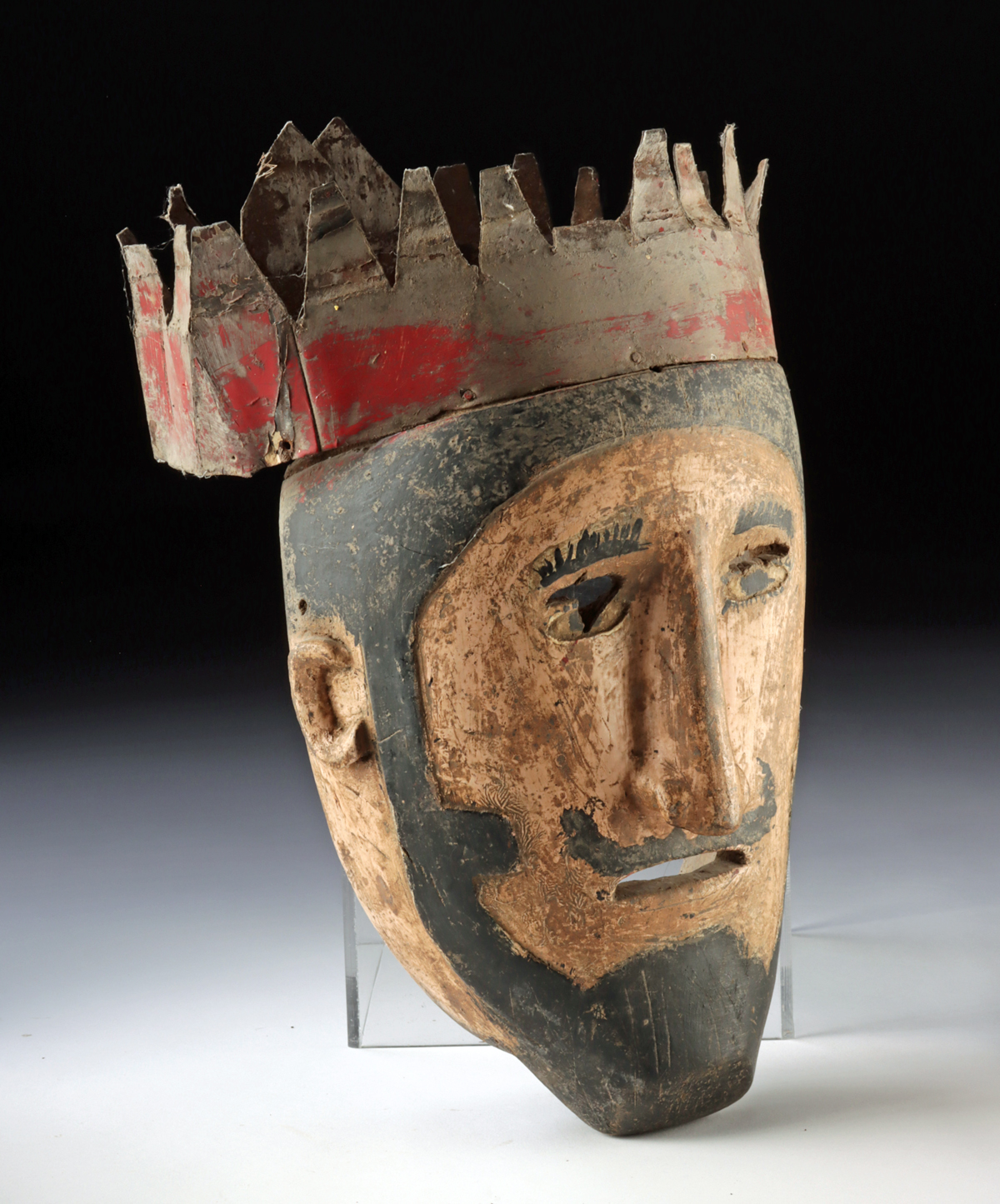
Latin America, Mexican, Guerrero, Nahua, ca. mid-20th century CE. A solemn crowned figure gazes forward with quiet authority, its elongated face and restrained expression evoking both dignity and theatrical presence. This painted wooden mask, surmounted by a hand-formed iron crown, represents a character from the enduring Danza de los Moros y Cristianos, a performance tradition layered with history, belief, and cultural transformation. Carved from wood and finished with a worn polychrome surface, the mask displays a refined simplicity. The narrow eyes, gently incised and outlined with painted lashes, sit above a long, straight nose and a small, slightly parted mouth. Traces of pigment define a dark beard and hair framing the face, reinforcing the identity of the figure as a foreign or noble type. Size: 7.3″ L x 8″ W x 13.4″ H (18.5 cm x 20.3 cm x 34 cm)
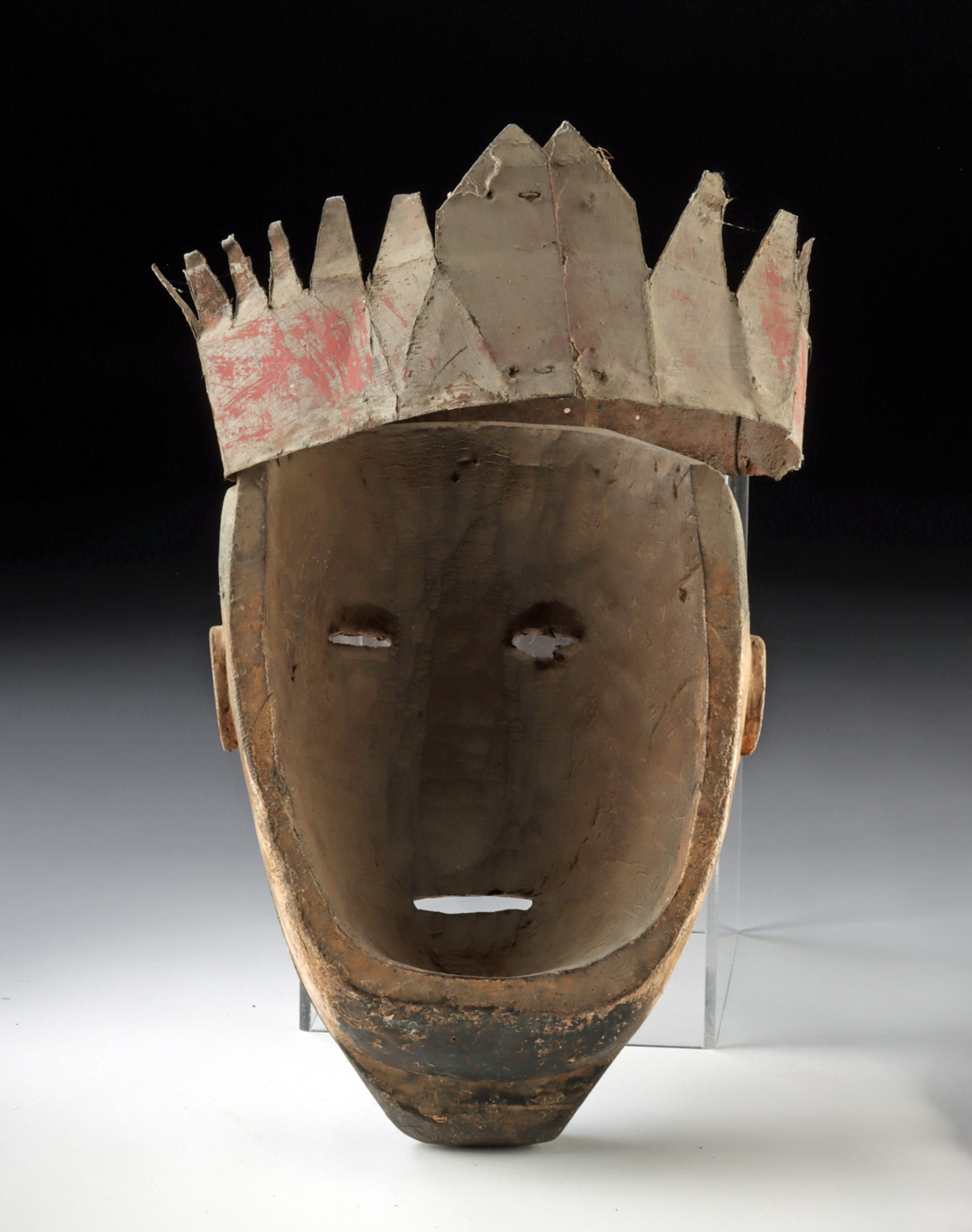
The crown, fashioned from sheet iron and painted in faded tones of red and white, rises in jagged crenellations, lending the figure a regal silhouette while also revealing the hand of the maker in its irregular, expressive form.
Masks of this type are associated with the Danza de los Moros y Cristianos, also known in some regions as the Danza de la Conquista. This performance tradition, introduced during the colonial period by Spanish missionaries, dramatizes the historical reconquest of Spain from Muslim rule. Through costumed dance and narrative, indigenous participants reenacted the triumph of Christianity over Islam, a message intended to instill both awe and submission to colonial authority. The performances became deeply embedded in local culture, evolving into complex spectacles that blend indigenous performance traditions with European historical narratives.
In many regions of Mexico – including Guerrero, Puebla, Veracruz, and Michoacan – these dances continue to be performed today, with characters representing both “Christians” and “Moors.” The present mask represents a Moorish figure, identifiable through its stylized facial hair and crowned status, suggesting a leader or noble participant within the drama. While the historical narrative behind the dance is one of conquest and imposed ideology, the masks themselves have taken on new meanings within the communities that continue to produce and perform them.
The combination of carved wood and applied metal crown reflects both practicality and visual impact, creating a lightweight yet striking object suited for dance or display. The surface wear and softened contours speak to handling and age, while the expressive economy of the carving gives the mask a quiet, enduring presence. Today, such masks are appreciated not only as components of performance but also as objects that embody a complex cultural dialogue – where indigenous craftsmanship, colonial history, and evolving identity converge.
Condition: Chipping to eye holes with loss to proper right eye. Some bending and losses to crown, as well as weathering and abrasions to wood. Good remaining pigments and rich patina throughout.
Provenance: private collection of S. Saunders, Nogales, Arizona, USA collection
All items legal to buy/sell under U.S. Statute covering cultural patrimony Code 2600, CHAPTER 14, and are guaranteed to be as described or your money back.
A Certificate of Authenticity will accompany all purchases.
We ship worldwide and handle all shipping in-house for your convenience.
Related Products
-


Lot 291, Auction 3/19/2026: Central African Kwele Wood & Kaolin Painted Mask
Add to cart -


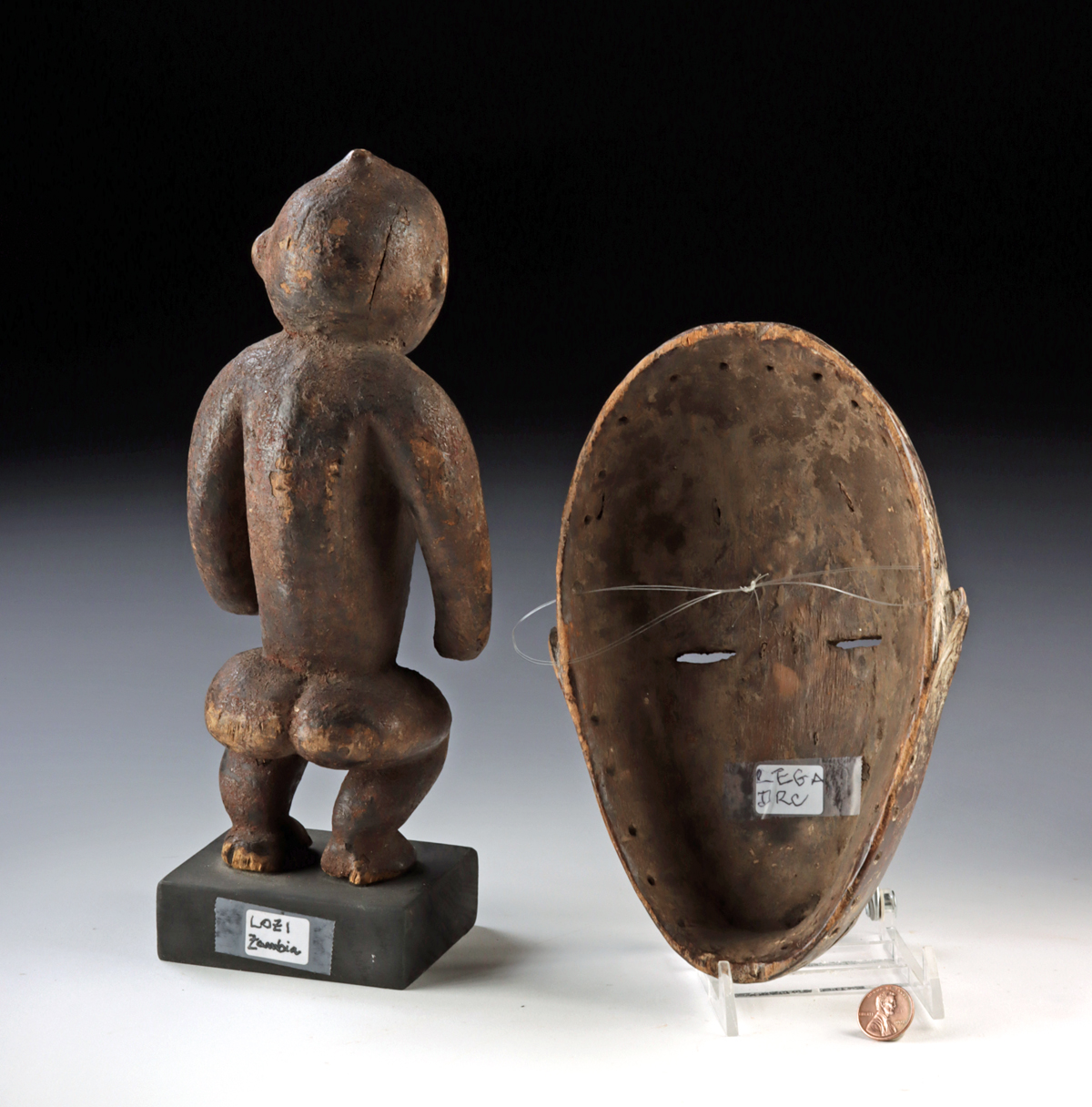
Lot 289, Auction 3/19/2026: African Lega Wood Bwami Mask & Lozi Wood Figure
Add to cart -


Lot 284, Auction 3/19/2026: Mali Bamana Wood Monkey Initiation Mask
Add to cart -


Lot 226, Auction 3/19/2026: Exceptionally Rare Ancient Hopewell Mica Sheet Mask
Add to cart -


Lot 201a, Auction 4/3/2026: Vintage Mexican Guerrero Conquistador Mask w/ Helmet
Add to cart -


Lot 200b, Auction 4/3/2026: 3 Vintage Mexican Cojo Masks, Danza Correr del Pocho
Add to cart -


Lot 200a, Auction 4/3/2026: Mexican Guerrero Silver Mask w/ Lizard Motif Bell
Add to cart -


Lot 146, Auction 3/19/2026: Pre-Columbian Teotihuacan Jade Maskette Pendant
Add to cart -


Lot 123, Auction 4/3/2026: Sepik River Tambanum Wood Spirit Mask w/ Cane Rim
Add to cart -


Lot 111, Auction 4/3/2026: West African Dogon Carved Wood Monkey Mask
Add to cart