Lot 120, Auction 4/20/2026: Late Permian Barasaurus Besairiei Fossil Slab
$1,040.00
In stock
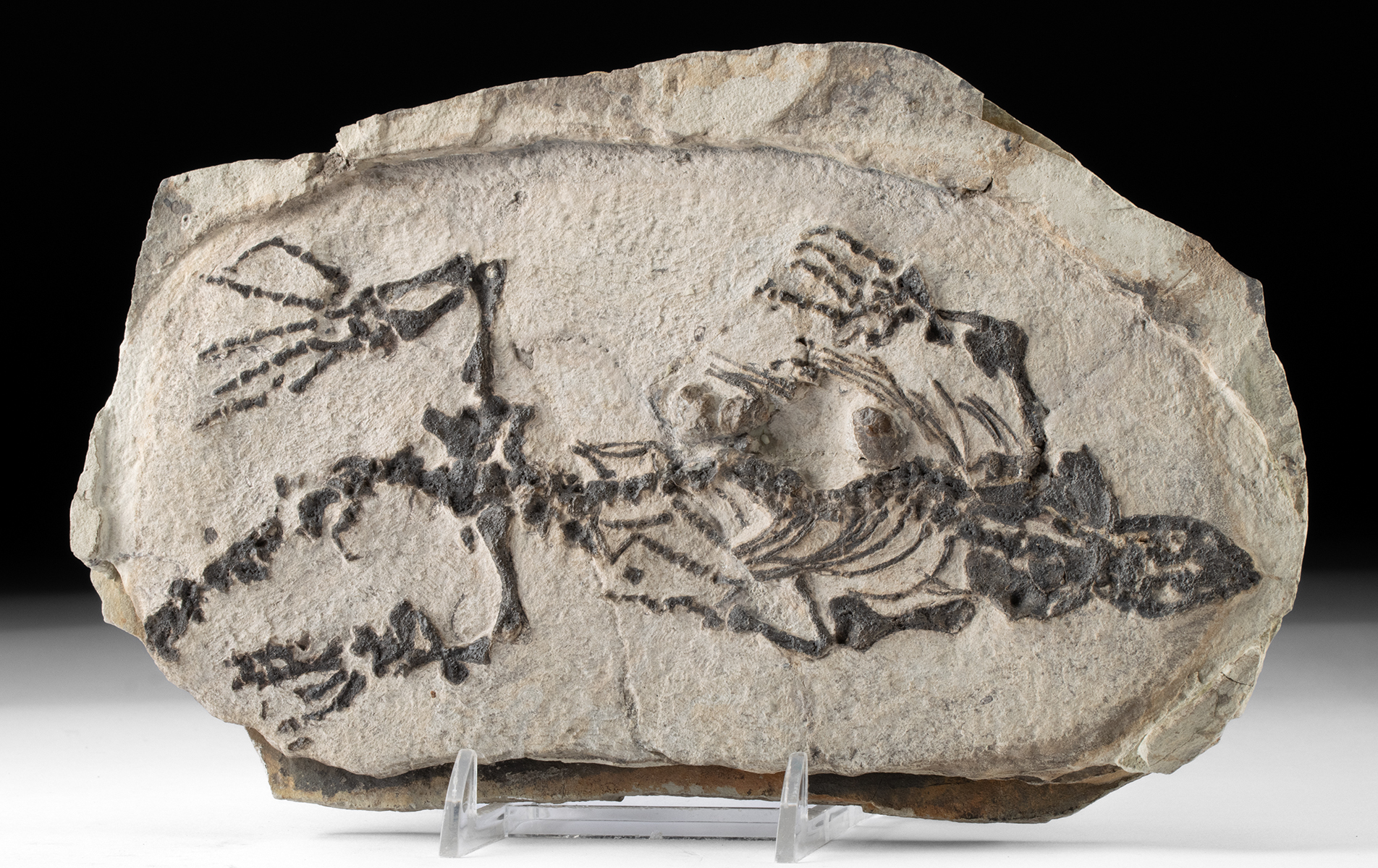
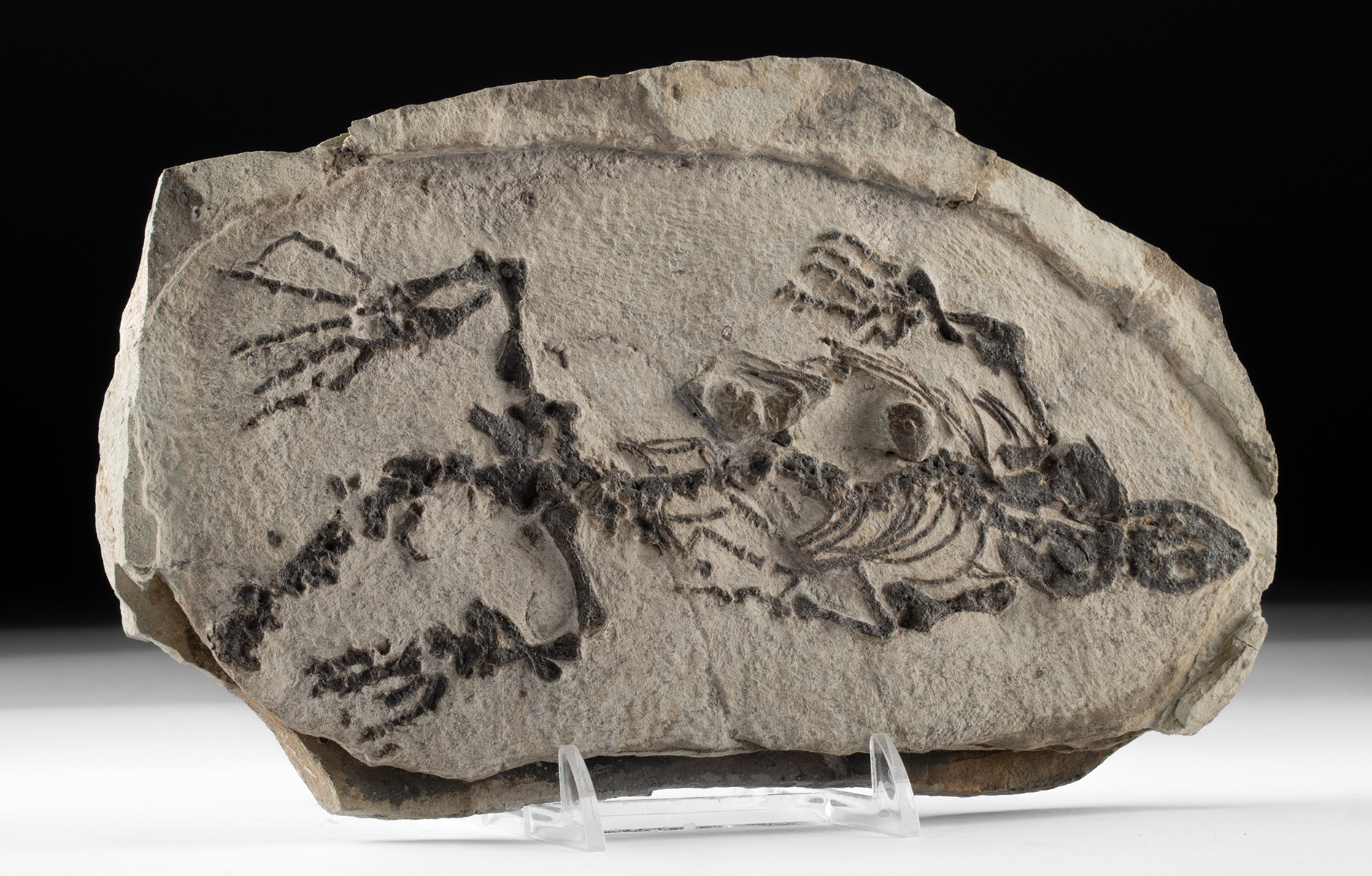
East Africa, Madagascar, Late Permian to Early Triassic, ca. 259 to 247 million years ago. A compelling relic from the twilight of the Paleozoic era, this fossil slab preserves the articulated remains of Barasaurus besairiei, an early owenettid parareptile whose delicate skeleton lies suspended in stone like a quiet echo of a vanished world. The darkened bones trace a graceful composition across the pale matrix – slender limbs splayed outward, ribs gently arcing from the spine, and the skull resting in profile – each element sharply defined against the warm beige and mineral-stained surface. Subtle tonal variations of cream, gray, and iron-rich ochre enliven the stone, enhancing the visual clarity of the fossilized form. First described in 1955 by French paleontologist Jean Piveteau, Barasaurus besairiei is known from the Lower Sakamena Formation of Madagascar, with additional material extending into the Early Triassic. Size of fossil: 9″ L x 4.1″ W (22.9 cm x 10.4 cm); of matrix: 10″ L x 6.3″ W (25.4 cm x 16 cm)
Notably, an area of loss near the rib cage, accompanied by a cluster of remaining stones, likely represents gastroliths once held within the animal’s body. Similar to modern crocodylians, which swallow stones to act as ballast, these inclusions suggest a functional adaptation for controlling buoyancy. The broad, paddle-like feet further support the interpretation of a semi-aquatic lifestyle, with the ingested stones aiding the animal in remaining submerged and navigating aquatic environments with greater stability.
Named in honor of the Bara people and geologist Henri Besairie, the species occupies an important position within the Owenettidae, a group of small-bodied parareptiles characterized by compact skulls and robust physiques. Distinctive anatomical features – including a fused astragalocalcaneum, specialized pedal elements, and an unusual phalangeal formula – distinguish Barasaurus among early amniotes.
Living at the threshold of one of Earth’s most profound extinction events, Barasaurus may have persisted through the Great Dying at the end of the Permian, before disappearing in the Early Triassic. Both scientifically significant and visually striking, this specimen captures a rare chapter in reptilian evolution, where survival and extinction meet in stone.
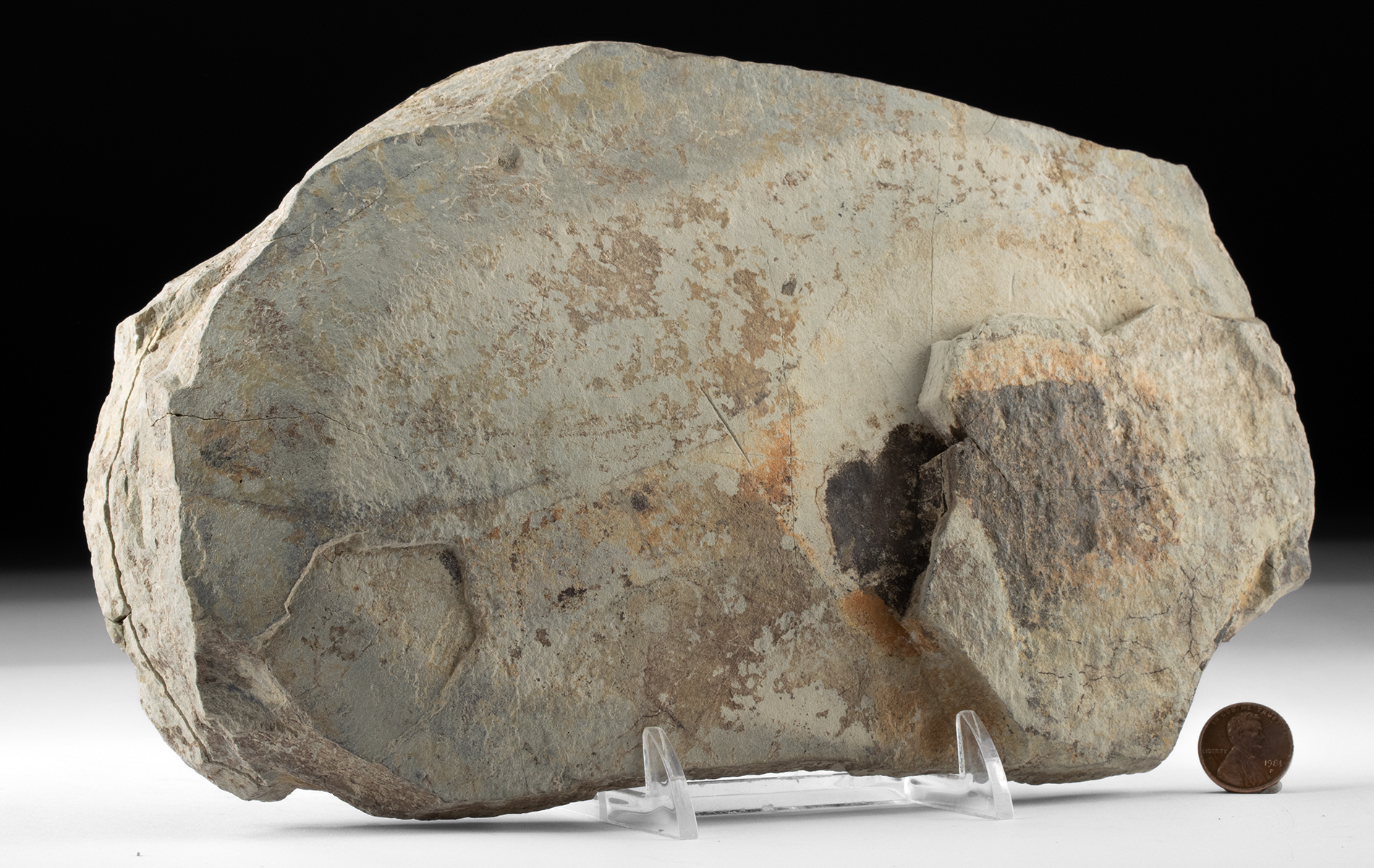
Condition: Missing end of tail and tip of toes on proper right foot. Loss to area of rib cage and chipping to edges as shown. Professionally prepared and well articulated.
Provenance: private Texas, USA Collection, acquired in May 2021; ex-Ancient Objects, Cranston, Rhode Island, USA
All items legal to buy/sell under U.S. Statute covering cultural patrimony Code 2600, CHAPTER 14, and are guaranteed to be as described or your money back.
A Certificate of Authenticity will accompany all purchases.
We ship worldwide and handle all shipping in-house for your convenience.
Related Products
-


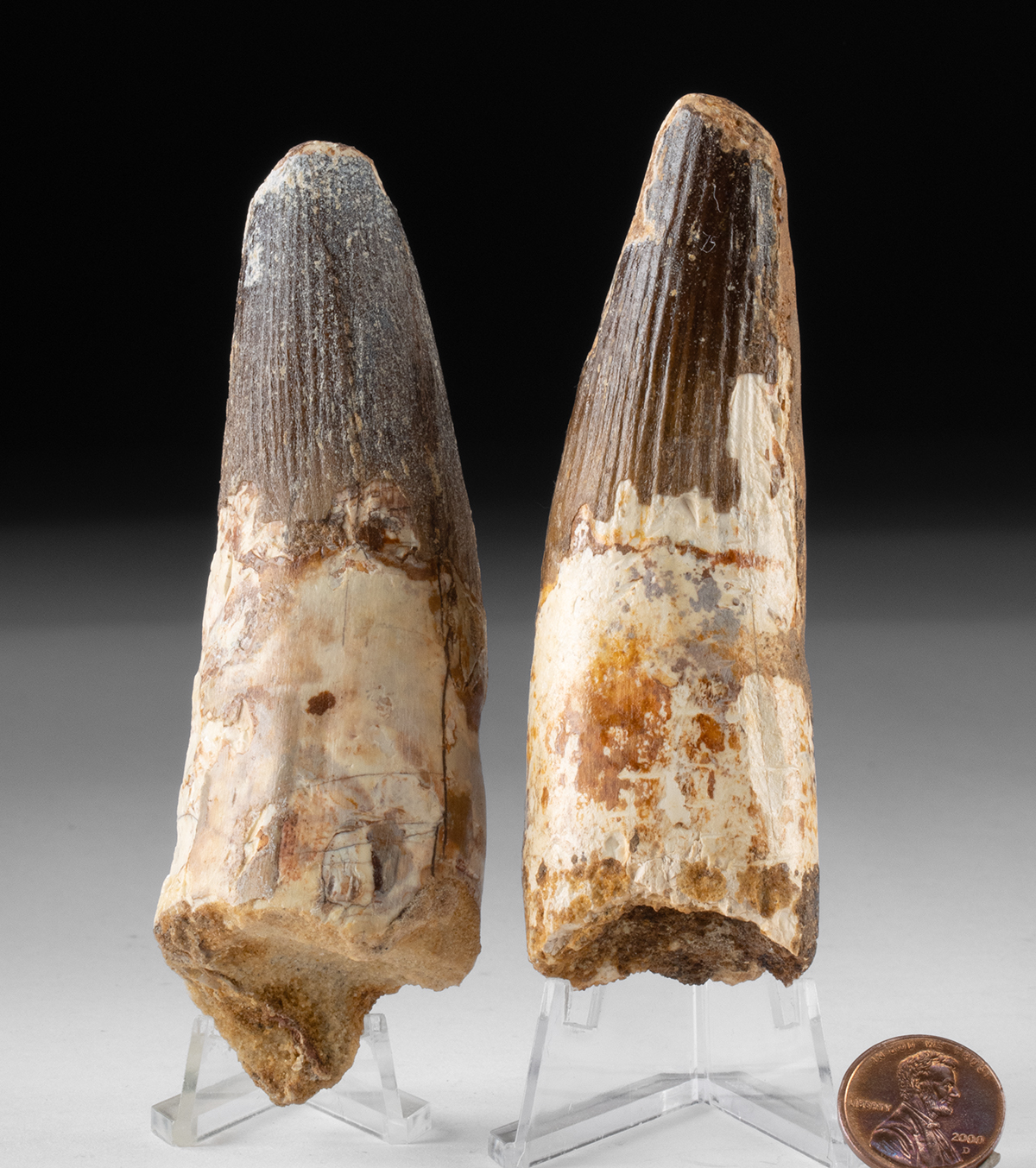
Lot 127, Auction 4/20/2026: Two Large Spinosaurus Aegyptiacus Teeth Fossils
Add to cart -


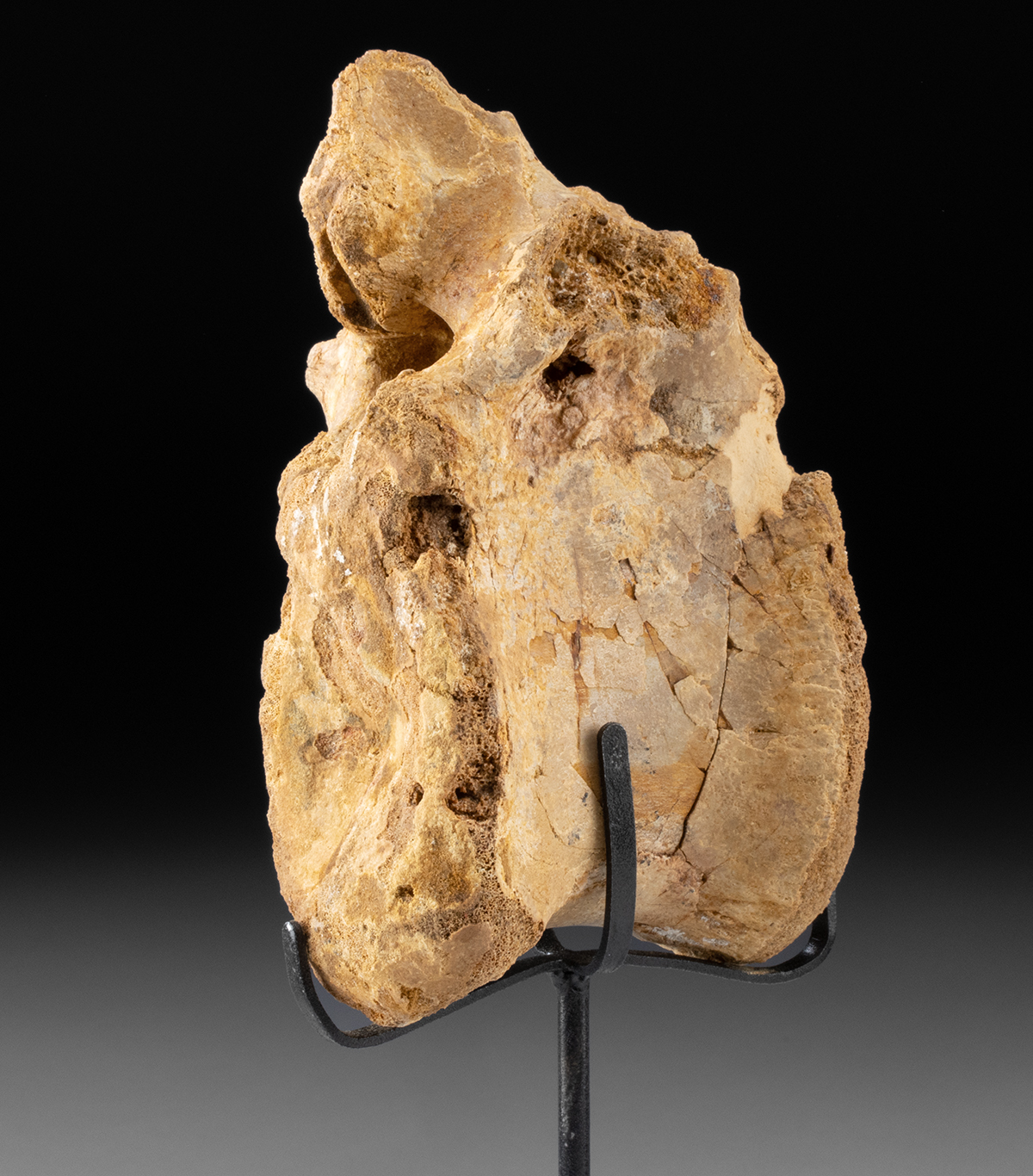
Lot 126, Auction 4/20/2026: Fossilized Spinosaurus Dinosaur Backbone Vertebra Bone
Add to cart -


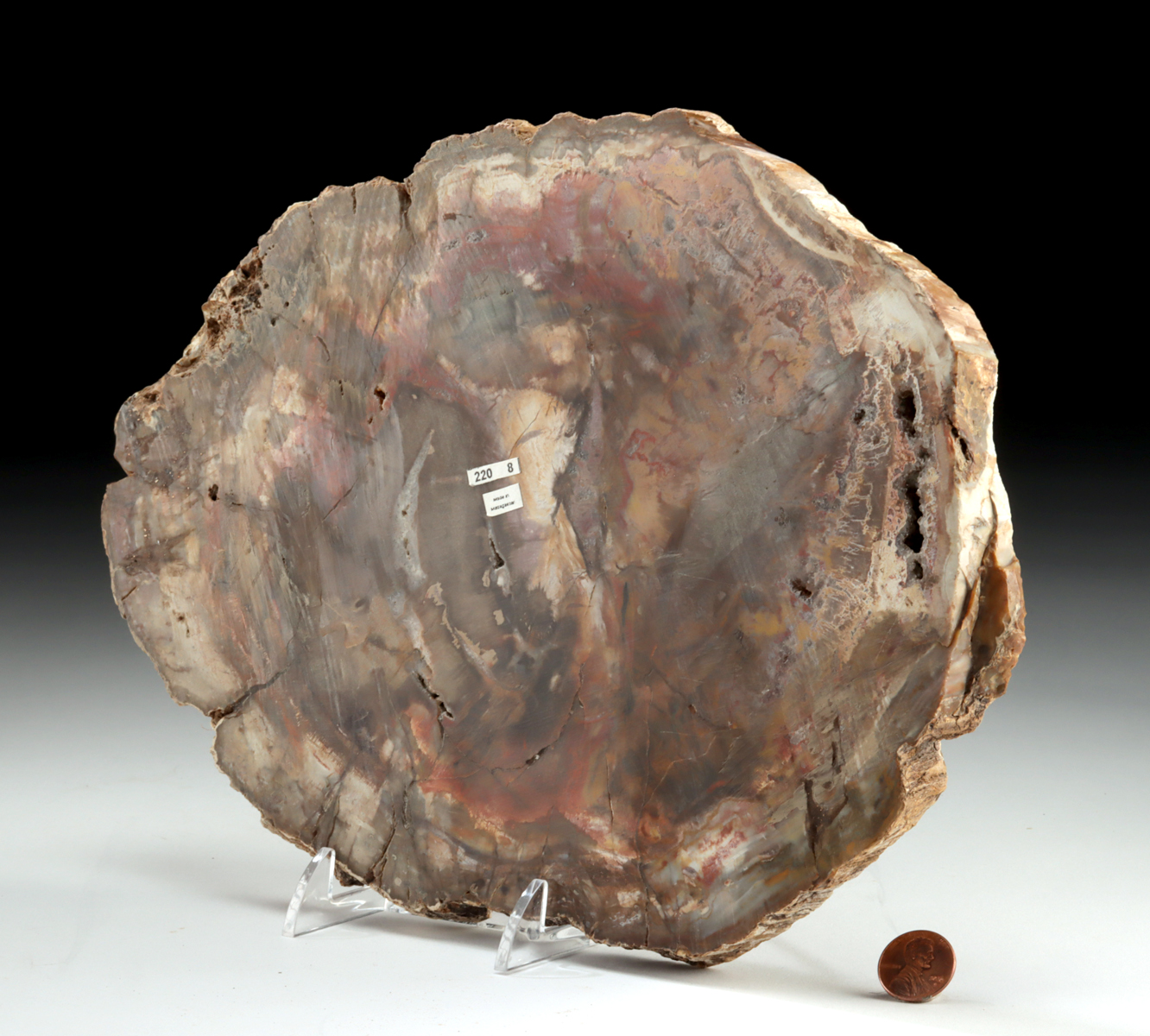
Lot 125, Auction 4/20/2026: Madagascar Petrified Wood Fossil Slab, Crystal Vugs
Add to cart -


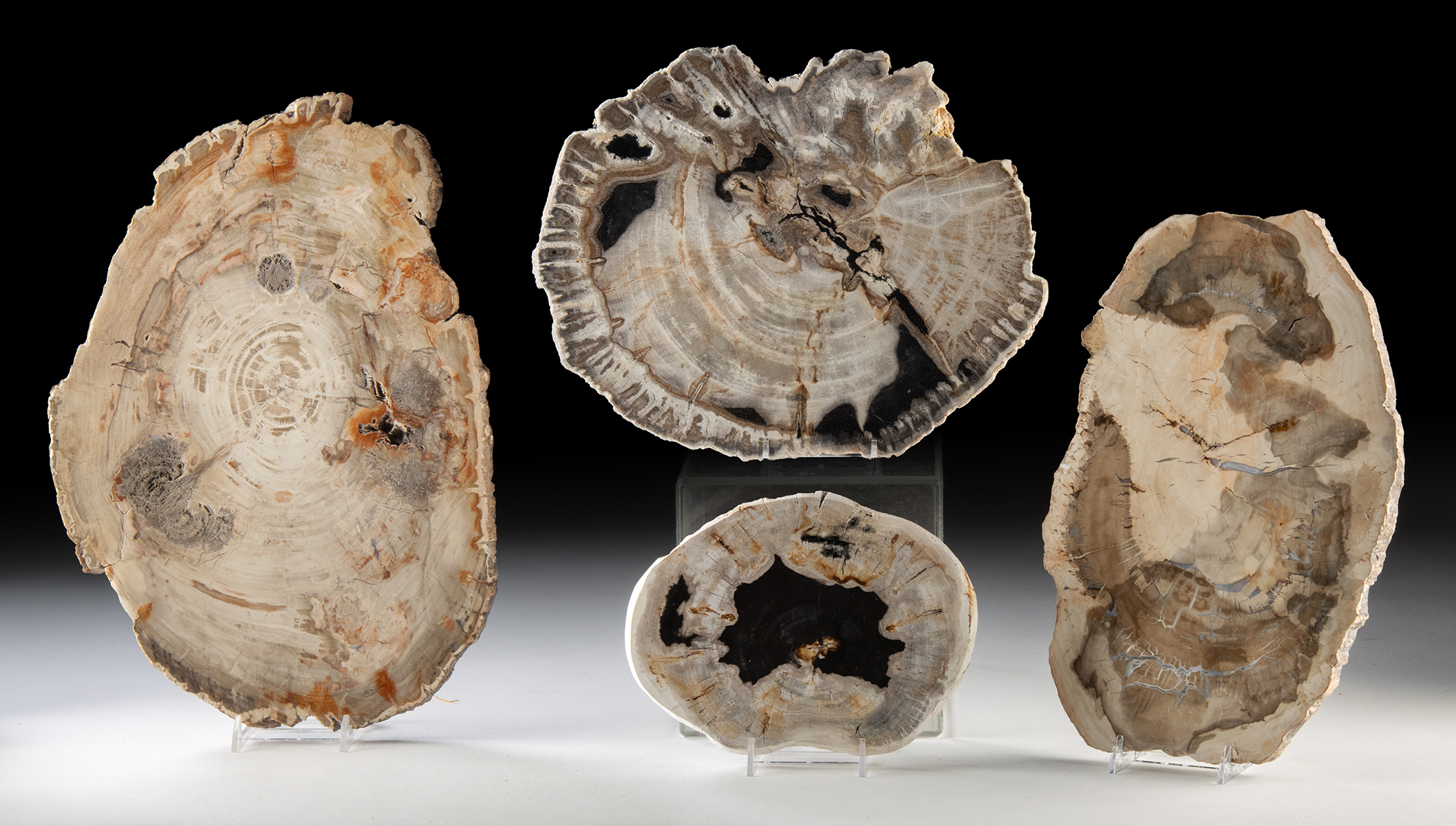
Lot 124, Auction 4/20/2026: Four Polished Petrified Wood Slabs in Various Sizes
Add to cart -


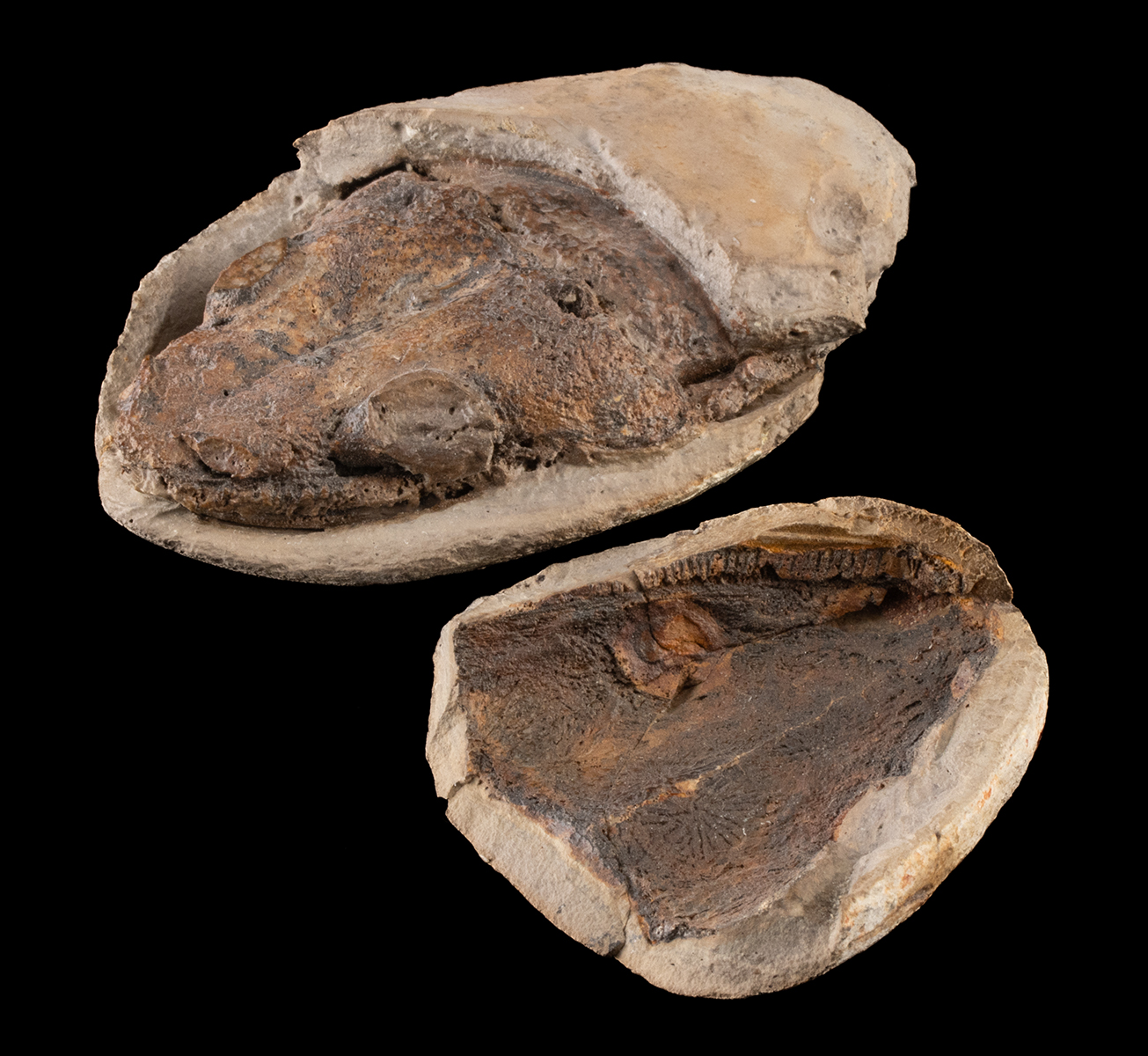
Lot 121, Auction 4/20/2026: Permian Amphibian Skull Fossil – Edingerella
Add to cart -


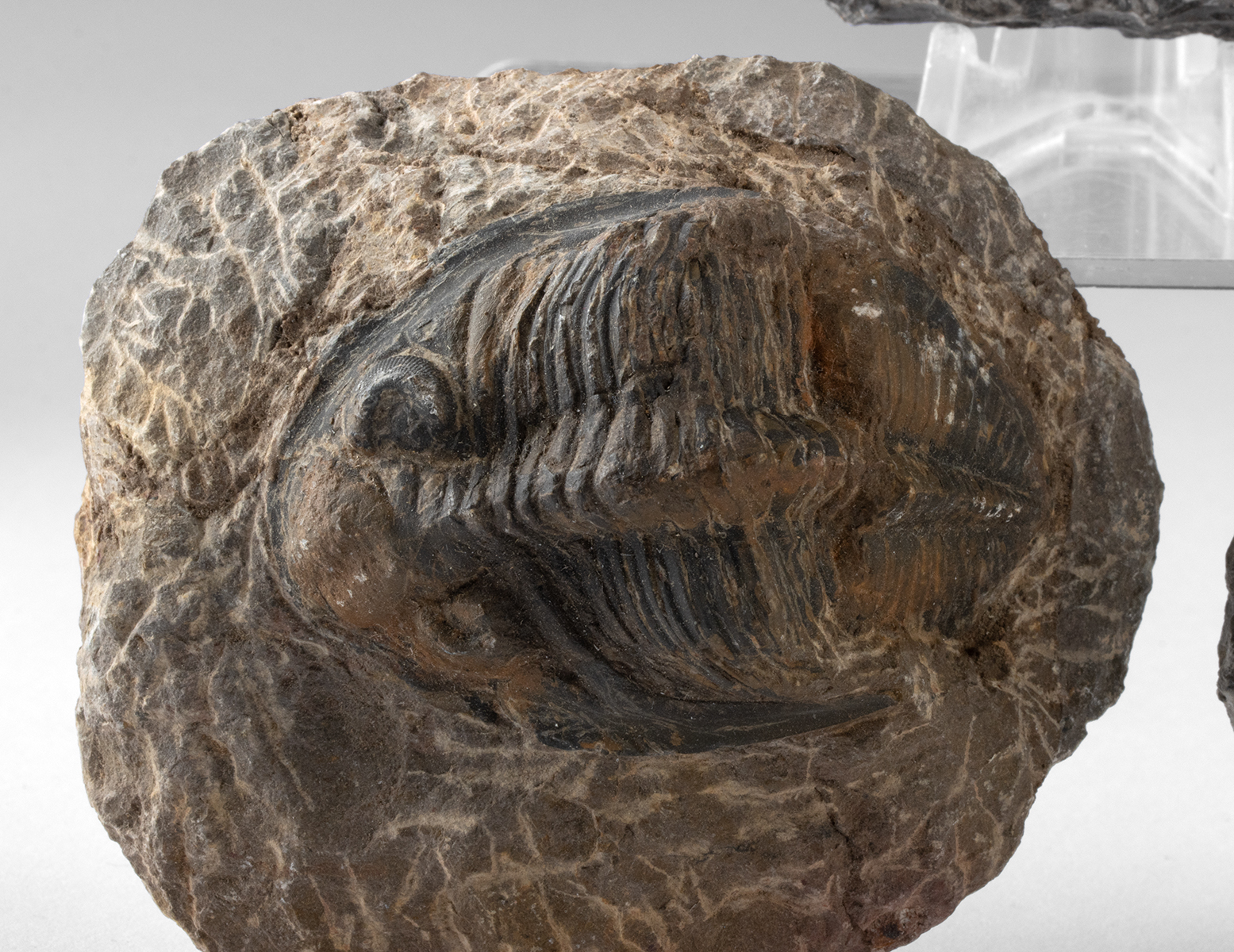
Lot 119, Auction 4/20/2026: Devonian Trilobite Fossils – Six in Matrices
Add to cart -


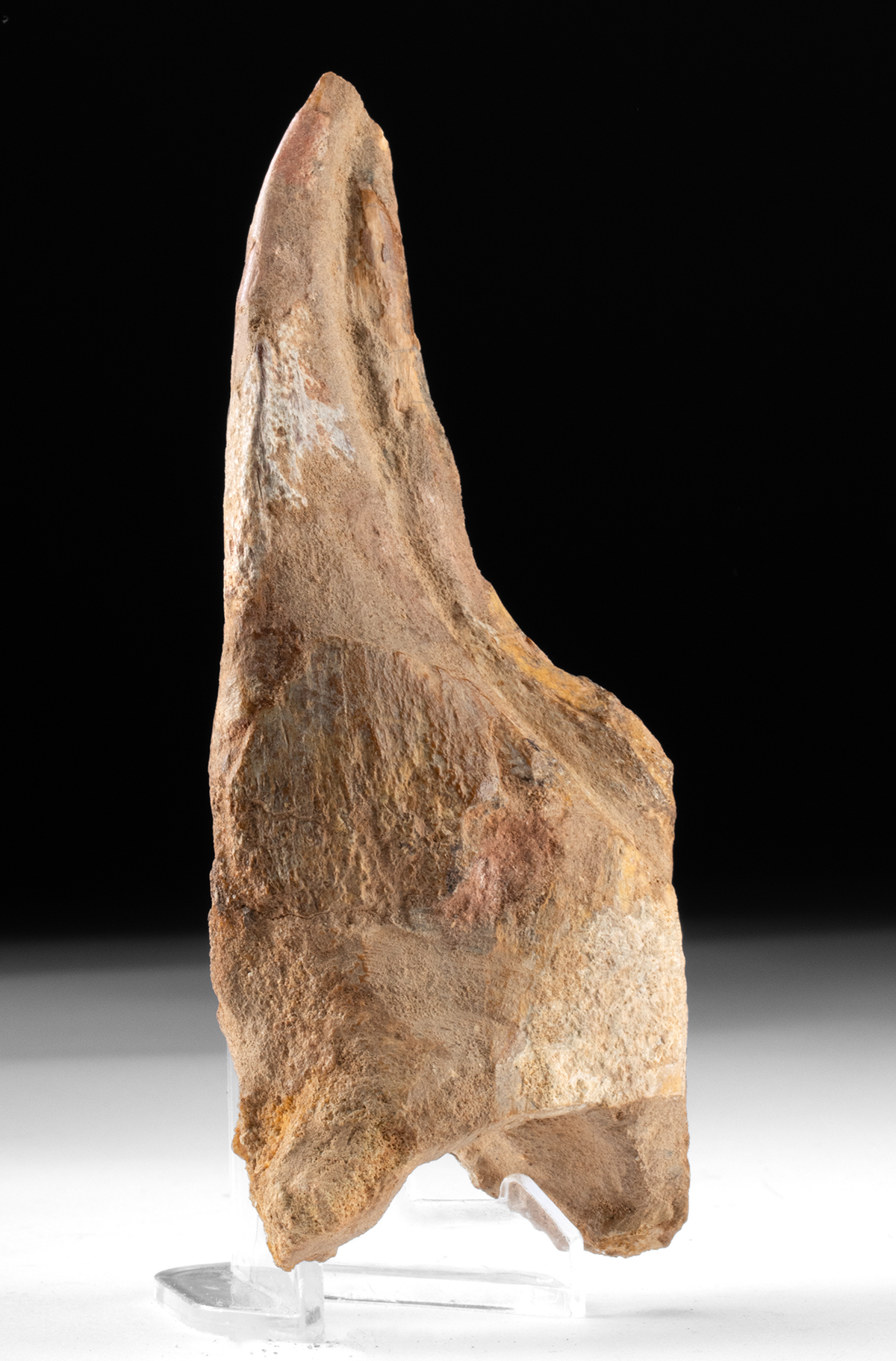
Lot 118, Auction 4/20/2026: Spinosaurus aegyptiacus Claw – Dinosaur Fossil
Add to cart -


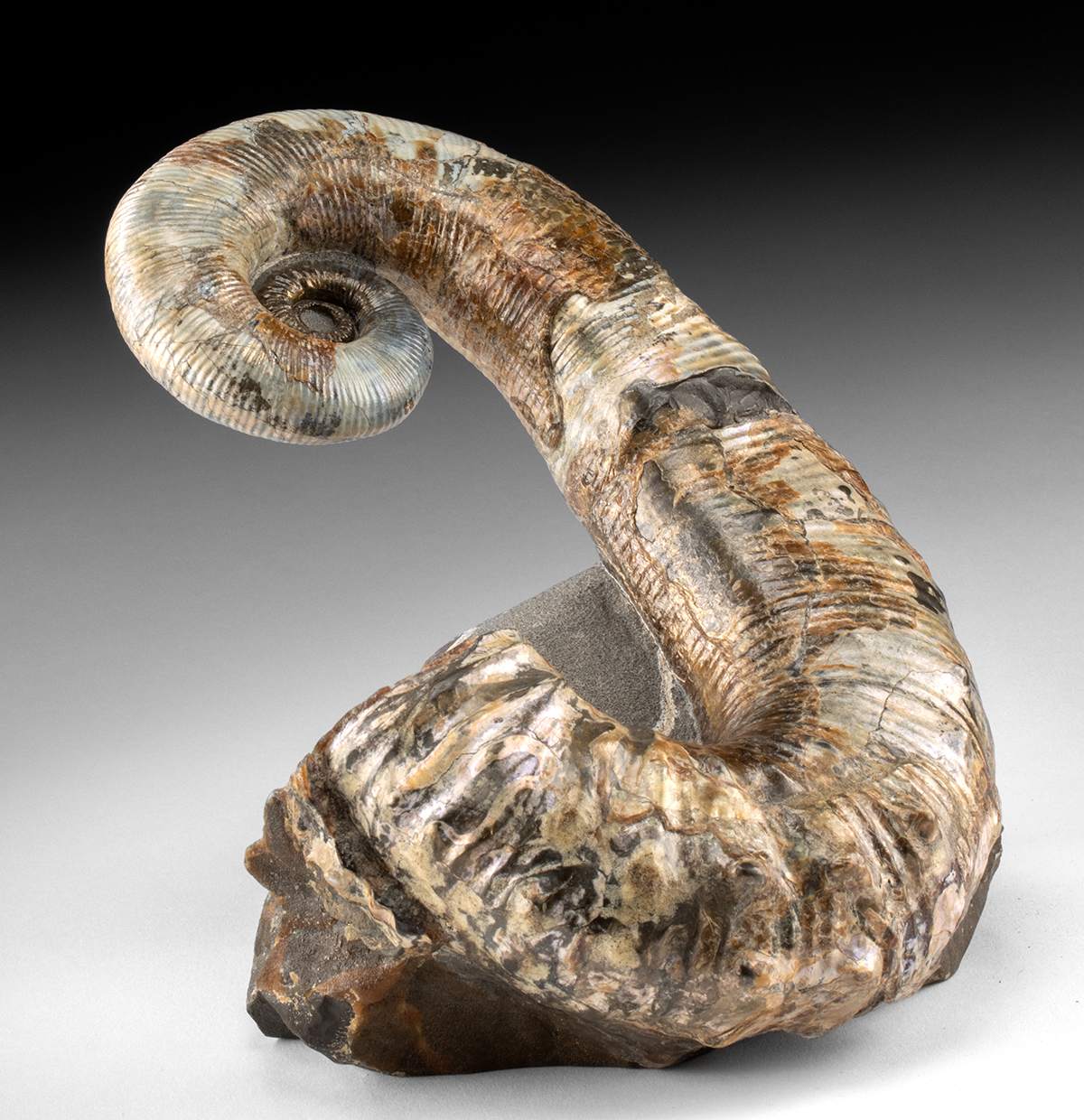
Lot 117, Auction 4/20/2026: Rare Heteromorph Audouliceras Ammonite Fossil
Add to cart -


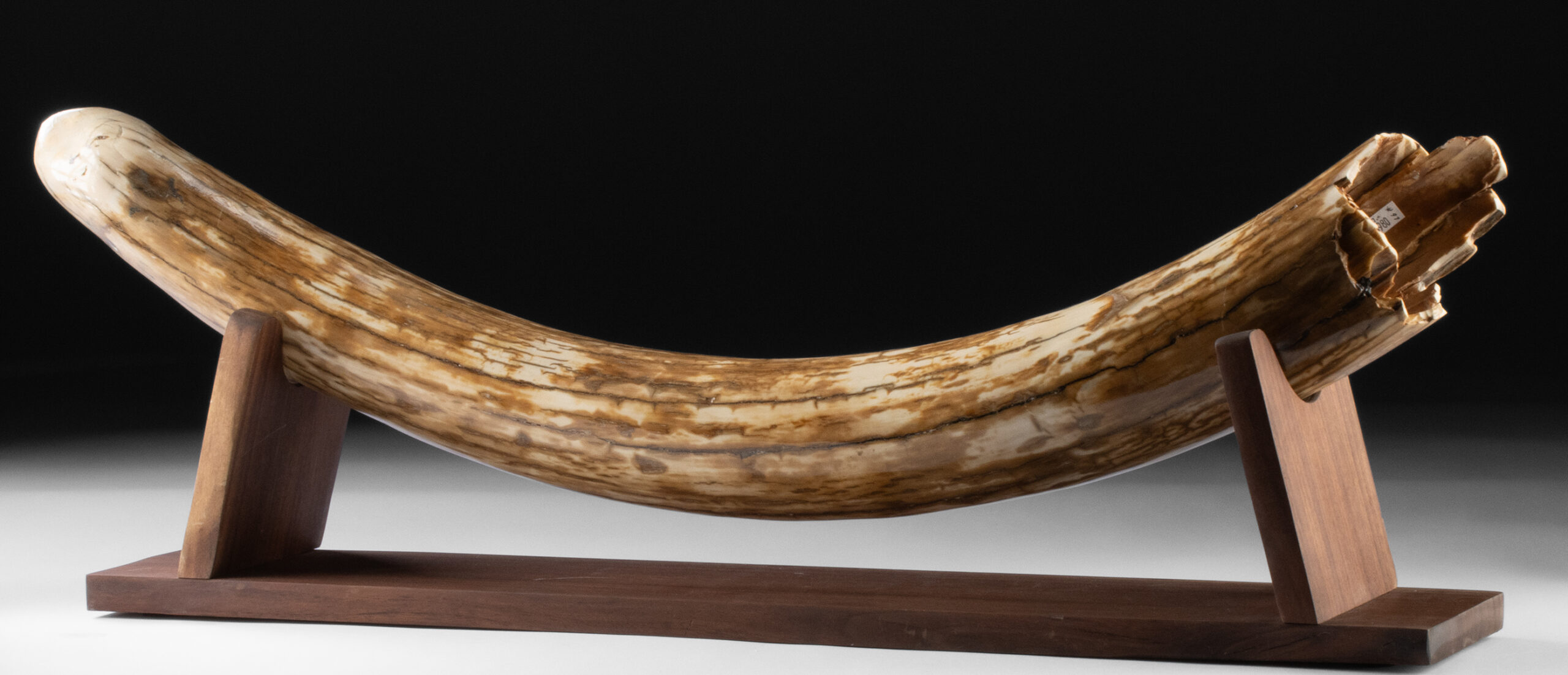
Lot 116a, Auction 4/20/2026: Fossilized Mammoth Tusk on Wood Base
Add to cart -


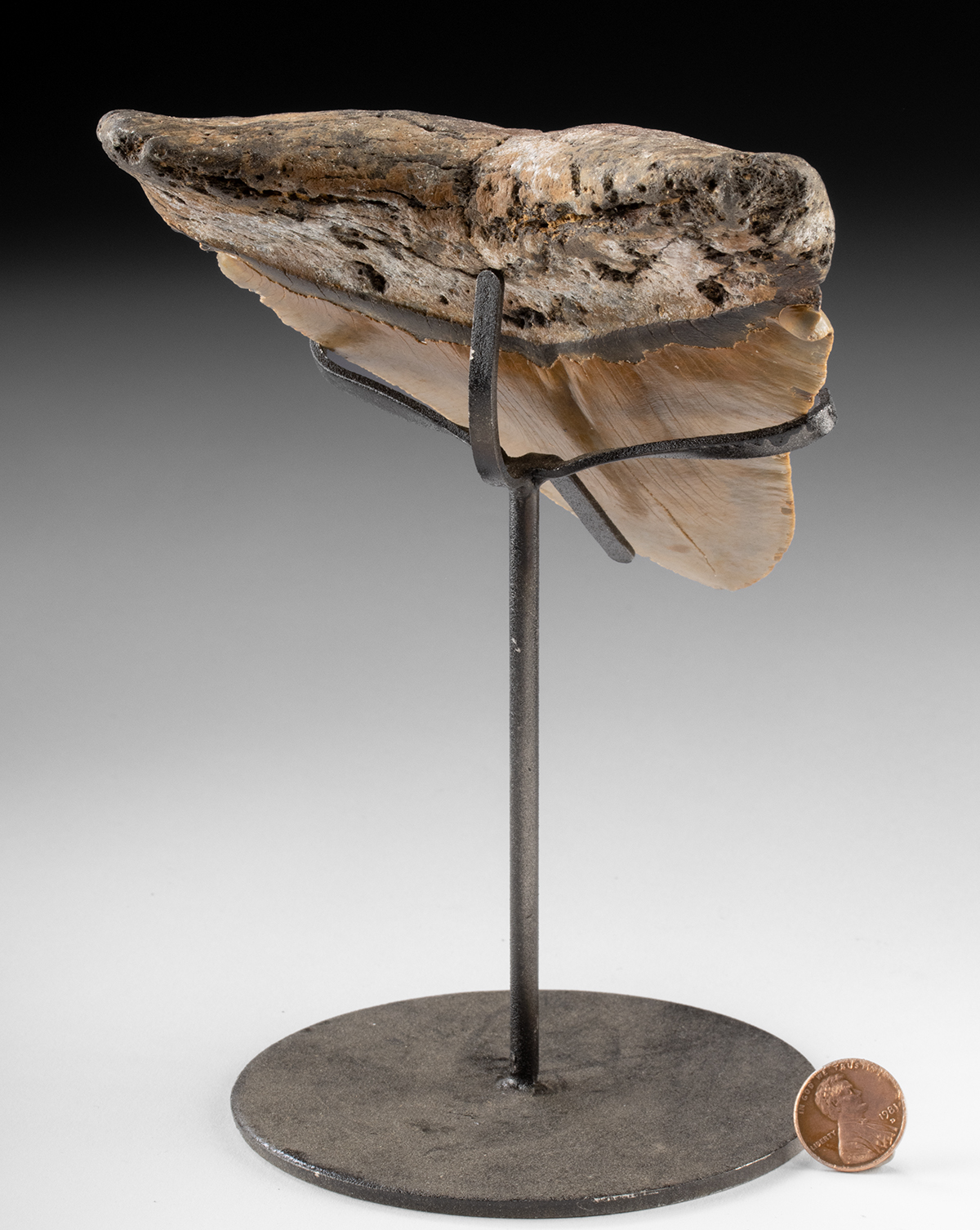
Lot 116, Auction 4/20/2026: Museum Sized Fossilized 6 Inch Megalodon Shark Tooth
Add to cart