Lot 118, Auction 4/20/2026: Spinosaurus aegyptiacus Claw – Dinosaur Fossil
$1,040.00
In stock
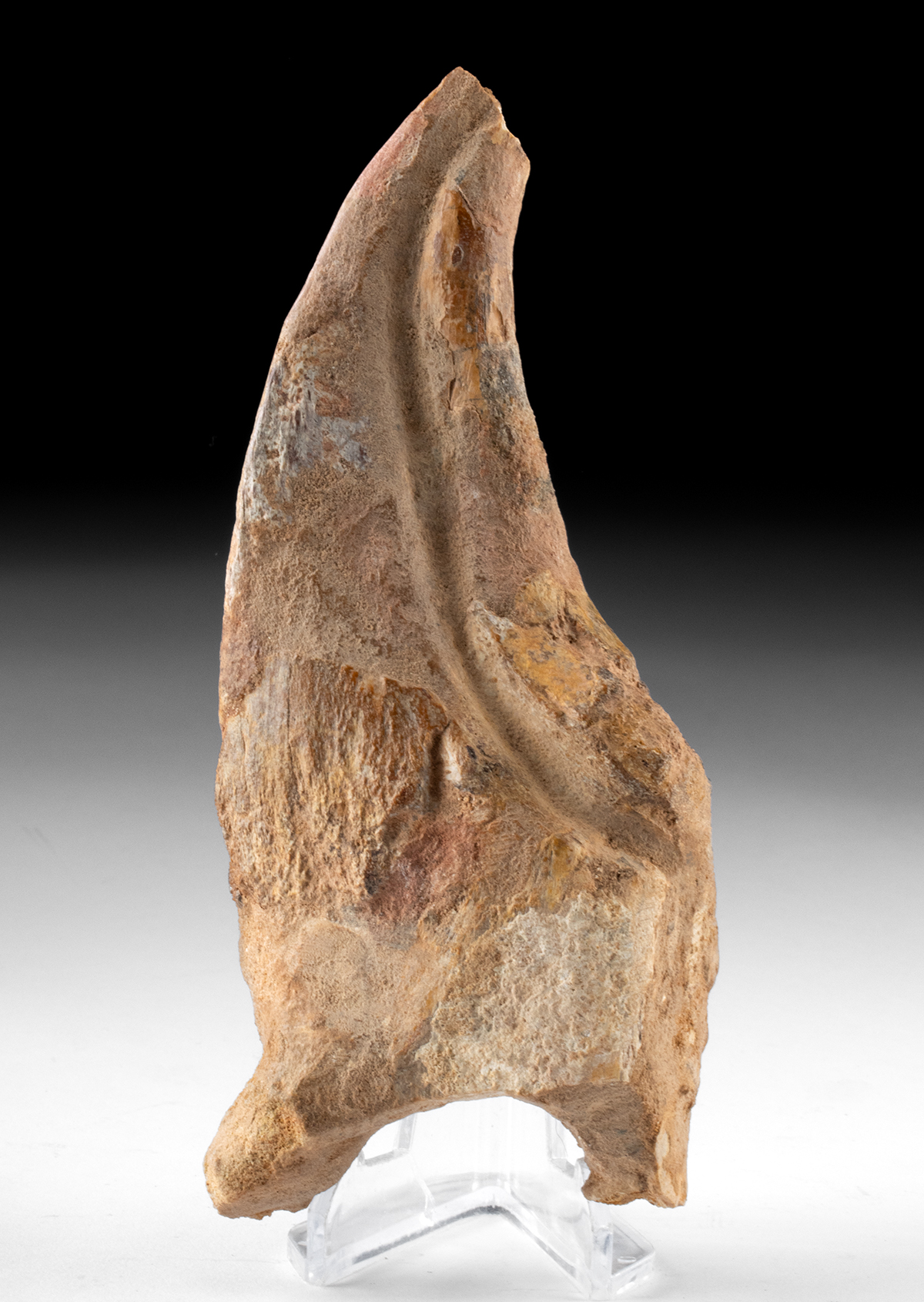
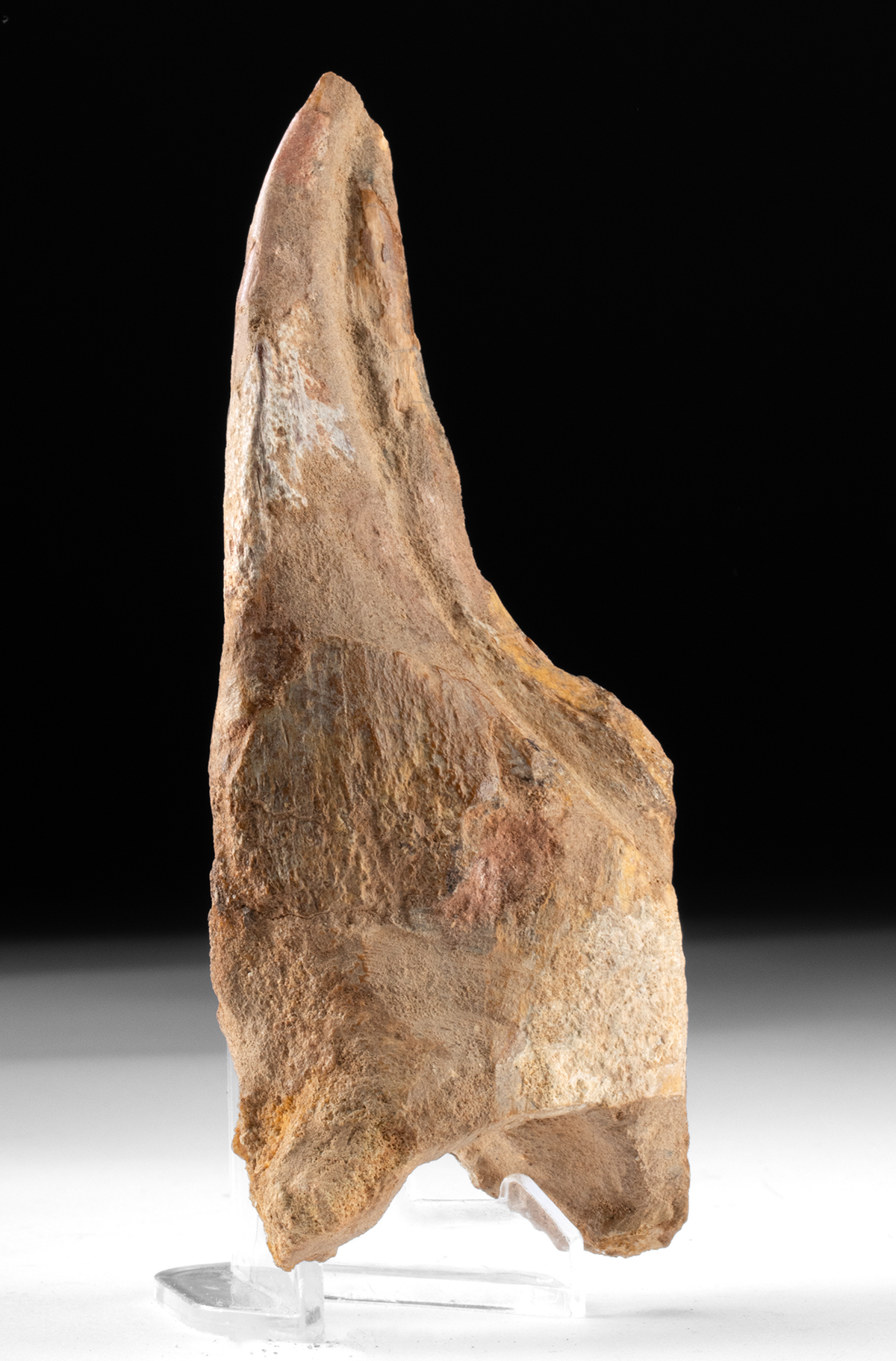
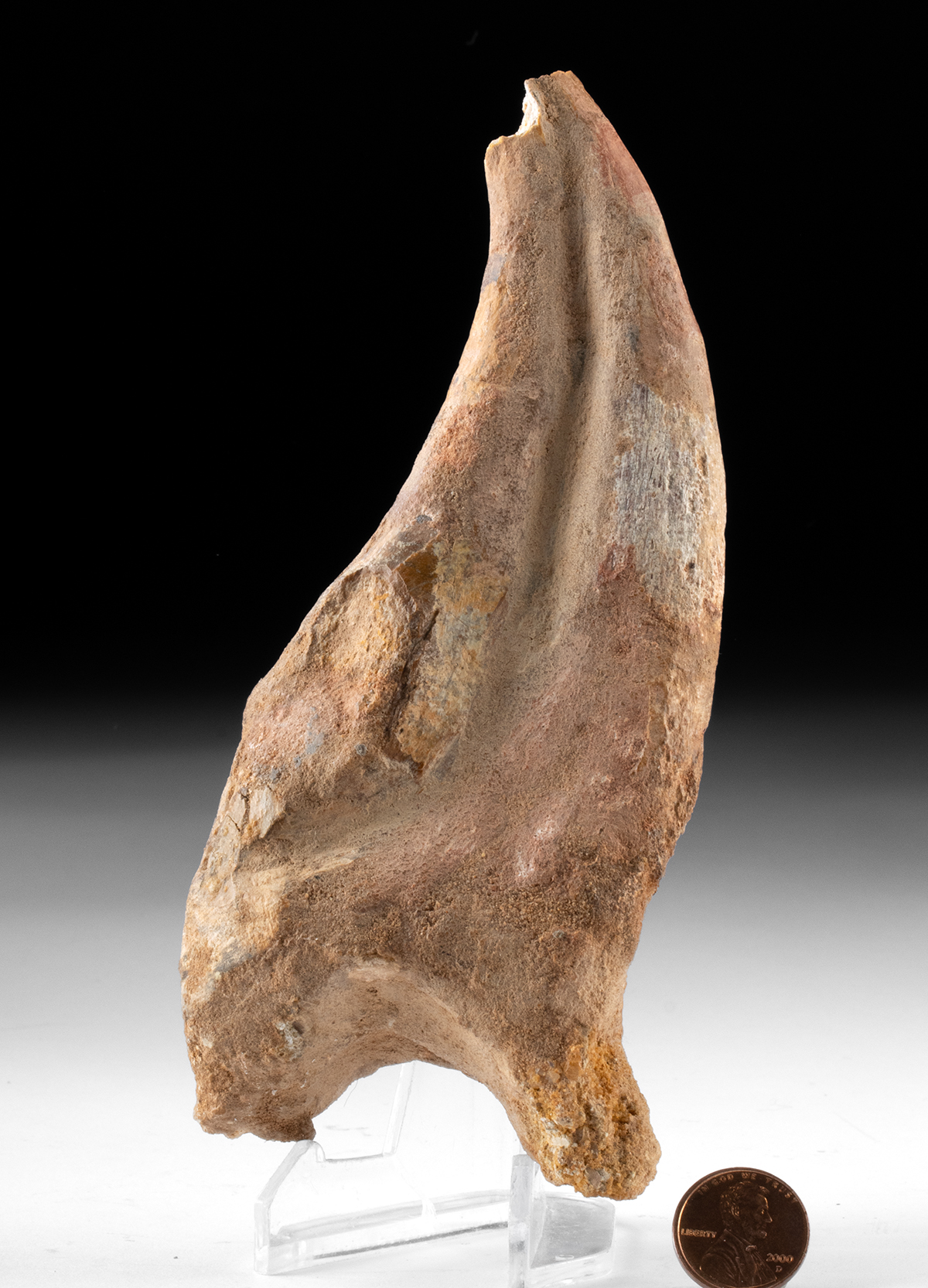
North Africa, Late Cretaceous, ca. 100 to 94 million years ago. A formidable relic of one of the largest predators ever to walk or wade the Earth, this fossilized claw from the forelimb of Spinosaurus aegyptiacus captures the raw mechanics of prehistoric power in a single sweeping curve. The ungual rises in a dramatic arc, its surface worn to a textured patina of warm ochre, sienna, and pale mineral tones, while a deep central groove runs along its length – a vestige of the keratin sheath that once extended the claw into a lethal instrument. Even in fossilized form, it retains an unmistakable sense of purpose, poised as if still ready to grasp, hook, or rend. Spinosaurus, whose name translates to “spine lizard,” was a colossal spinosaurid theropod inhabiting the riverine and coastal ecosystems of Cretaceous North Africa. First described in 1915 by Ernst Stromer from Egyptian material, it is now recognized as one of the largest carnivorous dinosaurs, reaching lengths of up to 14 meters. Size: 3.1″ L x 1.6″ W x 6.3″ H (7.9 cm x 4.1 cm x 16 cm)
Its anatomy diverged strikingly from other theropods: a long, crocodile-like skull lined with conical teeth, shortened hind limbs, and a deep, paddle-like tail adapted for movement through water.
The forelimbs, from which this claw derives, were unusually large and powerfully built, bearing three robust digits. The first digit in particular supported an enlarged claw such as this example, likely used in seizing prey or anchoring slippery fish along riverbanks and shallow waters. Unlike the blade-like claws of later terrestrial predators, these unguals are comparatively thick and only moderately recurved, suggesting strength and grip over slicing precision. This aligns with growing evidence that Spinosaurus occupied a semi-aquatic niche, stalking waterways rich with fish, turtles, and other aquatic life.
The morphology of the claw – broad at the base, tapering to a worn but once sharp tip – reflects both biological design and the passage of deep time. Subtle abrasions and mineral deposits speak to its burial within the sandstone deposits of formations such as the Kem Kem beds of Morocco, where shifting ancient rivers once carried and preserved the remains of this extraordinary animal. The morphology of the claw – broad at the base, tapering to a worn but once sharp tip – reflects both biological design and the passage of deep time. Subtle abrasions and mineral deposits speak to its burial within the sandstone deposits of formations such as the Kem Kem beds of Morocco, where shifting ancient rivers once carried and preserved the remains of this extraordinary animal.
Condition: Missing tip and part of root. Some flaking and weathering in areas. Otherwise, very nice with rich encrustations.
Provenance: private Texas, USA Collection, acquired December 2023; ex-LEAP Auctions, Franklin, Texas, USA
All items legal to buy/sell under U.S. Statute covering cultural patrimony Code 2600, CHAPTER 14, and are guaranteed to be as described or your money back.
A Certificate of Authenticity will accompany all purchases.
We ship worldwide and handle all shipping in-house for your convenience.
Related Products
-


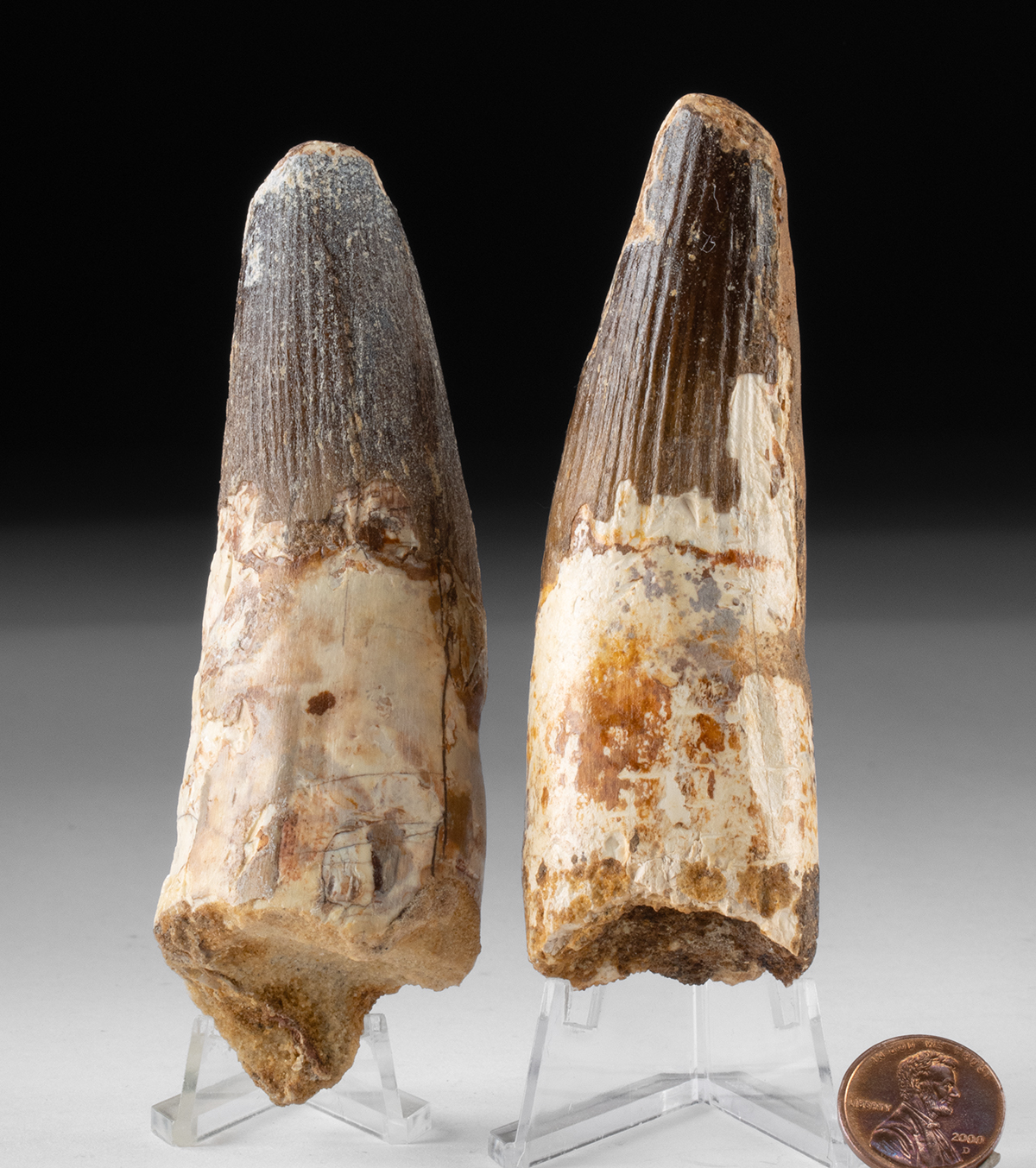
Lot 127, Auction 4/20/2026: Two Large Spinosaurus Aegyptiacus Teeth Fossils
Add to cart -


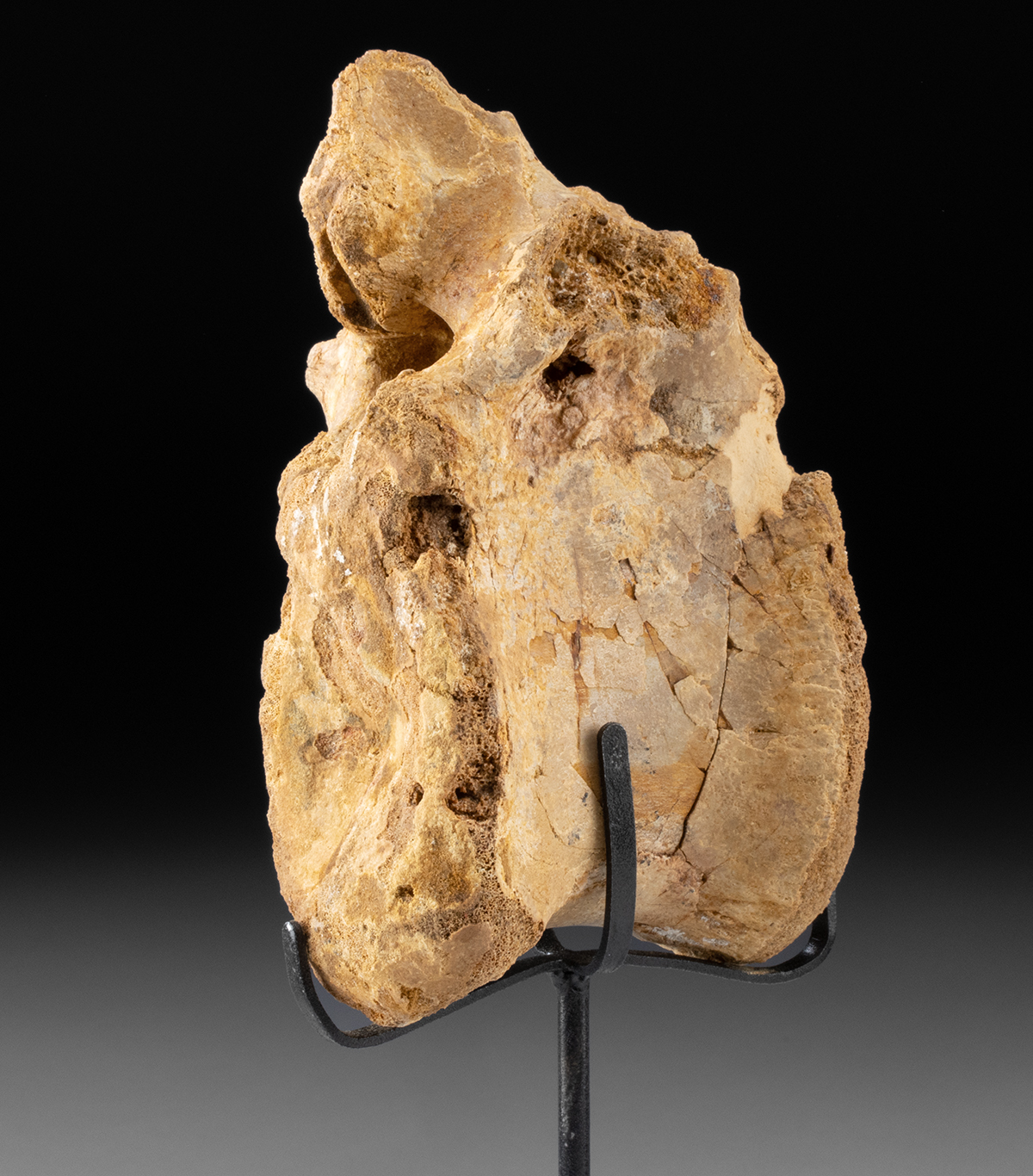
Lot 126, Auction 4/20/2026: Fossilized Spinosaurus Dinosaur Backbone Vertebra Bone
Add to cart -


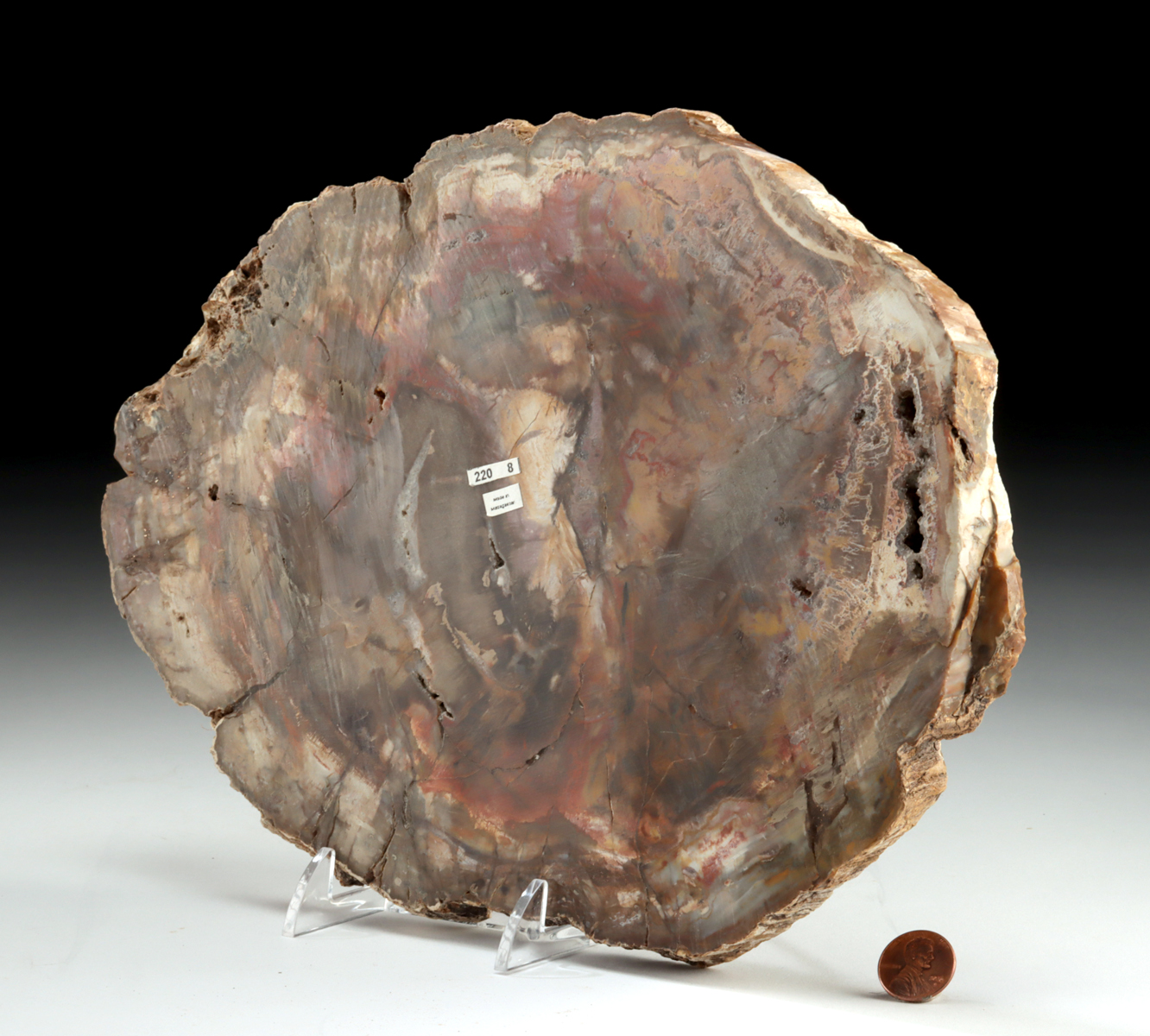
Lot 125, Auction 4/20/2026: Madagascar Petrified Wood Fossil Slab, Crystal Vugs
Add to cart -


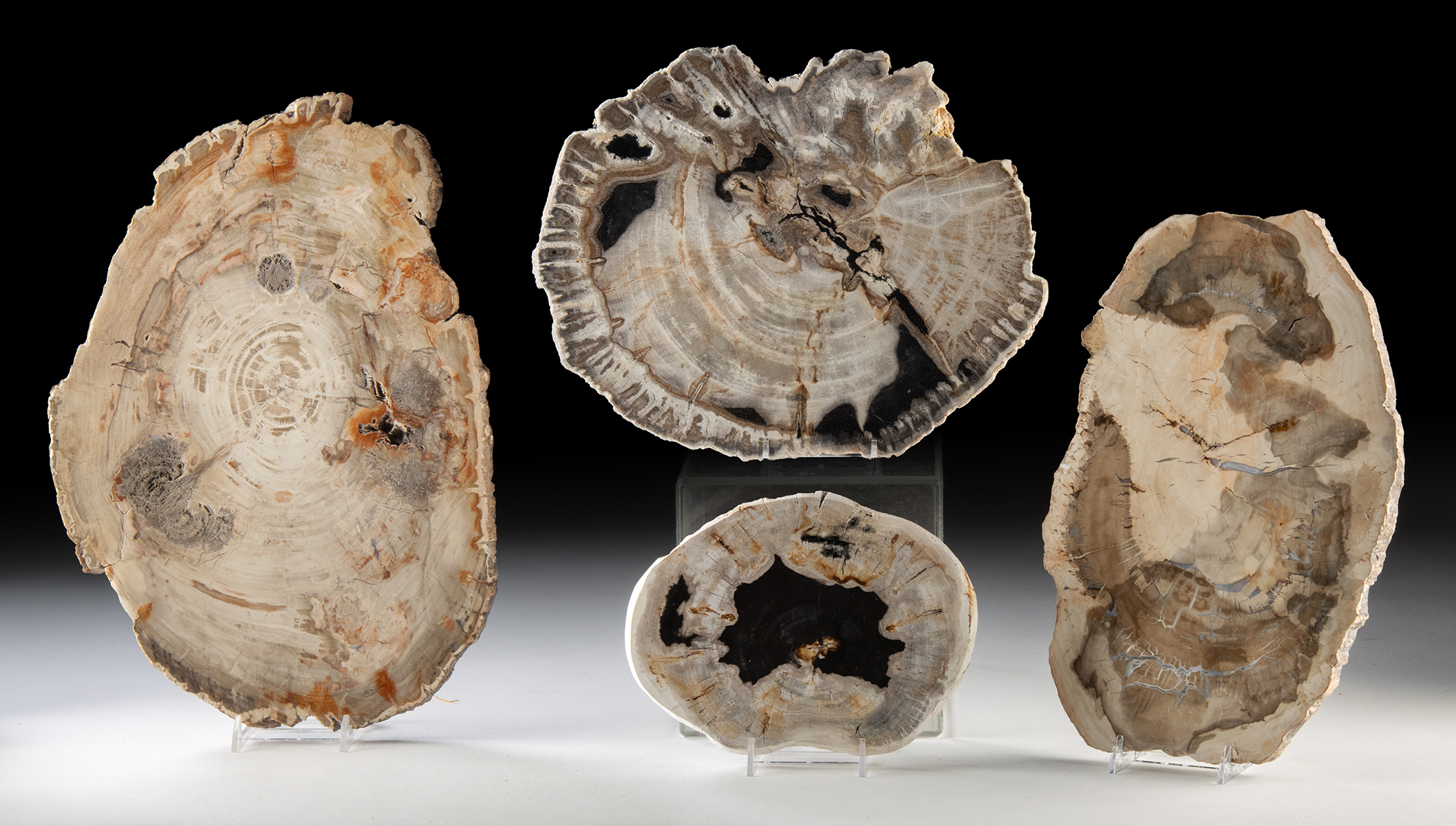
Lot 124, Auction 4/20/2026: Four Polished Petrified Wood Slabs in Various Sizes
Add to cart -


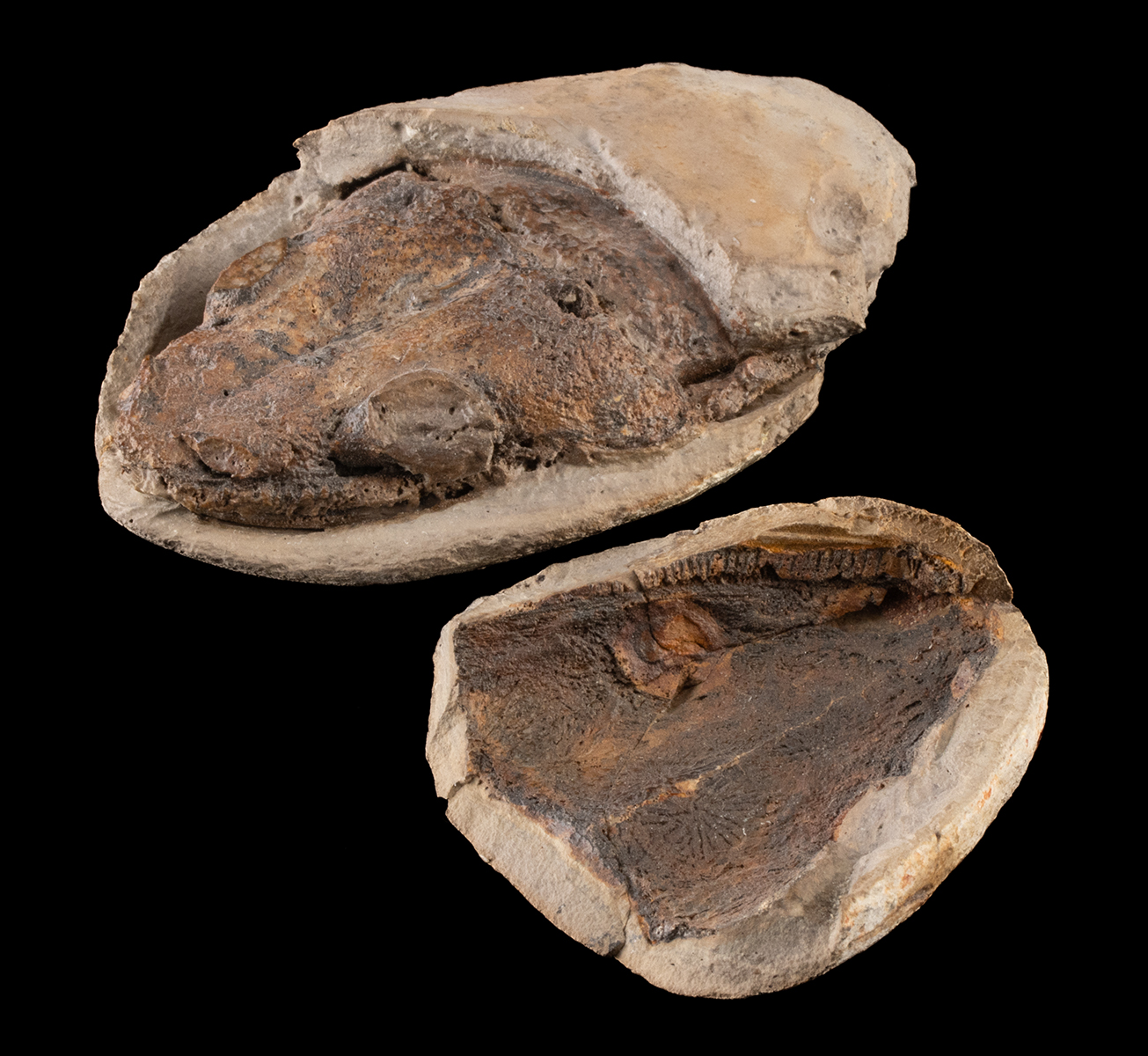
Lot 121, Auction 4/20/2026: Permian Amphibian Skull Fossil – Edingerella
Add to cart -


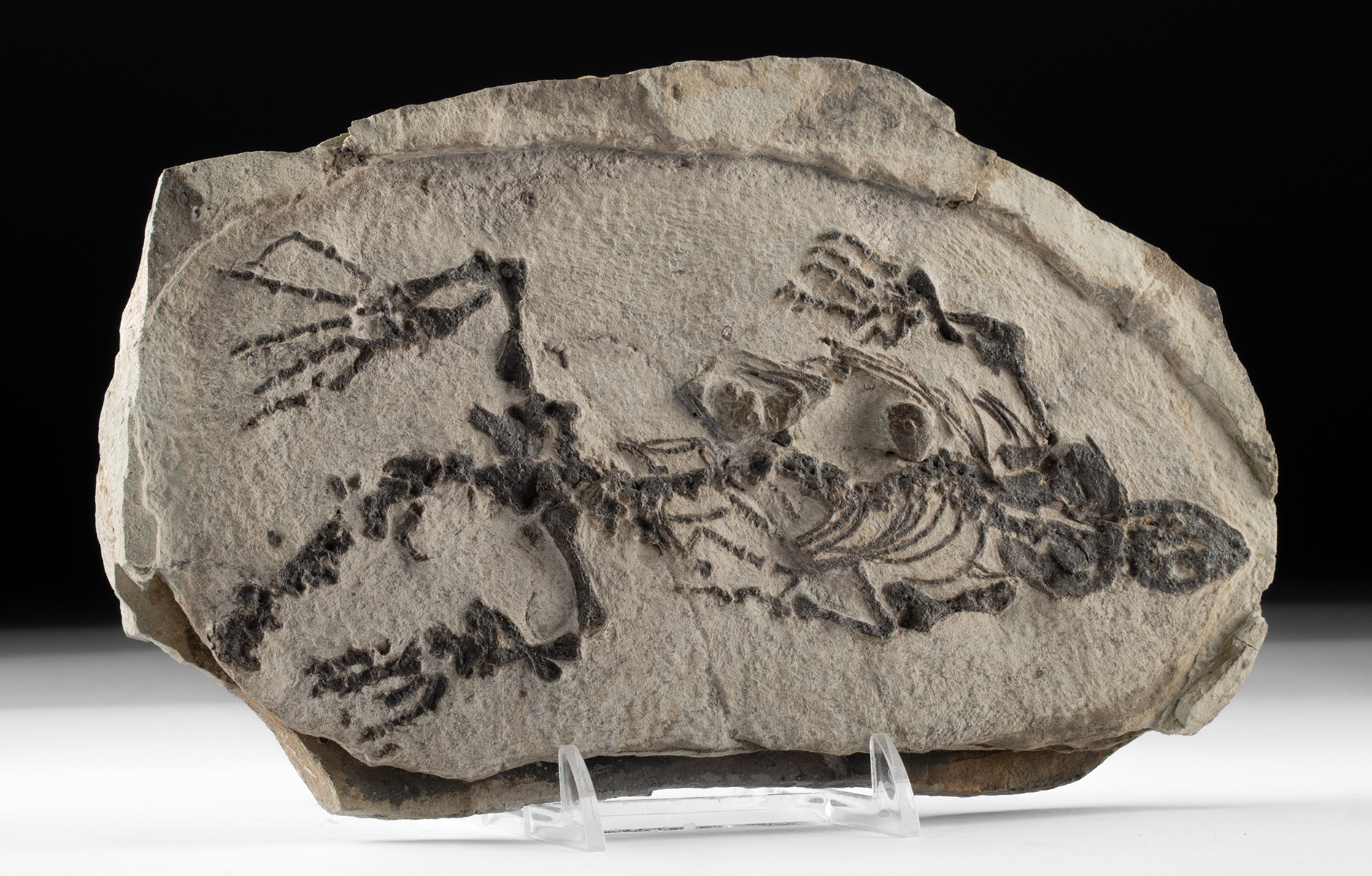
Lot 120, Auction 4/20/2026: Late Permian Barasaurus Besairiei Fossil Slab
Add to cart -


Lot 119, Auction 4/20/2026: Devonian Trilobite Fossils – Six in Matrices
Add to cart -


Lot 117, Auction 4/20/2026: Rare Heteromorph Audouliceras Ammonite Fossil
Add to cart -


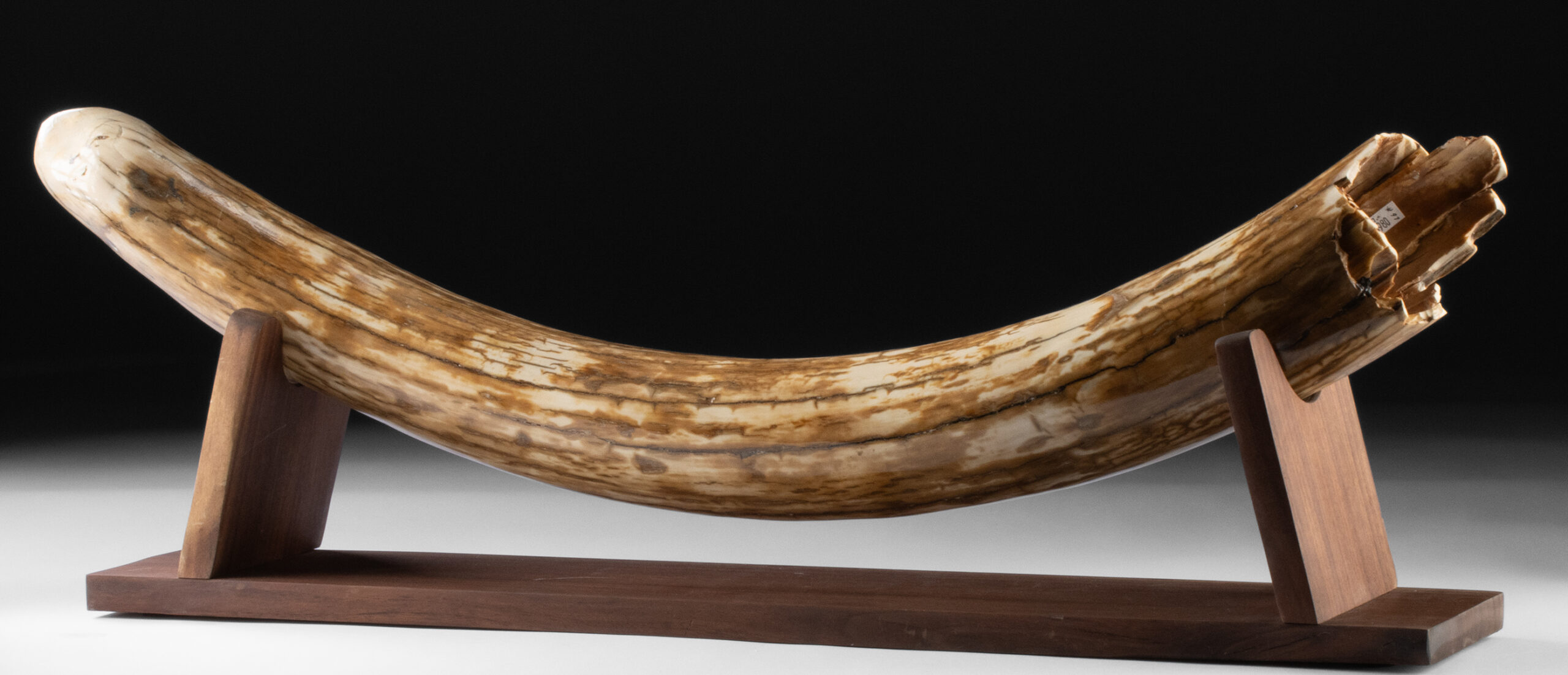
Lot 116a, Auction 4/20/2026: Fossilized Mammoth Tusk on Wood Base
Add to cart -


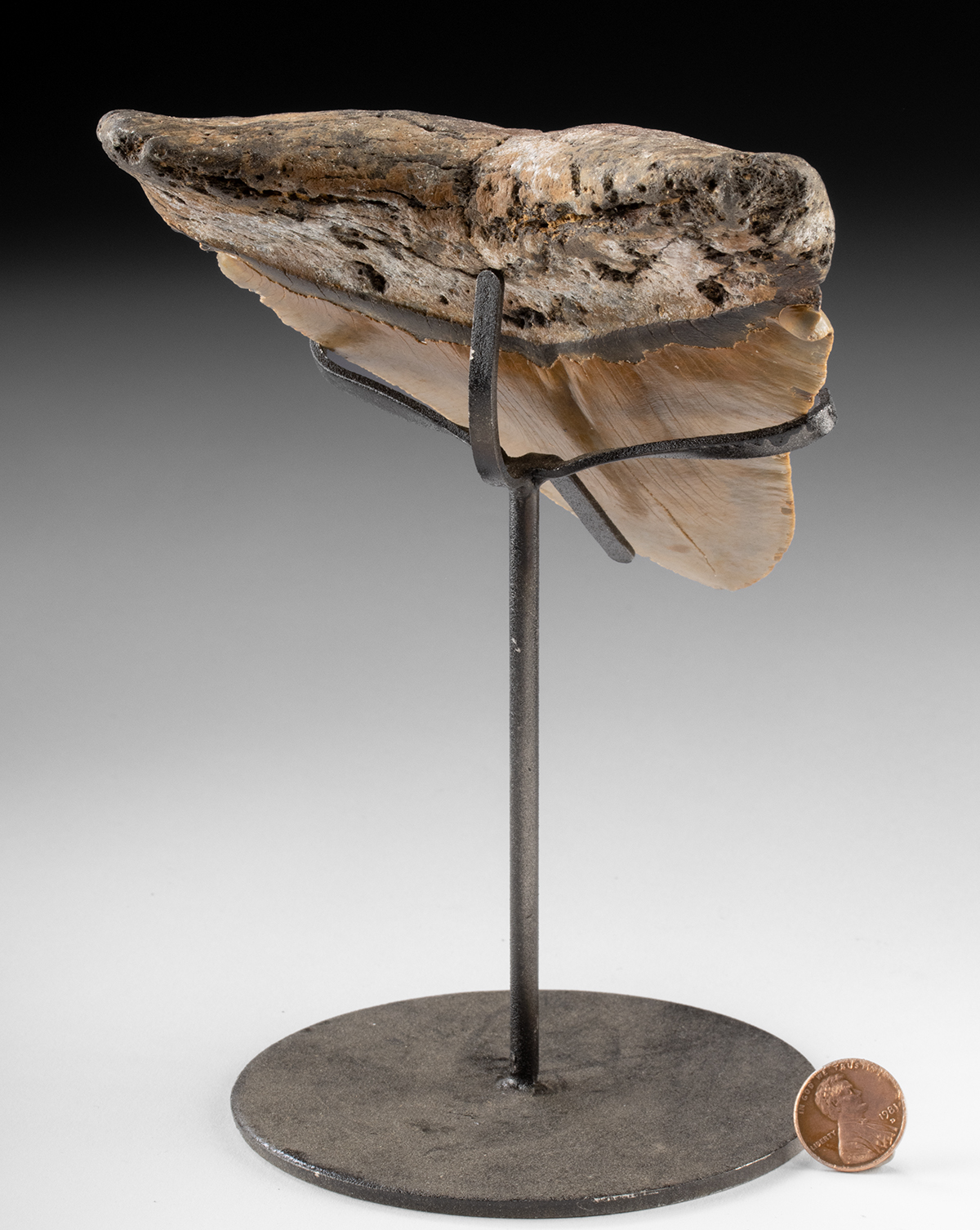
Lot 116, Auction 4/20/2026: Museum Sized Fossilized 6 Inch Megalodon Shark Tooth
Add to cart