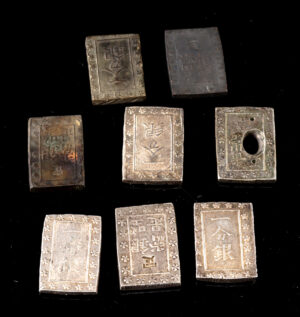
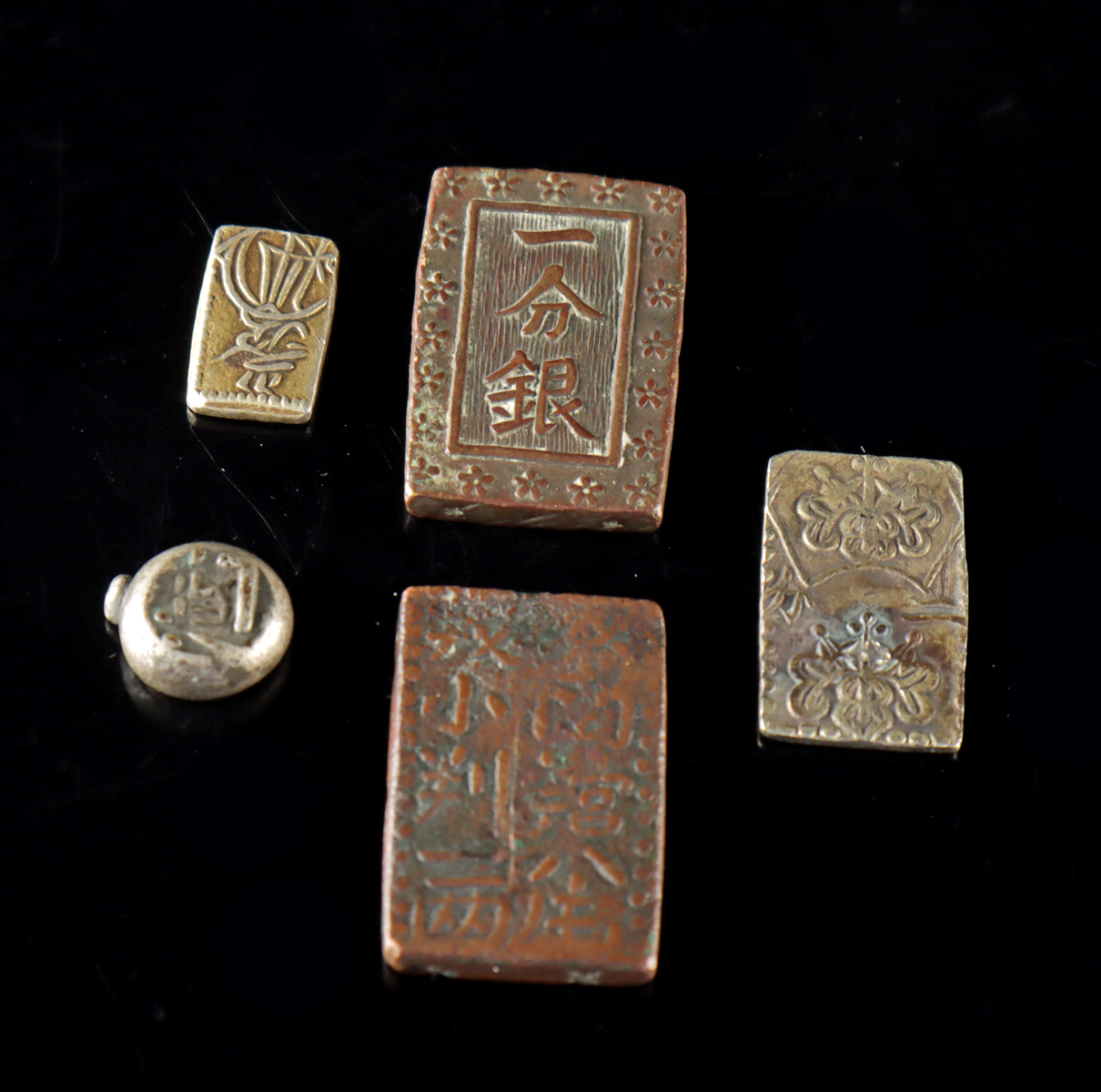
Lot 106, Auction 4/12/2026: Five Japanese Edo to Meiji Coins & Forgeries
$520.00
In stock
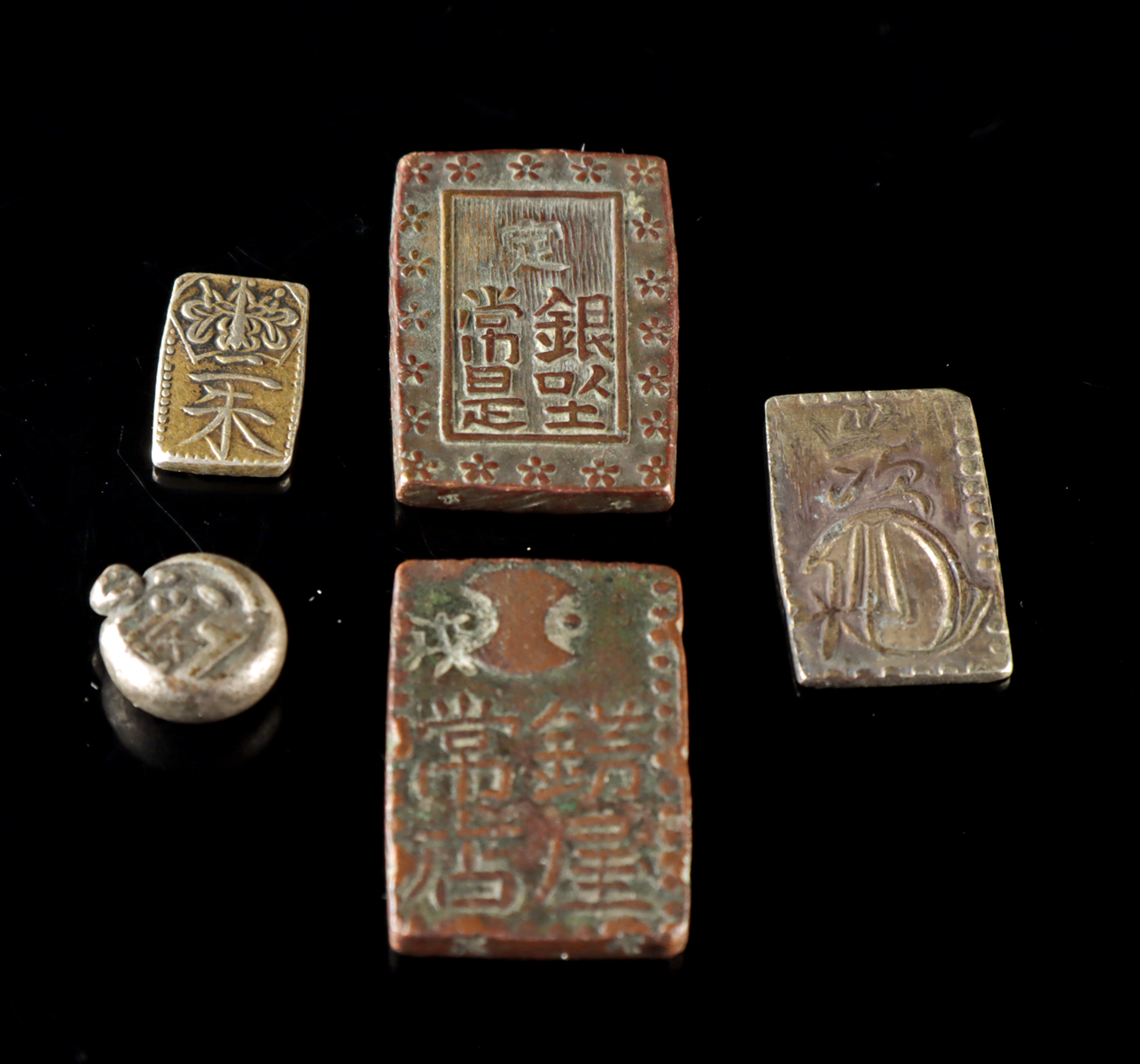
East Asia, Japan, Late Edo to Meiji period, ca. 1830 to 1912 CE. A compact and instructive study group of Japanese ingot coins and forgeries captures a monetary system in transition, where stamped bullion and shifting metal values tell a story of reform, scarcity, and adaptation. The assemblage includes rectangular and oval forms, their crisp calligraphic punches standing in quiet contrast to the irregularities that reveal imitation. At the core is a brass forgery of an Ichibugin, composed of 72.8% copper, 25.1% zinc, and a trace 1.5% silver, weighing 7.5 grams, its fabric subtly betraying its unofficial origin. A 2 Bu Meiji Nibukin follows, struck in a debased yet still precious alloy of 60.4% silver and 38.7% gold, weighing 2.9 grams, reflecting the evolving standards of early modern Japan. A small mameitagin, or “bean” ingot, composed of 56.1% silver and 41.5% copper at 2.4 grams, preserves an older tradition of irregular bullion currency. Size of largest (Ichibugin): 1″ L x 0.6″ W (2.5 cm x 1.5 cm)
Also included is a 2 Shu Tenpo nishukin, dating to ca. 1832 to 1858, struck in an alloy of 53.8% silver and 45% gold and weighing 1.5 grams, alongside a copper forgery of a 2 Shu coin composed almost entirely of copper (99.7%) and weighing 8.1 grams. Together, these pieces illustrate both official minting practices and the parallel world of contemporary imitation.
Rectangular bu and shu coins were produced by striking flat planchets with official dies, their value communicated through inscription and weight rather than milled edges. In periods of metal shortage and fluctuating bullion prices, such systems proved vulnerable, giving rise to widespread forgeries that circulated alongside legitimate issues. Now removed from circulation, these coins offer more than monetary value – they provide a tactile record of Japan’s passage from Tokugawa-era bullion exchange to the standardized currency reforms of the Meiji state, where trust, metal, and inscription were constantly negotiated.
Condition: Fair to fine condition. Some rubbing and patina throughout. Good remaining details.
Provenance: private Sheffield, Massachusetts, USA collection, by inheritance, collected 1970’s
All items legal to buy/sell under U.S. Statute covering cultural patrimony Code 2600, CHAPTER 14, and are guaranteed to be as described or your money back.
A Certificate of Authenticity will accompany all purchases.
We ship worldwide and handle all shipping in-house for your convenience.
Related Products
-


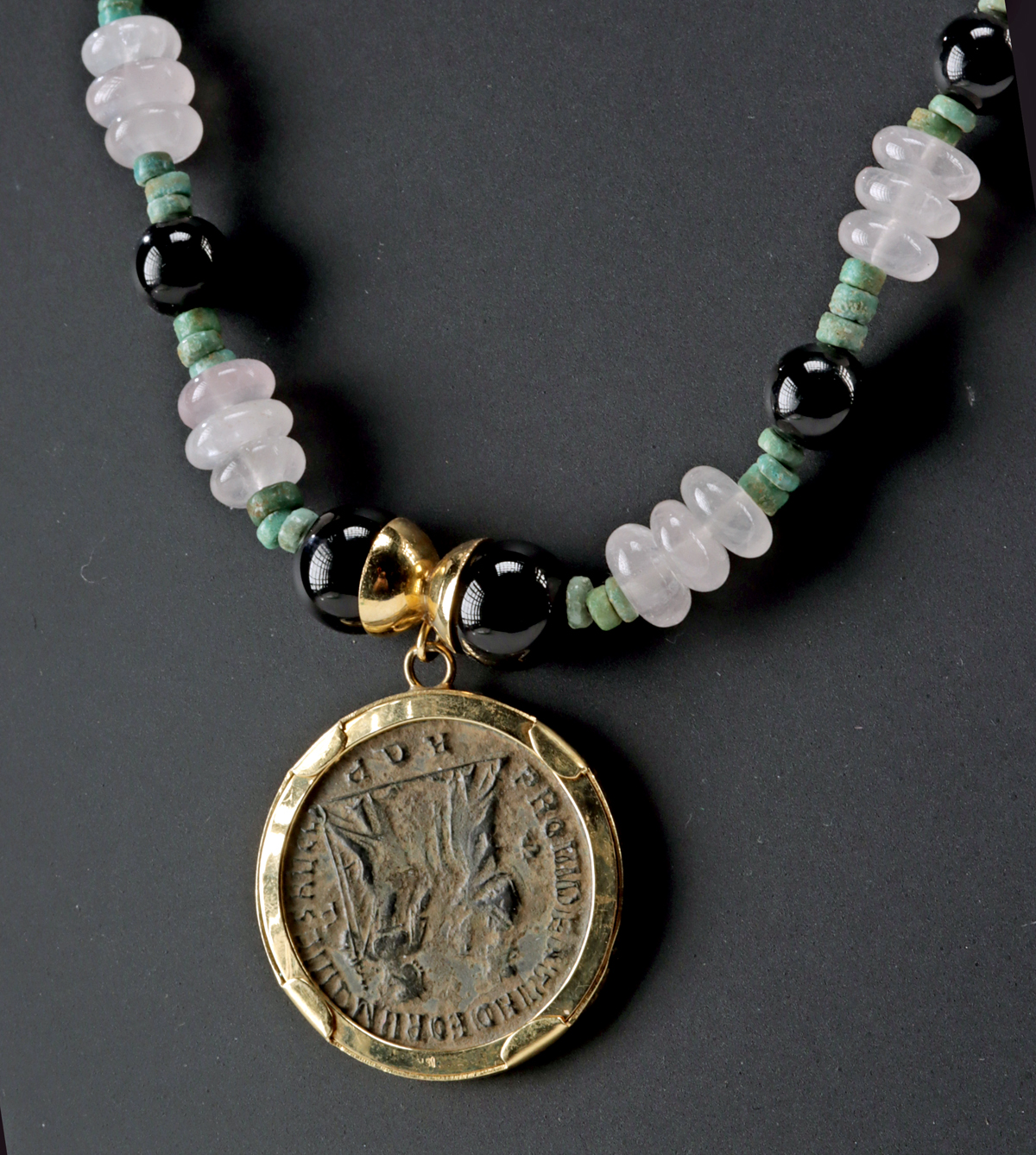
Lot 84, Auction 4/12/2026: Roman Diocletian Coin, Faience & Quartz Bead Necklace
Add to cart -


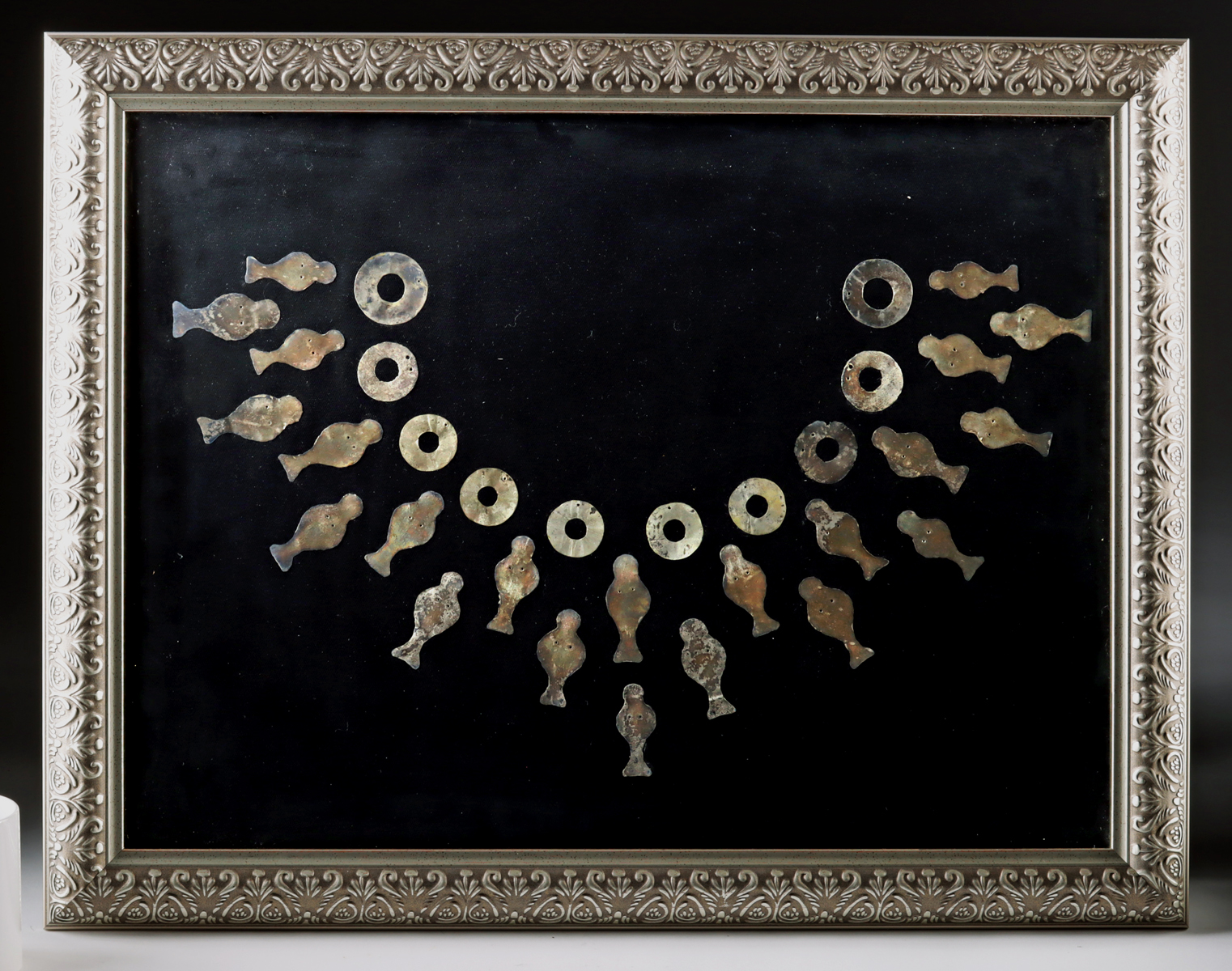
Lot 69a, Auction 4/12/2026: Rare Chimu Silver Necklace Ornaments, Framed Display
Add to cart -


Lot 68b, Auction 4/12/2026: Two Moche High Quality Gold & Silver Tweezers
Add to cart -


Lot 65f, Auction 4/12/2026: Ecuador Coral Bead Necklace & Silver Religious Pendants
Add to cart -


Lot 42, Auction 4/12/2026: Published 19th C. Navajo Silver Spoon & Reference Book
Add to cart -


Lot 322, Auction 3/19/2026: Four Lincoln Head Cent Pennies 1909-1961 Coin Albums
Add to cart -

Lot 318a, Auction 3/19/2026: 1830s American Copper Hard Times Tokens & Half Penny
Add to cart -


Lot 28, Auction 4/12/2026: Large Chimu Silver Headdress w/ Repousse Deity Head
Add to cart -


Lot 14d, Auction 3/19/2026: Four Japanese Edo Era Ichibugin Silver Coins
Add to cart -


Lot 136, Auction 4/3/2026: Greek Alexander the Great Silver Drachm in Gilt Pendant
Add to cart