New World/Pre-Columbian
First used in the 16th century, the term New World describes a vast cultural territory and encompasses people as diverse as their native geographical landscapes.
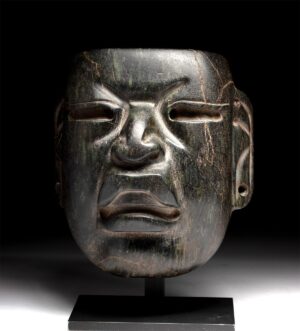
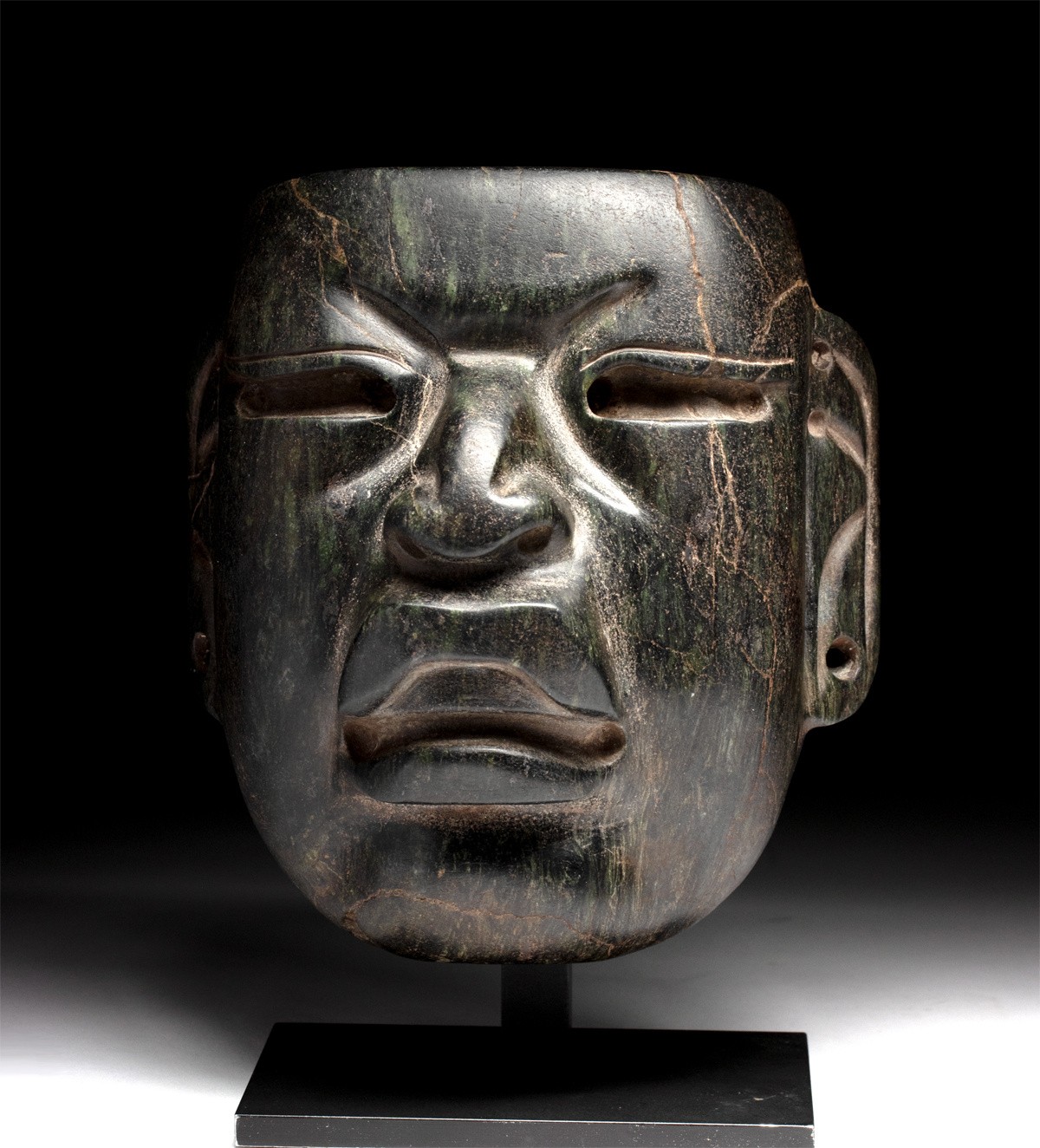
Indigenous peoples of the Americas, inhabiting a vast geographic realm, have created some of the most iconographically rich and aesthetically intriguing visual and material culture. Many of these works were inspired by sophisticated explorations of unique spiritual and cultural contributions such as the ritual ballgame, human sacrifice rituals, deities inspired by natural forces, as well as advancements in writing systems and astronomy. This includes Pre-Columbian examples created by the Olmec, Aztec, Inca, and Maya as well as lesser known cultures of Mesoamerica, Central America, South America, and the Caribbean; Native American works from the North American continent: the Eastern Woodlands, the Plains, the Southwest, the Northwest coast, and the Arctic; as well as post-conquest Spanish Colonial and Latin American works. Adding to this diversity is a remarkable range of materials and forms including precious jade carvings, lustrous gold jewelry and ornaments, dramatic masks made from wood, stone, and/or metals, finely woven textiles, paintings, retablos, silver and decorative arts, stone works, and fine pottery.