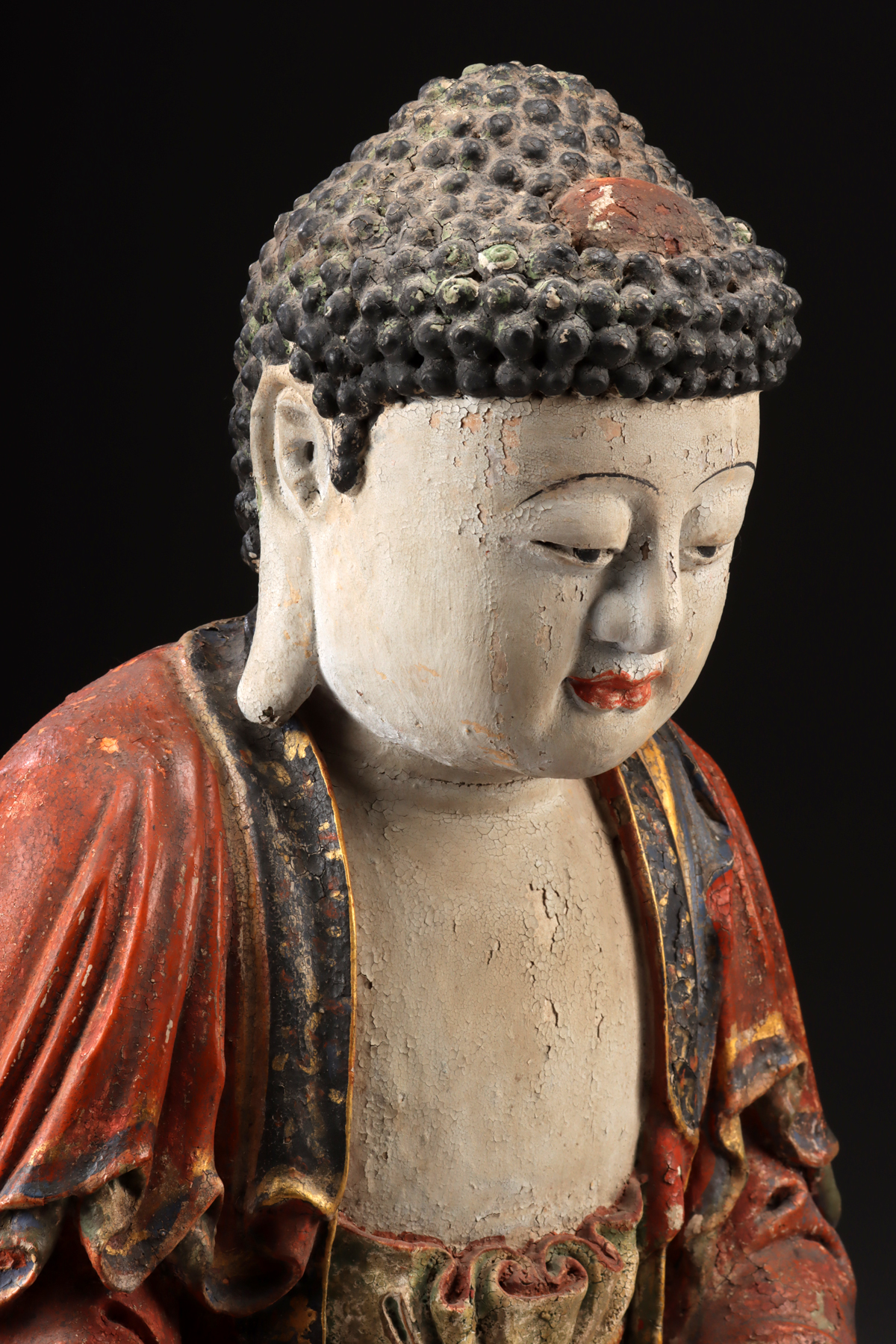
Monumental 16th C. Ming Dynasty Wood Shakyamuni Buddha
$5,495.00
In stock
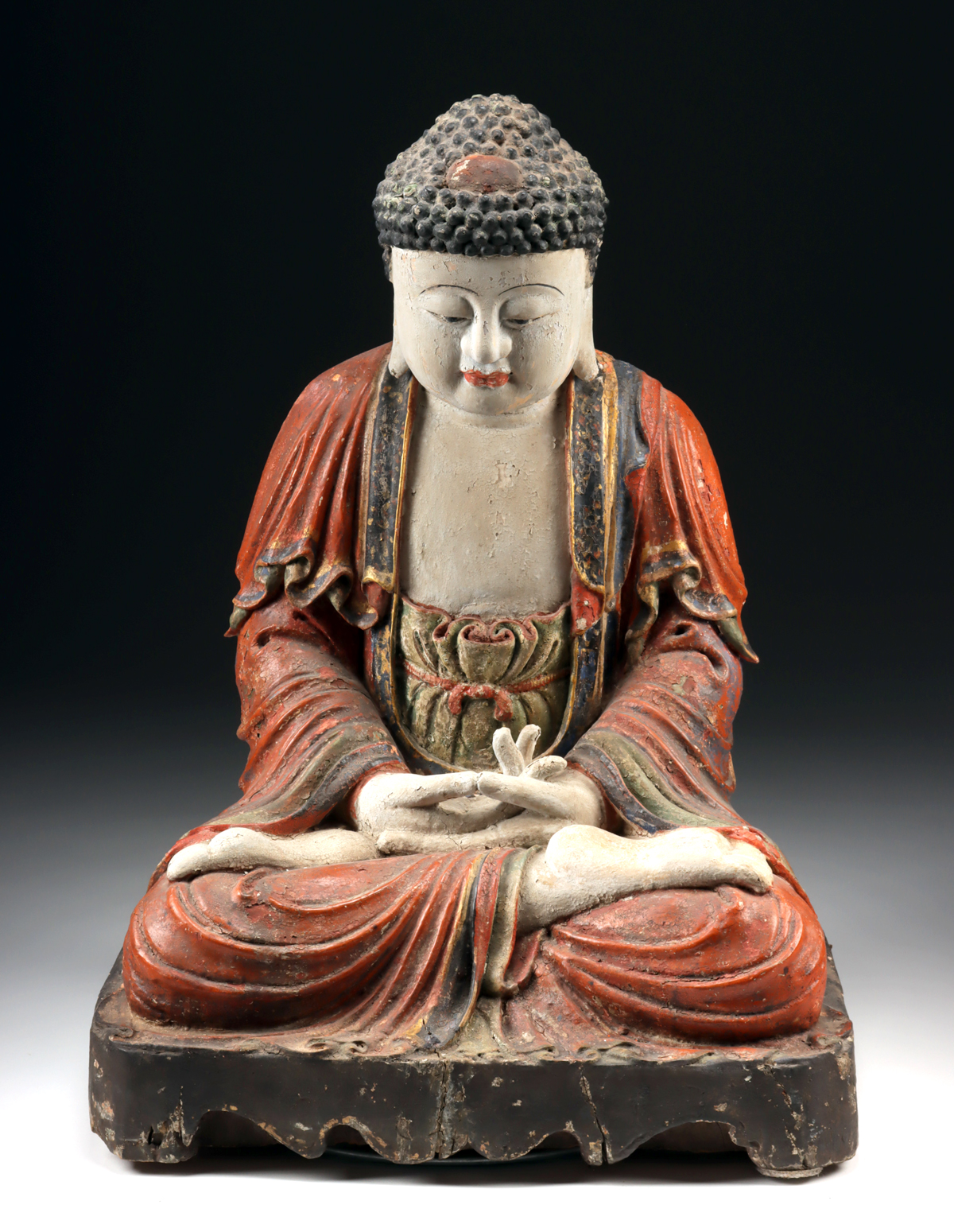
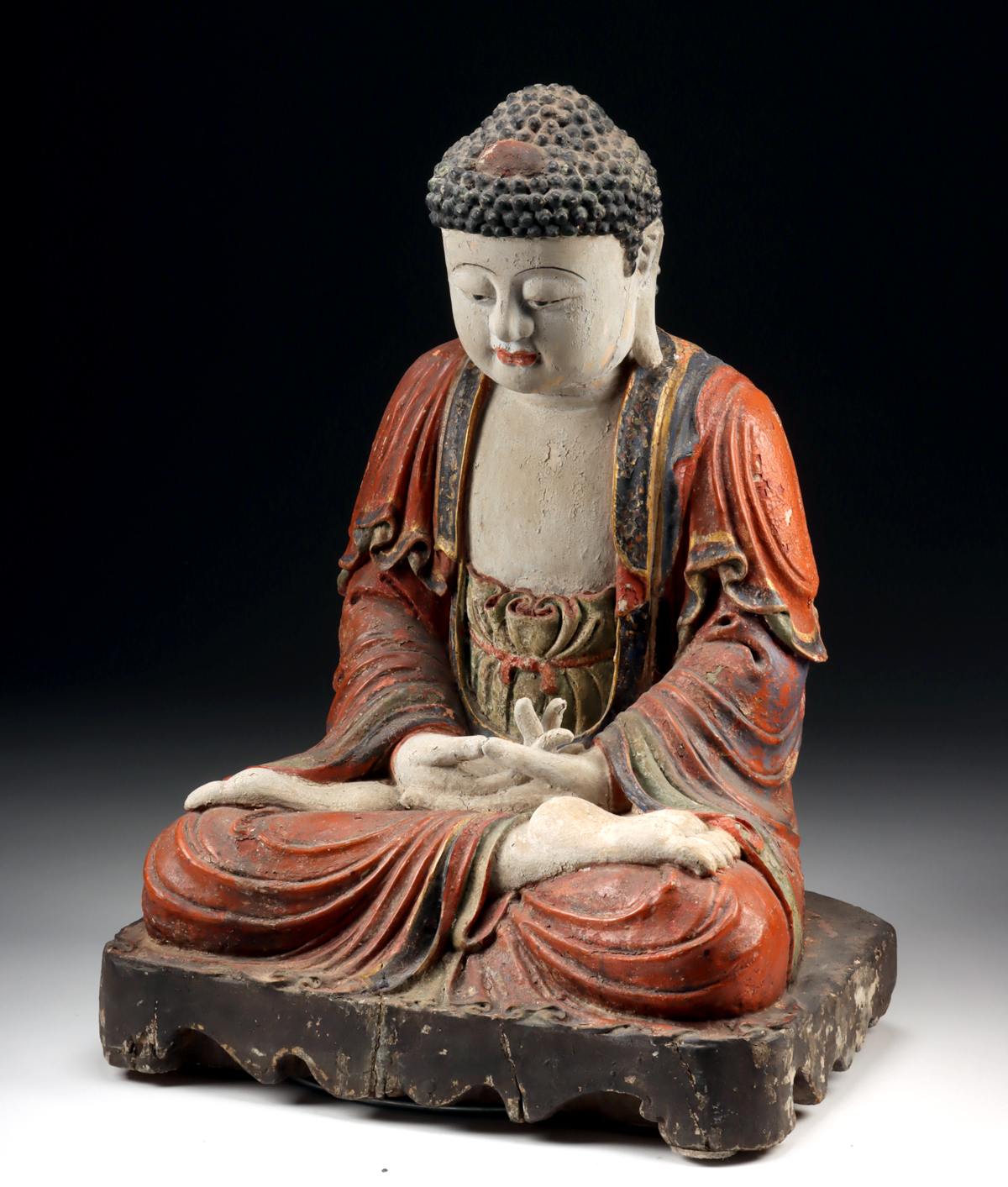
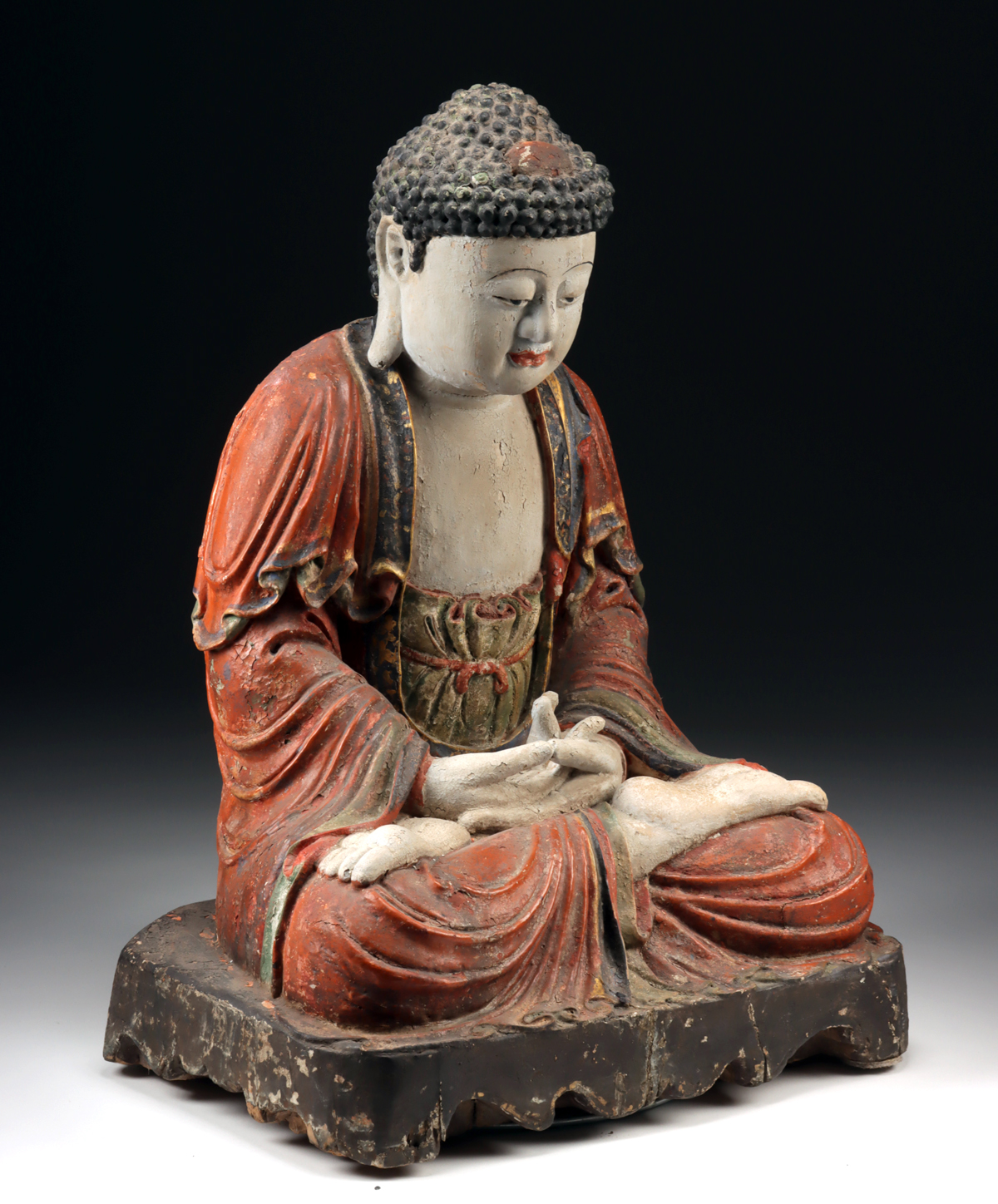
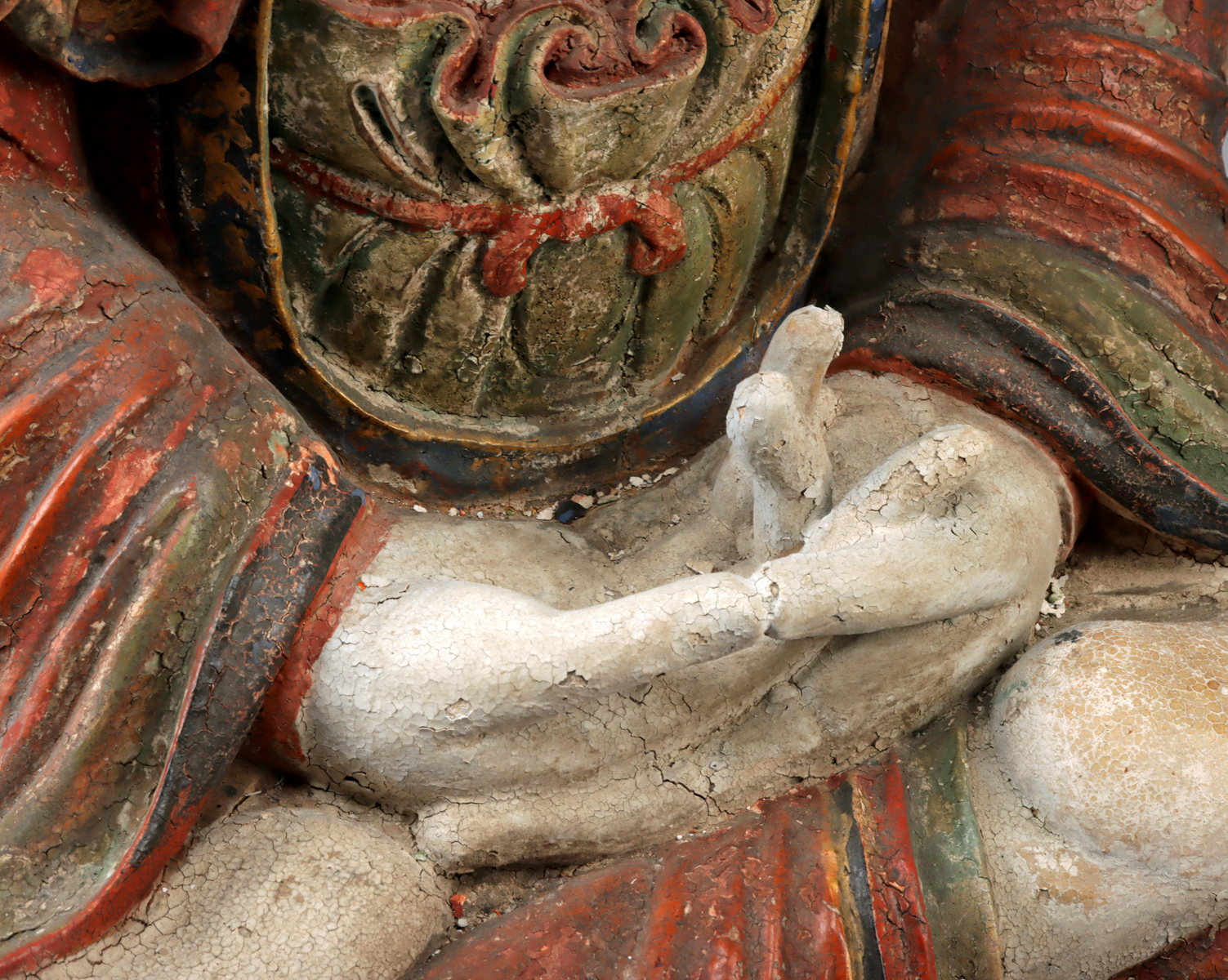
East Asia, China, Ming Dynasty, ca. 16th century CE. A magnificent hand-carved wooden figure of Buddha Sakyamuni, seated in deep meditation atop a narrow, unadorned throne. His legs are crossed in padmasana (lotus position) with both soles exposed, while his hands rest gently in his lap in dhyana mudra, the traditional gesture of meditation. His thumbs touch to form a triangle known as the triratna, symbolizing the triple gems of Buddhism – the Buddha, the Dharma (the teachings), and the Sangha (the monastic community). His serene visage is marked by gently arched brows, downward-gazing, lotus-shaped eyes, and full lips turned slightly downward in contemplation. Black-painted, snail-shell curls form his hair, capped by a pronounced ushnisha at the crown of his head, at the center of which sits a red painted jewel (nikkeishu) radiating enlightenment and spiritual wisdom. Size: 25.4″ L x 18.5″ W x 13.5″ H (64.5 cm x 47 cm x 34.3 cm)
Painted in bright white, his face, hands, and feet form a striking contrast to the luxurious, polychrome robes enveloping his form in elegant folds. The three-part monk’s robe includes a sweeping outer shawl, which is trimmed at the neck and sleeves with black-painted borders enriched by delicate traces of gilt, blue, and red. His undergarment, tied with a knotted sash, is rendered in rare green pigments – an uncommon feature for Buddhist carvings of this period. Combining refined craftsmanship, vivid color, and profound spiritual symbolism, this statue embodies the Ming dynasty’s reverence for the Buddha and the ideals of enlightened stillness and balance.
Historically, carved figural statues held profound cultural and religious significance in China, serving not merely as decoration but as vital conduits for spiritual inspiration, solace, and ancestral veneration. These sacred objects populated homes, clan halls, temples, and public spaces, where altars and shrines honored familial ancestors and a pantheon of deities. The size and opulence of these dedicated spaces reflected a family’s standing, with even modest homes featuring altars for expressing Confucian piety through ancestor worship. Wealthier families often dedicated entire rooms to elaborate shrines, housing images and ancestor tablets – inscribed placards acting as spiritual seats for the deceased, sometimes even found in temple halls where monks offered prayers for their well-being in the afterlife.
Central to imbuing these carvings with spiritual potency was the “eye opening ceremony,” a consecration ritual performed by a senior priest or monk. This process, involving practices like dotting the eyes with cinnabar, pricking them, or anointing them with liquids, was believed to awaken the statue’s senses, enabling it to perceive and respond to devotees’ prayers. Before this ritual, a cavity carved into the statue’s back was filled with sacred documents, a dated paper script honoring the donors and commemorating the event, prayers, and symbolic items representing inner organs, then sealed. The completed, veiled statue was then solemnly carried to the temple for the complex consecration, a communal event believed to imbue the inert carving with life force (chi or qi) and invite the deity’s spirit to reside within.
Condition: Missing cover to prayer niche in verso. Some nicks, abrasions, and small chips to paint as shown, as well as a few stable hairline fissures in area. Small areas of retouching, but otherwise, intact and very nice with good remaining detail.
Provenance: private Los Angeles, California, USA collection, acquired from 1990 – 2005
All items legal to buy/sell under U.S. Statute covering cultural patrimony Code 2600, CHAPTER 14, and are guaranteed to be as described or your money back.
A Certificate of Authenticity will accompany all purchases.
We ship worldwide and handle all shipping in-house for your convenience.
Related Products
-


Lot 152a, Auction 4/3/2026: Mesopotamian Stone Libation Bowl Lion Effigy
Add to cart -


Lot 150, Auction 4/3/2026: 12th C. Medieval Stone Corbel with Dual Faces
Add to cart -


Lot 135, Auction 4/3/2026: Eastern Greek Archaic Terracotta Votive – Woman w/ Bird
Add to cart -


Lot 130, Auction 4/3/2026: Ancient Egyptian Ptolemaic Pottery Figurine Fragments
Add to cart -


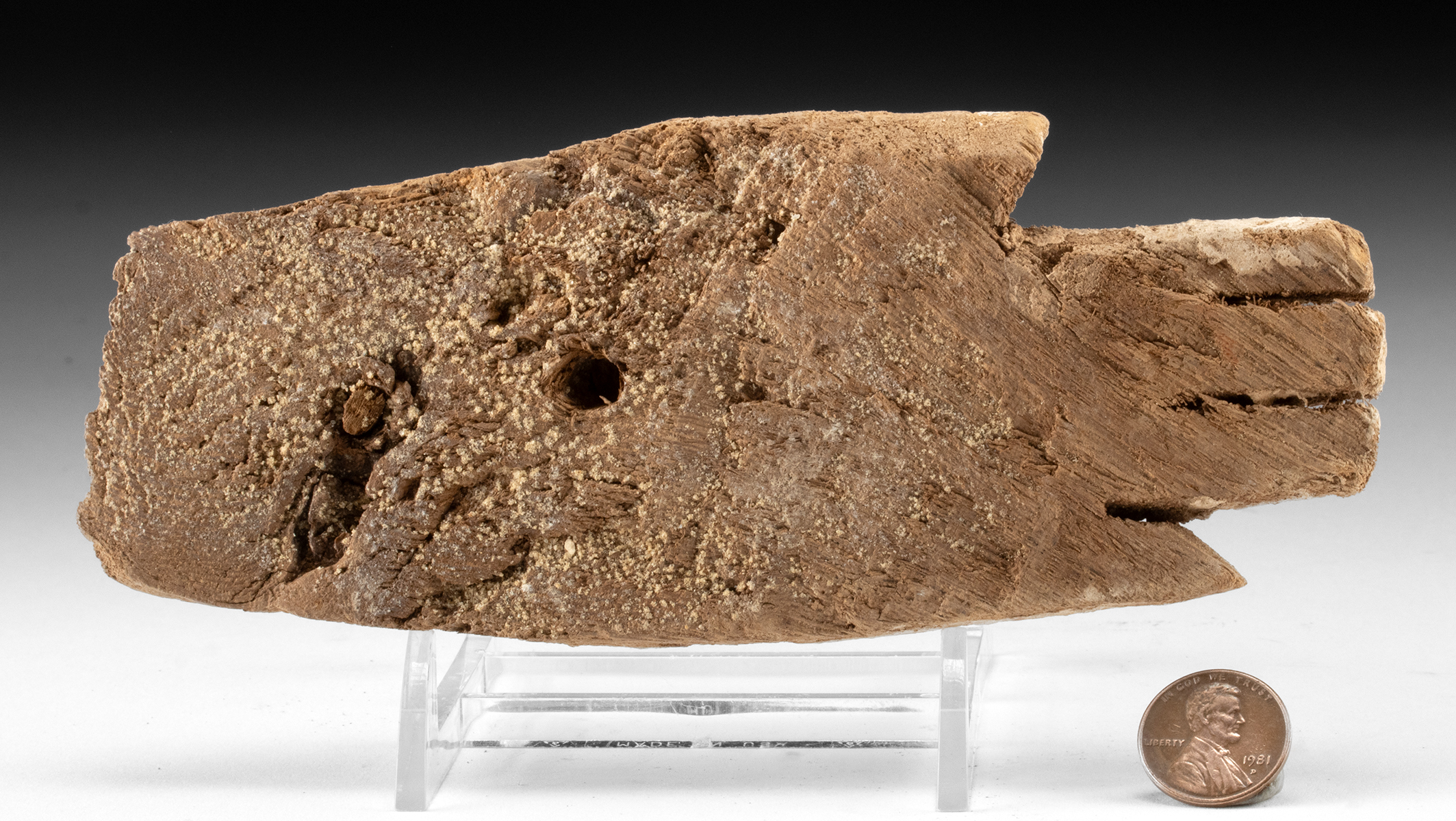
Lot 126, Auction 4/3/2026: Egyptian Painted Wood Hand – Late Dynastic Sarcophagus
Add to cart -


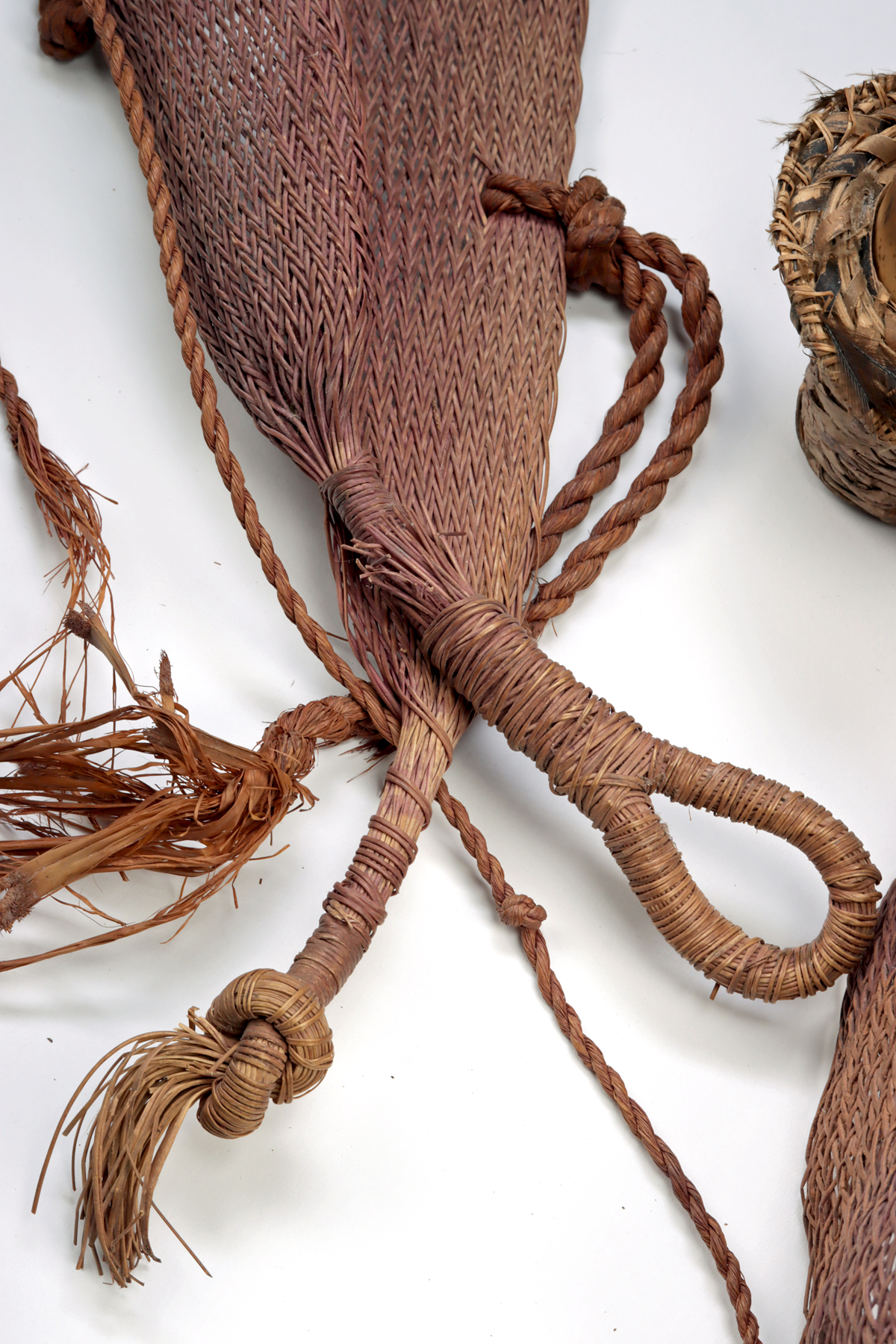
Lot 121, Auction 4/3/2026: Papua New Guinea Bamboo & Vegetal Fiber Implements
Add to cart -


Lot 119, Auction 4/3/2026: Papua New Guinea Yimam Yipwon Spirit Figure – Korewori
Add to cart -


Lot 117, Auction 4/3/2026: Dayak Wood Bound Captive Figure w/ Horse Hair Rope
Add to cart -


Lot 116, Auction 4/3/2026: Borneo Dayak Wood Ancestral Figure, Hampatong Guardian
Add to cart -


Lot 112, Auction 4/3/2026: Two African Wood Nude Figures – Bembe & Chamba
Add to cart