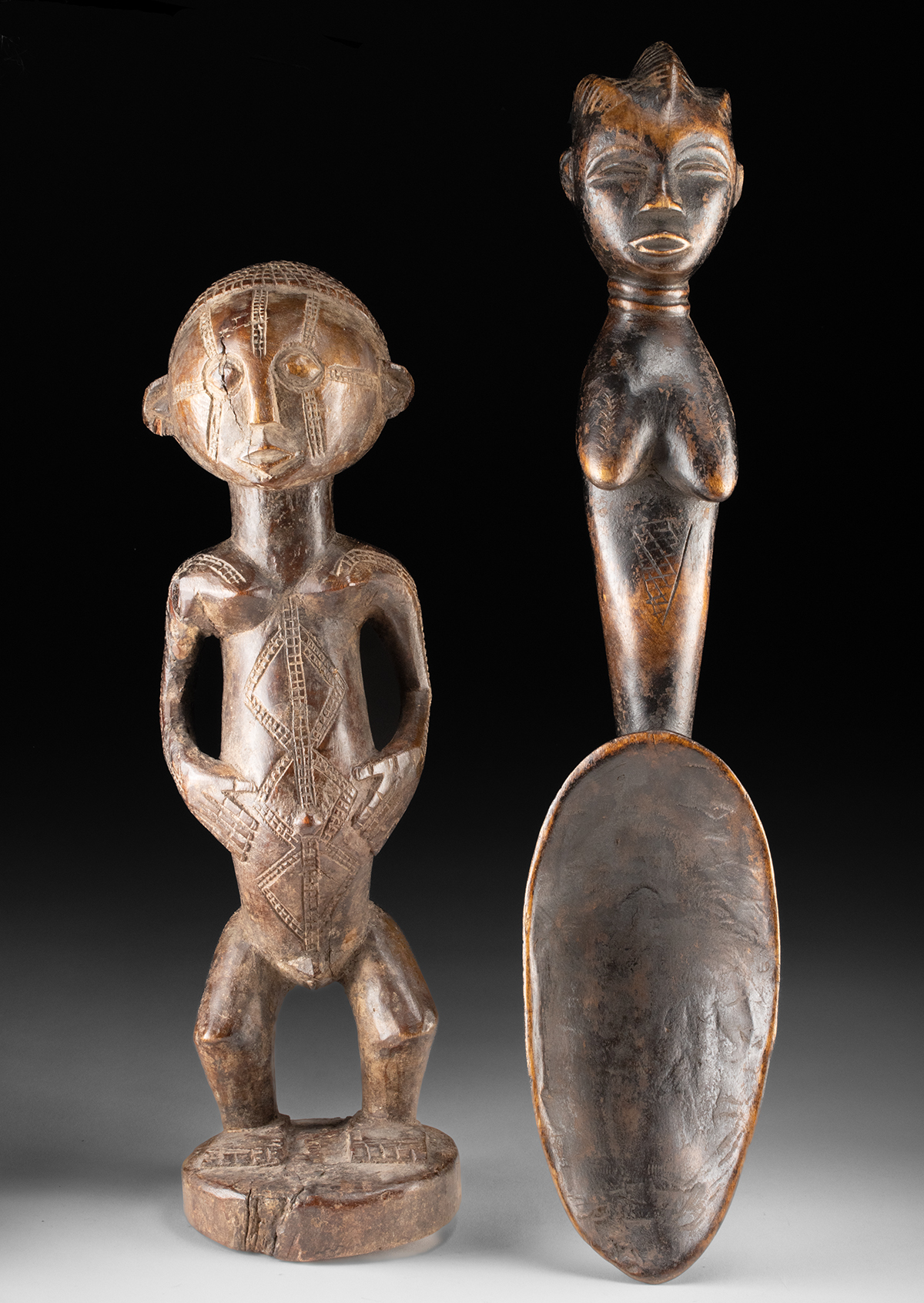
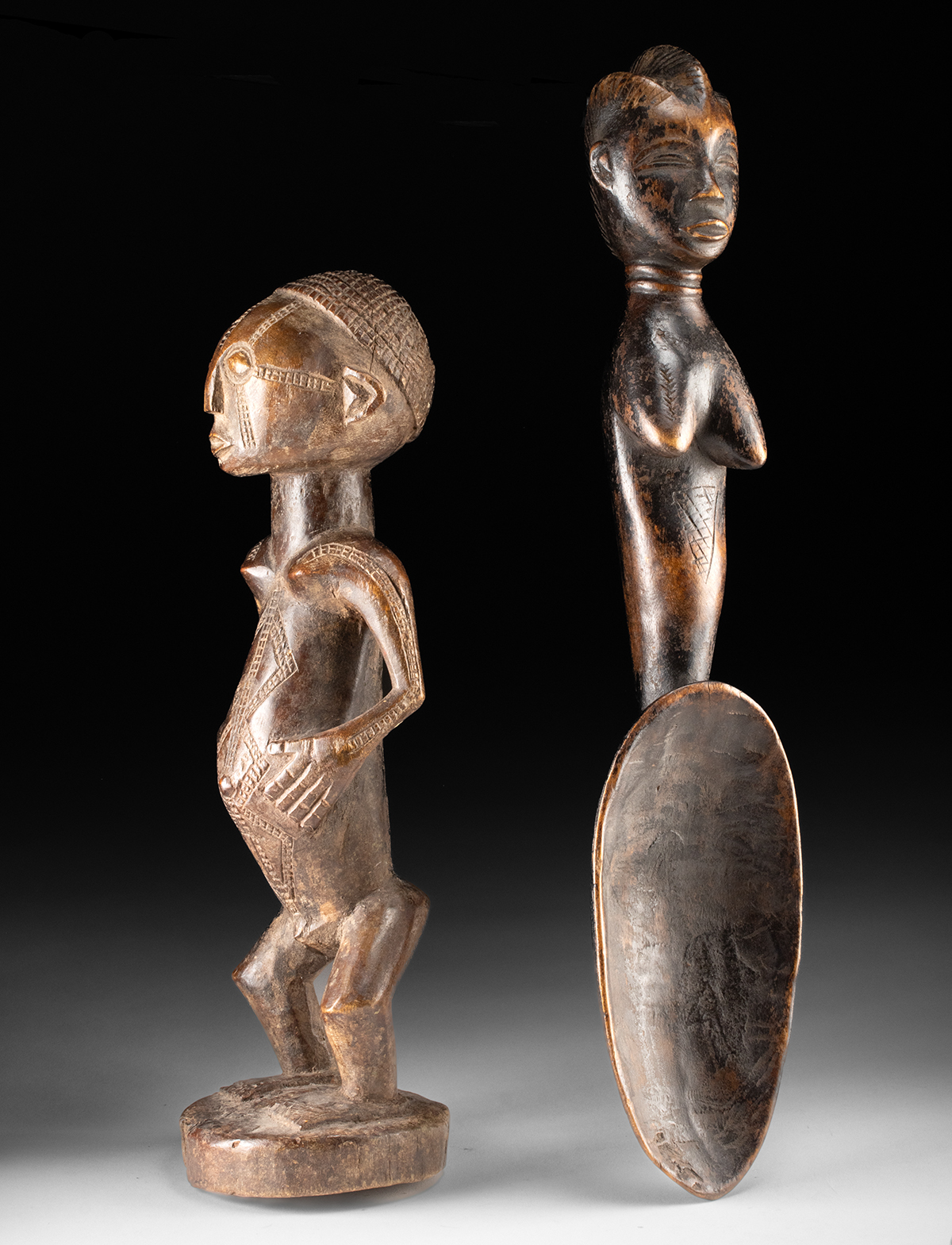
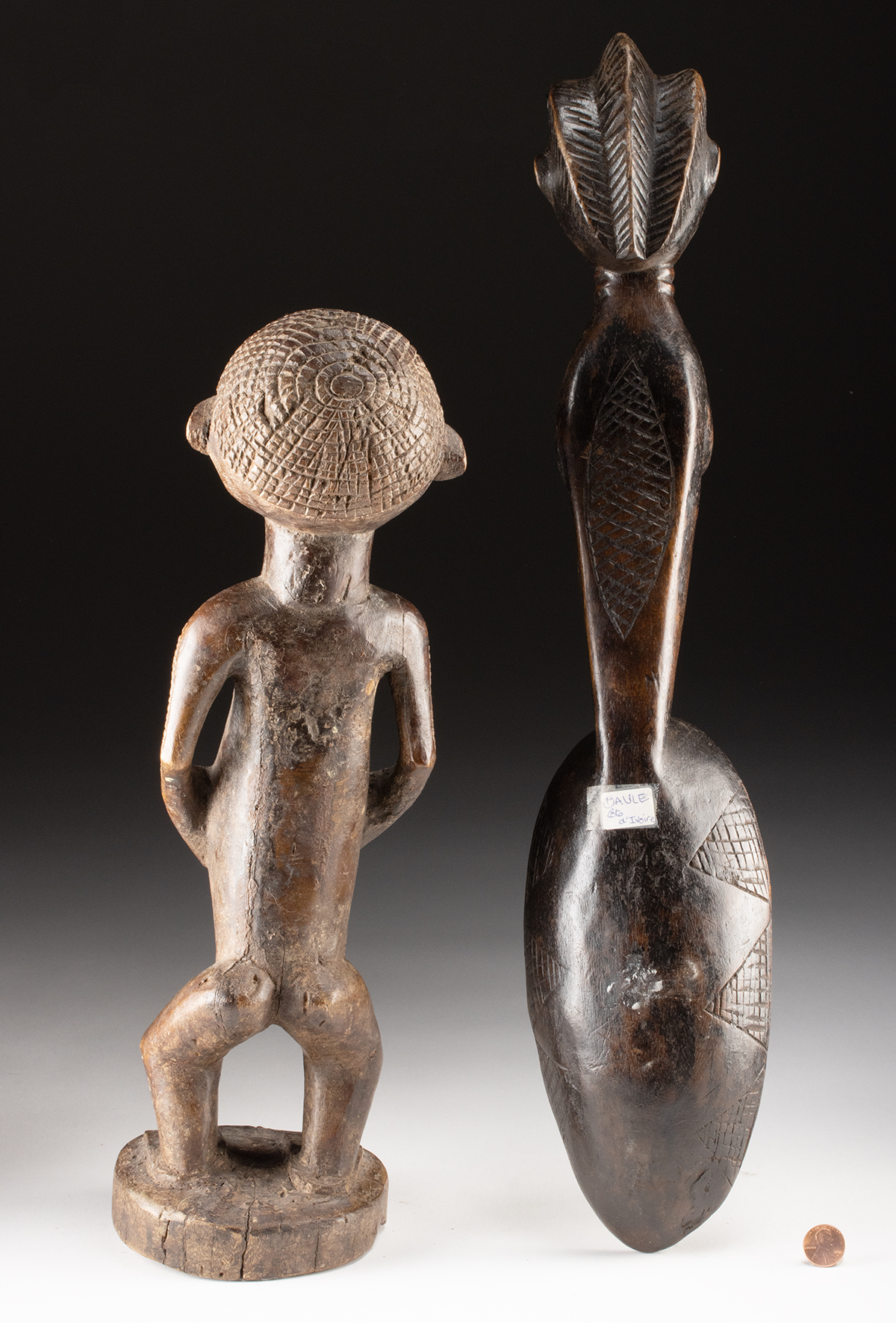
Lot 296, Auction 3/19/2026: Dan Wood Wunkirmian Spoon & Tabwa Ancestor Figure
$325.00
In stock
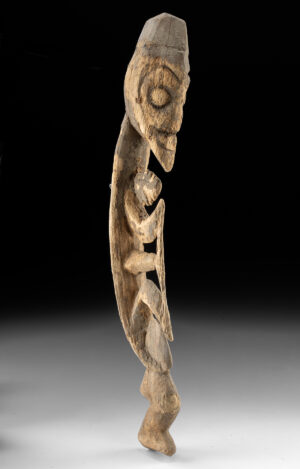
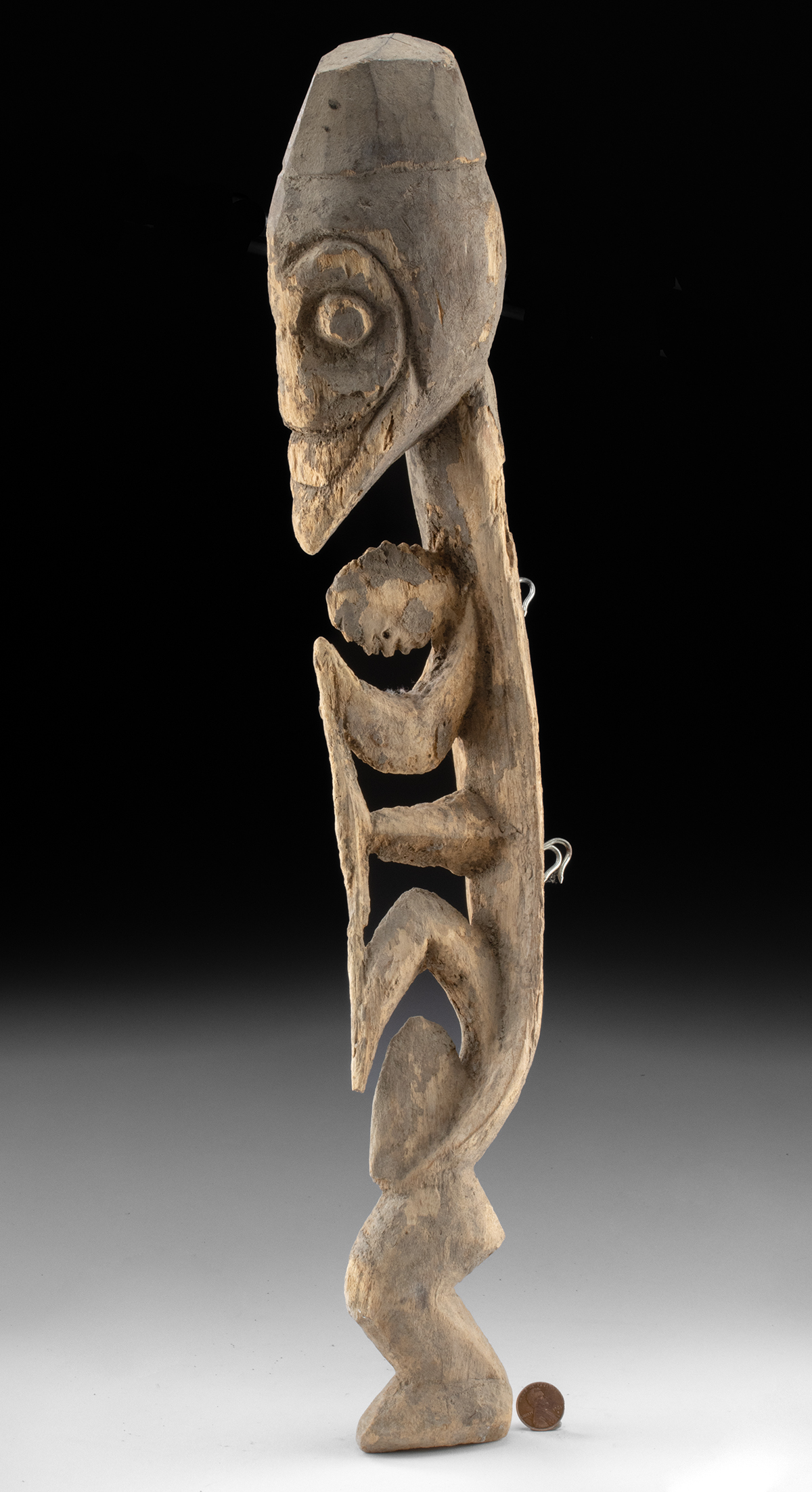
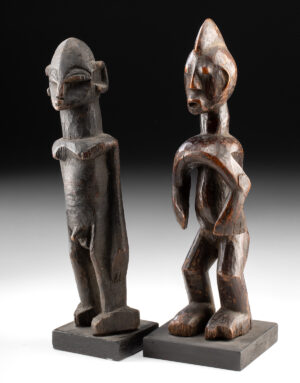
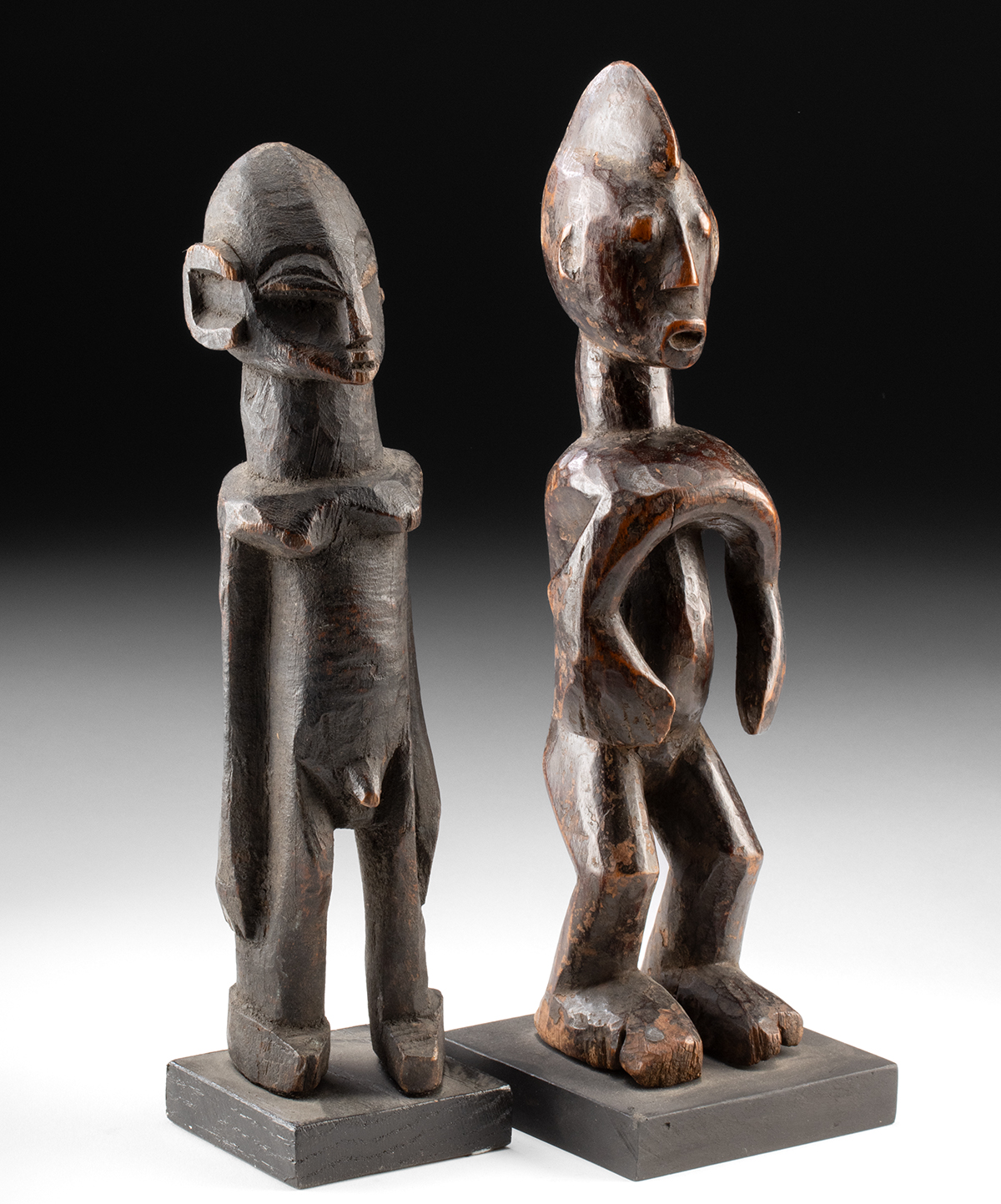
West Africa, Cote d’Ivoire or Liberia, Dan peoples; Central Africa, Democratic Republic of the Congo, Lake Tanganyika region, Tabwa peoples, ca. 20th century CE. A compelling pairing of two carved wooden objects, this lot brings together distinct yet complementary expressions of African sculptural tradition, each rooted in ritual authority, social identity, and the visual language of the human body. Though different in form and function, both works articulate status, lineage, and spiritual connection through figurative carving. The Dan peoples feasting spoon, known as a wunkirmian or wakemia, exemplifies the virtuosity of Dan sculptors along the Guinea coast. Carved on a monumental scale, such spoons functioned as emblems of honor awarded to the wa ke de, or “at feasts acting woman,” the most hospitable woman of the village. This title carried both prestige and obligation, as the wa ke de was responsible for organizing and hosting large ceremonial feasts associated with masquerade rituals. Size of larger (spoon): 4.4″ W x 21″ H (11.2 cm x 53.3 cm)
The deep bowl of the spoon, from which rice or coins were distributed to children during communal celebrations, symbolized the body and womb of the female figure, honoring women as sources of nourishment and life. The carved handle, often anthropomorphic, transforms a functional object into a sculptural statement of social role and spiritual power. Beyond their ceremonial use, wunkirmian also served as a woman’s primary conduit to the spirit world, occupying a role among women comparable to that of masks among men, and frequently appearing alongside masquerades as instruments of blessing.
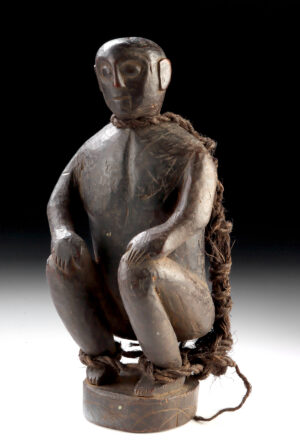
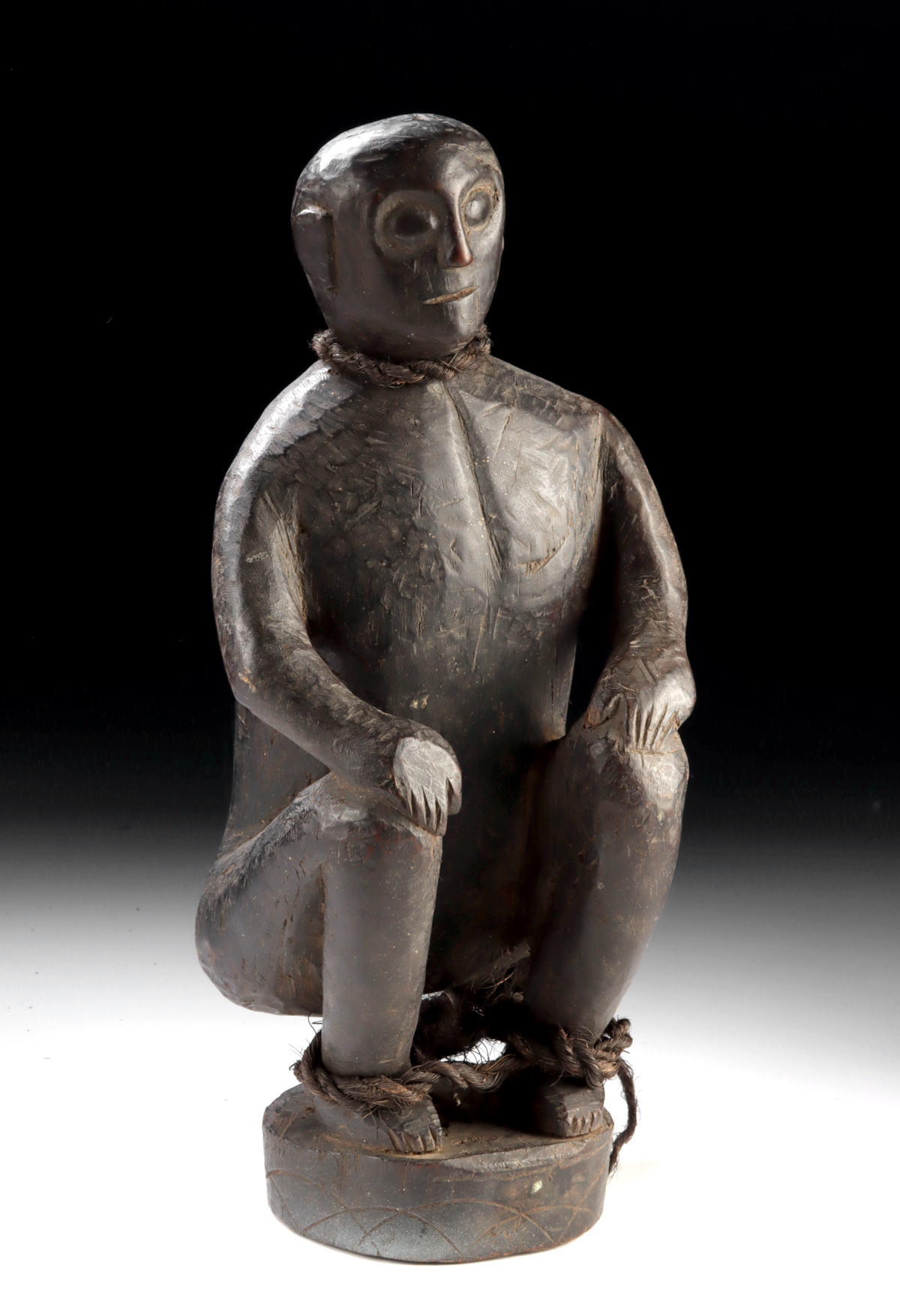
The accompanying ancestor figure is a Tabwa Mukisi Mupasi from the Lake Tanganyika region of the Democratic Republic of the Congo. Such figures represent revered ancestors of chiefly families and emerged during the mid nineteenth century as part of a new sculptural tradition developed to legitimize evolving forms of political authority. As elite Tabwa families gained prominence through regional trade, they asserted their right to rule by invoking ancestral lineage, sometimes constructing dynastic histories through figural sculpture. Passed down through generations, these figures embodied continuity, legitimacy, and inherited power. The nude body is adorned with raised geometric scarification patterns, visual markers of exceptional character and moral refinement. In Tabwa thought, the disciplined decoration of the body signified enlightenment and civilization. Though largely unclothed, such figures often reference beaded belts, objects that functioned as vital symbols of kinship and ancestry, reinforcing ties between past and present rulers.
Together, these works offer a layered view of African sculptural practice in the 20th century, where carving served not only aesthetic ends but also encoded systems of honor, authority, gender, and spiritual engagement. As a pair, they form a resonant study in how the human figure becomes a vessel for social meaning across regions and cultures.
Condition: Both have expected nicks, scuffs, and abrasions to surface as shown, all commensurate with age. Otherwise, both are in tact and very nice with good detail and rich patina. Both have old collection labels; spoon’s label incorrectly identifies it as Baule.
Provenance: private Santa Fe, New Mexico, USA collection
All items legal to buy/sell under U.S. Statute covering cultural patrimony Code 2600, CHAPTER 14, and are guaranteed to be as described or your money back.
A Certificate of Authenticity will accompany all purchases.
We ship worldwide and handle all shipping in-house for your convenience.
Related Products
-


Lot 152a, Auction 4/3/2026: Mesopotamian Stone Libation Bowl Lion Effigy
Add to cart -


Lot 150, Auction 4/3/2026: 12th C. Medieval Stone Corbel with Dual Faces
Add to cart -


Lot 135, Auction 4/3/2026: Eastern Greek Archaic Terracotta Votive – Woman w/ Bird
Add to cart -


Lot 130, Auction 4/3/2026: Ancient Egyptian Ptolemaic Pottery Figurine Fragments
Add to cart -


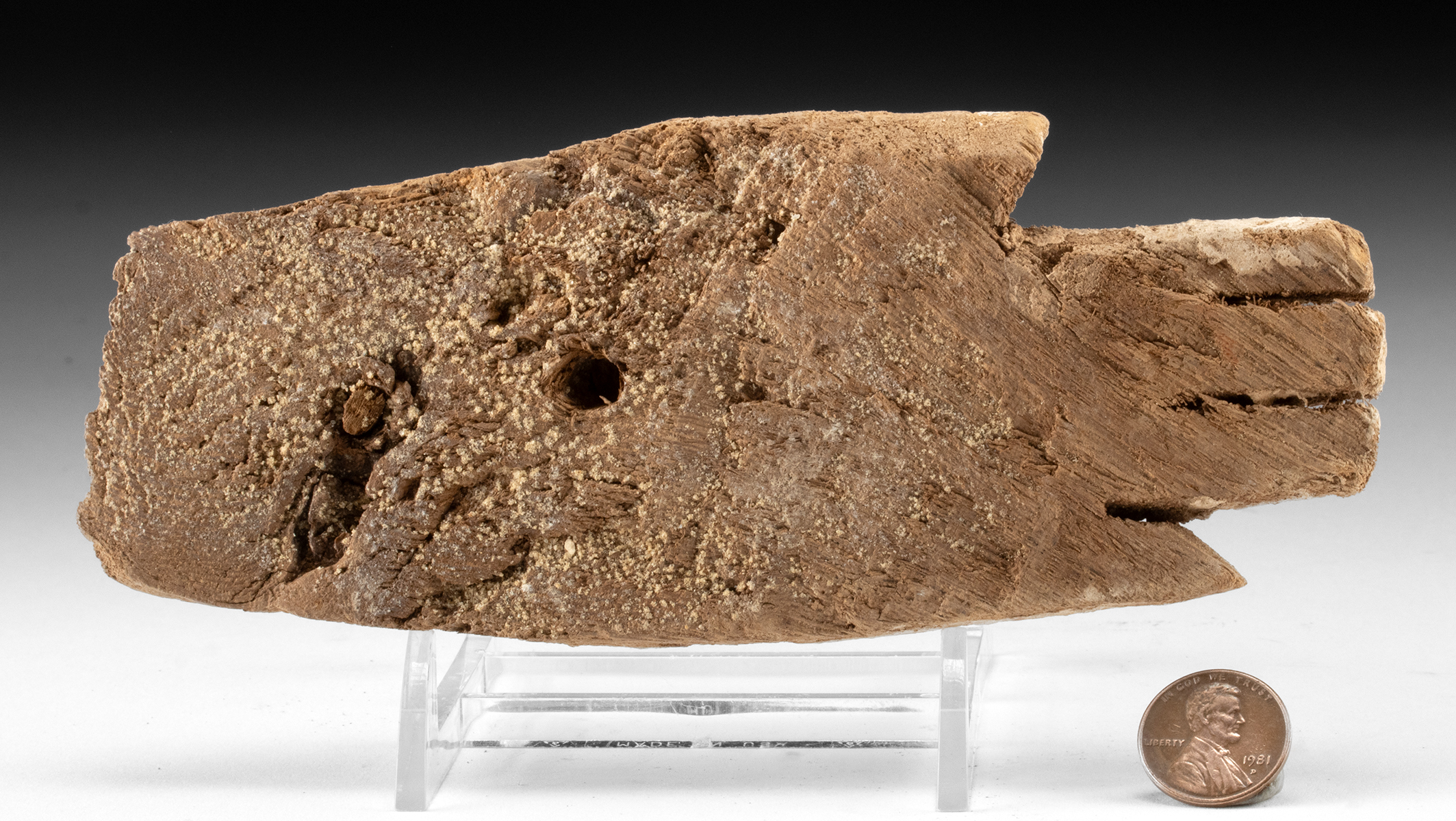
Lot 126, Auction 4/3/2026: Egyptian Painted Wood Hand – Late Dynastic Sarcophagus
Add to cart -


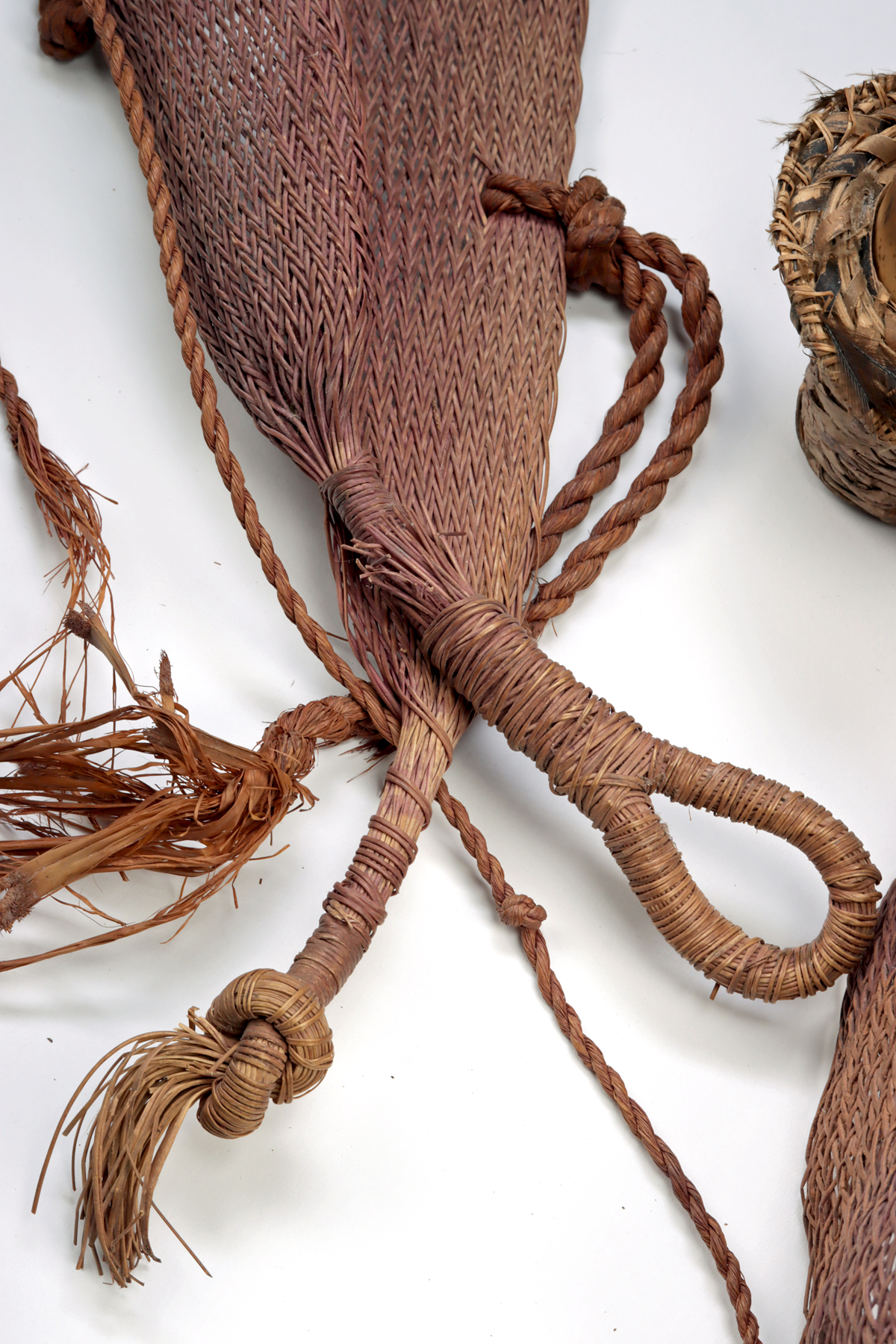
Lot 121, Auction 4/3/2026: Papua New Guinea Bamboo & Vegetal Fiber Implements
Add to cart -


Lot 119, Auction 4/3/2026: Papua New Guinea Yimam Yipwon Spirit Figure – Korewori
Add to cart -


Lot 117, Auction 4/3/2026: Dayak Wood Bound Captive Figure w/ Horse Hair Rope
Add to cart -


Lot 116, Auction 4/3/2026: Borneo Dayak Wood Ancestral Figure, Hampatong Guardian
Add to cart -


Lot 112, Auction 4/3/2026: Two African Wood Nude Figures – Bembe & Chamba
Add to cart