Lot 26, Auction 3/19/2026: Chinese Han Dynasty Tripod Ceremonial Ding
$455.00
In stock
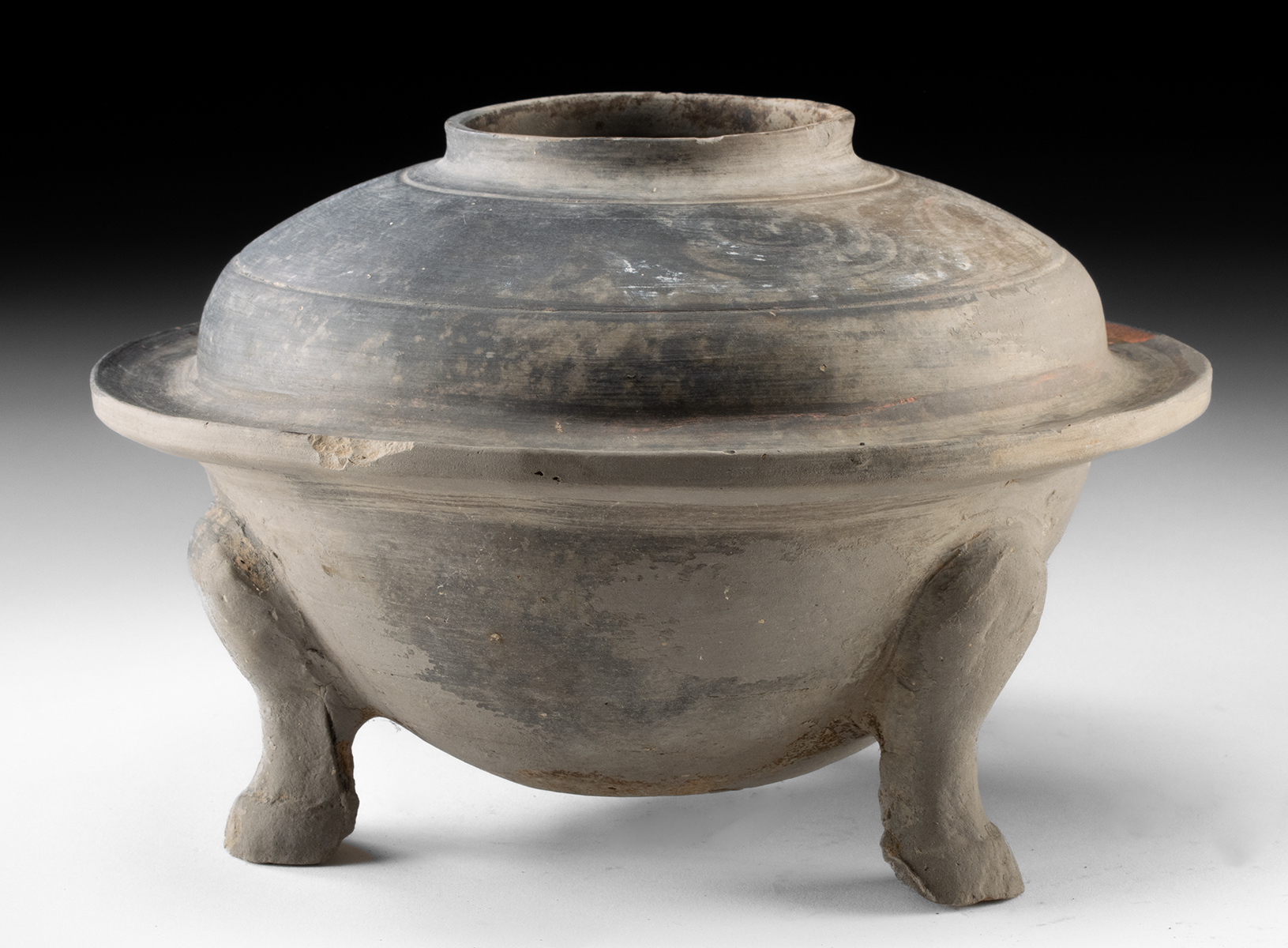
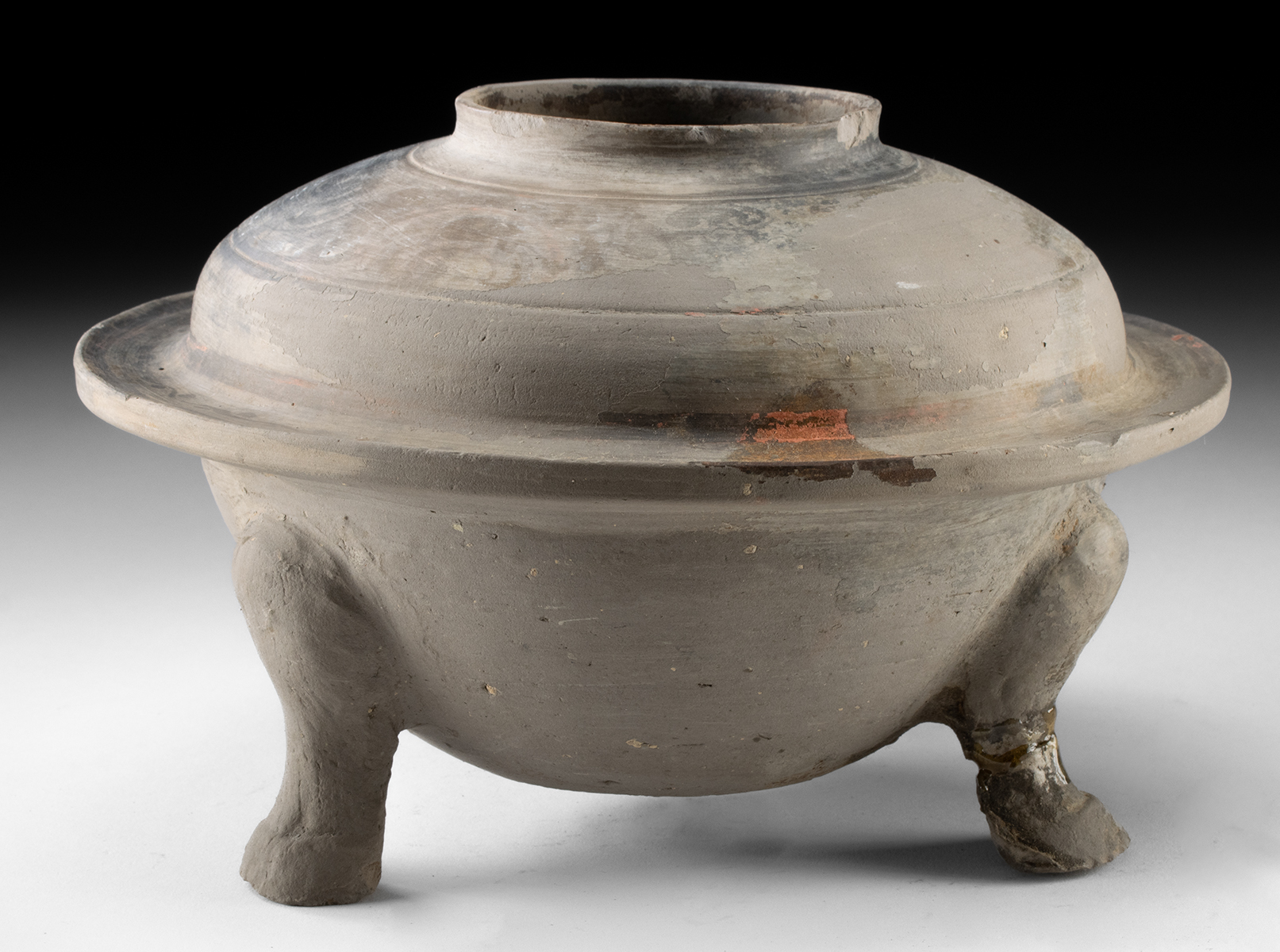
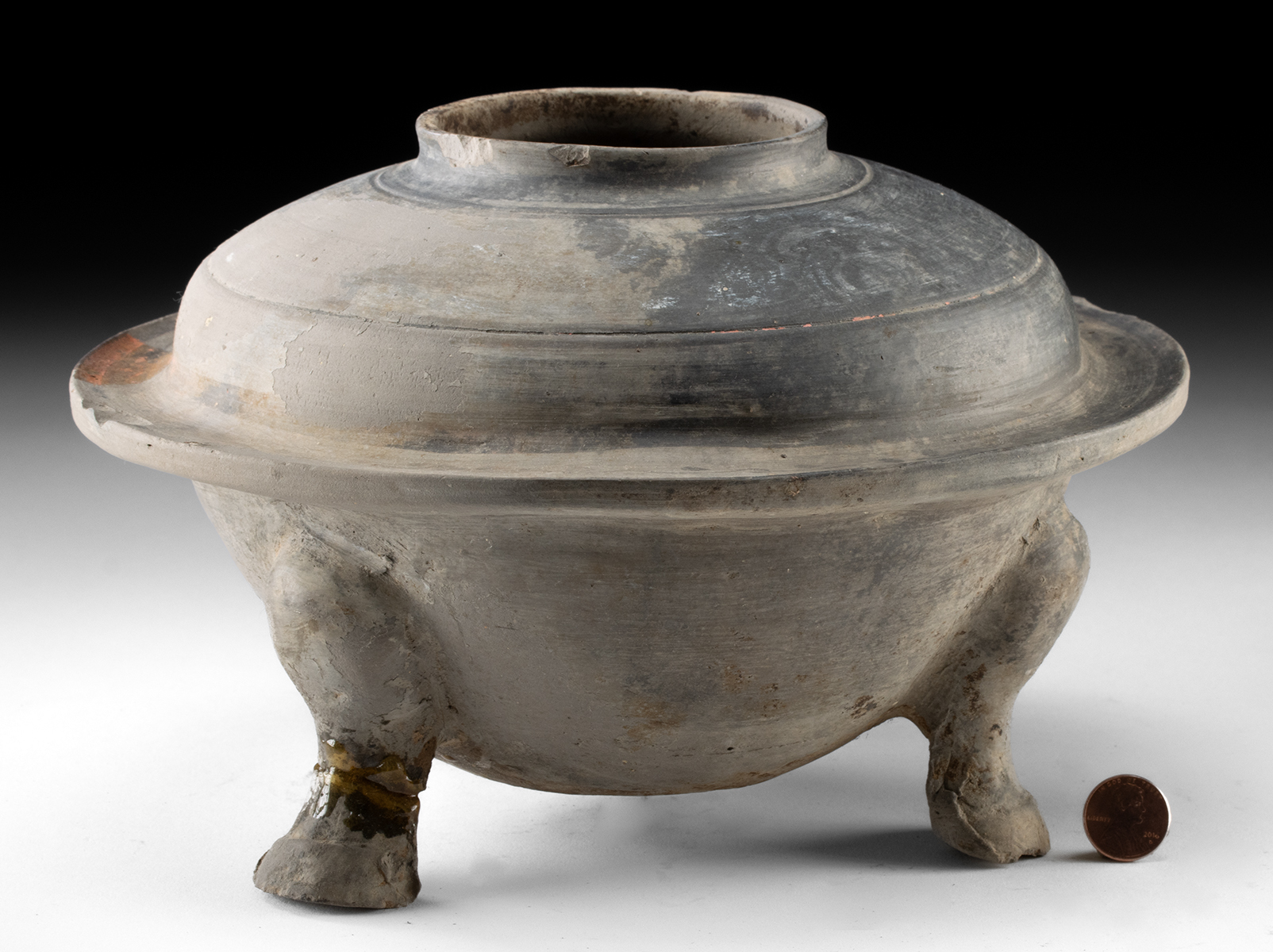
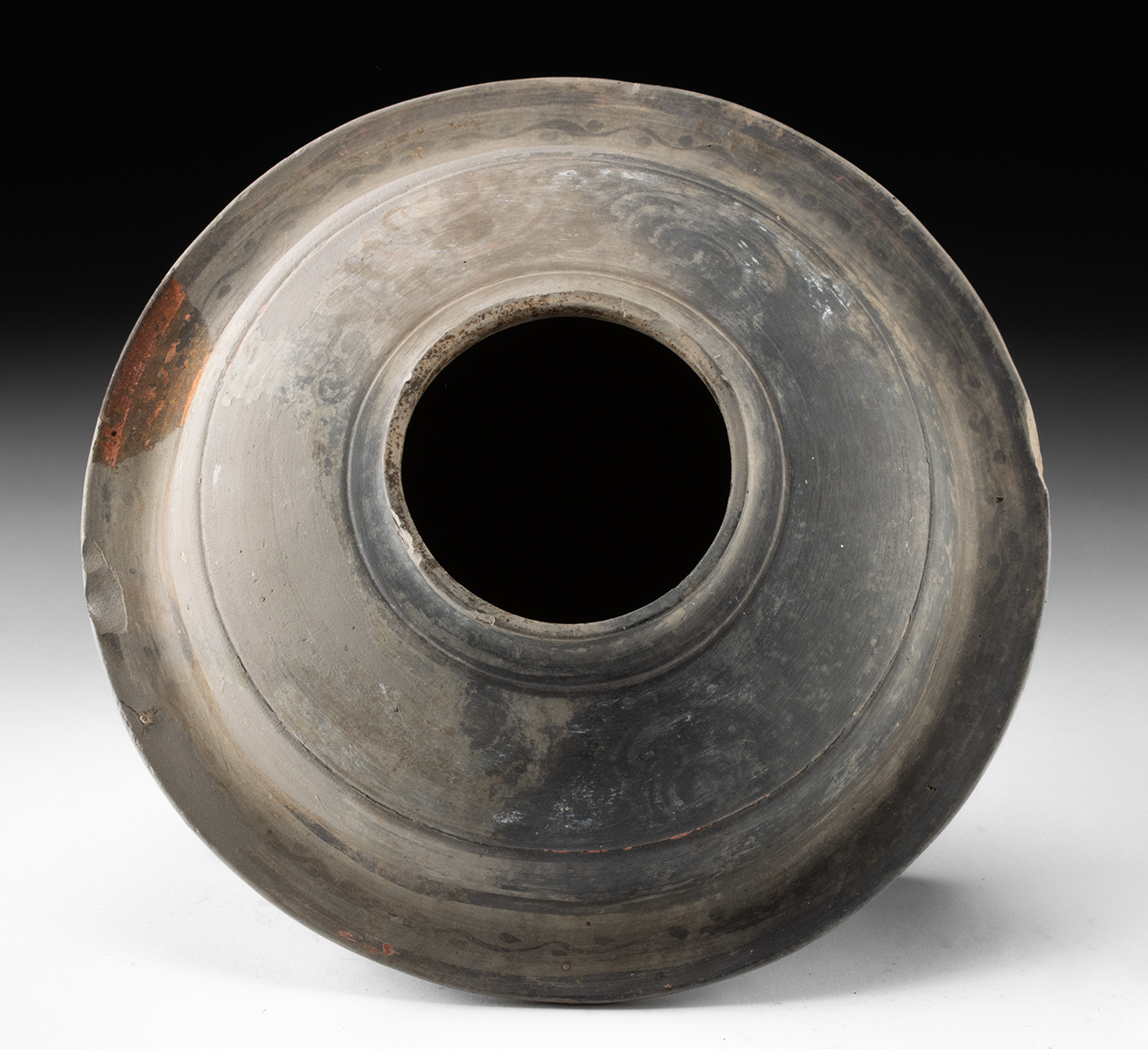
East Asia, China, Han Dynasty, ca. 206 BCE to 220 CE. A substantial Han Dynasty pottery tripod vessel or incense burner known as a ding, with a low, rounded bowl set on three robust legs and a broad, outward-flanged rim surrounding a short, upright neck. The form is grounded and symmetrical, reflecting centuries of ritual design that translators of material culture call both utilitarian and symbolic. The surface has faded to a soft gray through age and burial, but careful study shows that this vessel was once brightly painted. Traces of red and orange remain in places, evidence that it originally bore a fired slip or pigment similar to the classic orange lacquer seen on other Han ceramics and bronzes. Over time that surface layer has weathered away, leaving a subtle patina that still hints at its original color and finish. Size: 9.8″ Diameter x 6.4″ H (24.9 cm x 16.3 cm)
The body is turned with confident, smooth contours. Circular molding around the shoulder and rim recalls the formality of bronze ding of earlier eras, reverently echoed here in ceramic for use in domestic or funerary ritual. The three slightly splayed legs support the vessel while giving it a presence that is both stable and dynamic.
In Han culture, tripod vessels carried deep ritual associations. They were used in offerings of food or incense and often placed in tombs to serve the deceased in the afterlife. This earthenware ding bridges the practical and the sacred, a muted testament to the visual language of Han ritual and the shift from elite bronze casting to accessible ceramic interpretations. Steeped in history and grace, this ceramic tripod vessel retains enough surface evidence to reconnect it to a once-ceremonial ensemble of color, ritual, and meaning from early imperial China.
Condition: One leg has been reattached with break line and adhesive visible. Come chipping to rim, edge, and feet, as well as surface wear as shown, all commensurate with age. Otherwise, nice presentation with trace remains of orange pigments.
Provenance: private Great Barrington, Massachusetts, USA collection, acquired in the 1970s; ex-Virginia, USA auction house
All items legal to buy/sell under U.S. Statute covering cultural patrimony Code 2600, CHAPTER 14, and are guaranteed to be as described or your money back.
A Certificate of Authenticity will accompany all purchases.
We ship worldwide and handle all shipping in-house for your convenience.
Related Products
-


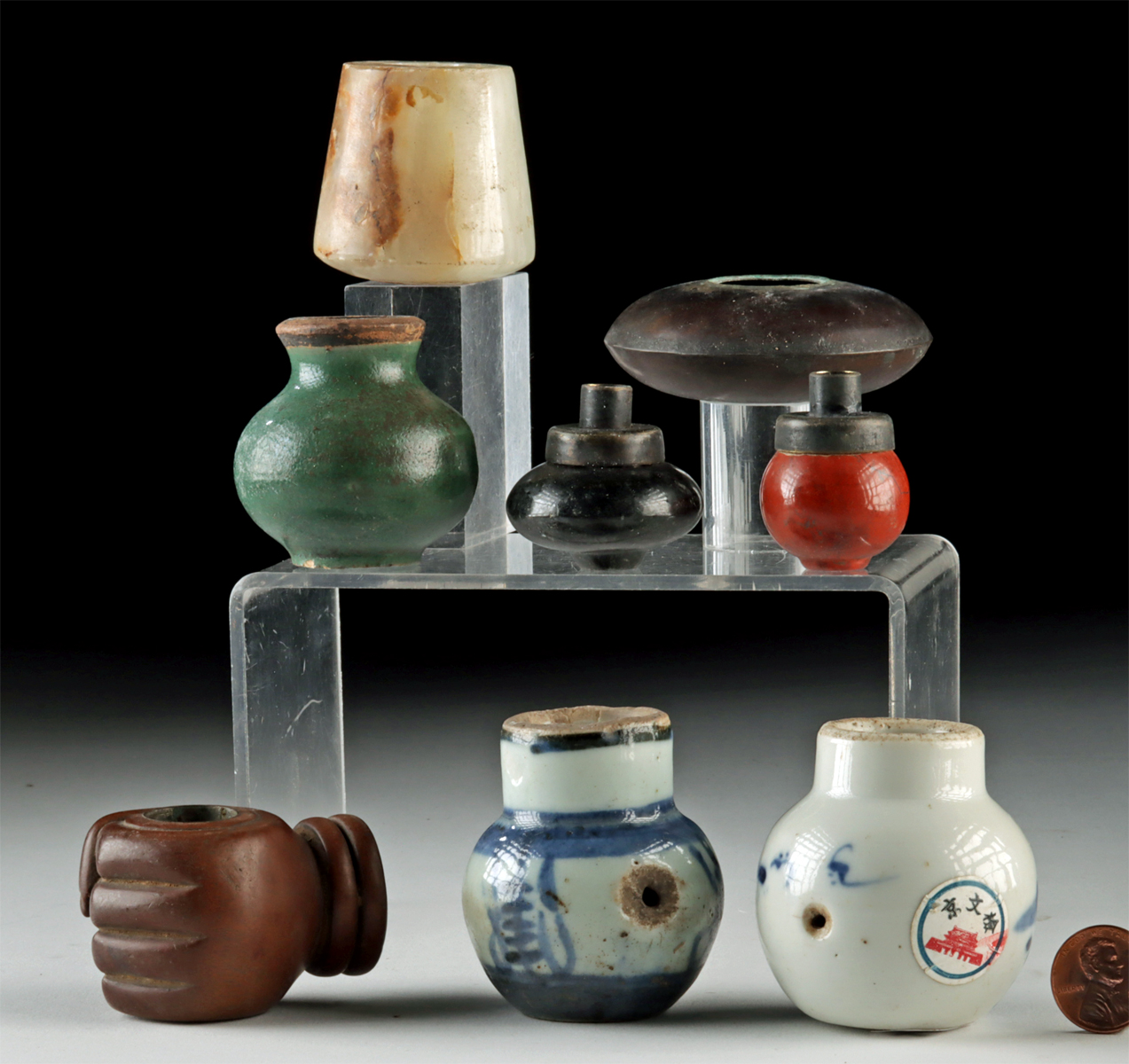
Lot 174, Auction 4/3/2026: 8 Chinese Pipe Bowls, Pottery, Stone, Brass & Wood
Add to cart -


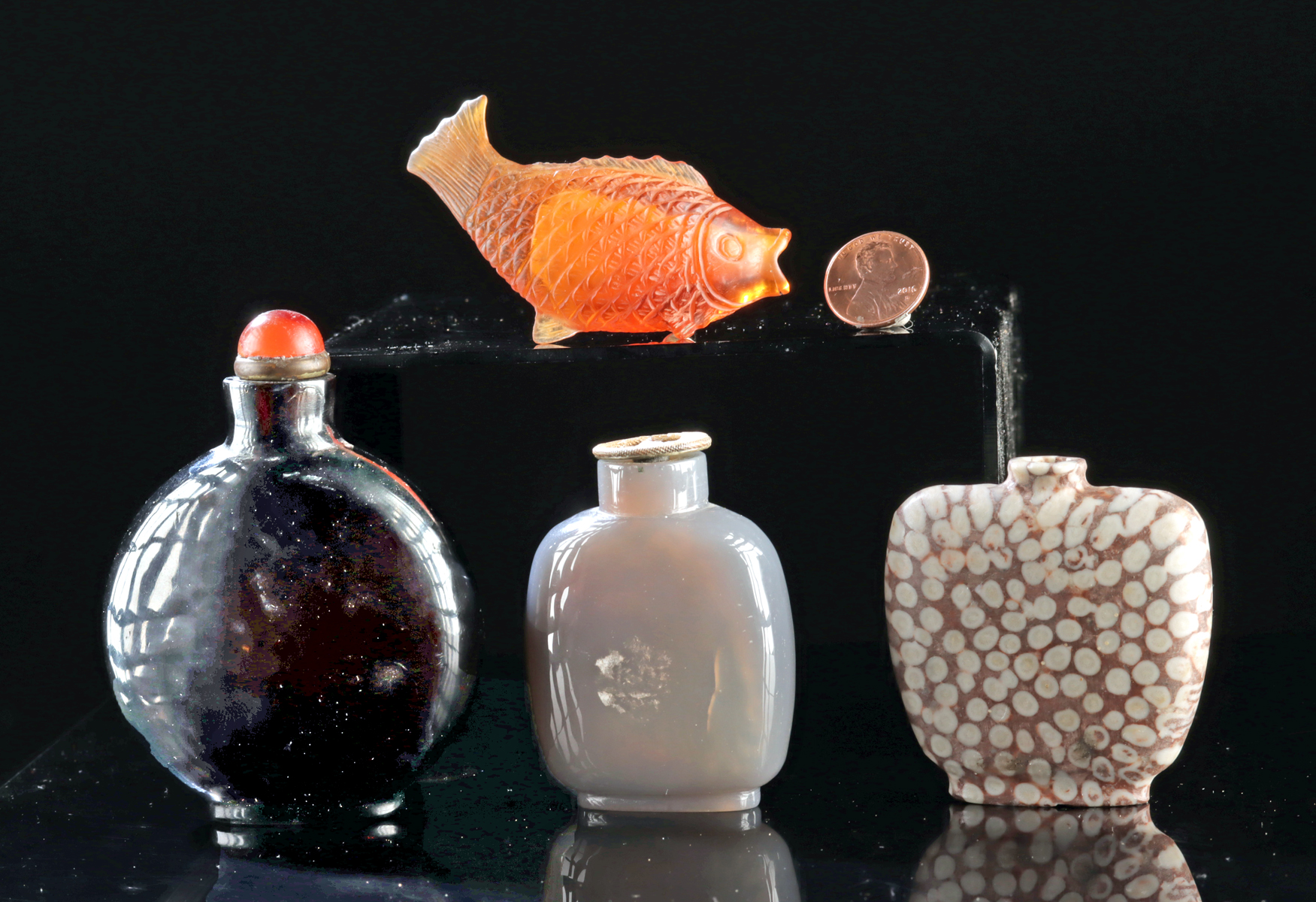
Lot 171, Auction 4/3/2026: Four 18th C. Chinese Qing Stone & Glass Snuff Bottles
Add to cart -


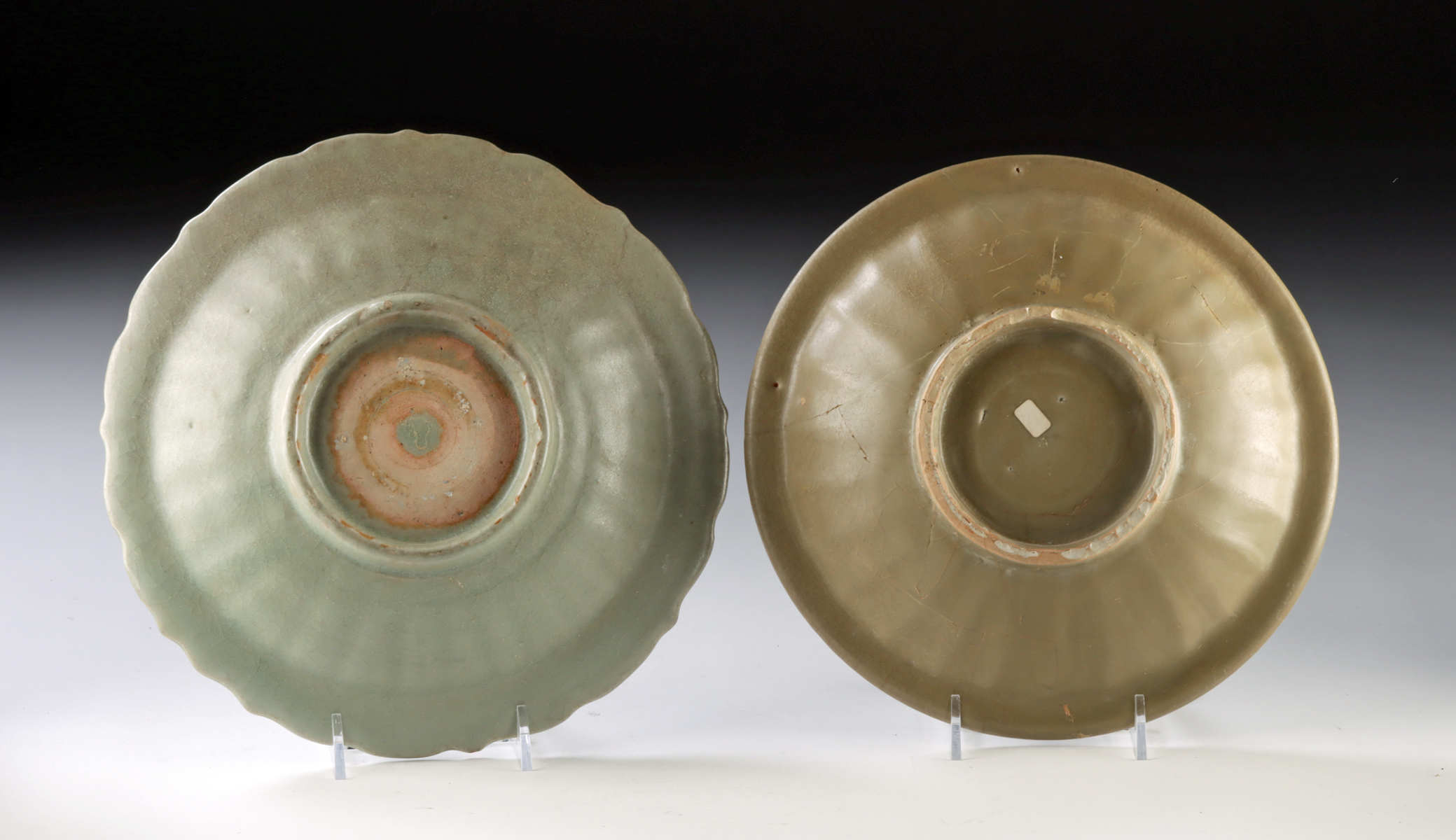
Lot 170a, Auction 4/3/2026: 2 Yuan & Ming Celadon Bowls – Twin Fish & Lotus Motifs
Add to cart -


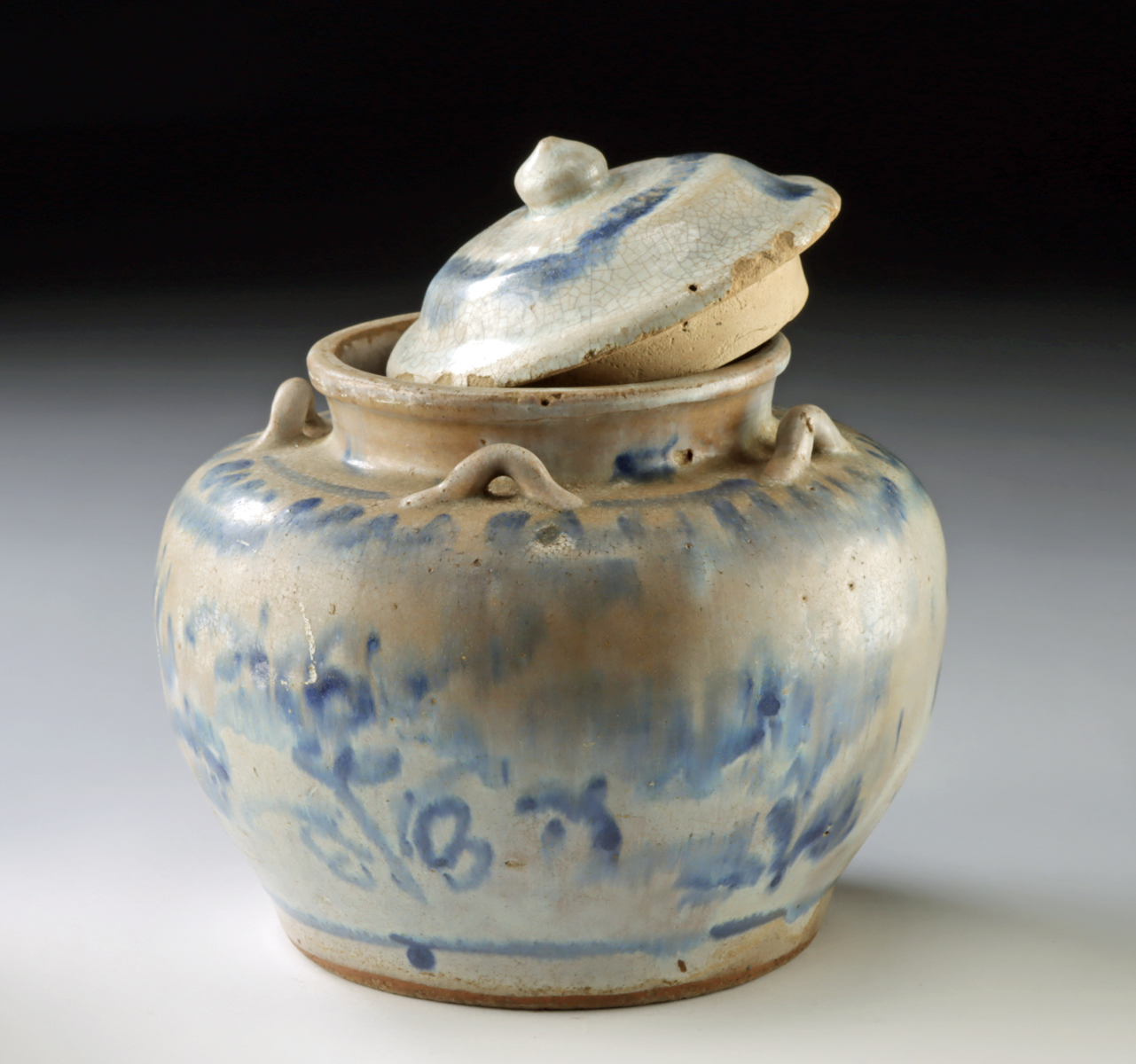
Lot 163a, Auction 4/3/2026: 18th C. Chinese Qing Blue Splashed Pottery Vessel
Add to cart -


Lot 158b, Auction 4/3/2026: Huge Gandharan Pottery Zoomorph Jar, TL Tested
Add to cart -

Lot 155, Auction 4/3/2026: Three Iron Age to Roman Holyland Pottery Pitchers
Add to cart -


Lot 153, Auction 4/3/2026: Five Holy Land Bronze to Iron Age Pottery Jars & Ewers
Add to cart -


Lot 143a, Auction 4/3/2026: 12th C. Byzantine Pottery Bowl – Sgraffito Bird Design
Add to cart -


Lot 128a, Auction 4/3/2026: Egyptian Early Dynastic Alabaster Cylindrical Jar
Add to cart -


Lot 124, Auction 4/3/2026: Hawaiian Koa Wood Vessels & Salt Shakers, 6 pcs
Add to cart