Lot 237a, Auction 4/3/2026: Edith Kramer Ink Drawing “Rooftops in the Rain” (1945)
$520.00
In stock
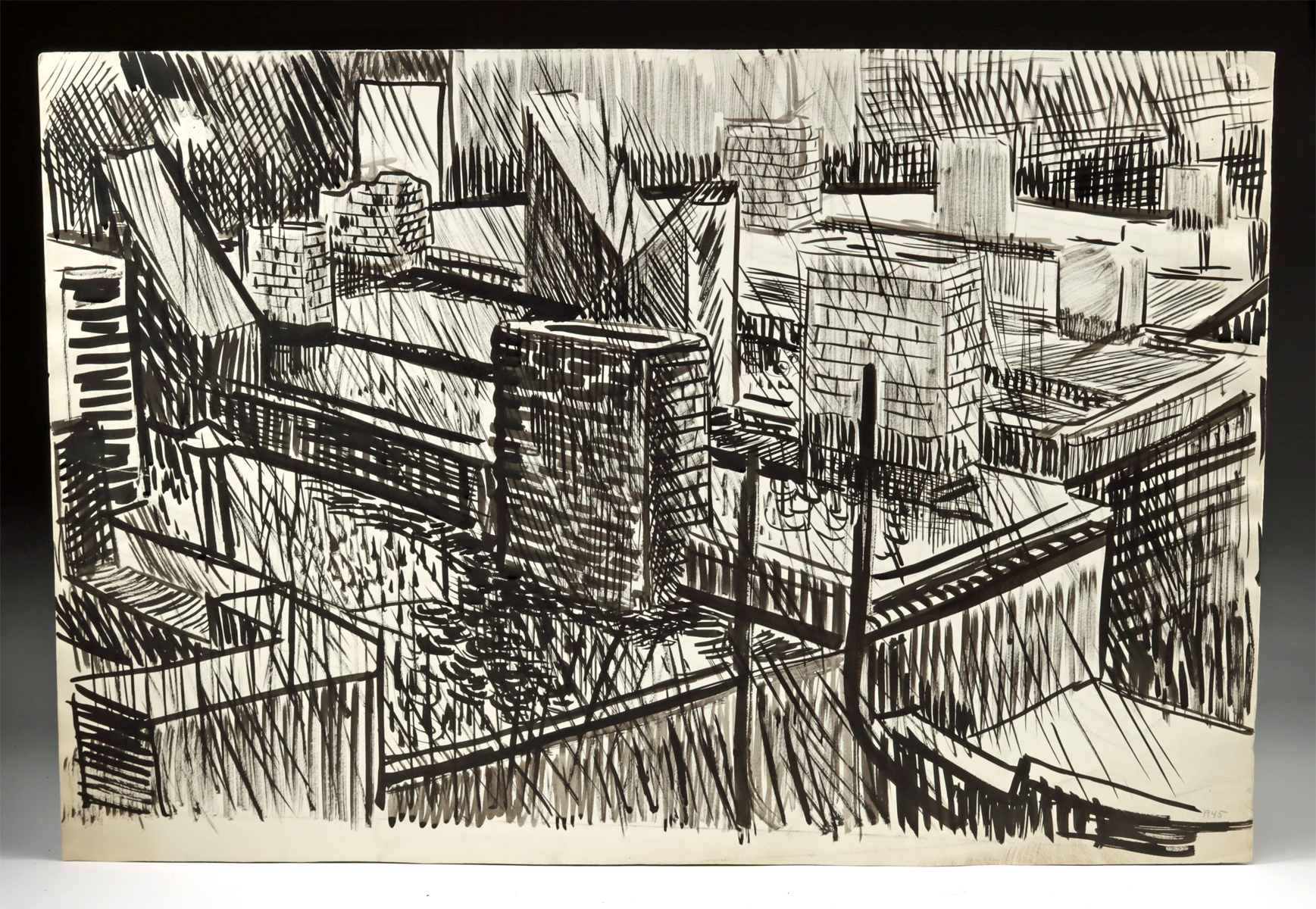
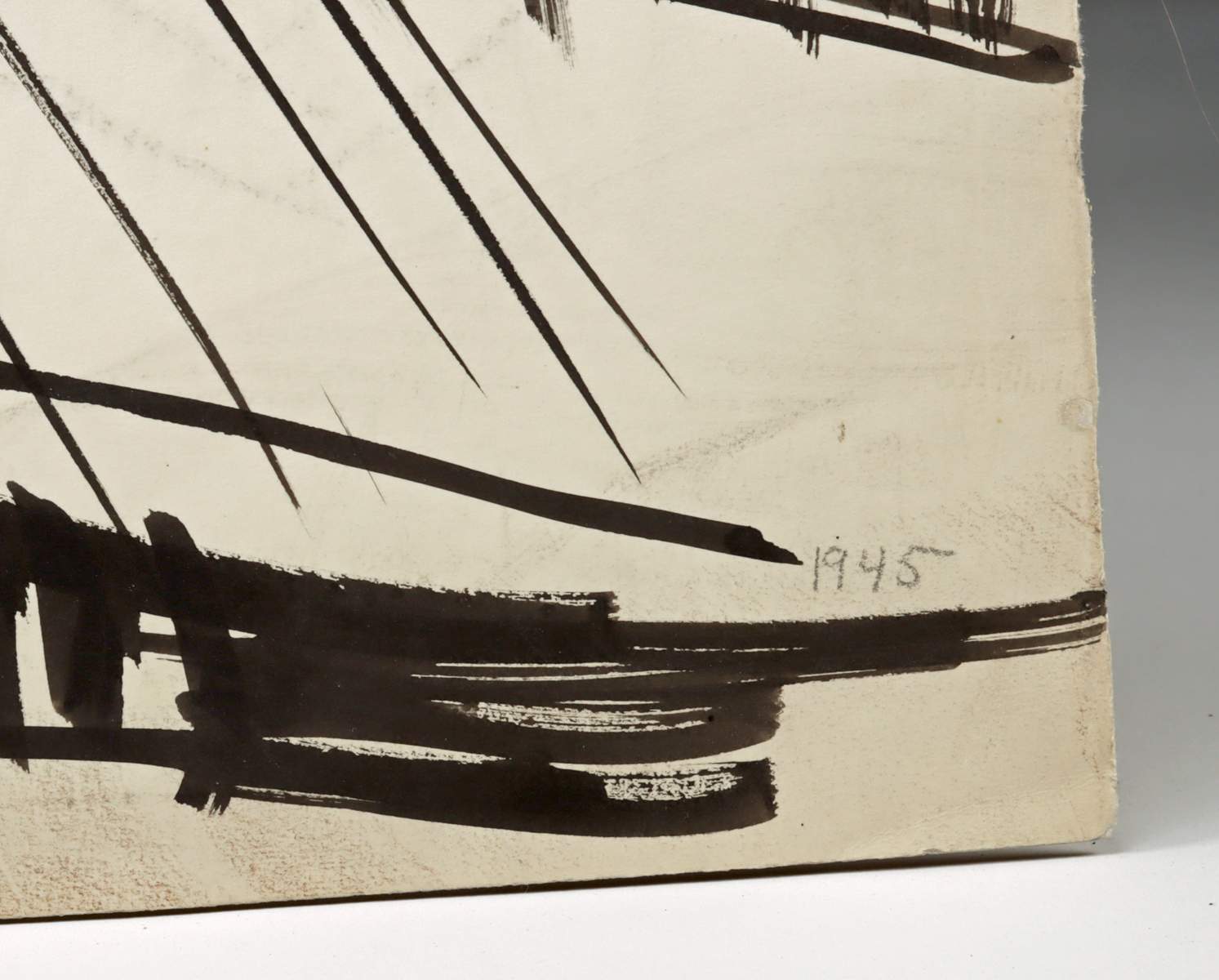
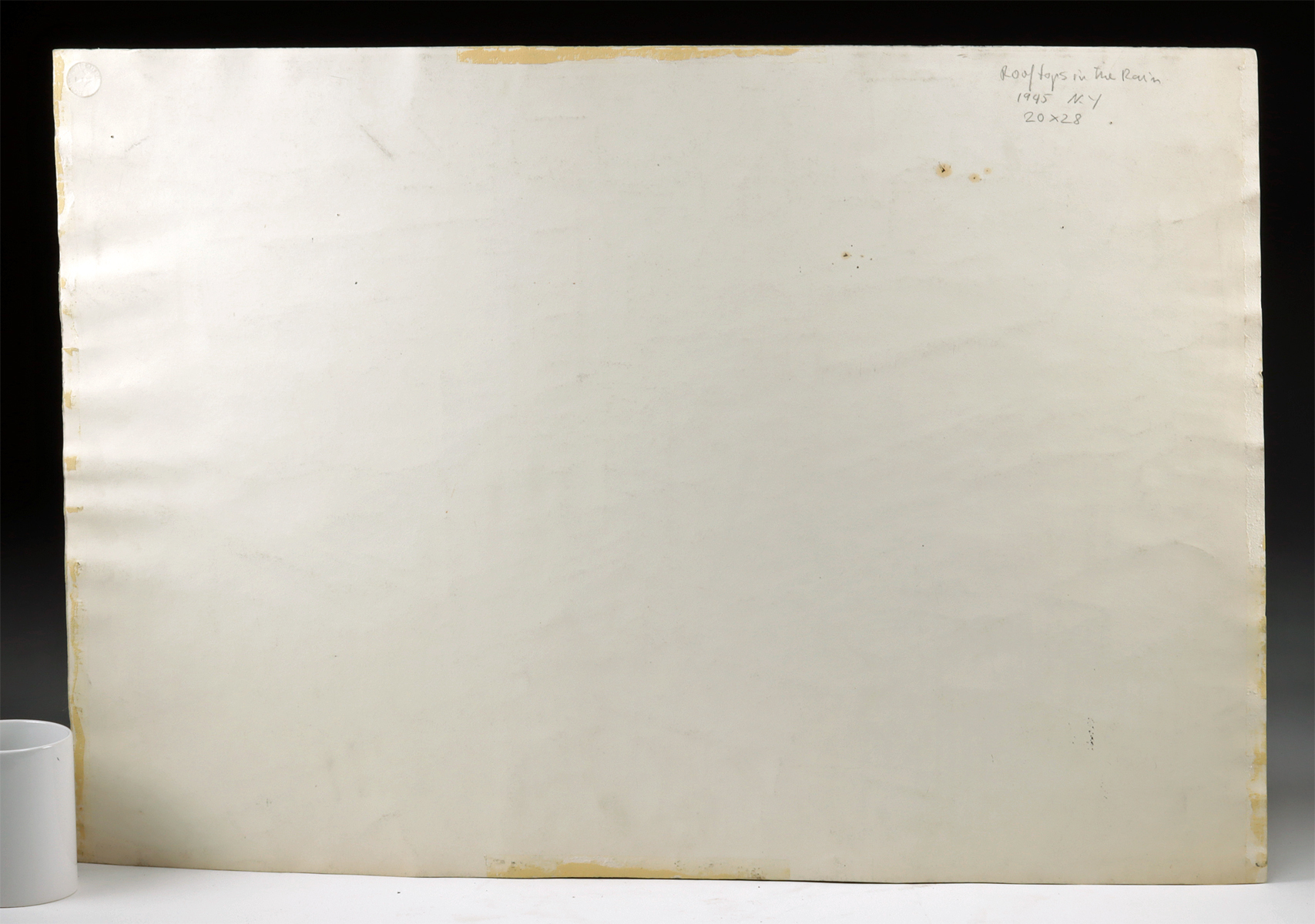
Edith Kramer (Austrian born American, 1916-2014). “Rooftops in the Rain” ink drawing on paper, 1945. Dated at lower right and titled on verso. A rain-soaked city rises in fractured planes and urgent lines in “Rooftops in the Rain,” Edith Kramer’s 1945 ink drawing of New York City seen from above. Chimneys, parapets, and flat roofs stack and intersect in a dense urban lattice, their edges blurred and sharpened in equal measure by falling rain and restless motion. The city feels compressed and alive, as if the weather itself were pressing down on the architecture. Kramer constructs the scene through vigorous, overlapping strokes of black ink, allowing structure to emerge from accumulation rather than outline. Crosshatching thickens into shadowed blocks, while slashing diagonals suggest slick surfaces, runoff, and the relentless rhythm of rain. Perspective shifts subtly across the composition, refusing a single stable viewpoint and instead mirroring the disorientation and energy of the city during the wartime years. Size: 29″ W x 20″ H (73.7 cm x 50.8 cm)
The drawing reflects Kramer’s Bauhaus-influenced approach to form and spatial organization, where geometry and expression are inseparable. Rooftops become abstracted volumes, reduced to their essential relationships of mass, line, and pressure, yet the scene never loses its specificity. Firewalls, vents, and water-darkened surfaces remain unmistakably New York, observed with the clarity of someone who knew the city intimately and worked within its industrial pulse.
Created during Kramer’s early years in the United States, “Rooftops in the Rain” captures an urban moment that is both external and psychological. The rain binds the city together, flattening distance and softening edges, while the assertive mark-making speaks to resilience and forward momentum. It is a drawing that holds tension between order and turbulence, structure and flux, rendering the city not as spectacle, but as lived experience.
About the artist: Edith Kramer was born in Vienna, Austria in 1916. Her exploration of art began at the age of 13 when Kramer took classes with Friedl Dicker, a graduate of the Bauhaus in Weimar, Germany. Kramer was greatly influenced by the theories of Bauhaus artist Johannes Itten who developed the preliminary Bauhaus course from 1919 to 1922. After Kramer graduated from Realgymnasium, Vienna in 1934 , she followed Dicker to Prague to continue her studies. Perhaps even more impactful was the time she spent assisting Dicker in teaching art to the children of political refugees.
Fearing the Nazi invasion, Kramer sought refuge in the United States. She arrived in New York City in 1938, and taught sculpture at the Little Red School House, one of the city’s first progressive schools. During WWII, Kramer worked in a machine shop in Soho. This experience resonated with her Bauhaus education and presented an opportunity to sketch and paint sitters in industrial settings. In addition to being a painter, Kramer was a sculptor, a printmaker, a collage maker, a mosaicist, a professor, and a founder of the Art Therapy movement.
Kramer is perhaps best known for her work as a pioneer in the field of Art Therapy. In 1971 she was part of the team that established an Art Therapy program at George Washington University, and she created the graduate program in Art Therapy at New York University in 1973. With her training in art, art education, as well as psychoanalytically informed psychotherapy, Kramer believed that negative emotions and thoughts could be transformed and rechanneled into productive energy through art. She and fellow pioneer Margaret Naumburg set out to champion the new field of Art Therapy. Kramer also believed that art therapists should create their own art in order to deal with the stress and exhaustion of clinical work, so she continued to create her own art. The following is Kramer’s statement about art therapy: “I perceive myself as a specialist who combines the general qualifications of being a competent artist with specialized capacities in the field of psychotherapy and education.
The theoretical framework of my understanding of child psychology is based in the main on Freudian psychoanalytic thought. The emphasis, however, is on the idea of art as therapy rather than on psychotherapy which uses art as a tool. My therapeutic medium is as old as mankind. Since human society has existed the arts have helped man to reconcile the eternal conflict between the individual’s instinctual urges and the demands of society. Thus, all art is therapeutic in the broadest sense of the word. The artist who applies modern psychology in the field of art has to adapt his methods to the medium so that the therapeutic value of art is heightened by the introduction of therapeutic thinking, not destroyed or weakened by the introduction of concepts and methods that might be incompatible with the inner laws of artistic creation.
It is not always easy for the art therapist to reconcile the therapist’s approach with her function as an artist and teacher. In her function as a teacher who introduces disturbed children or adults into the realms of art, she has to be ready to accept the limitations of the individuals in her care. She has to be interested in progress on any level. She has to be flexible enough to accept and understand a diversity of styles and to find ways of helping each person according to his individual needs. As therapist she has to accept the unbeautiful manifestations of sexual and aggressive impulses in the raw, along with the results of confusions and incomplete sublimation. But this attitude of acceptance, which is essential in all therapy, must not dull the artist’s capacity for discrimination. The teacher has to preserve her integrity genuine, between blocks and limitations, regressions and progress, superficial pretense and genuine communication.
Even though my therapeutic approach includes awareness of psychic processes that may remain unconscious, the therapeutic maneuvers I am apt to employ seldom include uncovering unconscious material or the interpretation of unconscious meaning.
Art therapy is conceived primarily as a means of supporting the ego. It harnesses the power of art to the task of fostering a psychic organization that is sufficiently resilient to function under pressure without breakdown or the need to resort to stultifying defensive measures. Thus conceived, art therapy constitutes an element of the therapeutic milieu that complements or supports psychotherapy but does not replace it.
While art therapists encourage unconventional form and content in the art of their patients they are also intent on fostering artistic eloquence. The spoken words in psychotherapy and the play and talk in clinical therapy are typically formless and fluid. Content rather than form is essential. In art therapy form and content are equally important and the order and structure with which artistic creation endows experience constitutes a powerful aid in sorting out and mastering experience. To quote of art Susan Langer (1962): ‘The primary function of art is to objectify experience so that we can contemplate and understand it’ (p.90).” (source: Edith Kramer website)
Condition: In excellent overall condition. Dated at lower right and titled on verso.
Provenance: private Denver, Colorado, USA collection
All items legal to buy/sell under U.S. Statute covering cultural patrimony Code 2600, CHAPTER 14, and are guaranteed to be as described or your money back.
A Certificate of Authenticity will accompany all purchases.
We ship worldwide and handle all shipping in-house for your convenience.
Related Products
-


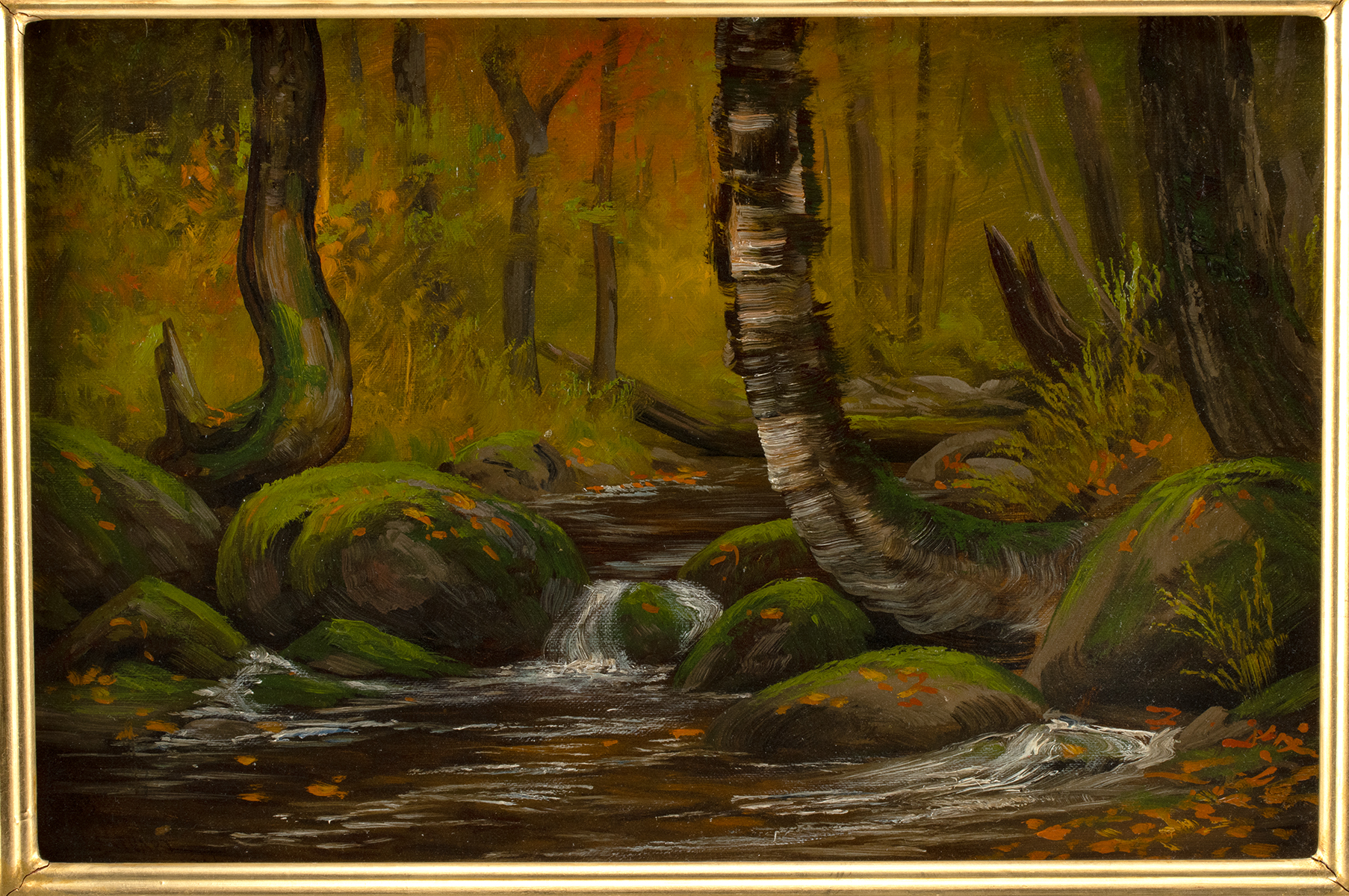
Lot 234, Auction 4/3/2026: James E. Stuart Painting “Looking Up a Brook …” (1906)
Add to cart -


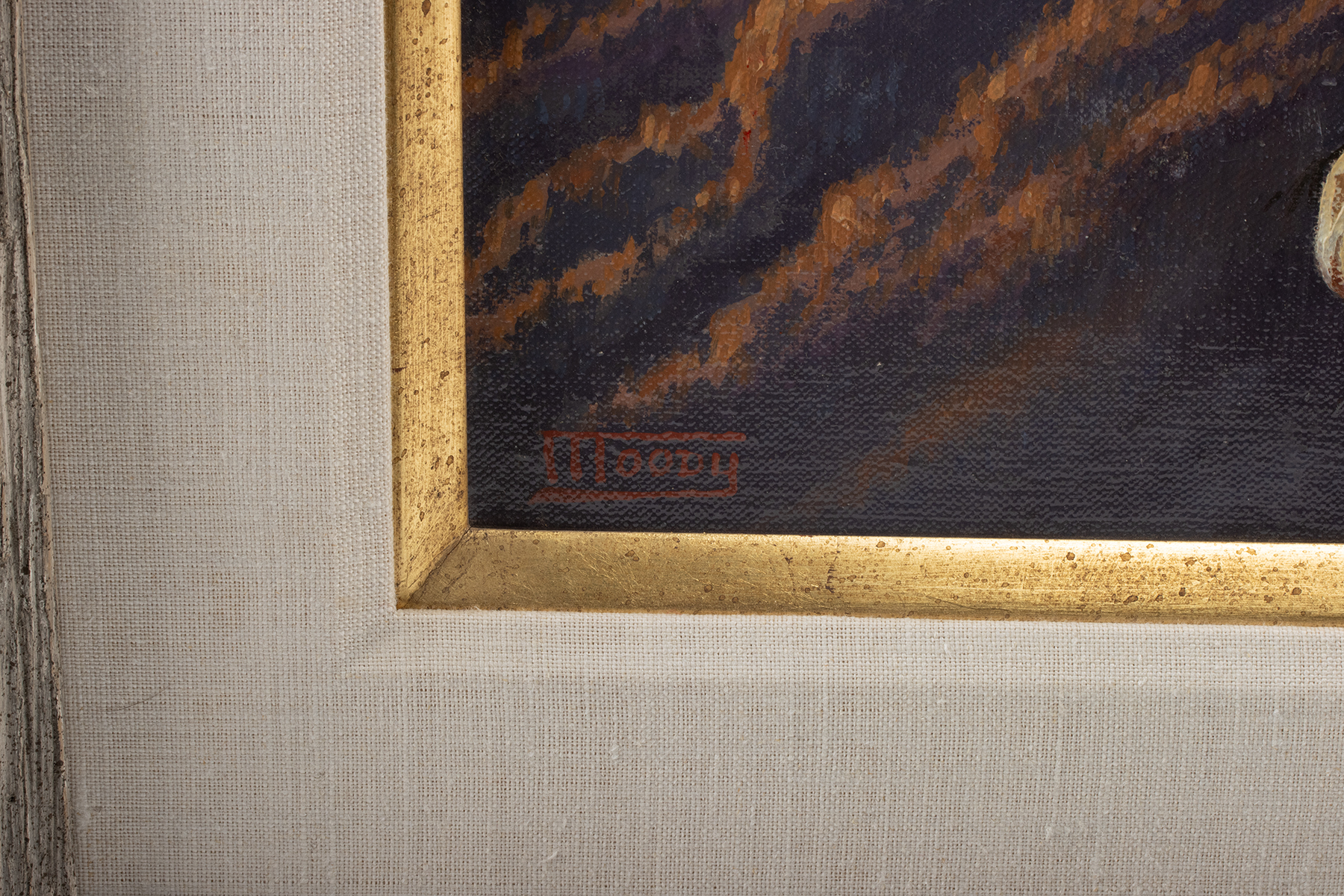
Lot 233, Auction 4/3/2026: Franklin Moody Painting – Storm’s Passing, Grand Canyon
Add to cart -


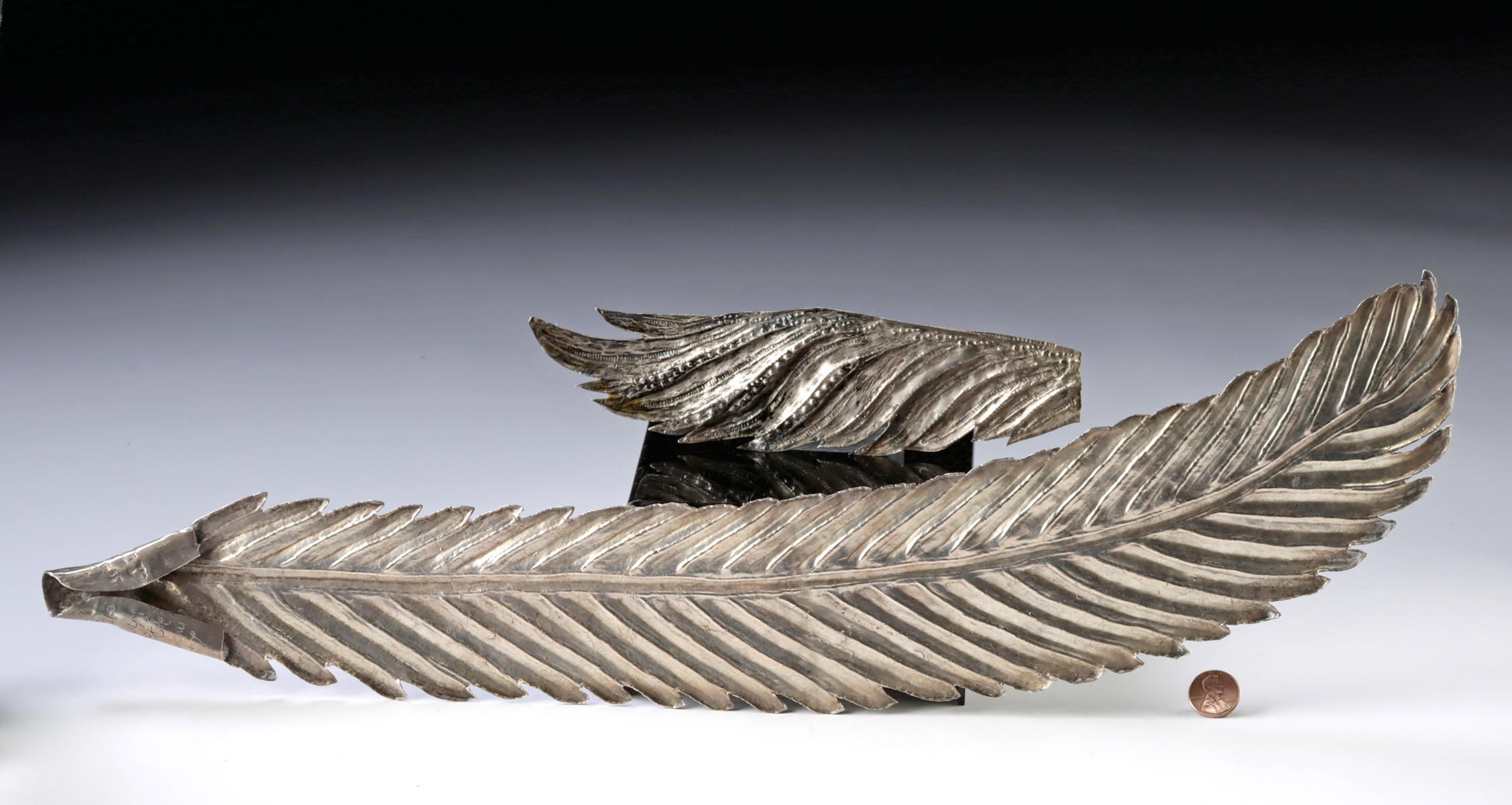
Lot 227b, Auction 4/3/2026: Two 19th C Italian Silver Devotional Feathers
Add to cart -


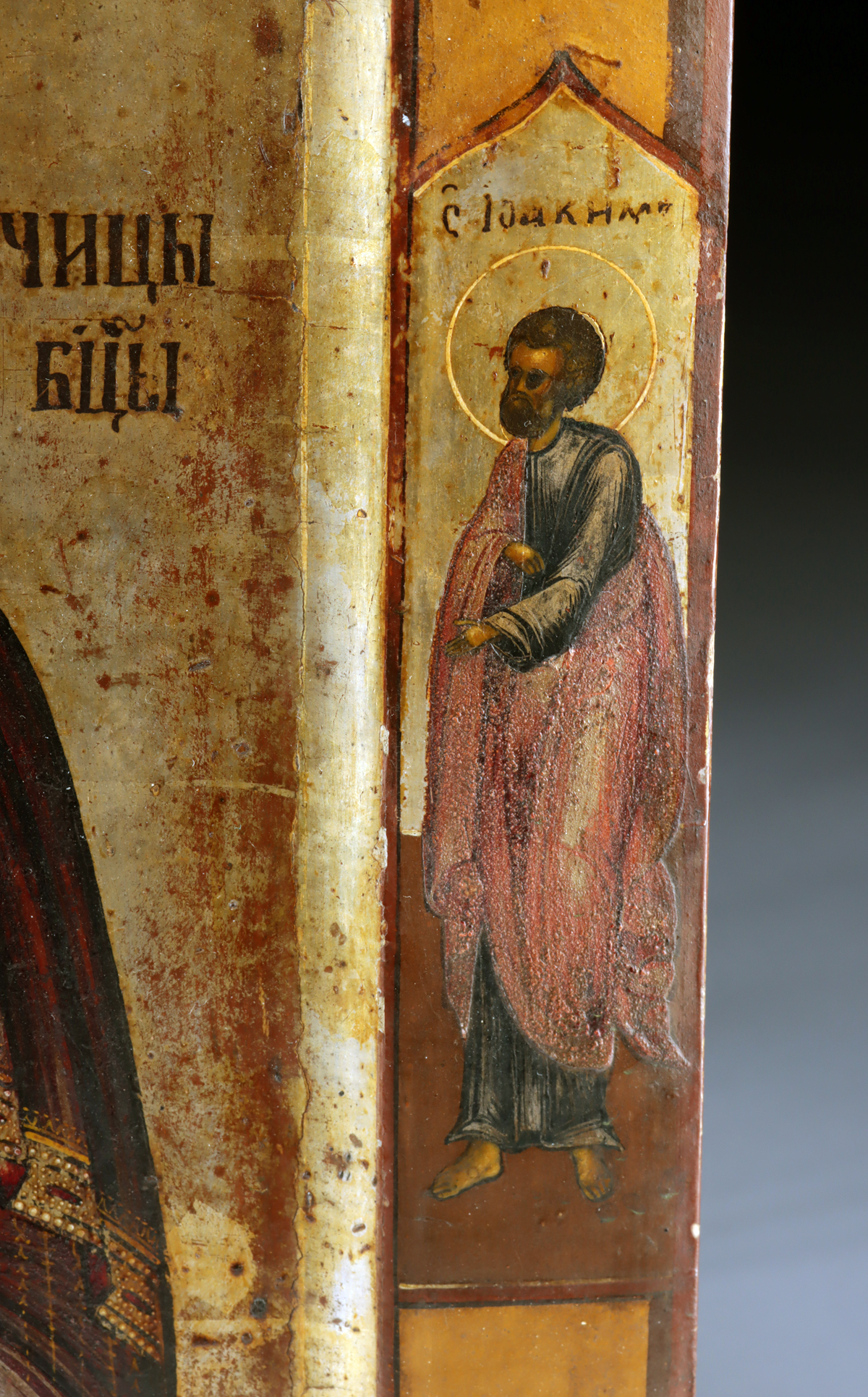
Lot 227, Auction 4/3/2026: 19th C. Gilt & Silvered Three-Handed Mother of God Icon
Add to cart -


Lot 226, Auction 4/3/2026: 18th C. Russian Silvered Icon – “The Unexpected Joy”
Add to cart -


Lot 221, Auction 4/3/2026: WWI Silver-Plated Shell Trench Art – Dancers
Add to cart -


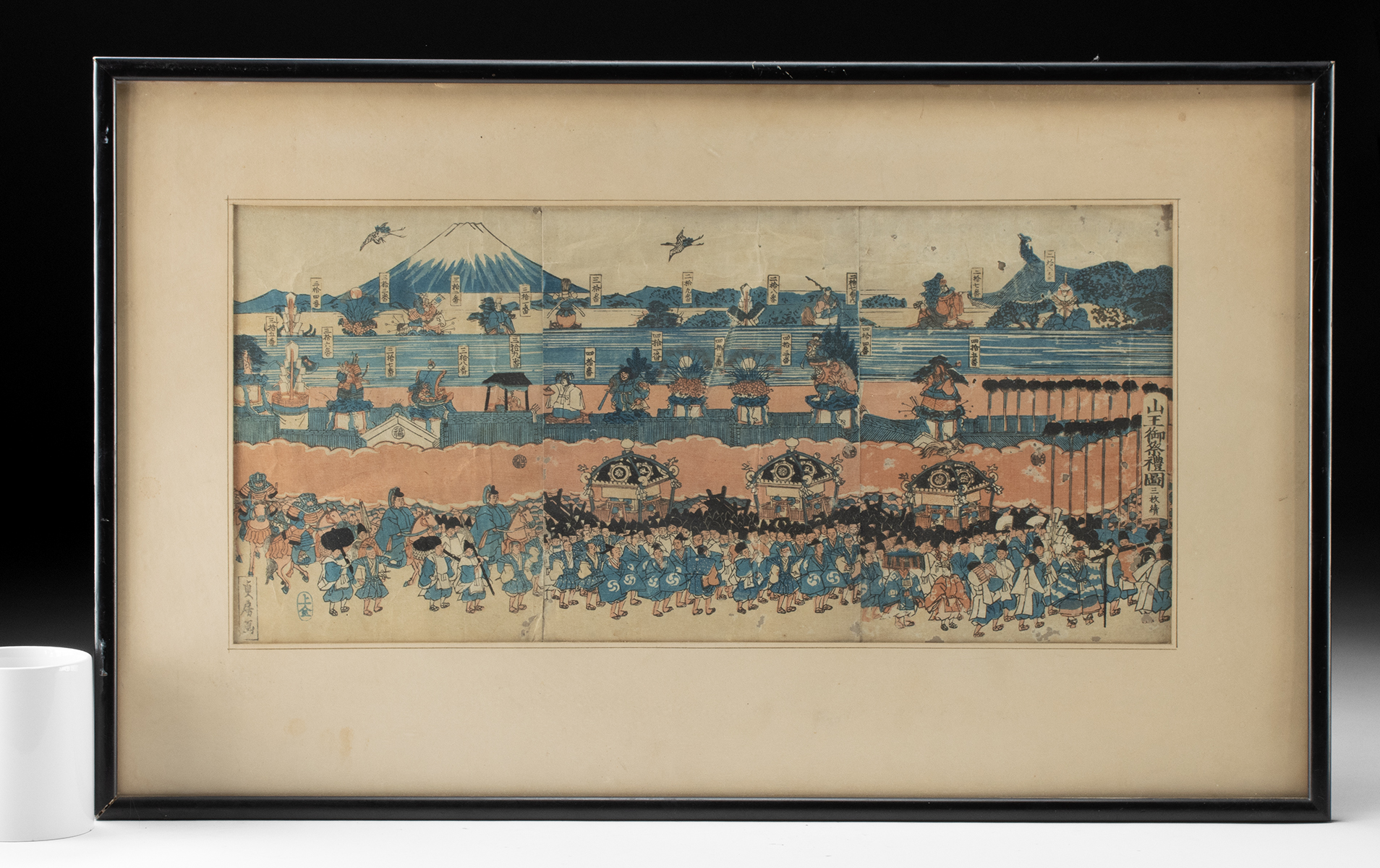
Lot 184, Auction 4/3/2026: Japanese Ukiyo-e Print Triptych – “Sanno Festival”
Add to cart -


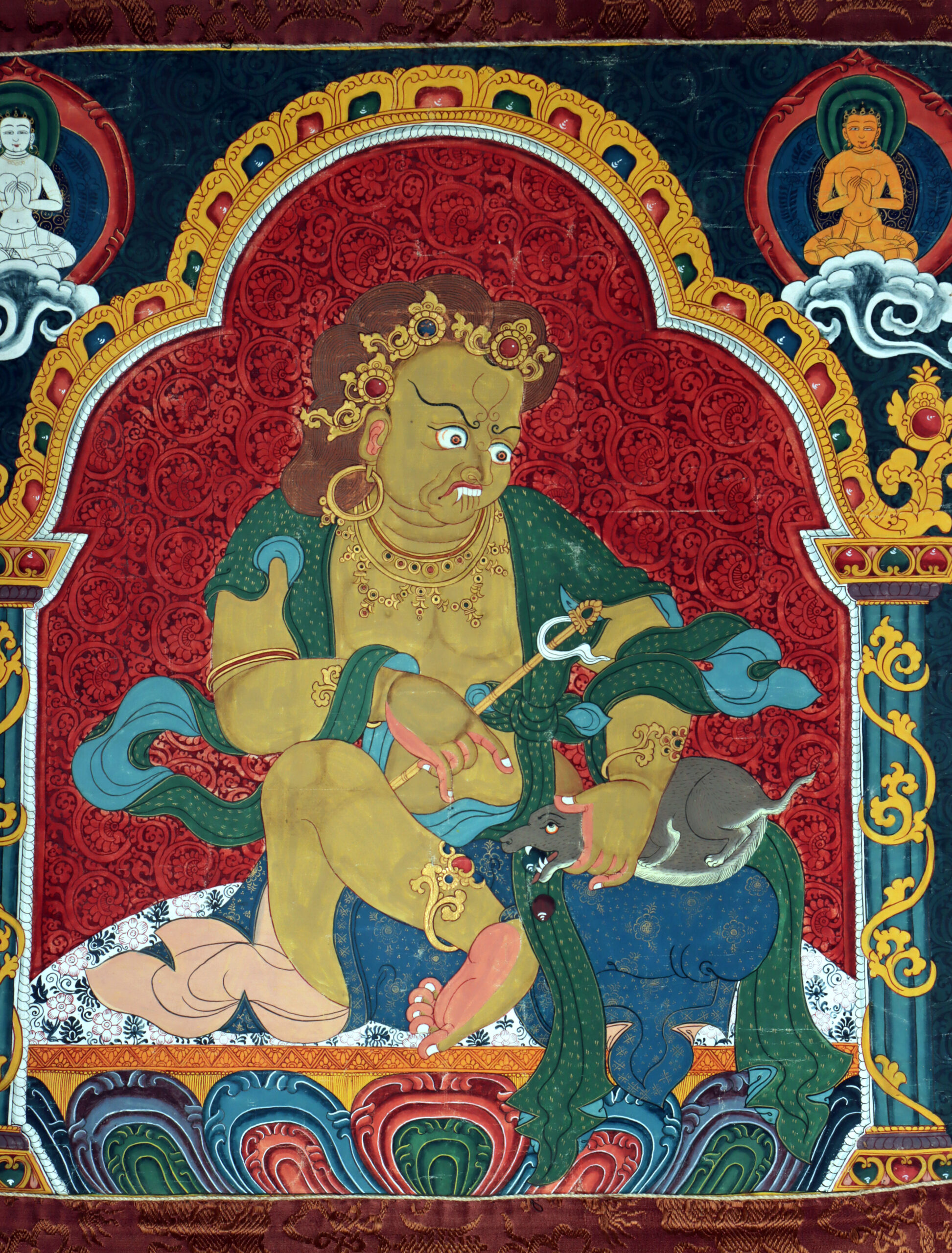
Lot 161d, Auction 4/3/2026: Tibetan Gilt Thangka Silk Painting – Yellow Jambhala
Add to cart -

Lot 161c, Auction 4/3/2026: 18th C. Tibetan Thangka – Shakyamuni Buddha
Add to cart -


Lot 132, Auction 4/3/2026: Egyptian Coptic Textile Fragment – Nude Dancers & Hares
Add to cart