Lot 168, Auction 4/3/2026: Chinese Wei – Tang Dynasty Terracotta Guardian w/ TL
$845.00
In stock
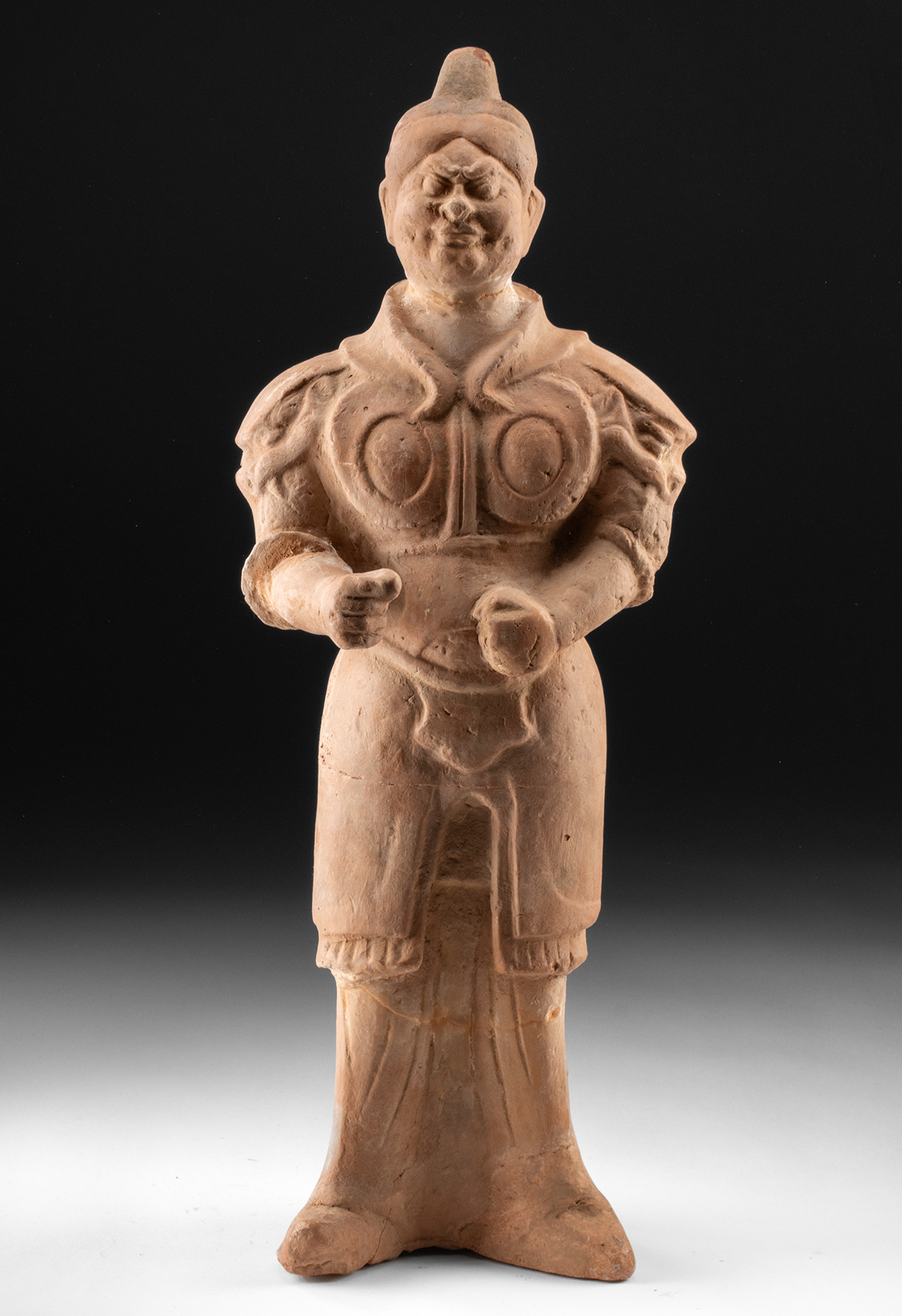
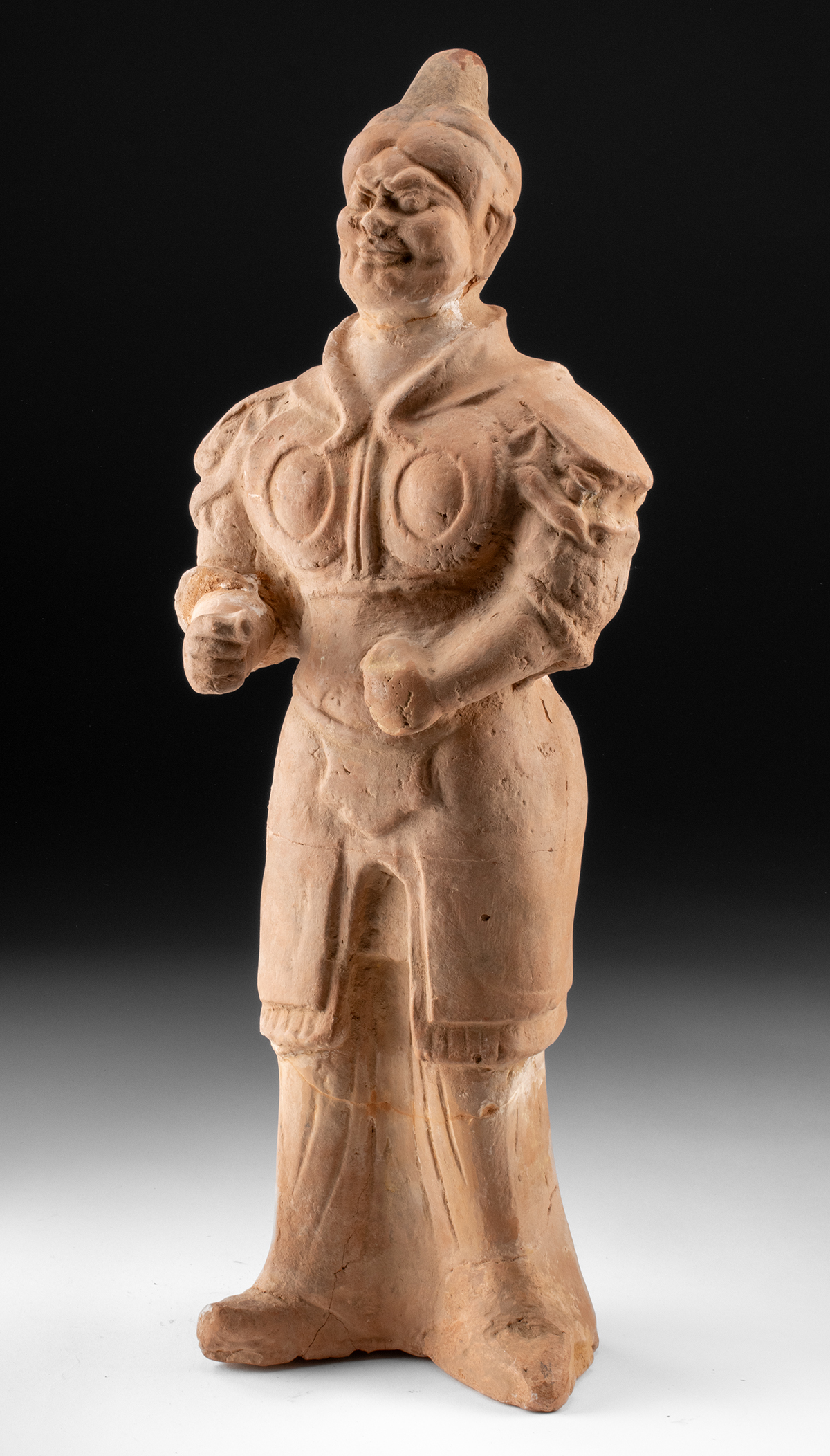
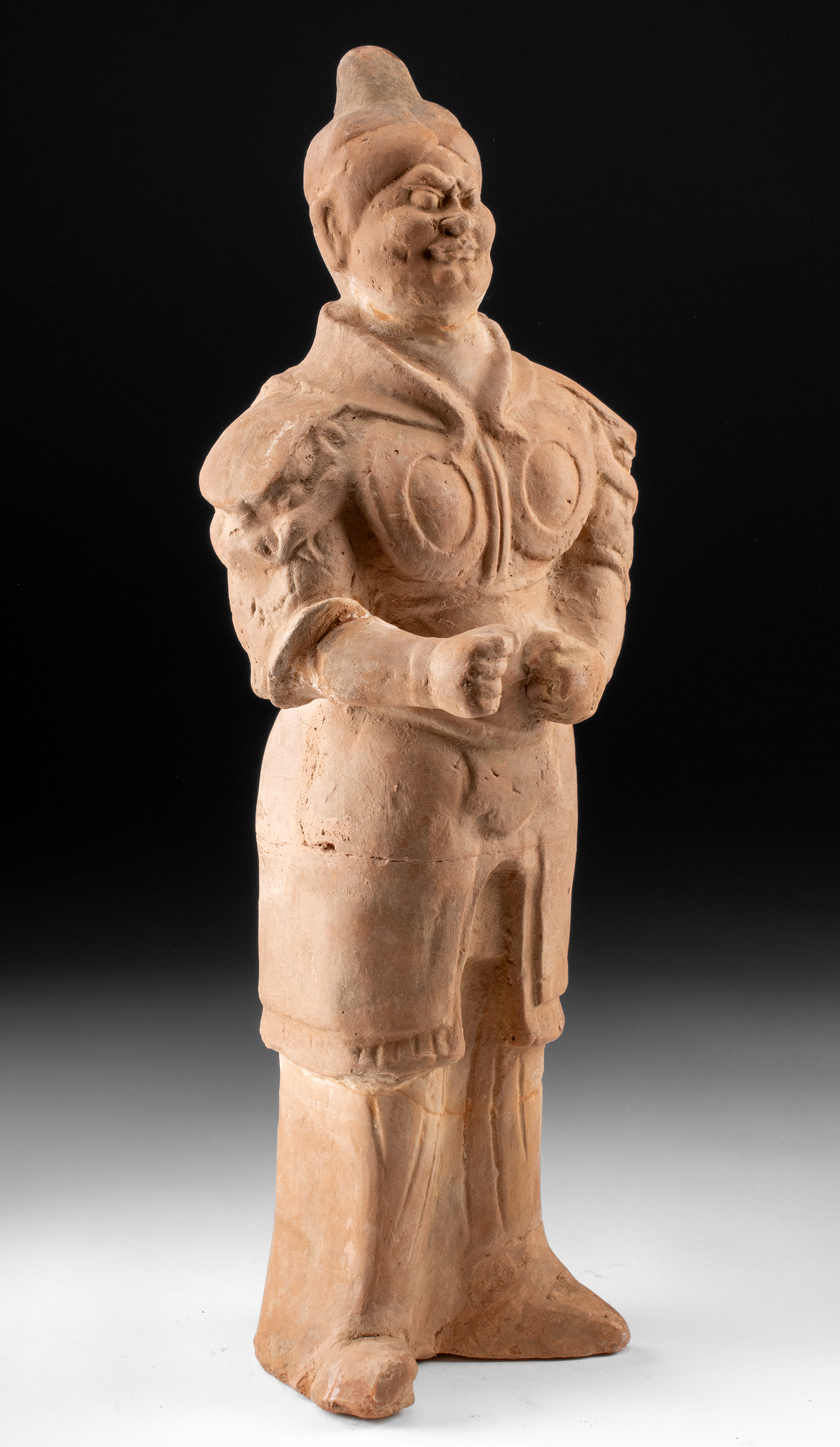
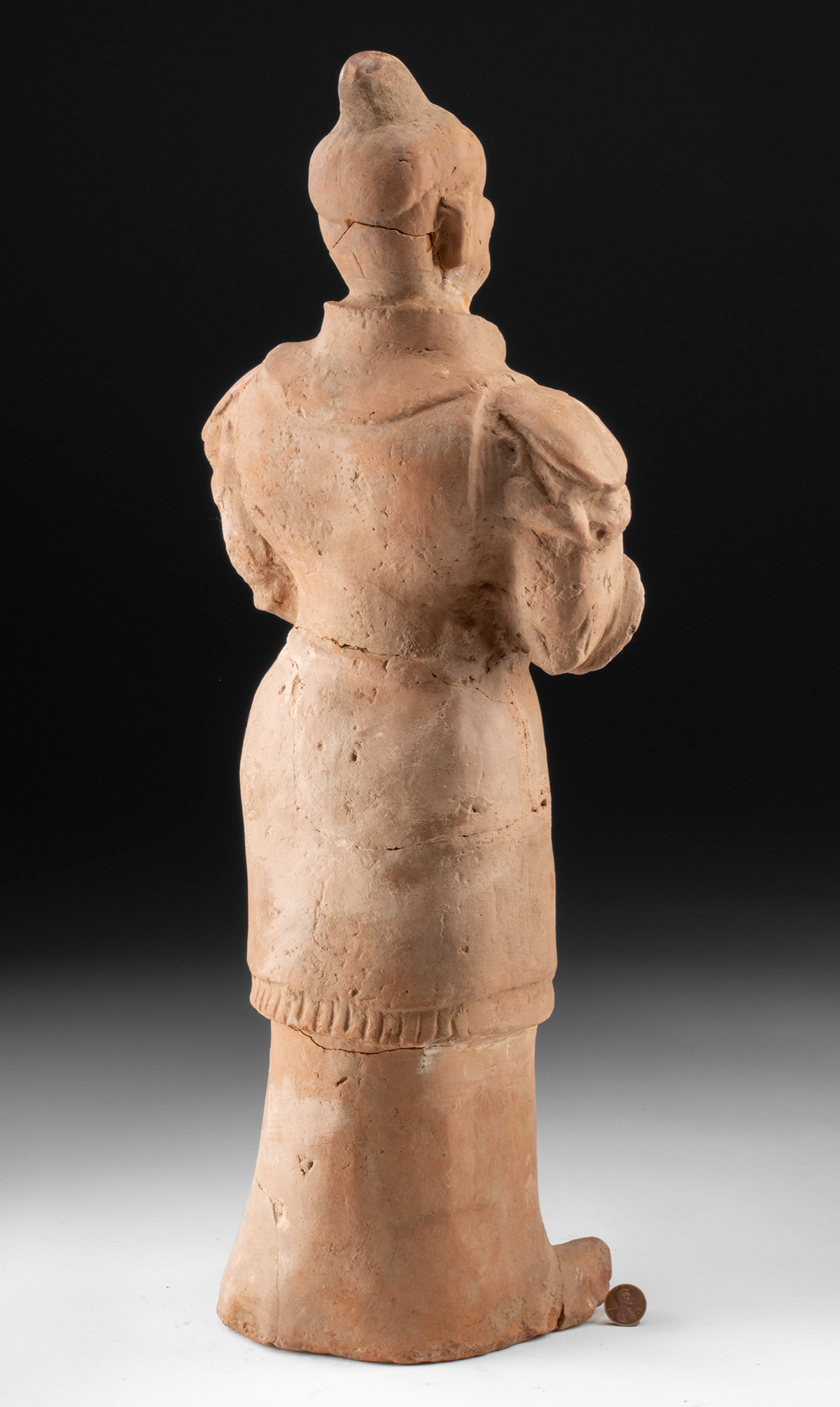
East Asia, China, Northern Wei to early Tang Dynasty, ca. 5th to 7th century CE. A commanding terracotta guardian figure, this imposing sculpture once stood sentinel within a Chinese tomb, its stern gaze and armored presence intended to repel malevolent forces in the afterlife. Modeled in earthenware and now presenting in buffware, the figure was originally vividly painted, its polychrome surface animating the armor, garments, and facial features within the dim interior of a burial chamber. Constructed in sections, it stands upright on sturdy, booted feet, its proportions elongated in keeping with sculptural conventions of the Northern Wei and early Tang periods. The torso is clad in stylized armor, marked by circular breast medallions and pronounced shoulder guards, while the arms bend forward at the elbows, hands clenched as if once grasping now-lost attributes or weapons. The garment falls in simple, columnar folds below the waist, terminating above firmly planted feet that anchor the figure with quiet authority. Size: 8.2″ W x 22.1″ H (20.8 cm x 56.1 cm)
The face is expressive and forceful. Heavy-lidded eyes, arched brows, and a tightly set mouth convey vigilance and restrained power. The figure wears a cap or helmet rising to a subtle peak, reinforcing its martial identity. Though surface pigments have largely faded, traces would once have heightened the figure’s lifelike presence and intensified its protective function.
Guardian figures of this type formed part of mingqi, or spirit goods, placed in elite tombs to serve and protect the deceased in the afterlife. During the Northern Wei and into the Tang dynasty, funerary sculpture evolved toward greater naturalism and dynamism, reflecting both Central Asian influences and the cosmopolitan culture of early medieval China. Martial guardians, along with civil officials, attendants, and mythical beasts, populated tomb ensembles that mirrored earthly hierarchies.
Large-scale examples such as this underscore the status of the tomb occupant and the importance placed on spiritual protection. With its solid stance, stylized armor, and vigilant expression, the figure embodies the transitional aesthetic between the linear elongation of the Wei period and the growing volumetric strength that would define Tang sculpture.
This piece has been tested using thermoluminescence (TL) analysis and has been found to be ancient and of the period stated. A full printed and bound report will accompany the item upon purchase.
Condition: Repaired from multiple pieces and restoration to left foot and areas of left arm, with resurfacing and overpainting along new material, and small chips, some resurfacing, and light adhesive residue along break lines. Fading to original pigment, with abrasions and minor nicks to legs, body, arms, and head, and softening to some finer details. Nice remains of original slip pigment throughout. TL drill holes behind left arm and beneath base.
Provenance: private Collector, Staten Island, NY, USA; ex-private Forest Hills, New York, USA collection, acquired in October 2020; ex-Artemis Gallery, Louisville, Colorado, USA; ex-private J.H. collection, Beaverton, Oregon, USA, acquired in May 2015; ex-Artemis Gallery; ex-private Maui, Hawaii, USA collection acquired prior to 2013
All items legal to buy/sell under U.S. Statute covering cultural patrimony Code 2600, CHAPTER 14, and are guaranteed to be as described or your money back.
A Certificate of Authenticity will accompany all purchases.
We ship worldwide and handle all shipping in-house for your convenience.
Related Products
-


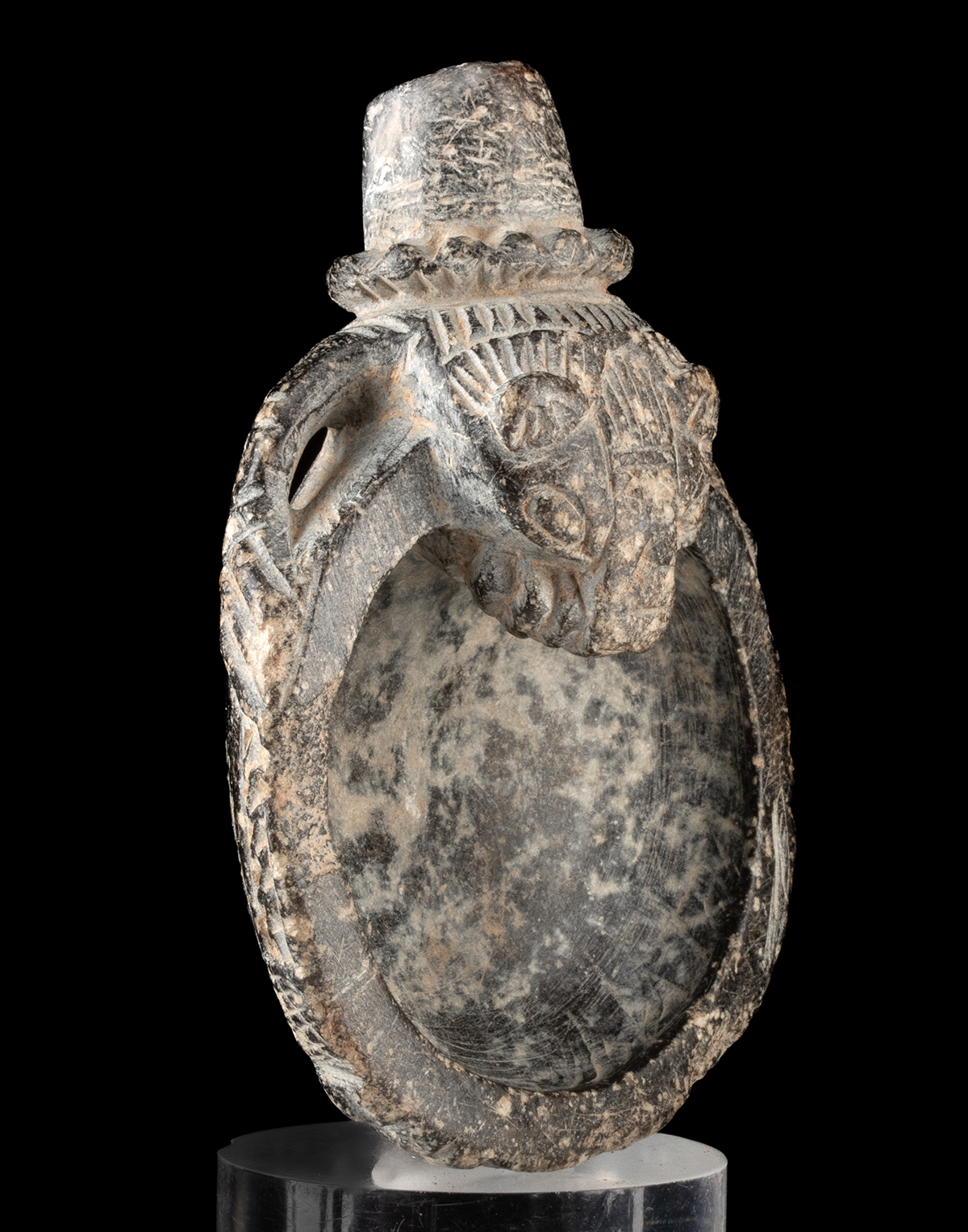
Lot 152a, Auction 4/3/2026: Mesopotamian Stone Libation Bowl Lion Effigy
Add to cart -


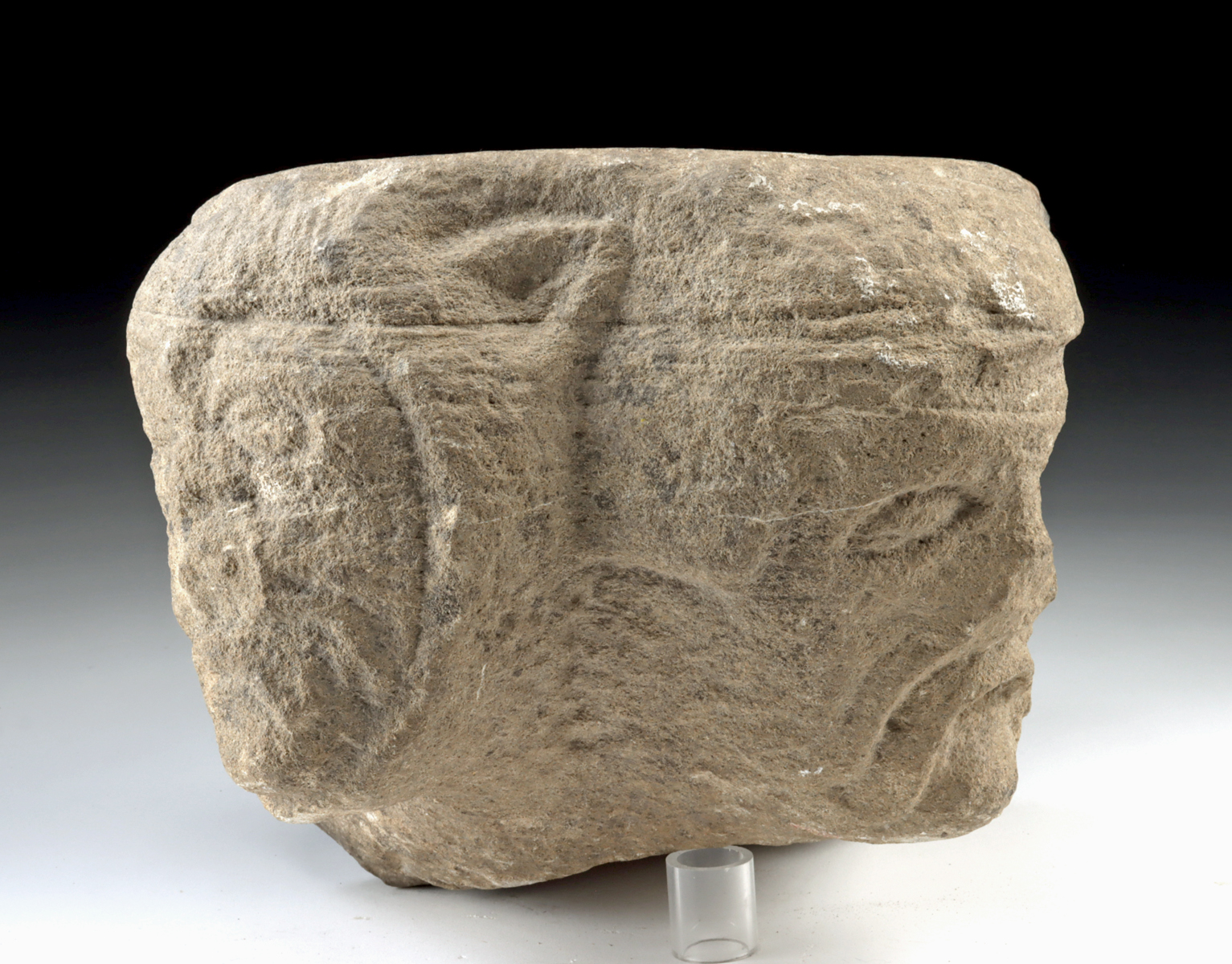
Lot 150, Auction 4/3/2026: 12th C. Medieval Stone Corbel with Dual Faces
Add to cart -


Lot 135, Auction 4/3/2026: Eastern Greek Archaic Terracotta Votive – Woman w/ Bird
Add to cart -


Lot 130, Auction 4/3/2026: Ancient Egyptian Ptolemaic Pottery Figurine Fragments
Add to cart -


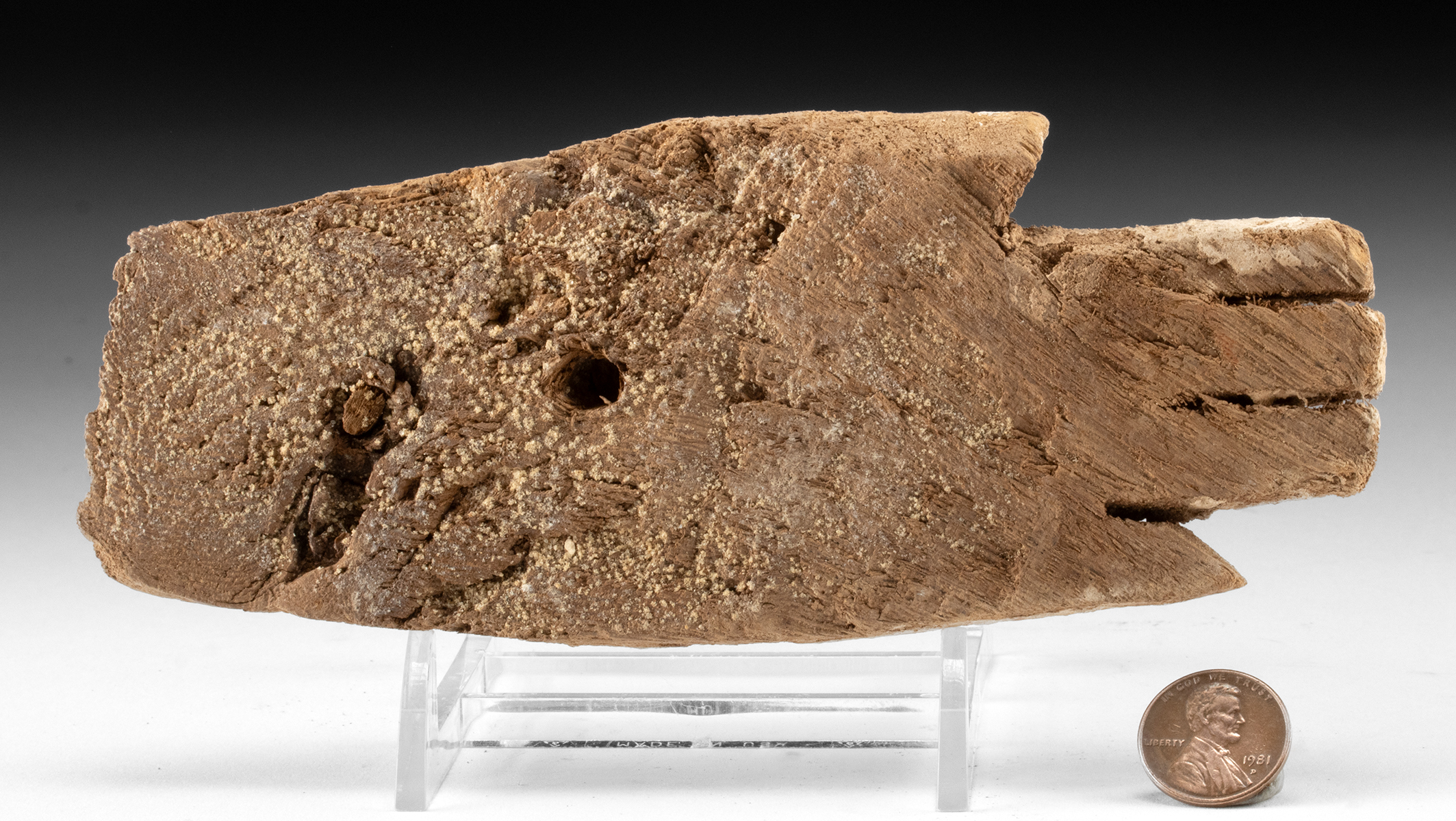
Lot 126, Auction 4/3/2026: Egyptian Painted Wood Hand – Late Dynastic Sarcophagus
Add to cart -


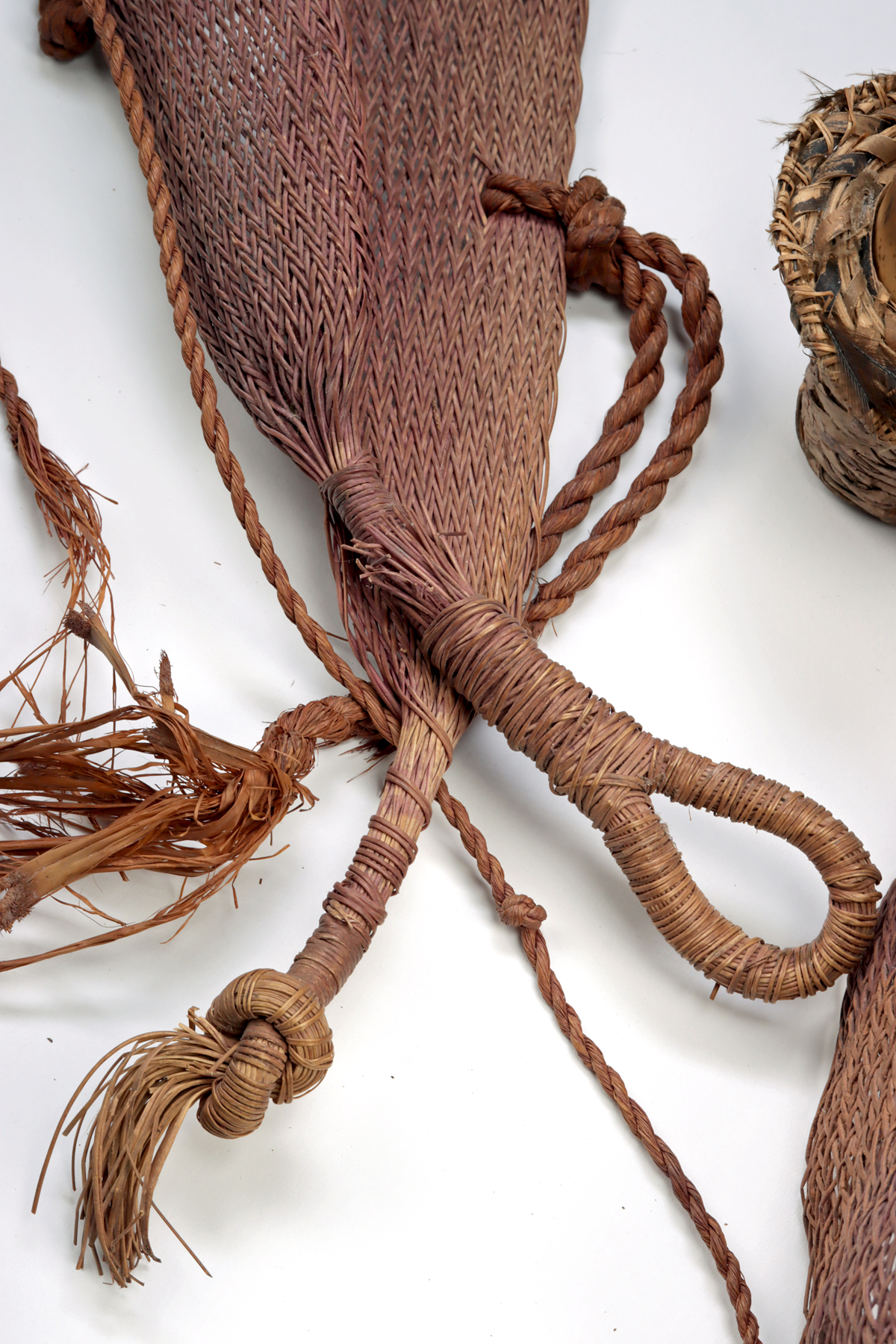
Lot 121, Auction 4/3/2026: Papua New Guinea Bamboo & Vegetal Fiber Implements
Add to cart -


Lot 119, Auction 4/3/2026: Papua New Guinea Yimam Yipwon Spirit Figure – Korewori
Add to cart -


Lot 117, Auction 4/3/2026: Dayak Wood Bound Captive Figure w/ Horse Hair Rope
Add to cart -


Lot 116, Auction 4/3/2026: Borneo Dayak Wood Ancestral Figure, Hampatong Guardian
Add to cart -


Lot 112, Auction 4/3/2026: Two African Wood Nude Figures – Bembe & Chamba
Add to cart