Lot 163, Auction 4/3/2026: 17th C. Chinese Seated Lohan, Glass Eyes & Shunya Mudra
$2,080.00
In stock
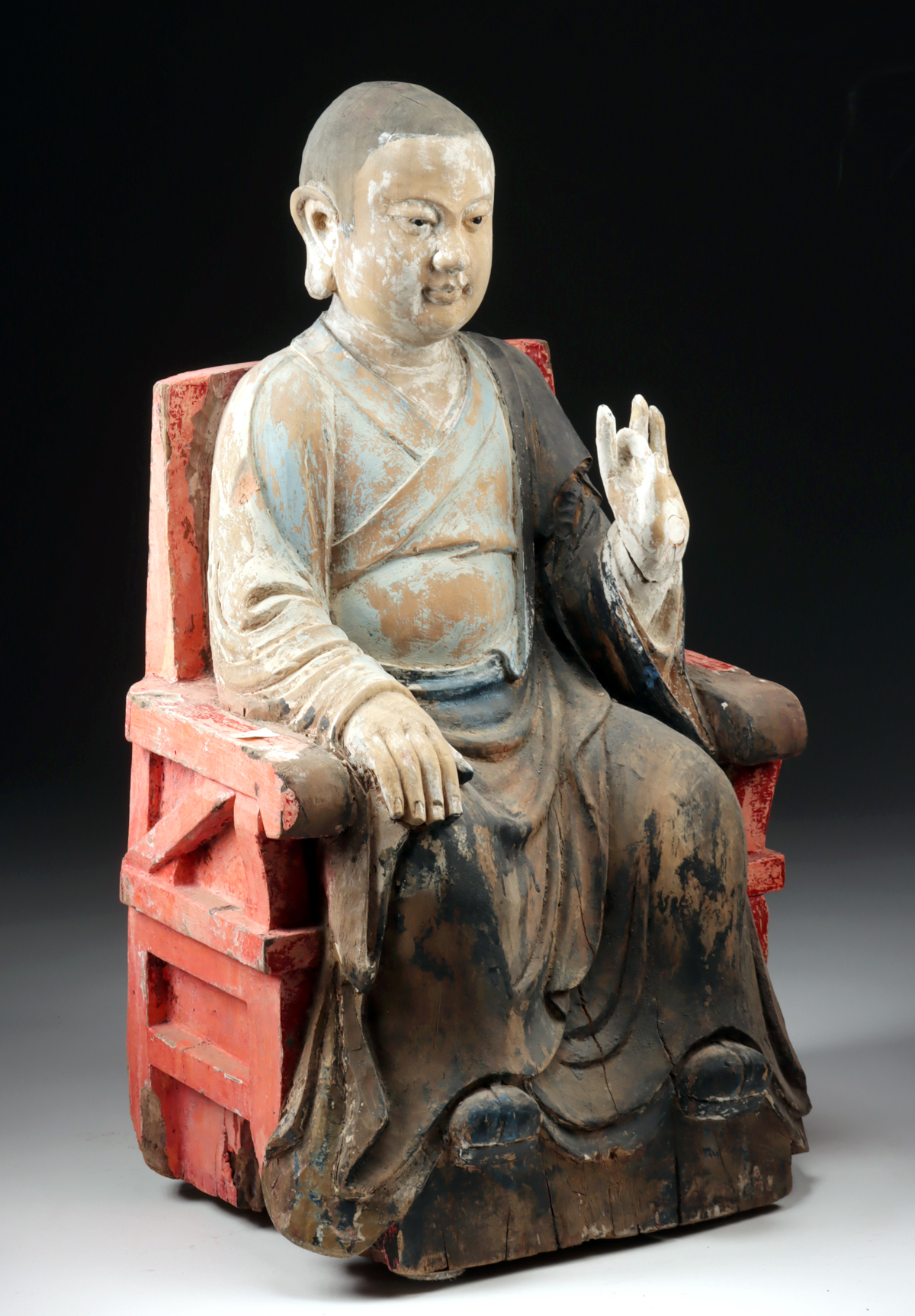
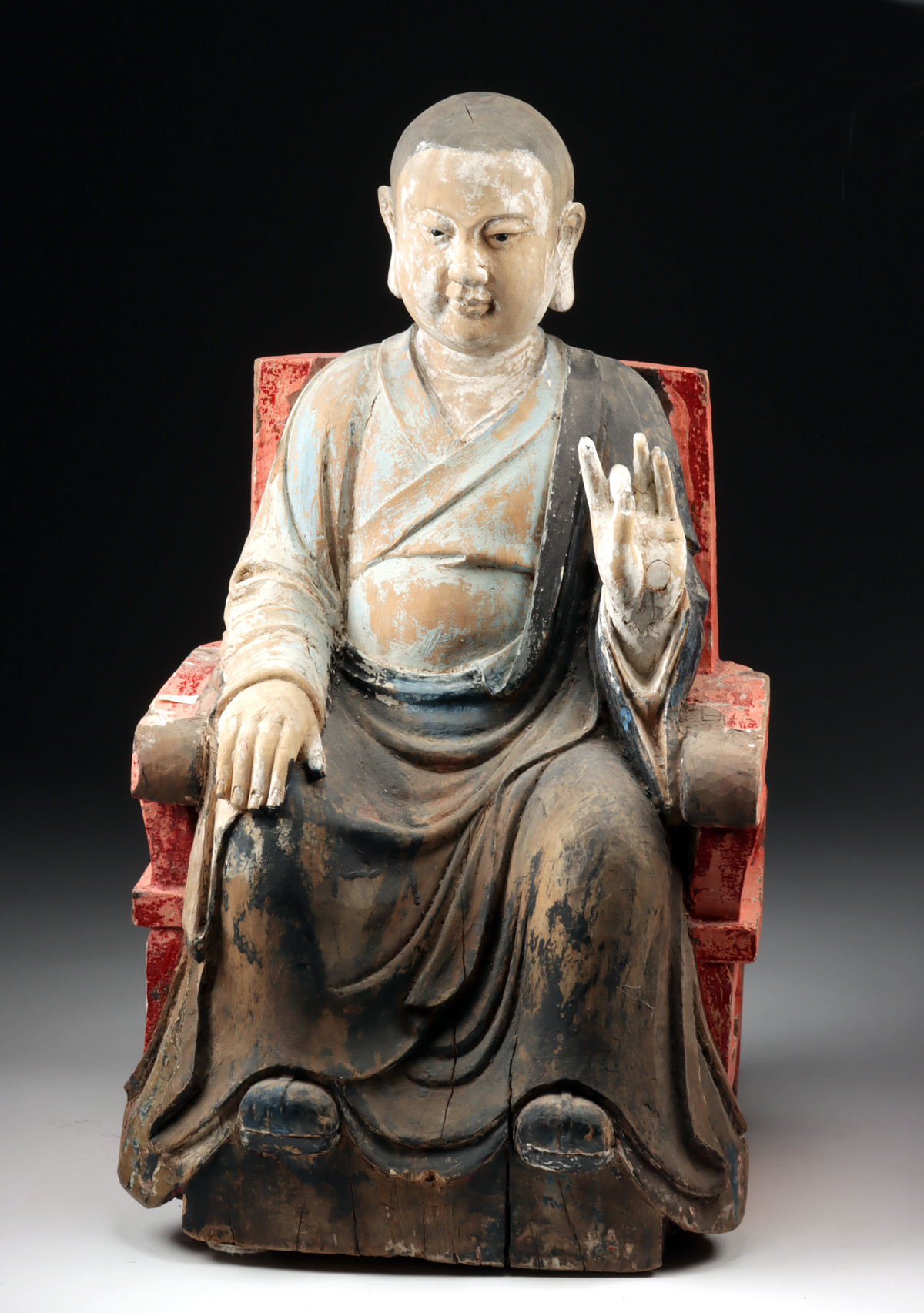
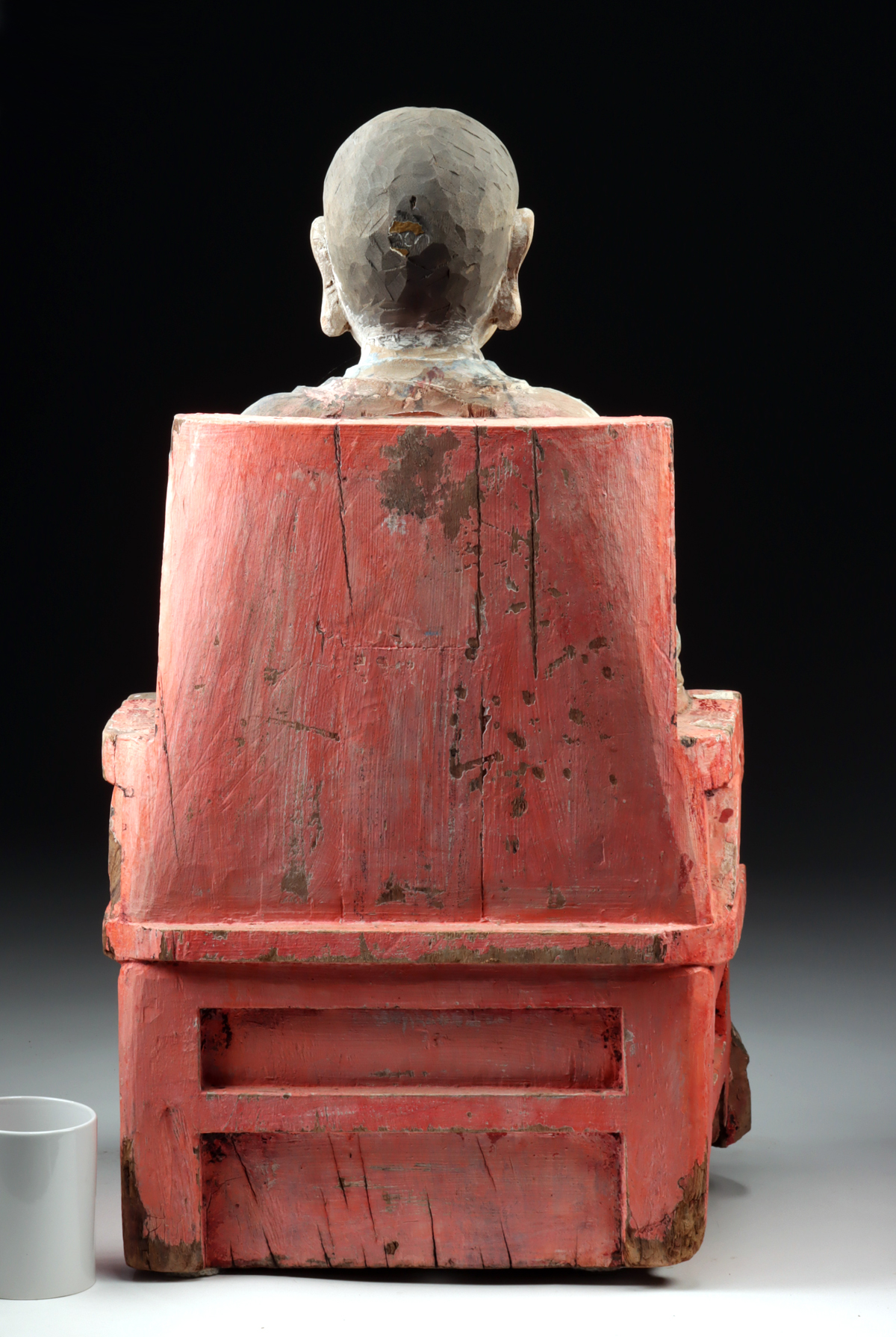
East Asia, China, late Ming to early Qing Dynasty, ca. 17th to 18th century CE. A solemn and sensitively rendered wooden sculpture of a lohan (also known as arhat), a venerable disciple of the Buddha, seated in dignified repose upon a red-lacquered chair. Carved with a commanding yet peaceful expression, the lohan holds his left hand in the shunya mudra – the “seal of patience” – a symbolic gesture associated with cultivating inner calm and transcending the ego. His right hand rests gently on his knee in a naturalistic pose. The figure is draped in a monastic robe that flows in sinuous folds, its surface retaining traces of black, blue, and ochre pigments that contrast beautifully with the bold red of the chair. The figure’s glass eyes, set within finely carved sockets, lend a lifelike sense of presence, intensifying the contemplative realism of his gaze. His shaved head, full cheeks, and slightly parted lips reflect the serene self-mastery of a spiritual elder. Size: 11.5″ L x 14.4″ W x 26″ H (29.2 cm x 36.6 cm x 66 cm)
During the Ming and Qing periods, such figures were frequently installed in temple halls, either individually or as part of a set of sixteen or eighteen arhats. Their expressive naturalism reflects a broader trend in late imperial Buddhist art toward intimate, accessible portrayals that encouraged personal engagement and reverence.
The shunya (or shuni) mudra, formed by touching the tip of the middle finger to the thumb while extending the other fingers, is traditionally believed to dispel inner noise and enhance spiritual discipline. In Buddhist iconography, it is often interpreted as a sign of deep introspection and mental focus – virtues befitting a lohan, who is revered for having attained enlightenment through unwavering devotion.
Lohans were highly esteemed in Chinese Buddhism during the Ming and Qing periods, often represented in temple halls in groups of sixteen or eighteen. Sculptures such as this would have served both didactic and devotional functions, embodying the continuity of the Buddha’s teachings through his enlightened followers. The use of realistic elements – like glass eyes and detailed hand gestures – underscores the Ming-Qing period’s increasing emphasis on lifelike expression and humanized portrayals in religious art.
Condition: Proper left hand has ben reattached with break line visible. Chipping to base, stable fissures, nicks, and abrasions as shown, commensurate with age. Repainted in some areas. Otherwise, nice presentation with liberal remaining pigments and good detail. Patina to wood in areas.
Provenance: private Los Angeles, California, USA collection, acquired from 1990 – 2005
All items legal to buy/sell under U.S. Statute covering cultural patrimony Code 2600, CHAPTER 14, and are guaranteed to be as described or your money back.
A Certificate of Authenticity will accompany all purchases.
We ship worldwide and handle all shipping in-house for your convenience.
Related Products
-


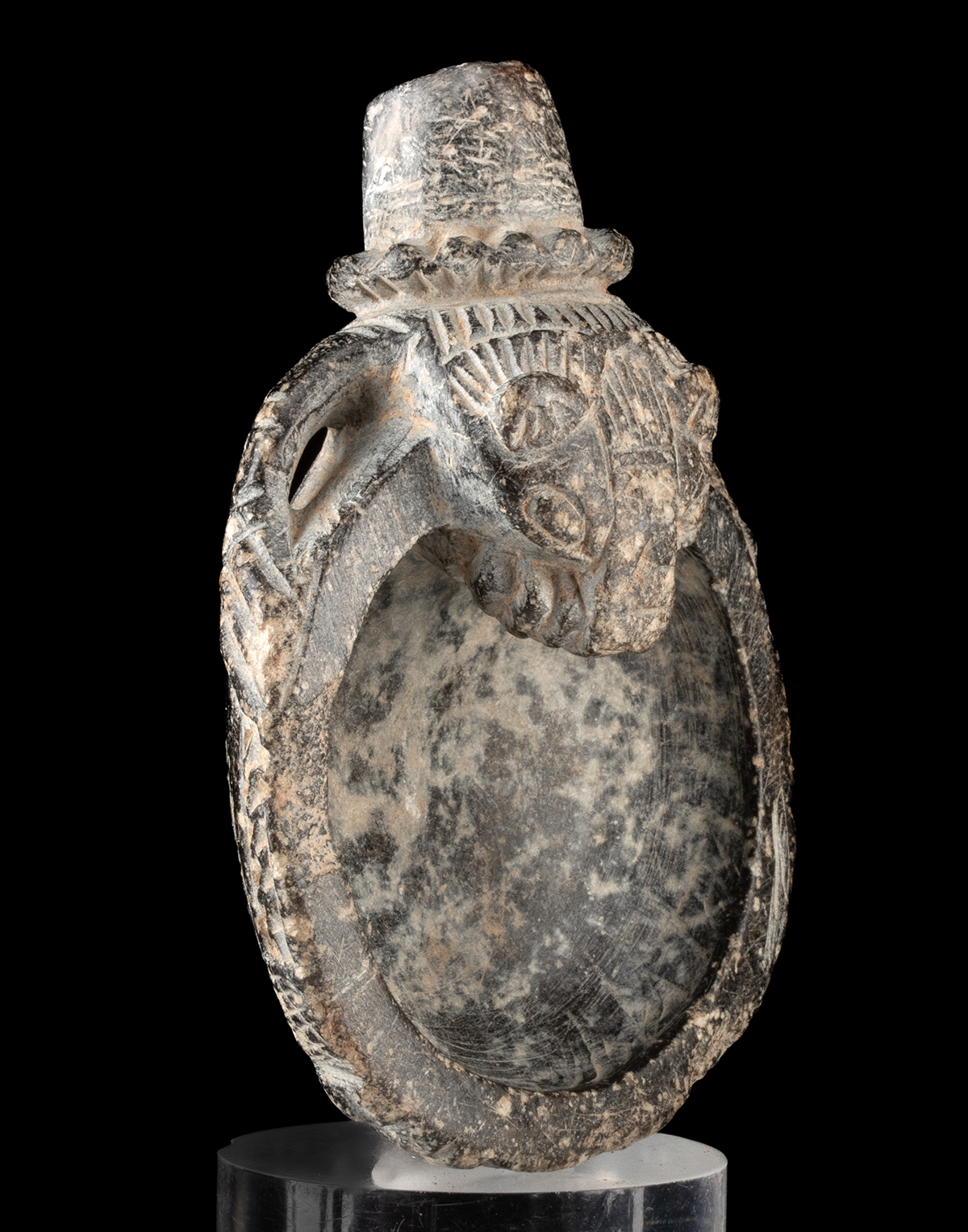
Lot 152a, Auction 4/3/2026: Mesopotamian Stone Libation Bowl Lion Effigy
Add to cart -


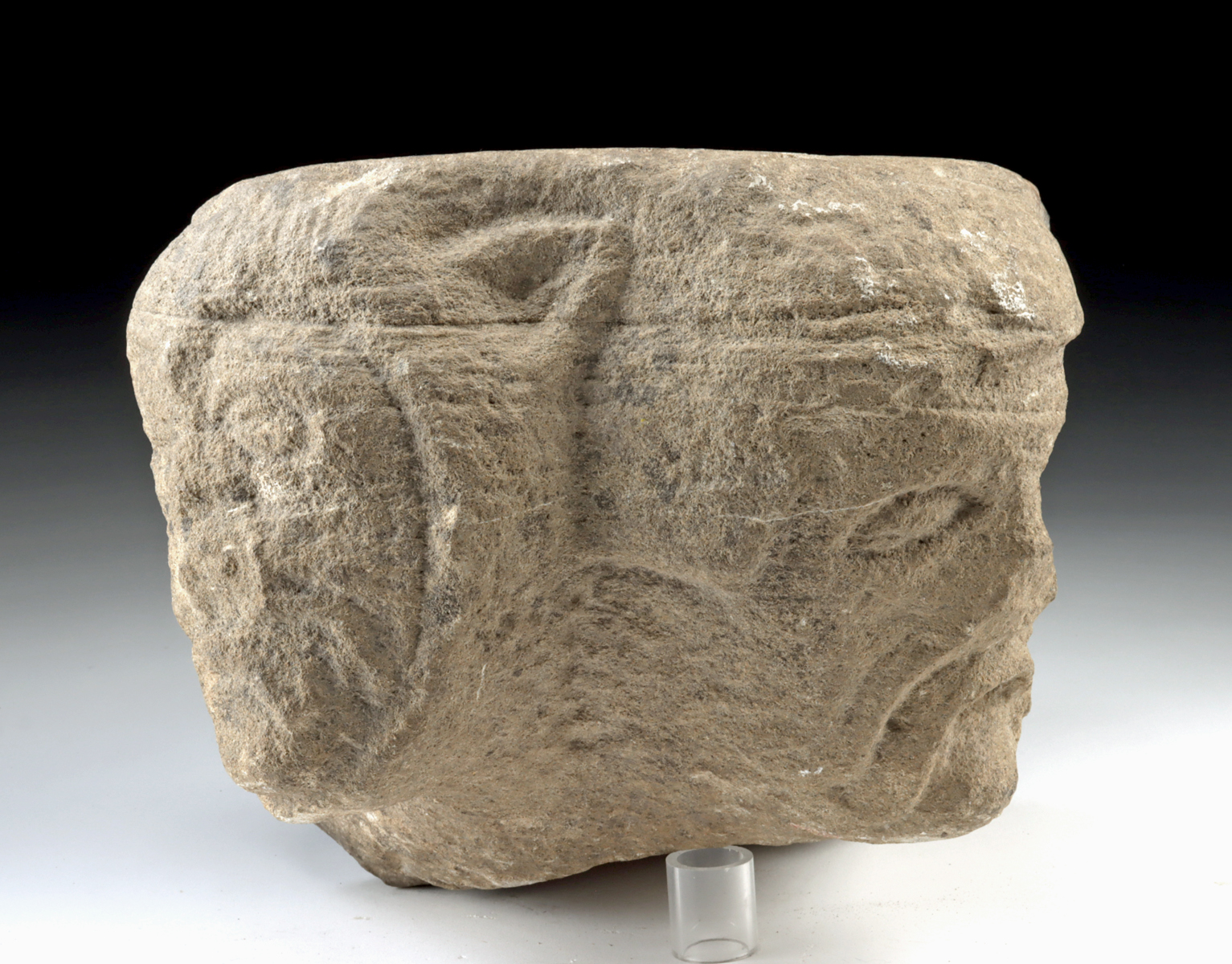
Lot 150, Auction 4/3/2026: 12th C. Medieval Stone Corbel with Dual Faces
Add to cart -


Lot 135, Auction 4/3/2026: Eastern Greek Archaic Terracotta Votive – Woman w/ Bird
Add to cart -


Lot 130, Auction 4/3/2026: Ancient Egyptian Ptolemaic Pottery Figurine Fragments
Add to cart -


Lot 126, Auction 4/3/2026: Egyptian Painted Wood Hand – Late Dynastic Sarcophagus
Add to cart -


Lot 121, Auction 4/3/2026: Papua New Guinea Bamboo & Vegetal Fiber Implements
Add to cart -


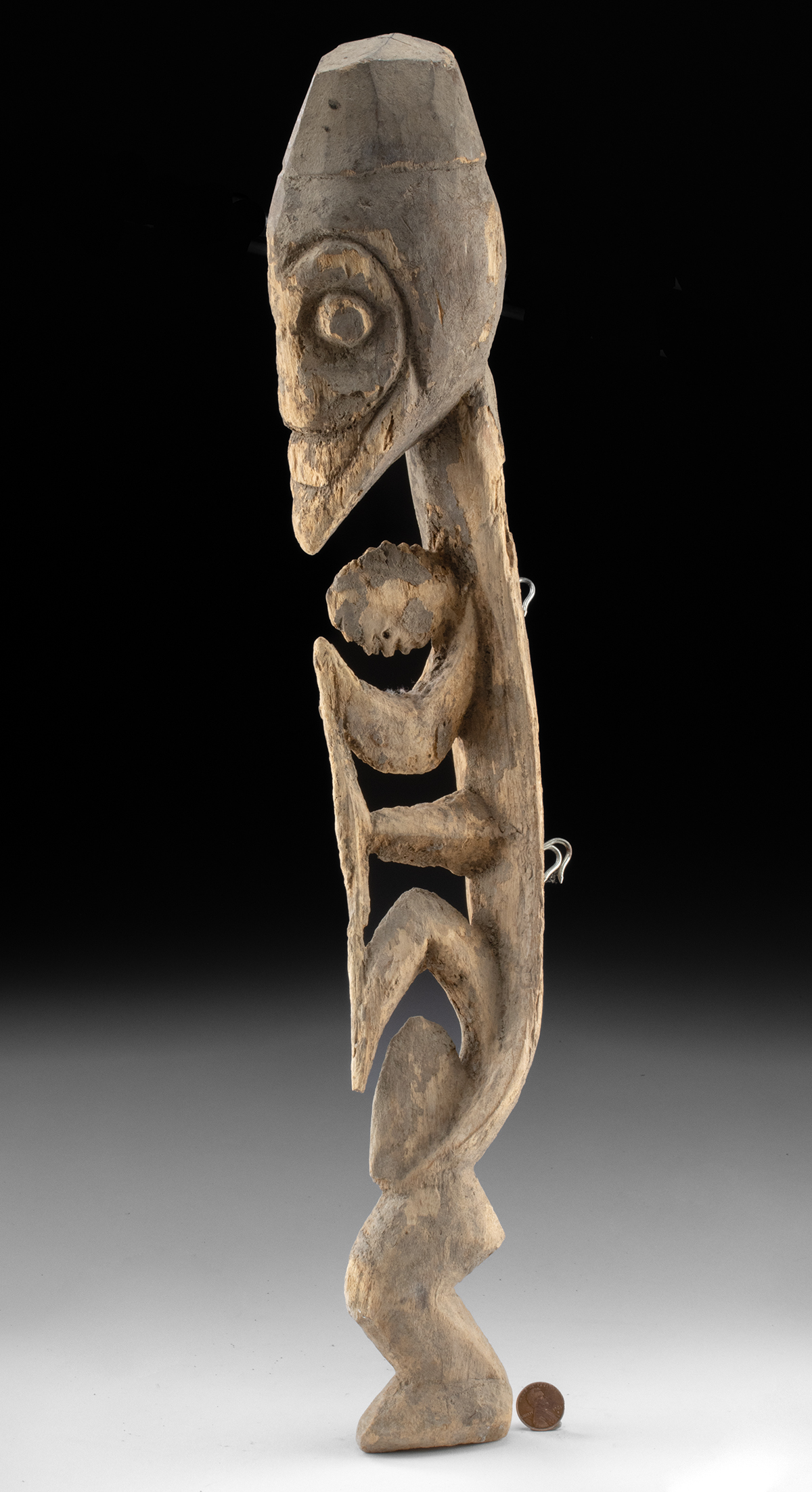
Lot 119, Auction 4/3/2026: Papua New Guinea Yimam Yipwon Spirit Figure – Korewori
Add to cart -


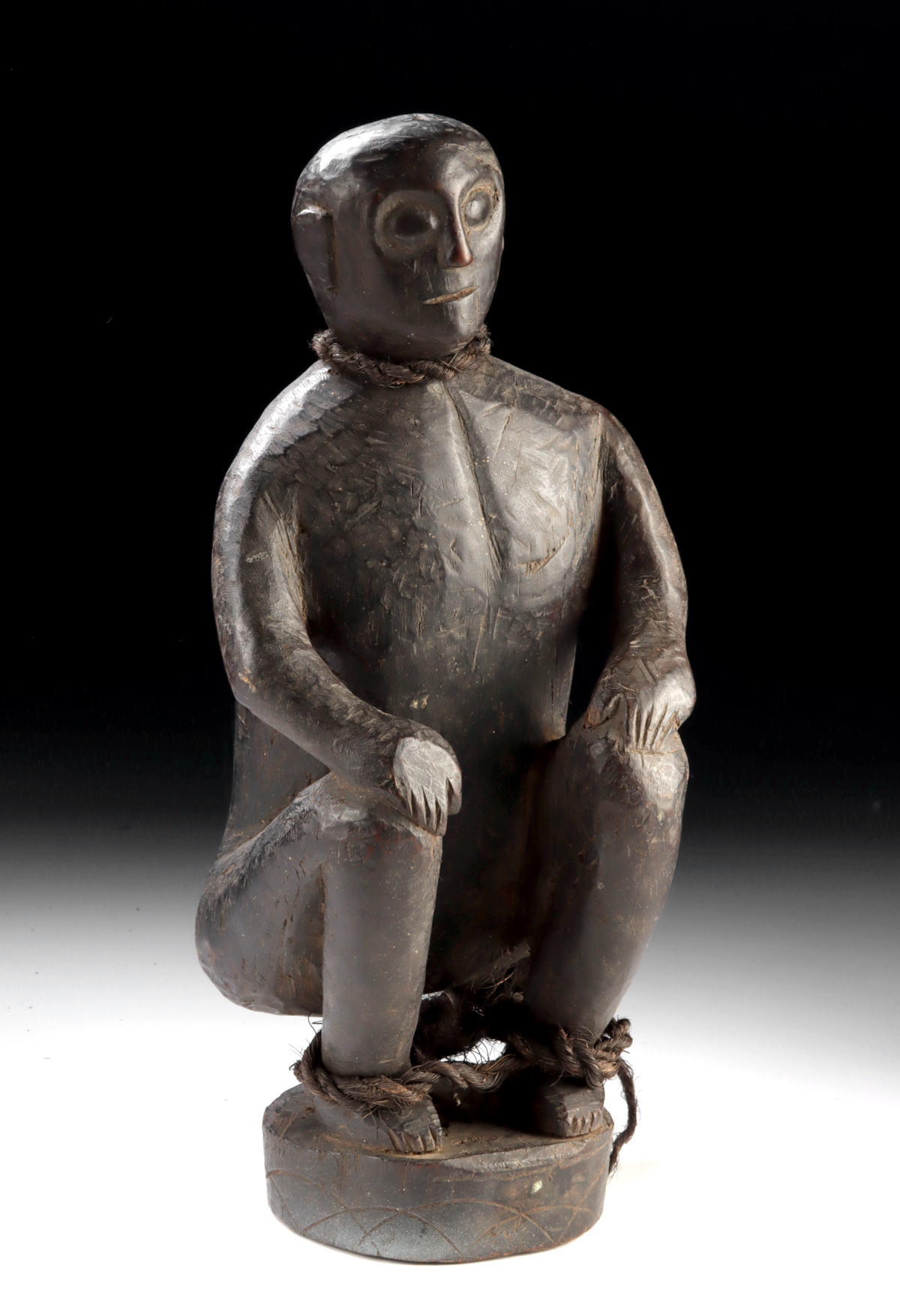
Lot 117, Auction 4/3/2026: Dayak Wood Bound Captive Figure w/ Horse Hair Rope
Add to cart -


Lot 116, Auction 4/3/2026: Borneo Dayak Wood Ancestral Figure, Hampatong Guardian
Add to cart -


Lot 112, Auction 4/3/2026: Two African Wood Nude Figures – Bembe & Chamba
Add to cart