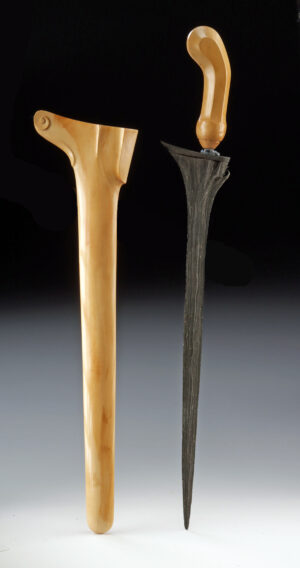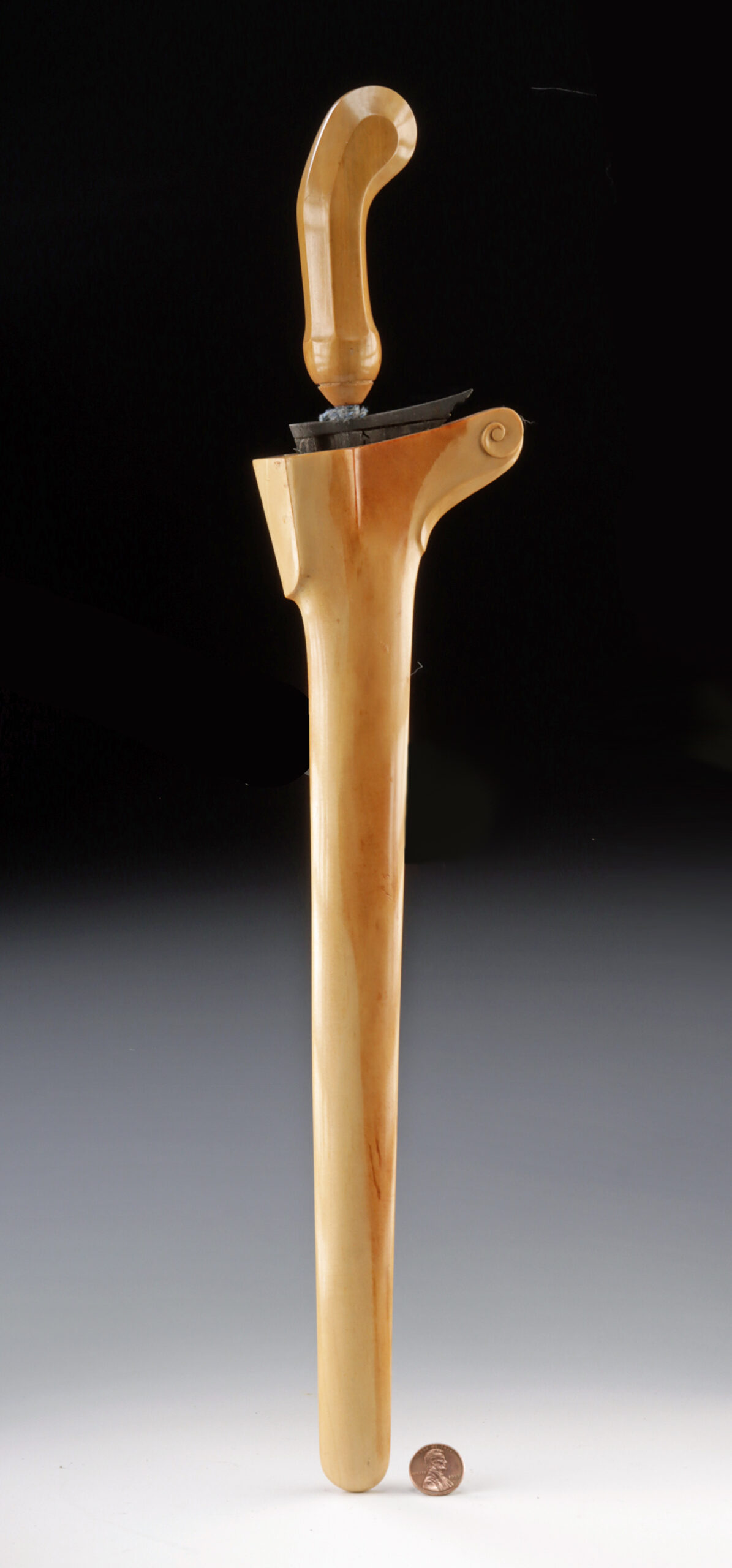
Lot 12b, Auction 3/19/2026: 18th C. Indonesian Talismanic Keris Pejetan Blade
$260.00
In stock
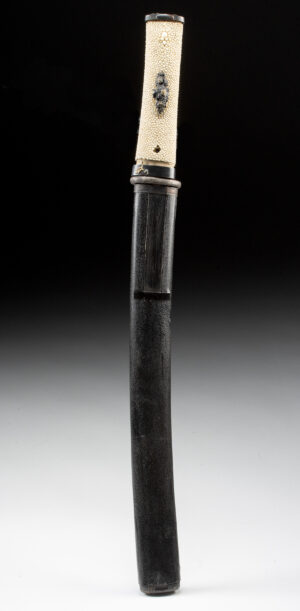
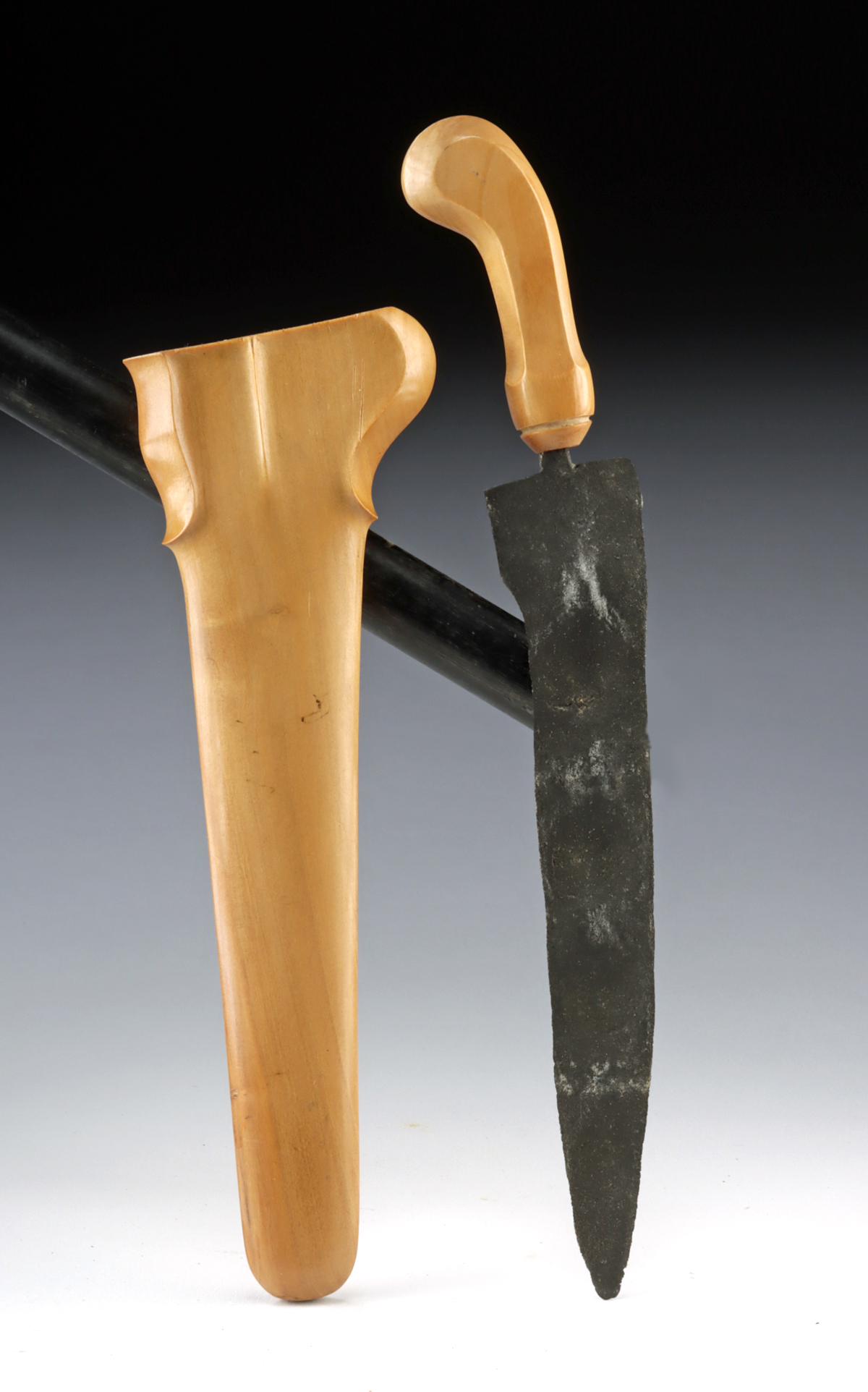
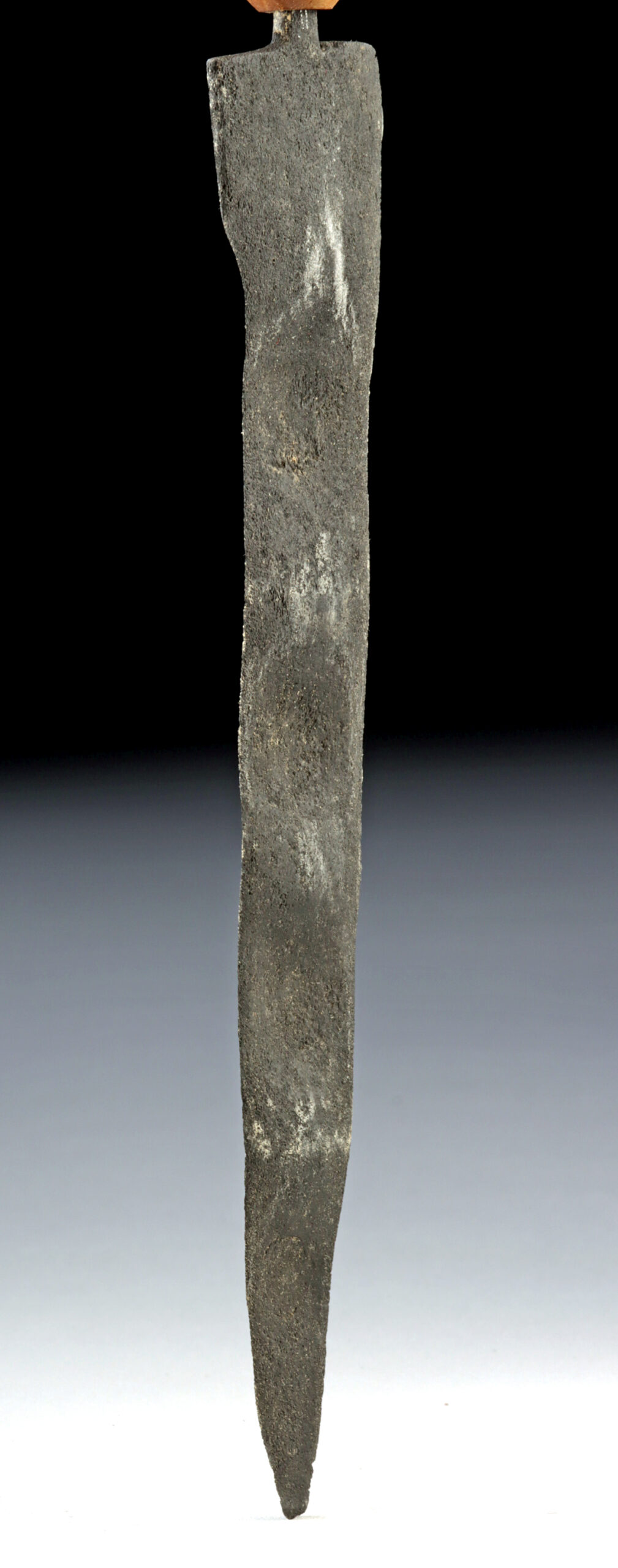
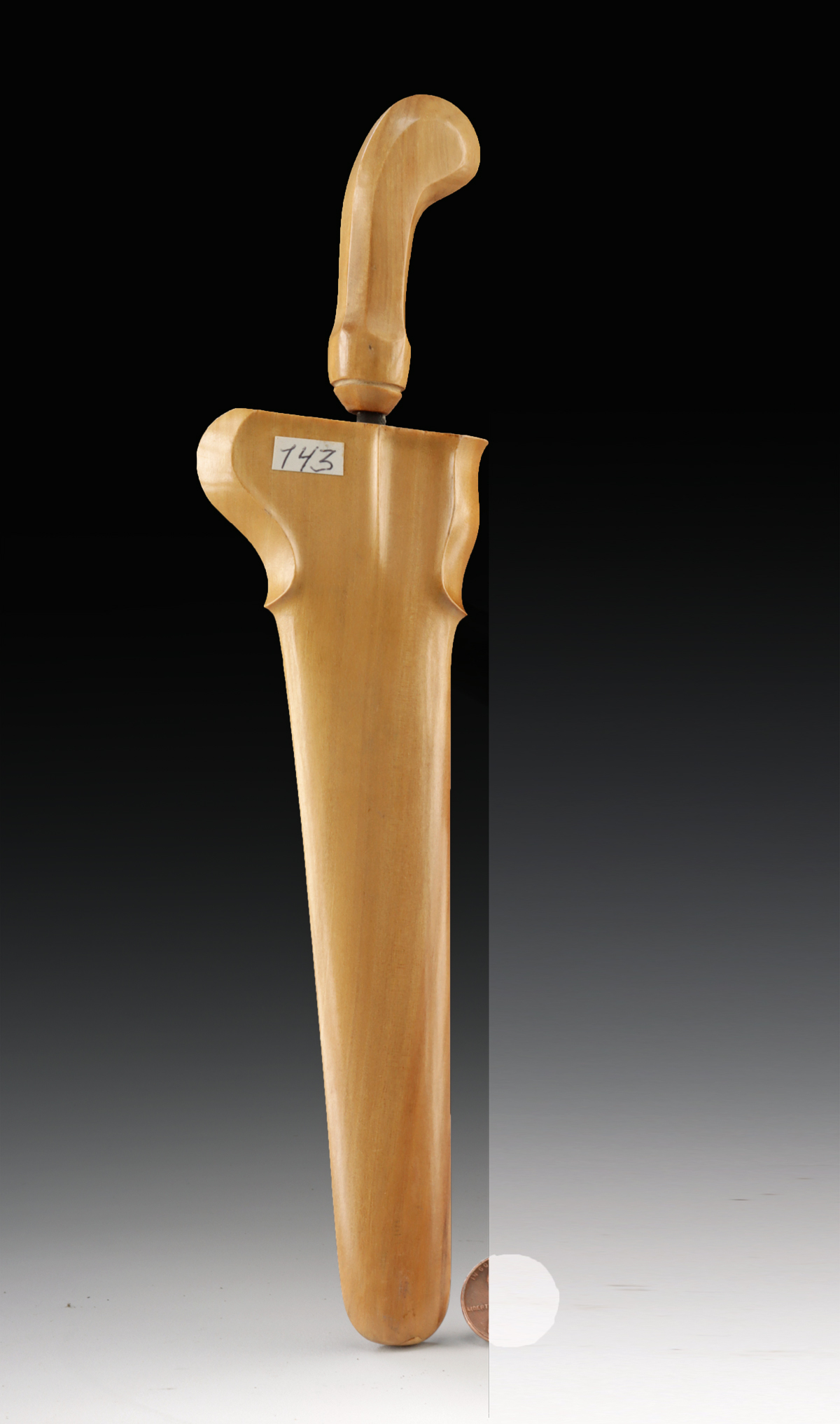
Southeast Asia, Indonesia, blade: 18th to 19th century CE; hilt and sheath: 20th century CE. A rare and austere Indonesian keris featuring a talismanic blade of the type known as keris pejetan or keris pichit, distinguished by the subtle indentations pressed into its surface. Unlike the more familiar serpentine keris blades with visible curves or luk, this example is straight in form yet bears shallow depressions along the iron surface created through a process sometimes described as “finger pressing.” These marks give the blade its name – pejetan meaning pressed or massaged – and have long inspired stories within the keris tradition. Some collectors even count the number of indentations as if they correspond to hidden luk, leading to the poetic description of a keris pejetan as a “straight keris with invisible curves.” Size with sheath: 9.5″ L x 2.3″ W (24.1 cm x 5.8 cm)
Blades of this type are typically forged as a single piece without a separate ganja base, known as iras. Their restrained form and modest decoration contrast with the elaborate ornament often associated with keris blades, suggesting a purpose beyond that of a conventional weapon. Within Javanese belief, such blades were often regarded as possessing protective or spiritual properties, functioning as personal amulets or talismanic objects rather than instruments of combat.
Many traditions connect these unusually simple kerises to the legendary female smith Empu Ni Mbok Sombro, said in folklore to have worked during the Pajajaran era before the rise of Majapahit. According to keris lore, blades attributed to her were often short, straight, and forged from excellent iron with minimal ornament yet imbued with a mysterious aura. Stories surrounding her methods and the spiritual potency of her work circulated widely among keris communities, reinforcing the association between the pejetan style and protective or healing powers.
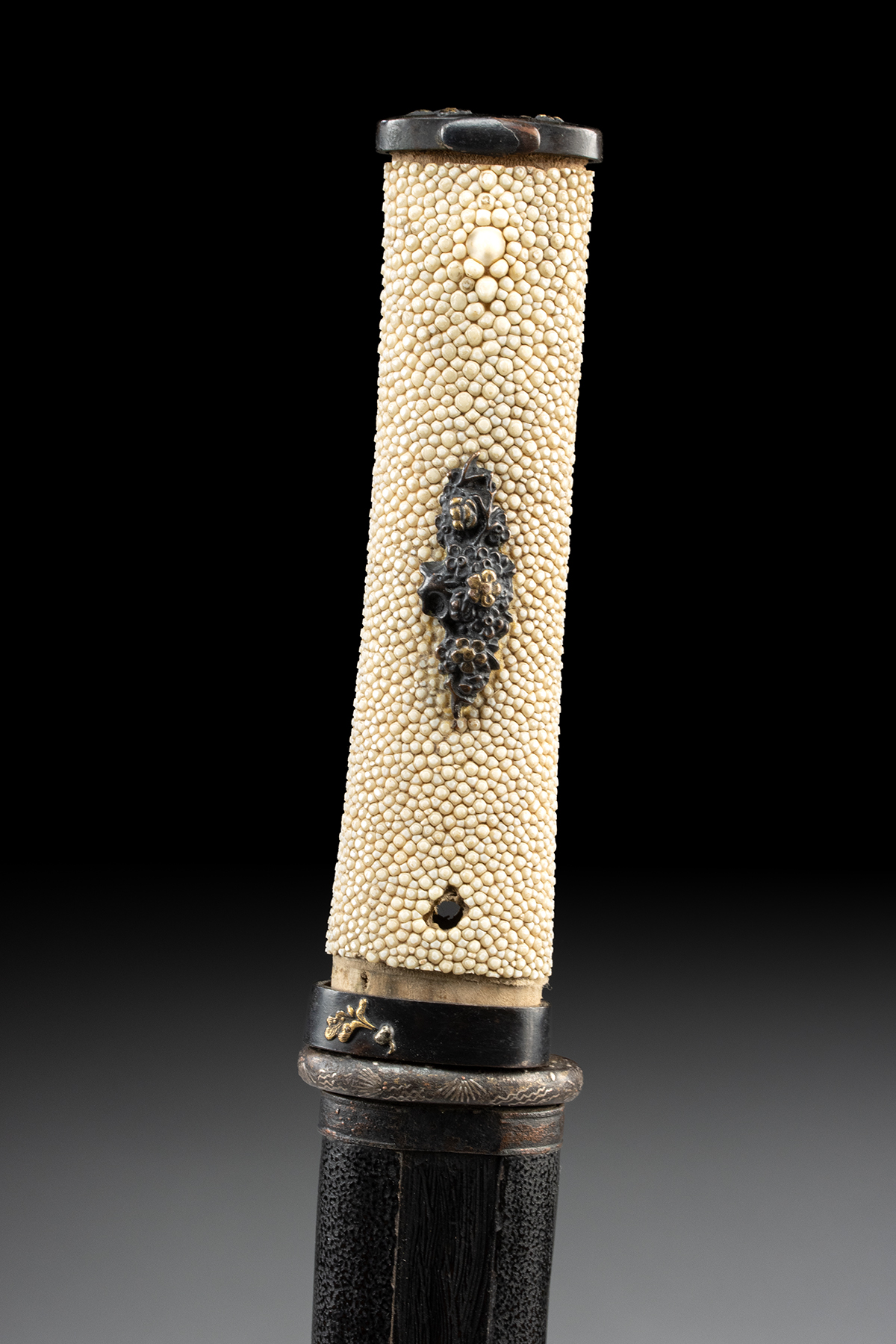
The present blade is mounted in a later 20th century wooden hilt and sheath whose smooth, warm tone complements the dark, aged iron of the blade. Together they frame an object that reflects both the metallurgical skill and the layered spiritual symbolism that have made the keris one of the most culturally significant weapons of the Indonesian archipelago.
Condition: 18th to 19th-century blade set in 20th-century hilt and sheath. Expected age wear and weathering to blade. Some small abrasions to sheath in areas. Otherwise, very nice with rich patina to blade.
Provenance: private Rochester, Michigan, USA collection, acquired December 15, 2001; ex-Fahnoe collection, Boca Raton, Florida, USA
All items legal to buy/sell under U.S. Statute covering cultural patrimony Code 2600, CHAPTER 14, and are guaranteed to be as described or your money back.
A Certificate of Authenticity will accompany all purchases.
We ship worldwide and handle all shipping in-house for your convenience.
Related Products
-


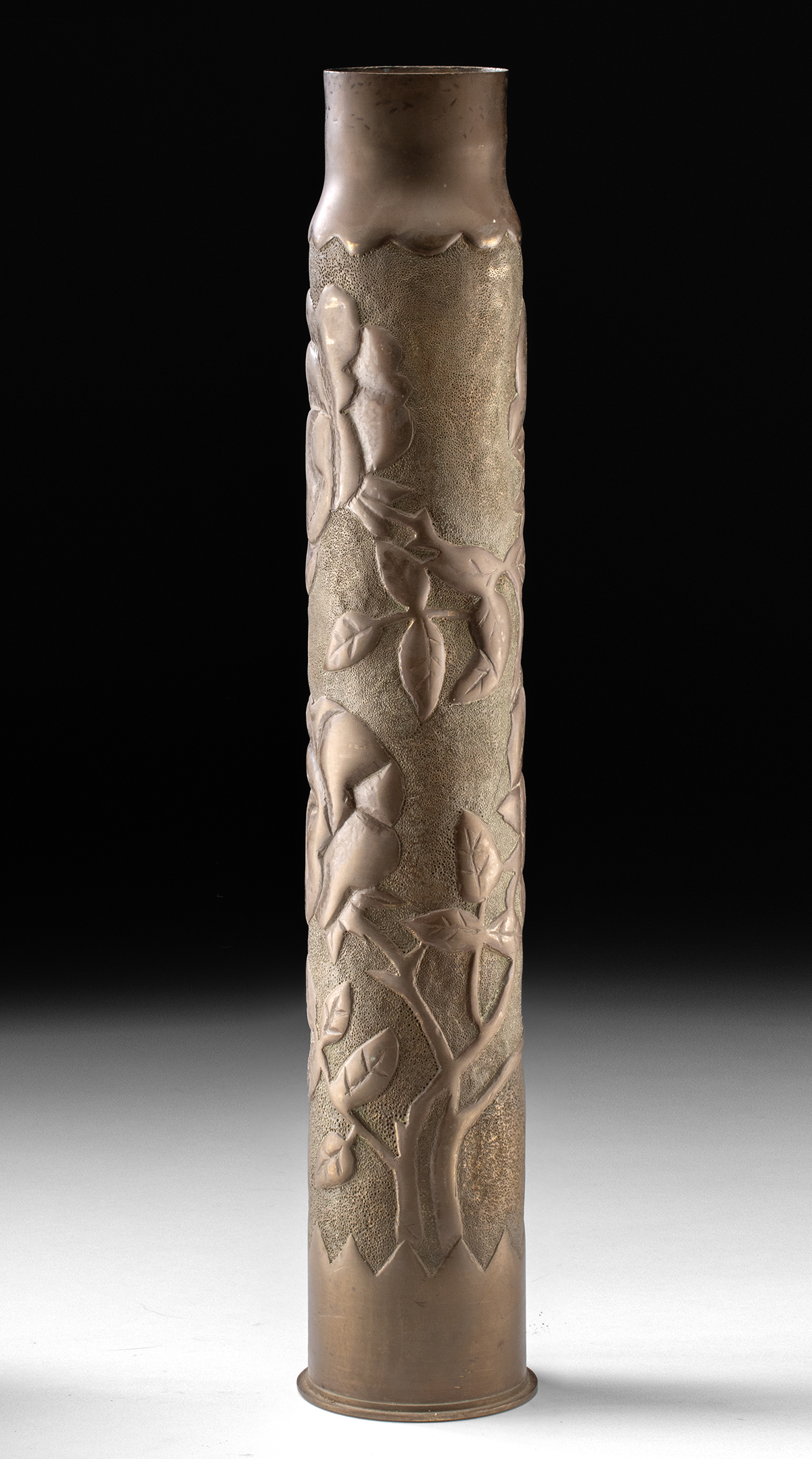
Lot 218, Auction 4/3/2026: WWI Trench Art Brass 50 Caliber Shell Casing with Roses
Add to cart -


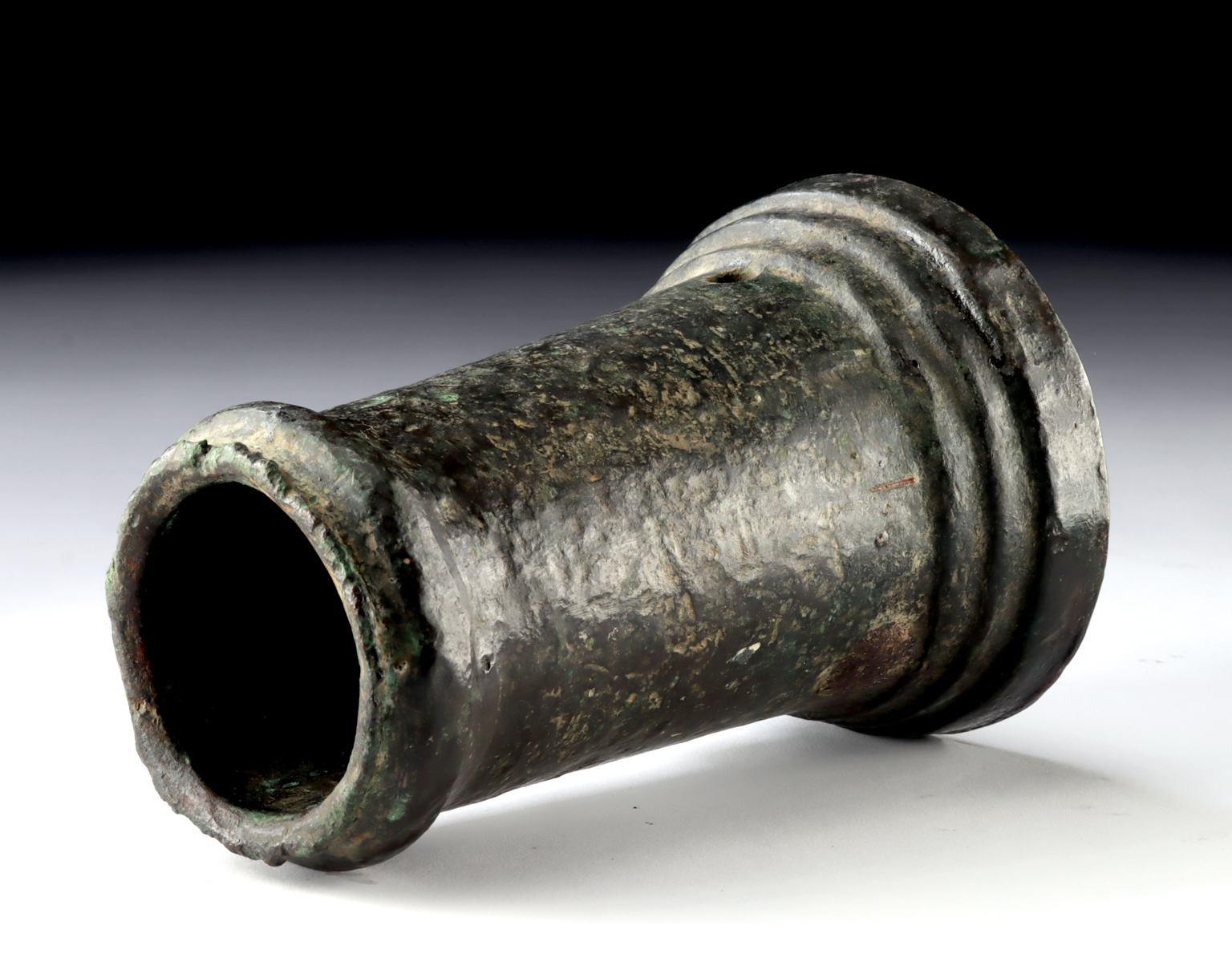
Lot 202b, Auction 4/3/2026: Mexico Spanish Colonial Bronze Signal Cannon Thundermug
Add to cart -


Lot 196, Auction 4/3/2026: Amazon Basin Indigenous Hunting Bows & Arrows
Add to cart -


Lot 14b, Auction 3/19/2026: Japanese Edo Wakizashi Koshirae Fitting, Saya & Kojirae
Add to cart -


Lot 147a, Auction 4/3/2026: Late Bronze-Age Flange-Hilted Dagger (Dirk)
Add to cart -


Lot 134, Auction 4/3/2026: Helladic Bronze Dagger – Integral Hilt
Add to cart -


Lot 12c, Auction 3/19/2026: Indonesian Executioner’s Kris w/ Sheath
Add to cart -


Lot 122, Auction 4/3/2026: Papua New Guinea Bark & Hide Quiver w/ 12 Wood Arrows
Add to cart -

Lot 120a, Auction 4/3/2026: Papua New Guinea Dance & Warfare Wood Bow & Arrows
Add to cart -


Lot 114, Auction 4/3/2026: 19th C. Javanese Polearm Spear with Carved Wood Shaft
Add to cart