


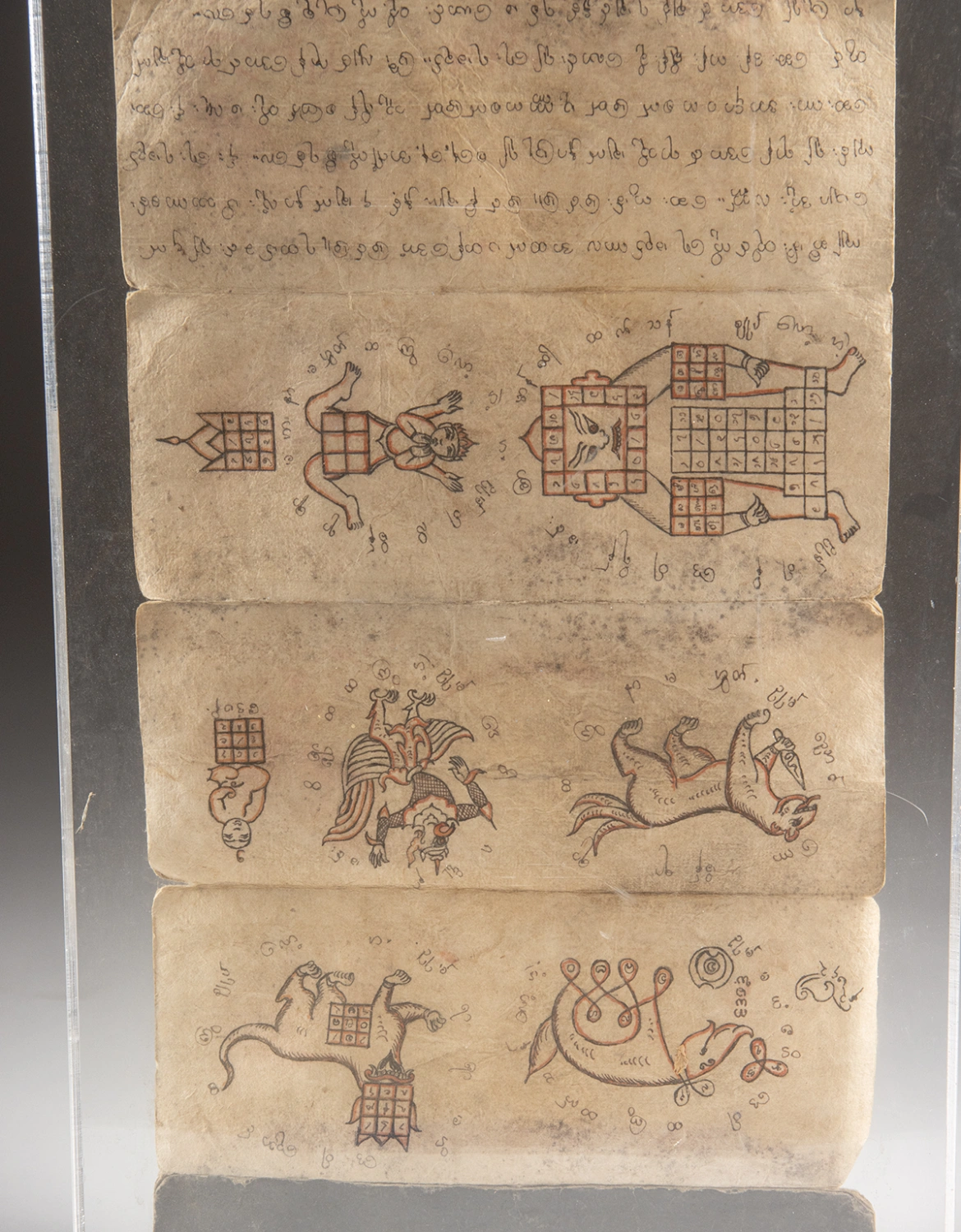
19th C. Tai-Burmese Spirit Manuscript – Yantra Diagrams (Auction 2026-06-05, Lot 236C)
$578.25
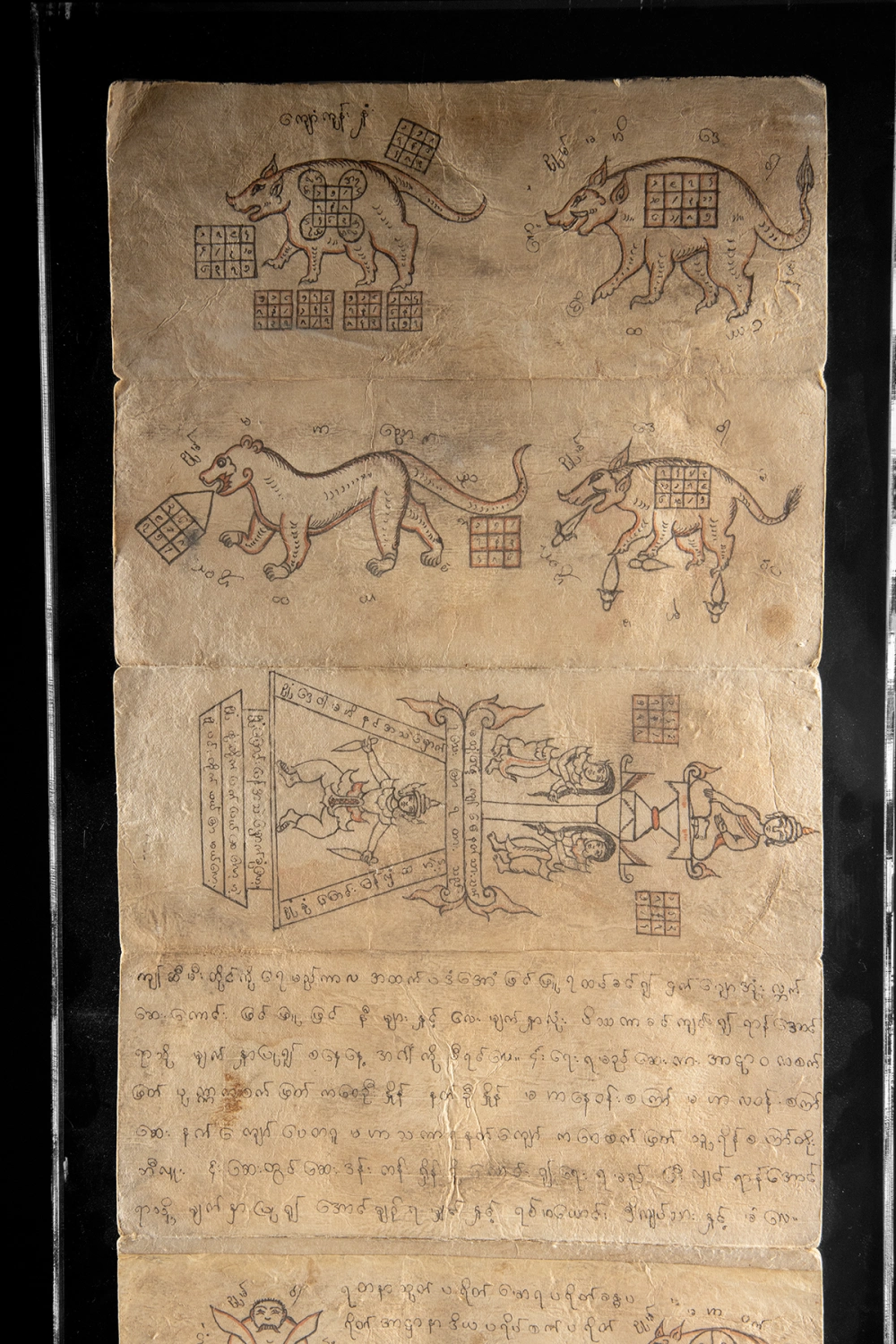
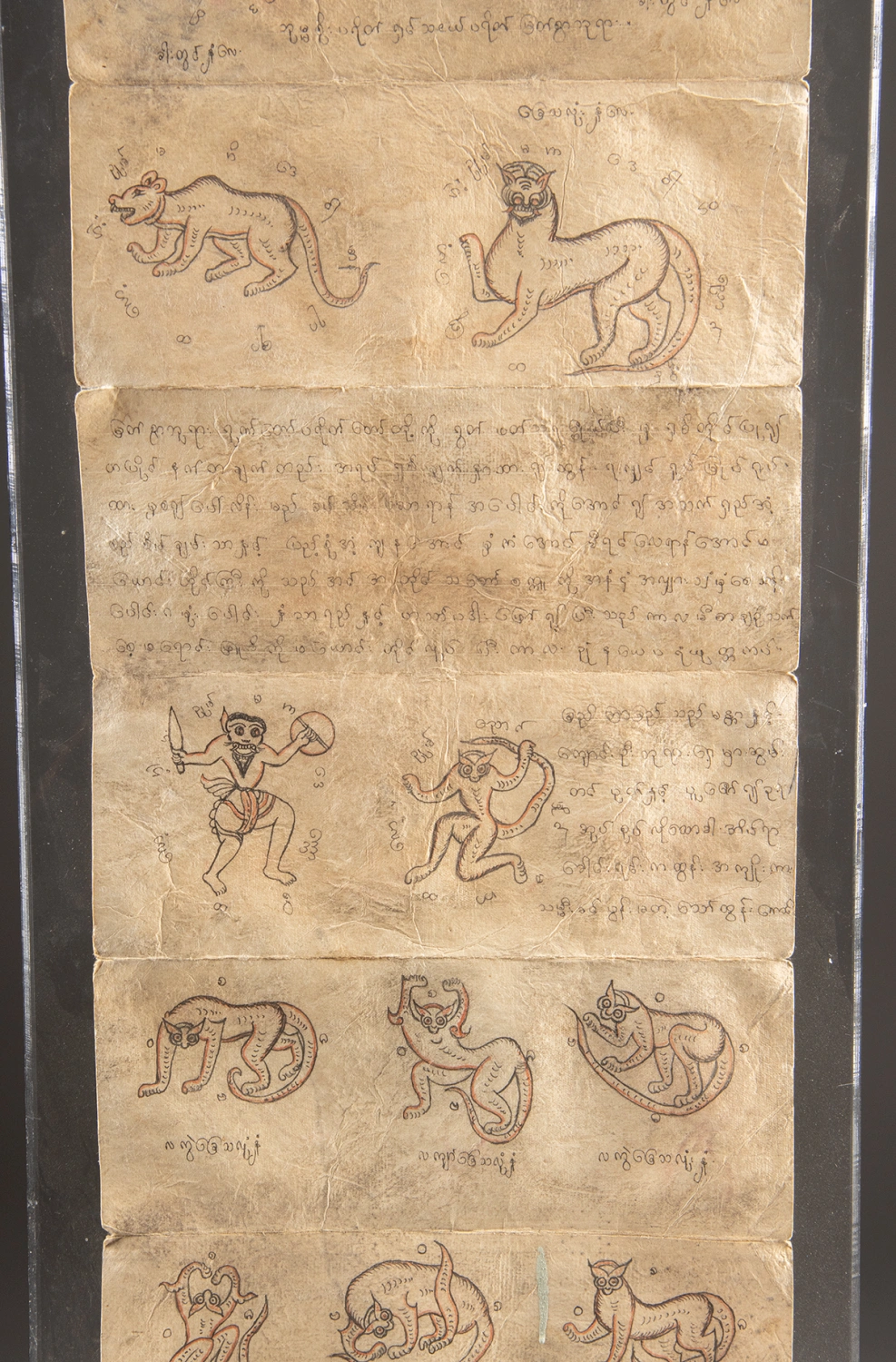
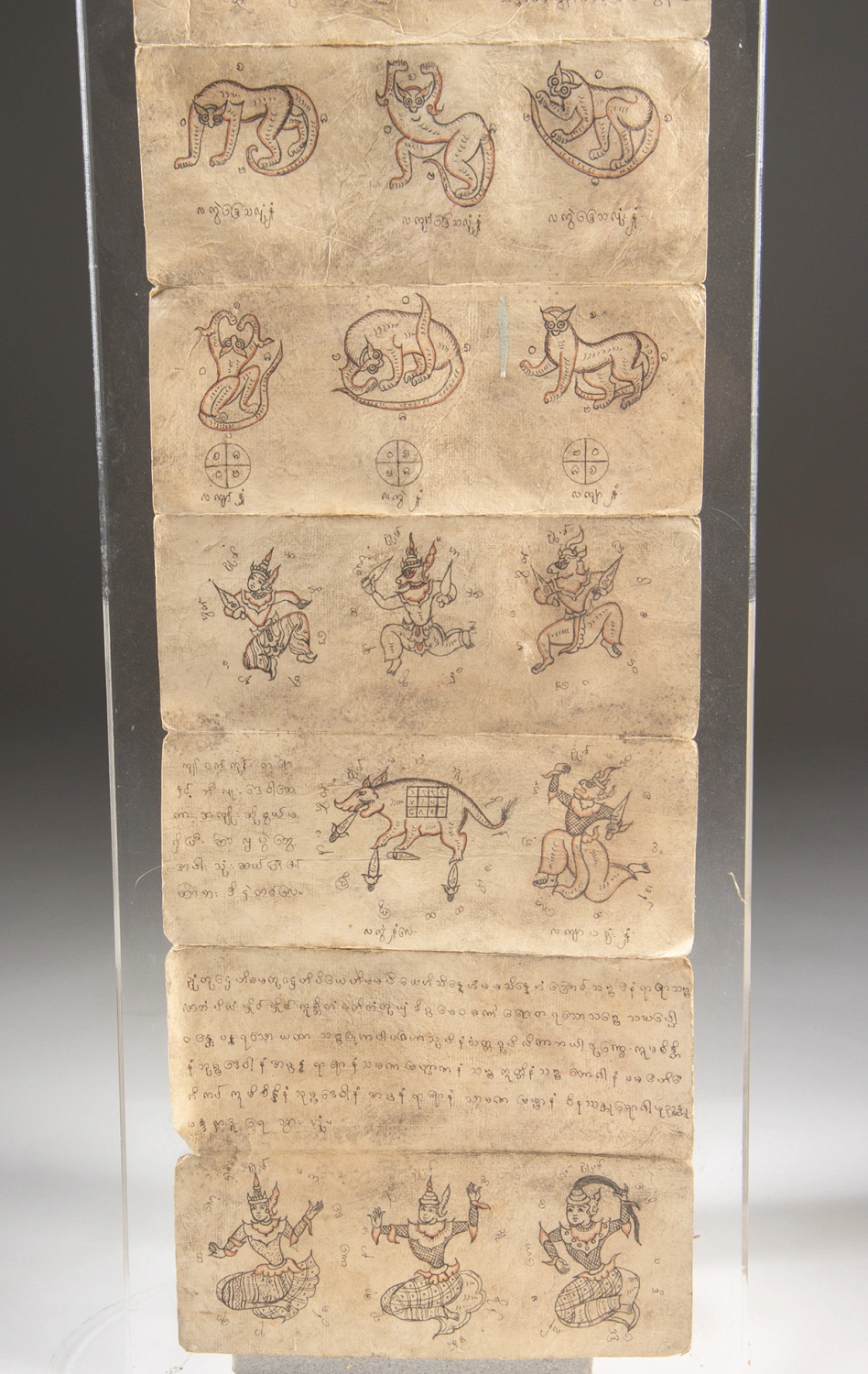
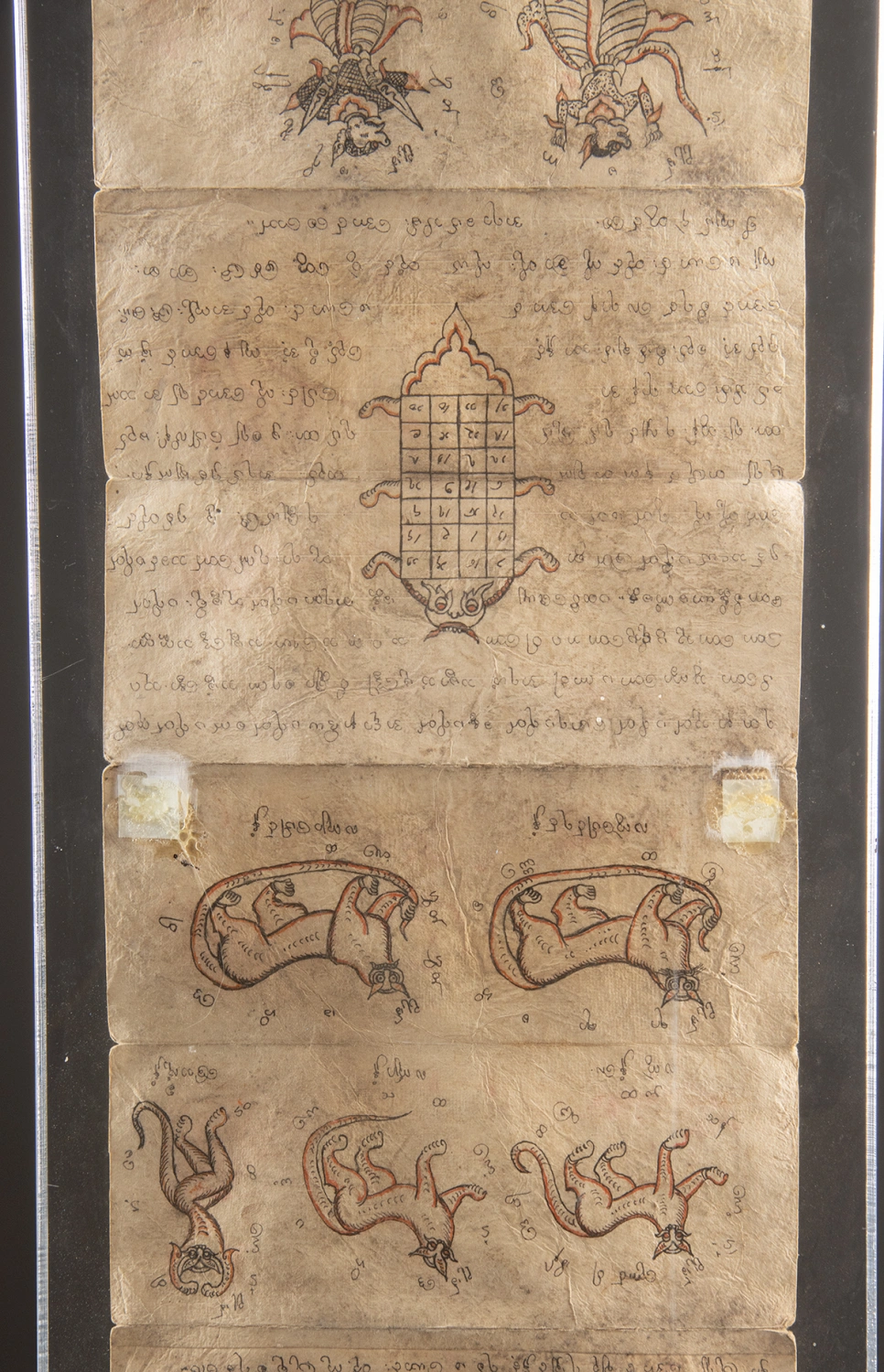
Southeast Asia, Burma (Myanmar), Tai Cultural Regions, ca. late 19th to 20th century CE. A remarkable accordion-folded manuscript comprising fourteen panels of mulberry paper, twelve of which are double-sided with two dark brown versos serving as protective covers, yielding twenty-six pages in total. Illustrated throughout in black and red ink, this manuscript presents a vivid tableau of hybrid beasts, celestial beings, and protective diagrams accompanied by inscriptions in Burmese script. This rare divination text likely originates from the culturally Tai-influenced regions of northern Myanmar or northeast India, areas historically home to the Tai-speaking Shan and related peoples. The manuscript reflects the enduring influence of Tai folk religion, or Satsana Phi- the religion of spirits. This syncretic animist system, widespread among the Lao, Shan, Tai Ahom, Dai, and Khamti communities, blends indigenous spirit veneration with Buddhist cosmology. Size of manuscript: 10.8″ W x 62″ H (27.4 cm x 157.5 cm); of mounting glass: 13″ W x 64″ H (33 cm x 162.6 cm)
The faith centers upon the worship of phi, or ancestral and tutelary spirits, mediated by shamans who act as intermediaries between human and supernatural realms. Across its length, the manuscript unfolds an esoteric cosmology: animals and fantastical creatures marked with yantra grids (mystical diagrams) and inscribed mantras serve as protective emblems or divinatory symbols. Such manuscripts were often consulted by ritual specialists to interpret omens, ward off malevolent forces, or restore spiritual equilibrium. The grid-like symbols – each containing Burmese numerals and script – suggest an astrological or numerological system grounded in Buddhist cosmography and local geomancy.
The dynamic figures – part human, part divine, part beast – evoke both the creative and chaotic energies of the spirit world. The stylistic rendering, with its fine linework, restrained palette, and rhythmic composition, aligns with late Konbaung-period artistic conventions adapted into local Tai vernacular forms. These divination manuals stand as enduring testaments to Southeast Asia’s intertwined traditions of religion, art, and magic – documents of both spiritual practice and cultural identity, passed through generations of ritual practitioners and lay devotees seeking harmony with the unseen.
Provenance: private Wichita, Kansas, USA collection
Condition: Creasing with some tears and fraying as well as folds and wrinkling to paper. Some small losses and scuffs and stains throughout. Light green paint on fifth panel from bottom. Otherwise, nice presentation with imagery and text still very clear. Mounted to custom glass frame that allows panels to be viewable on both sides. Suspension wire on verso for display.
Related Products
-


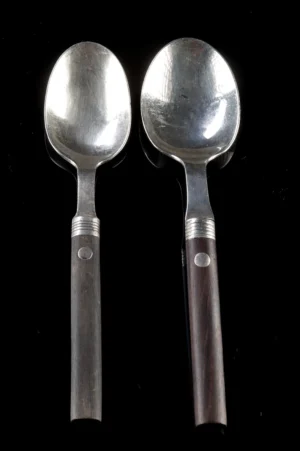
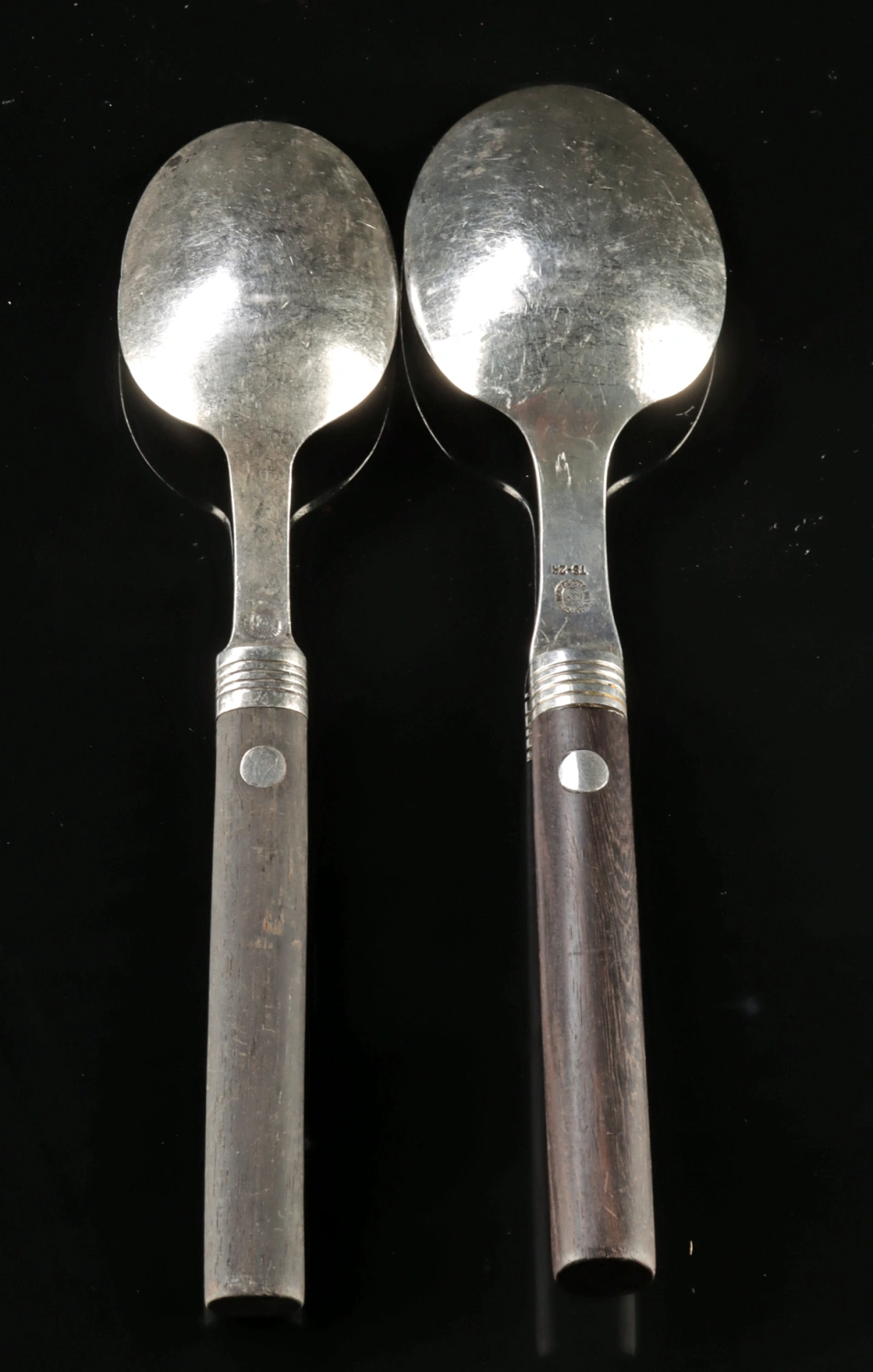
William Spratling Silver & Wood Spoon Pair | TS-24 | Taxco post-1979 (Auction 2026-06-05, Lot 261A)
Add to cart -


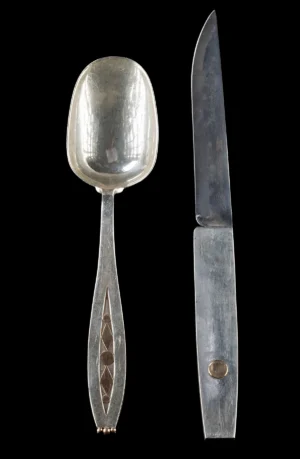
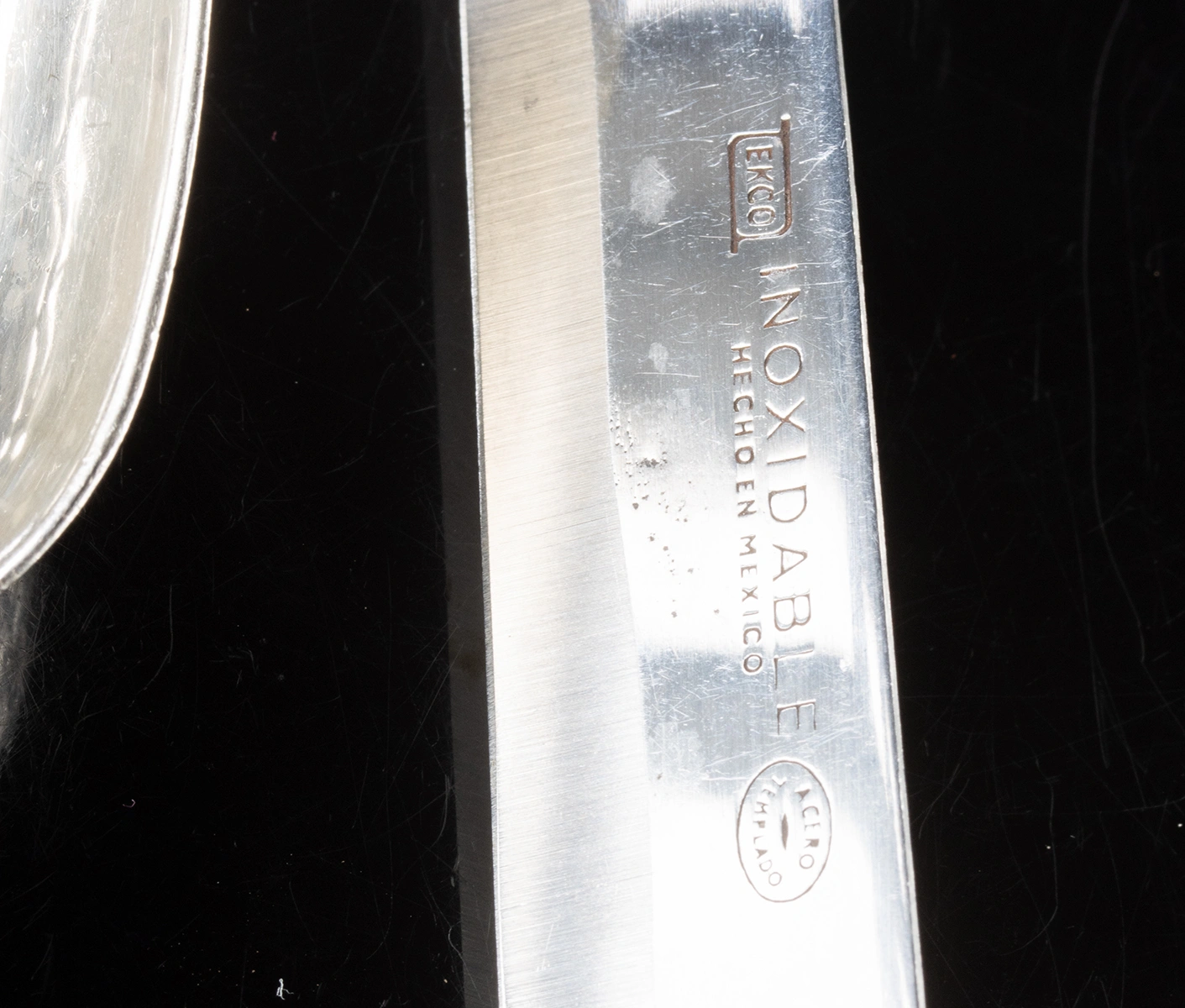
William Spratling “TS-24” Sterling & Gold Gilt Flatware Pair (Auction 2026-06-05, Lot 261B)
Add to cart -


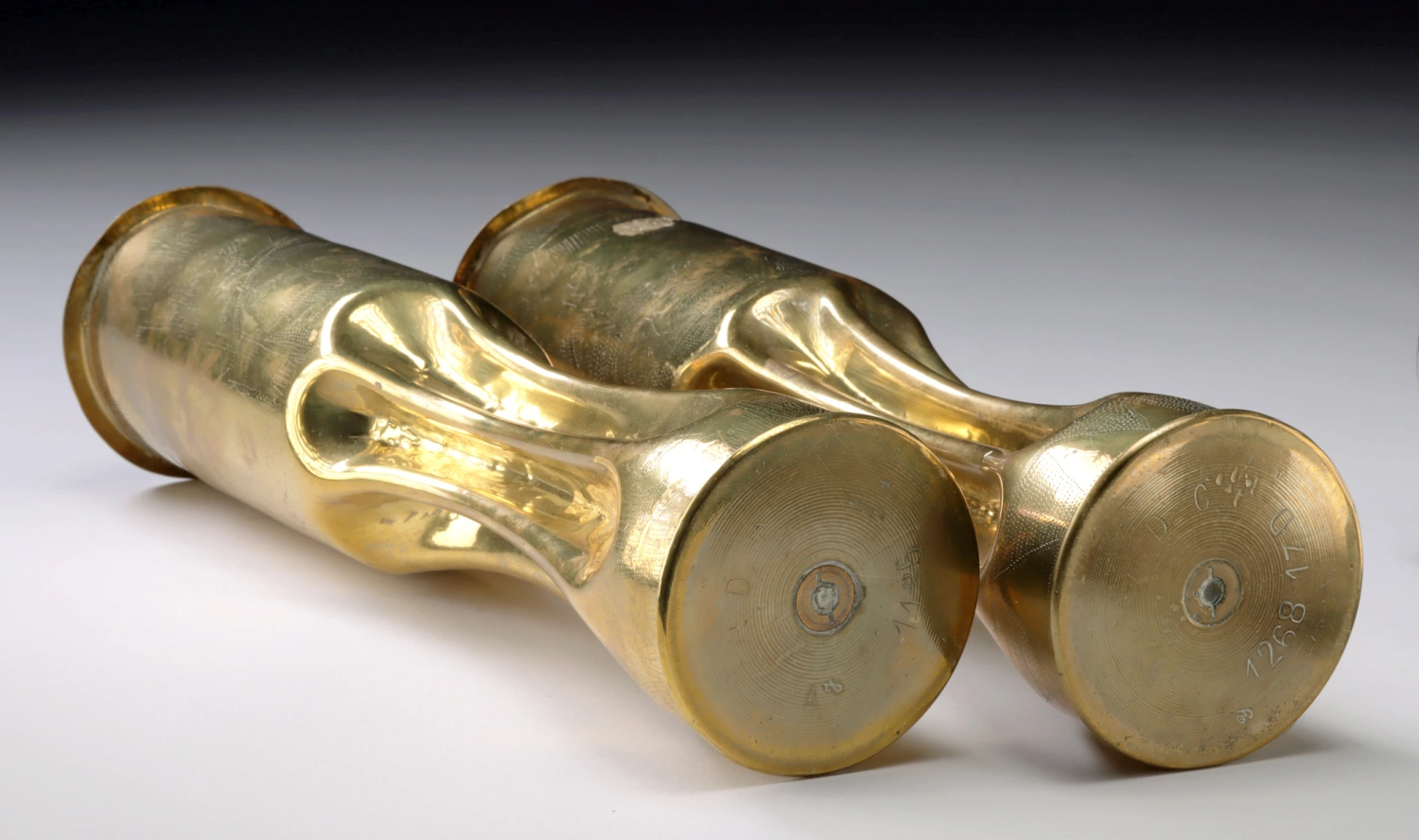
Pair WWI Trench Art Brass Shell Vases 1919 (Auction 2026-06-05, Lot 267)
Add to cart -


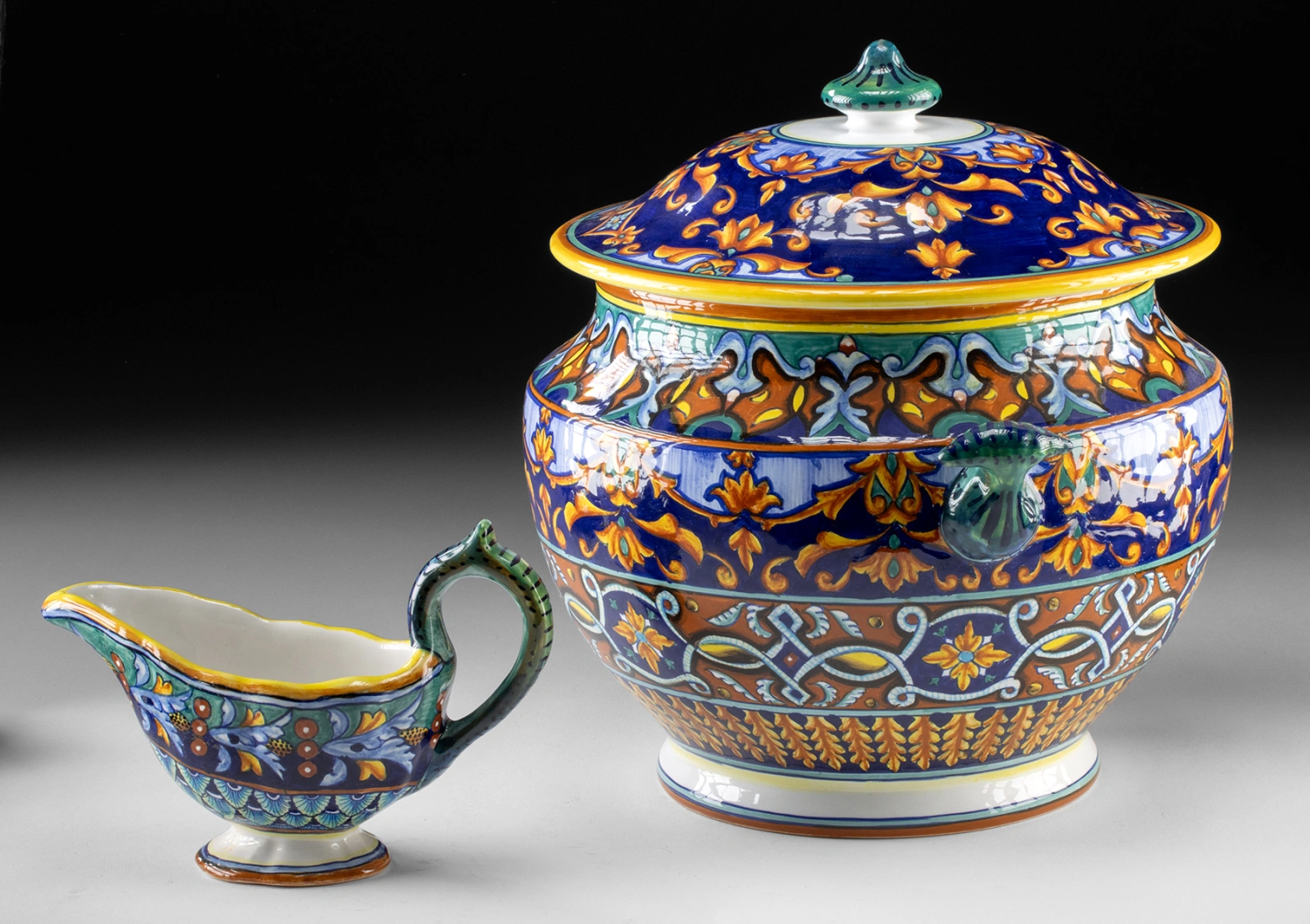
Large Italian Deruta Maiolica Tureen & Gravy Boat (Auction 2026-06-05, Lot 267A)
Add to cart -


20th C. Japanese Woodblocks After Utamaro – Takamizawa, Pair (Auction 2026-06-05, Lot 232F)
Add to cart -

19th C. Toyohara Kunichika Woodblock Triptych – Yaegaki & Katsuyori Kabuki Scene (Auction 2026-06-05, Lot 232G)
Add to cart -


19th C. Thai Painting of Buddha Returning from Heaven (Auction 2026-06-05, Lot 236A)
Add to cart -

19th C. Ogata Gekko Woodblock Print – Sumida River Snow Viewing (Auction 2026-06-05, Lot 232E)
Add to cart -

19th C. Chikanobu Woodblock Triptych – Shogun’s Lawsuit at Fukiage (Auction 2026-06-05, Lot 232D)
Add to cart -


18th C. Russian Silvered Icon – “The Unexpected Joy” (Auction 2026-06-05, Lot 266)
Add to cart