Lot 121, Auction 4/12/2026: 19th C. Mexican Tin Retablo – Santo Nino de Atocha
$520.00
In stock
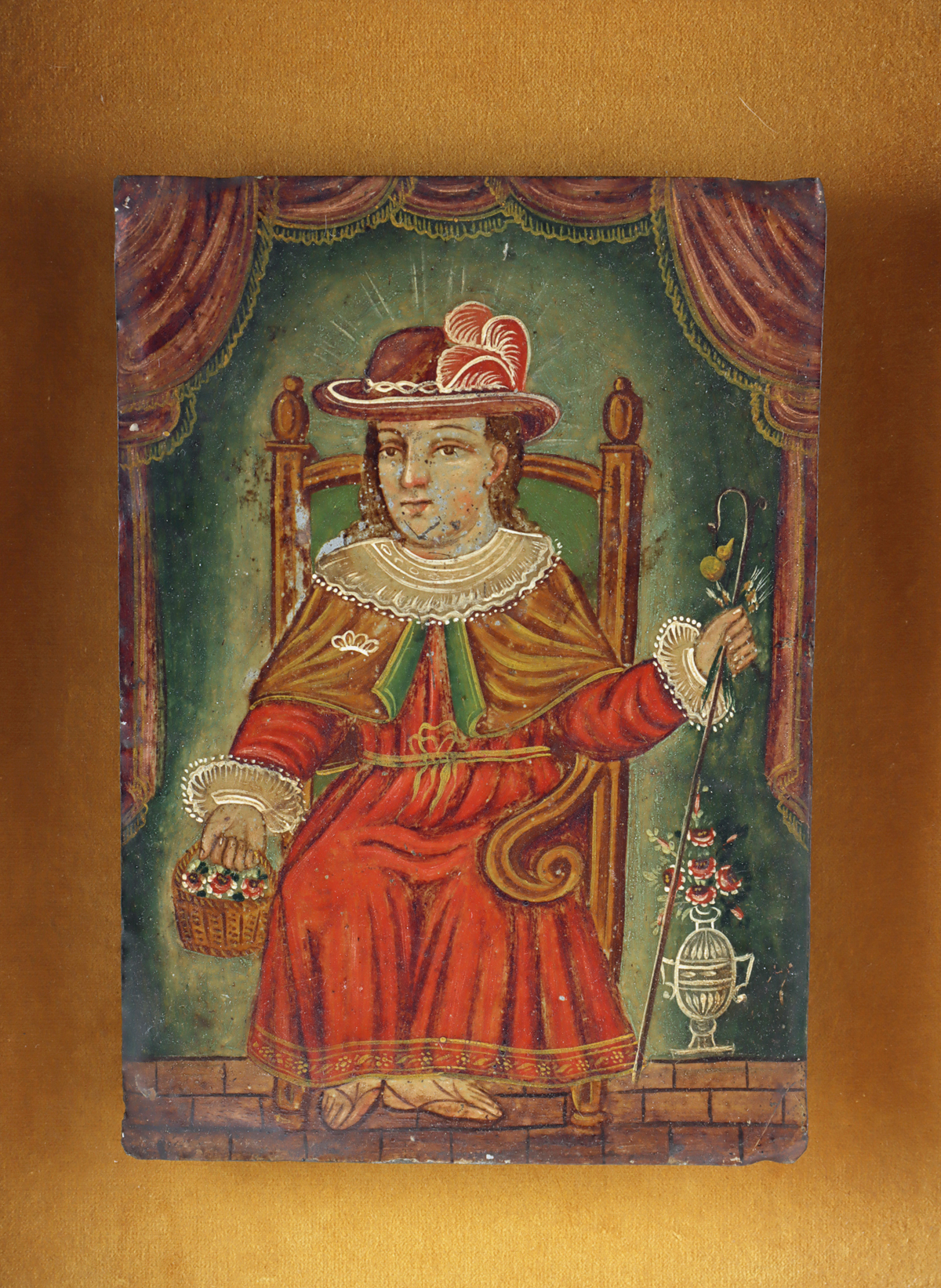
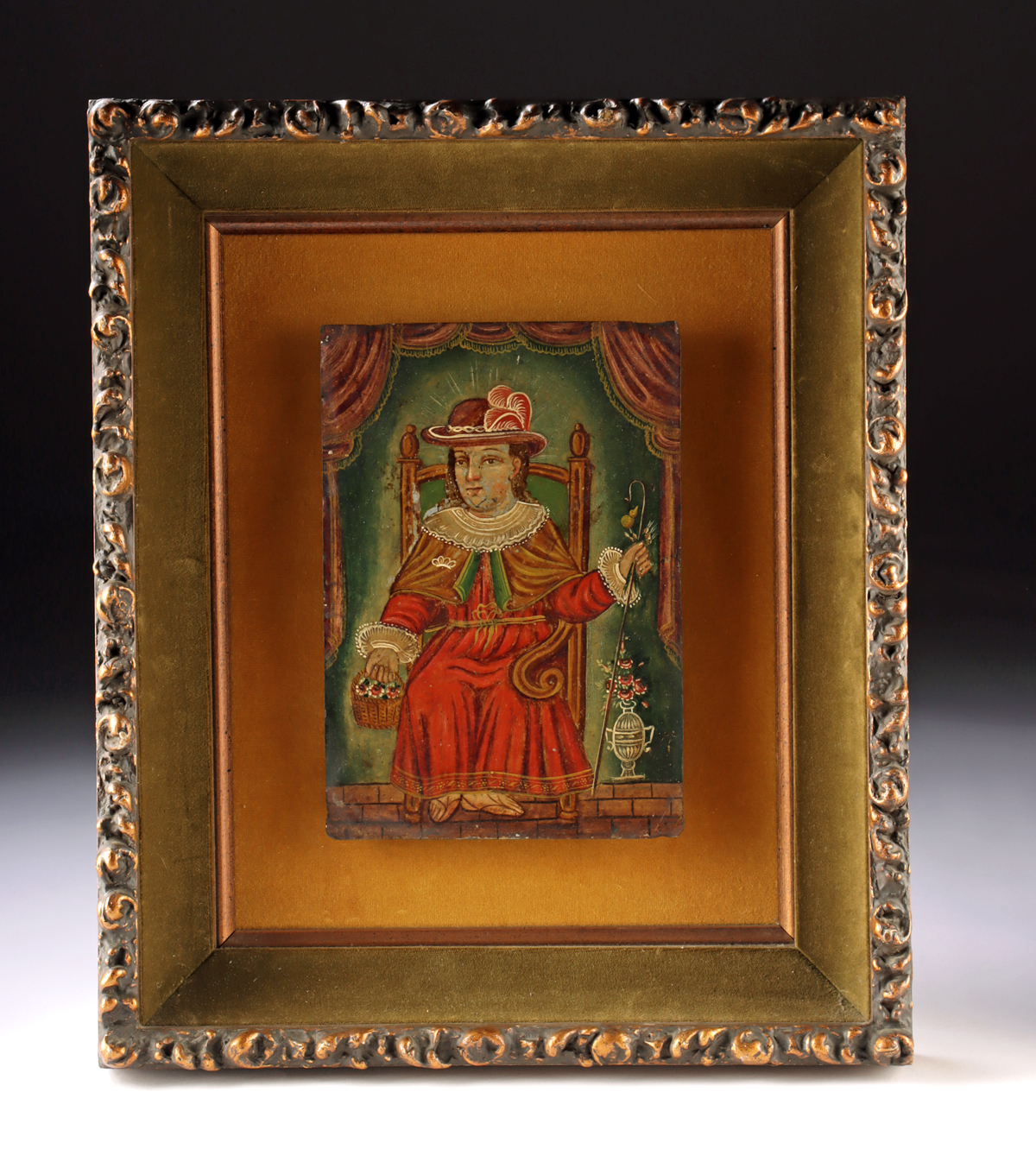
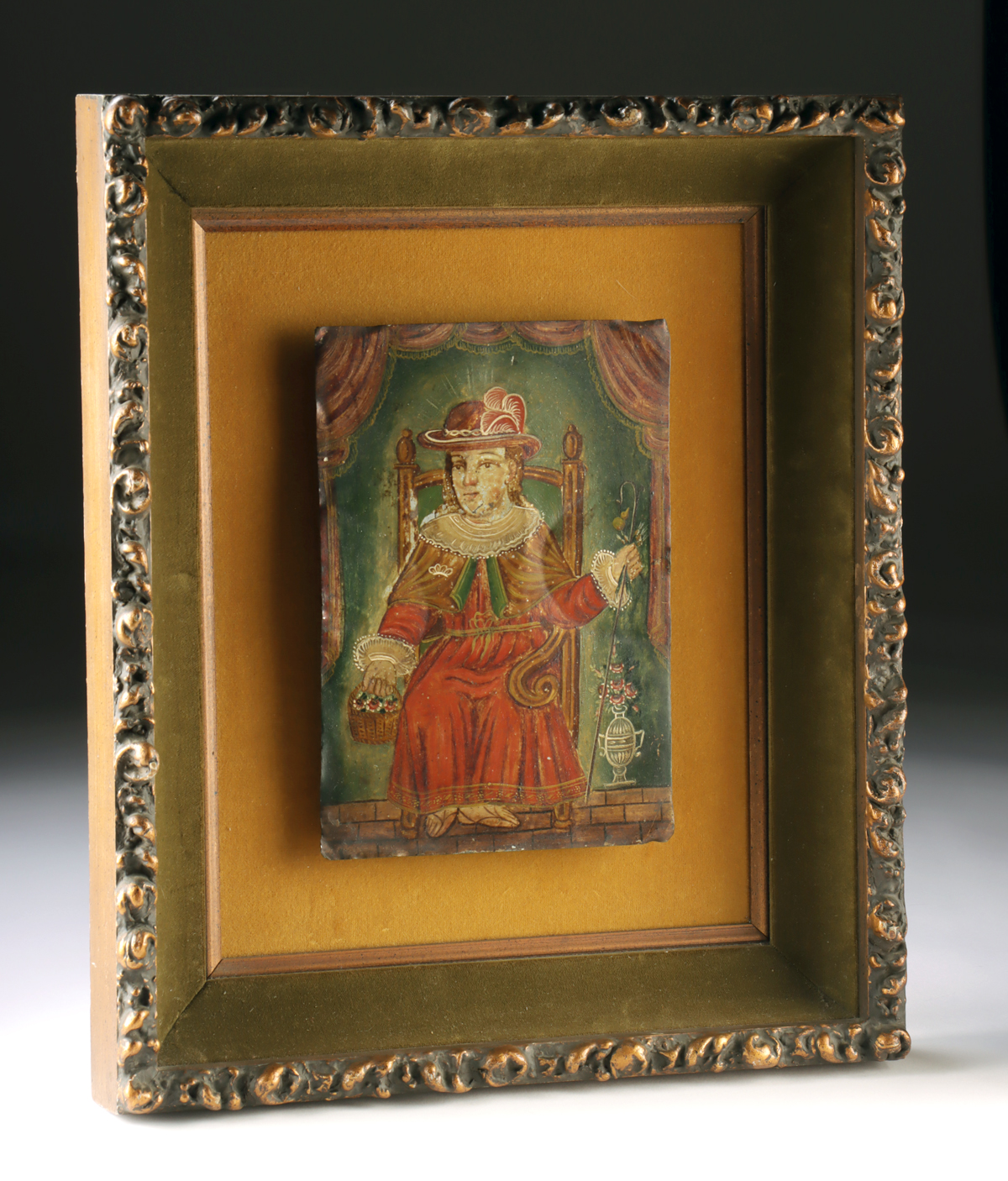
Latin America, Mexico, ca. 19th century CE. A luminous and intimate devotional image, this 19th century Mexican tin retablo depicts Santo Nino de Atocha enthroned in quiet majesty, rendered with the clarity and symbolism characteristic of folk religious painting. The Holy Child appears seated beneath parted drapery, haloed and composed, dressed in a richly colored red robe with lace-trimmed collar and cuffs, and crowned with a broad-brimmed pilgrim’s hat adorned with a plume. In keeping with traditional iconography, he holds a slender pilgrim’s staff and a basket, here filled with flowers, while a vessel hangs nearby, recalling the gourd of water he carries in other representations. His attire and attributes mark him unmistakably as a divine traveler, a child who moves between worlds, offering aid where it is most needed. Size of retablo: 7″ W x 10″ H (17.8 cm x 25.4 cm); of frame: 15.5″ W x 18.5″ H (39.4 cm x 47 cm)
El Nino de Atocha is among the most enduring and widely depicted subjects in retablo art, his imagery remarkably consistent across centuries. He is almost always shown as a pilgrim – clad in cape and hat, carrying a staff, basket, and water gourd – sometimes adorned with the scallop shell, the ancient emblem of pilgrimage associated with Saint James. Flowers, as seen in this example, often accompany him, symbolizing both offering and renewal. These visual elements are not decorative alone but serve as narrative markers, encoding a story that spans continents and centuries.
The origins of this figure trace back to medieval Spain, beginning with the Moorish invasion of the Iberian Peninsula in 711 AD and the later occupation of Atocha, near present-day Madrid. During this period, Christian men were imprisoned and denied sustenance, with the exception that children under the age of twelve were permitted to bring food to relatives. Those prisoners without children faced starvation, prompting their families to pray to Our Lady of Atocha. In response, a mysterious child began appearing in the prison – dressed as a pilgrim, carrying a basket of food and a gourd of water – miraculously feeding all who had been left without aid. Like the miracle of the loaves and fishes, his provisions never diminished. When townspeople returned to the chapel to give thanks, they found the sandals of the Christ Child in the statue of the Virgin worn and dusted, as though he himself had walked among the imprisoned.
Following the end of Moorish rule in 1492, devotion to the Holy Child of Atocha spread widely throughout Spain and was later carried to the Americas by Spanish colonists. By the mid-16th century, his veneration had taken root in Mexico, particularly in Zacatecas, where reports of miracles and apparitions continued. Over time, Santo Nino became a powerful protector figure, regarded as the patron of prisoners, travelers, and those in peril, with major shrines established in both Mexico and the American Southwest.
This retablo reflects that enduring devotion. Painted on tin, a material favored in 19th century Mexican folk art for its affordability and durability, the work emphasizes directness and accessibility over illusionistic depth. The figure’s steady gaze and composed posture offer reassurance, while the symbolic objects he holds affirm his role as provider and guide. Though modest in scale, the painting carries a profound narrative weight, embodying centuries of faith, miracle, and cultural continuity in a single, quietly radiant image.
Please note that quantities of mercury, arsenic, and lead have been detected in this painting.
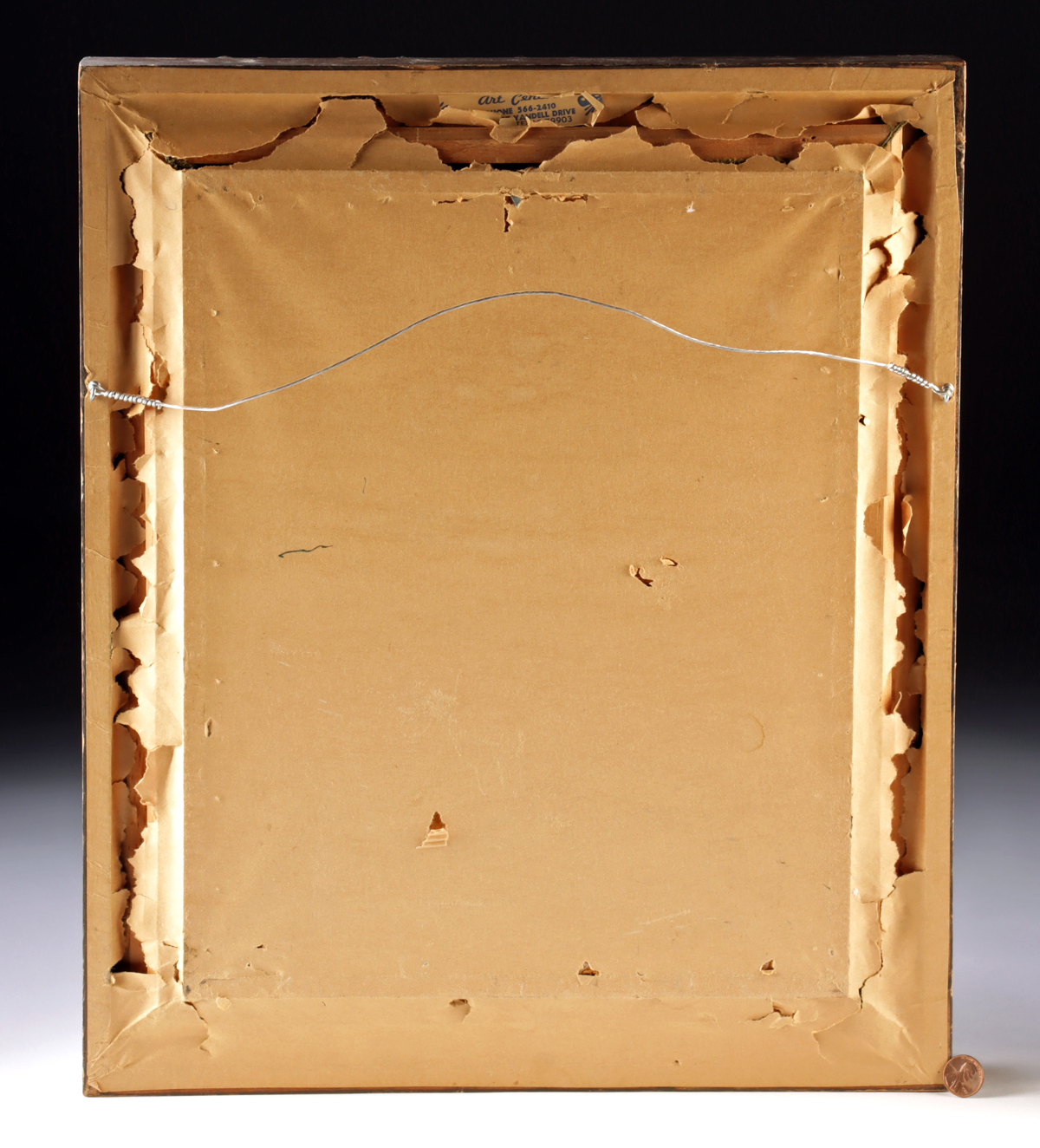
Condition: Mounted in custom velvet matte and carved wood period frame. Retouching to white pigment, but other pigments are old and contain mercury, arsenic, and lead. Some areas of bending to metal and chips and losses to pigment, as well as a few small scuffs to frame. Otherwise, very nice presentation with clear imagery and suspension wire on verso for display. Old collection number etched into bottom periphery of frame.
Provenance: ex-private D.G. collection, St. Louis, Missouri, USA
All items legal to buy/sell under U.S. Statute covering cultural patrimony Code 2600, CHAPTER 14, and are guaranteed to be as described or your money back.
A Certificate of Authenticity will accompany all purchases.
We ship worldwide and handle all shipping in-house for your convenience.
Related Products
-


Lot 165, Auction 4/12/2026: Arthur Knebel Painting – “Old Homestead”
Add to cart -


Lot 164, Auction 4/12/2026: Arthur Knebel Painting – Ars Gratia Artis
Add to cart -


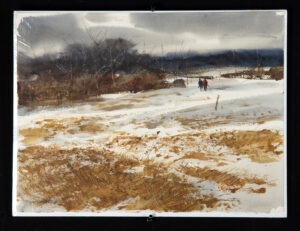
Lot 161, Auction 4/12/2026: Don Stone Watercolor Painting, 2 Figures in Snowy Field
Add to cart -

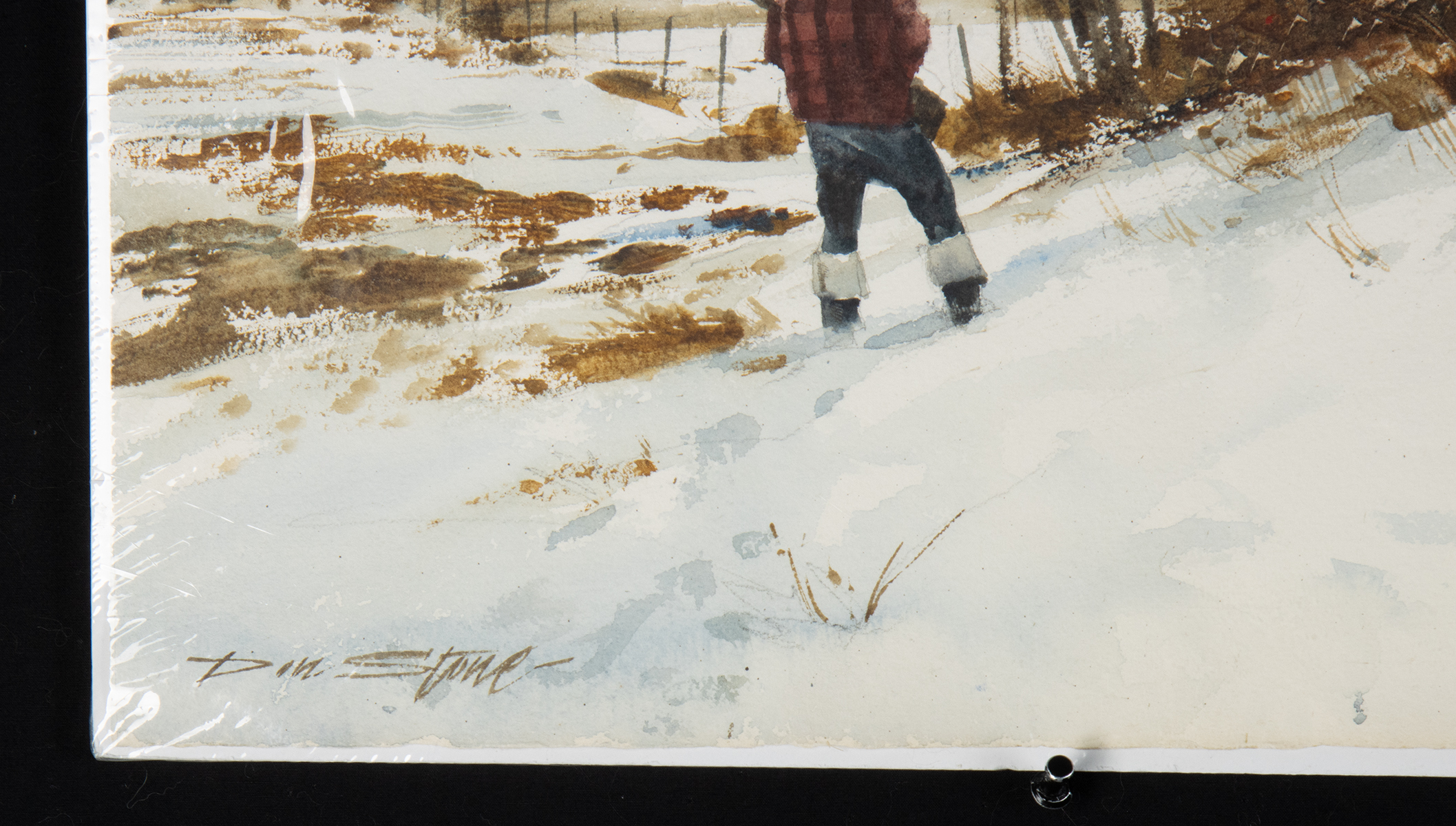
Lot 160, Auction 4/12/2026: Don Stone Watercolor – Hunter in Snowy Field (1970s)
Add to cart -


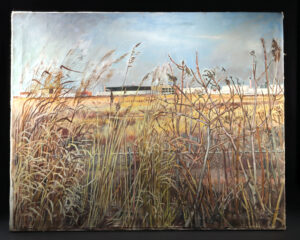
Lot 158, Auction 4/12/2026: Edith Kramer Painting “Tanks und Graser” (1990)
Add to cart -


Lot 157, Auction 4/12/2026: Edith Kramer Painting – NYC Derelict House (1968)
Add to cart -


Lot 150a, Auction 4/12/2026: 17th C. Brass Repousse – “Minerva Introducing Painting”
Add to cart -


Lot 150, Auction 4/12/2026: Signed “Art Work of Louis C. Tiffany” Limited Ed. 1914
Add to cart -


Lot 145a, Auction 4/12/2026: Romanian Silver Oklad Icon, Resurrection w/ Donor Names
Add to cart -


Lot 121a, Auction 4/12/2026: Mexican Painting – Batalla del Cinco de Mayo de 1862
Add to cart