Lot 200a, Auction 4/3/2026: Mexican Guerrero Silver Mask w/ Lizard Motif Bell
$5,200.00
In stock
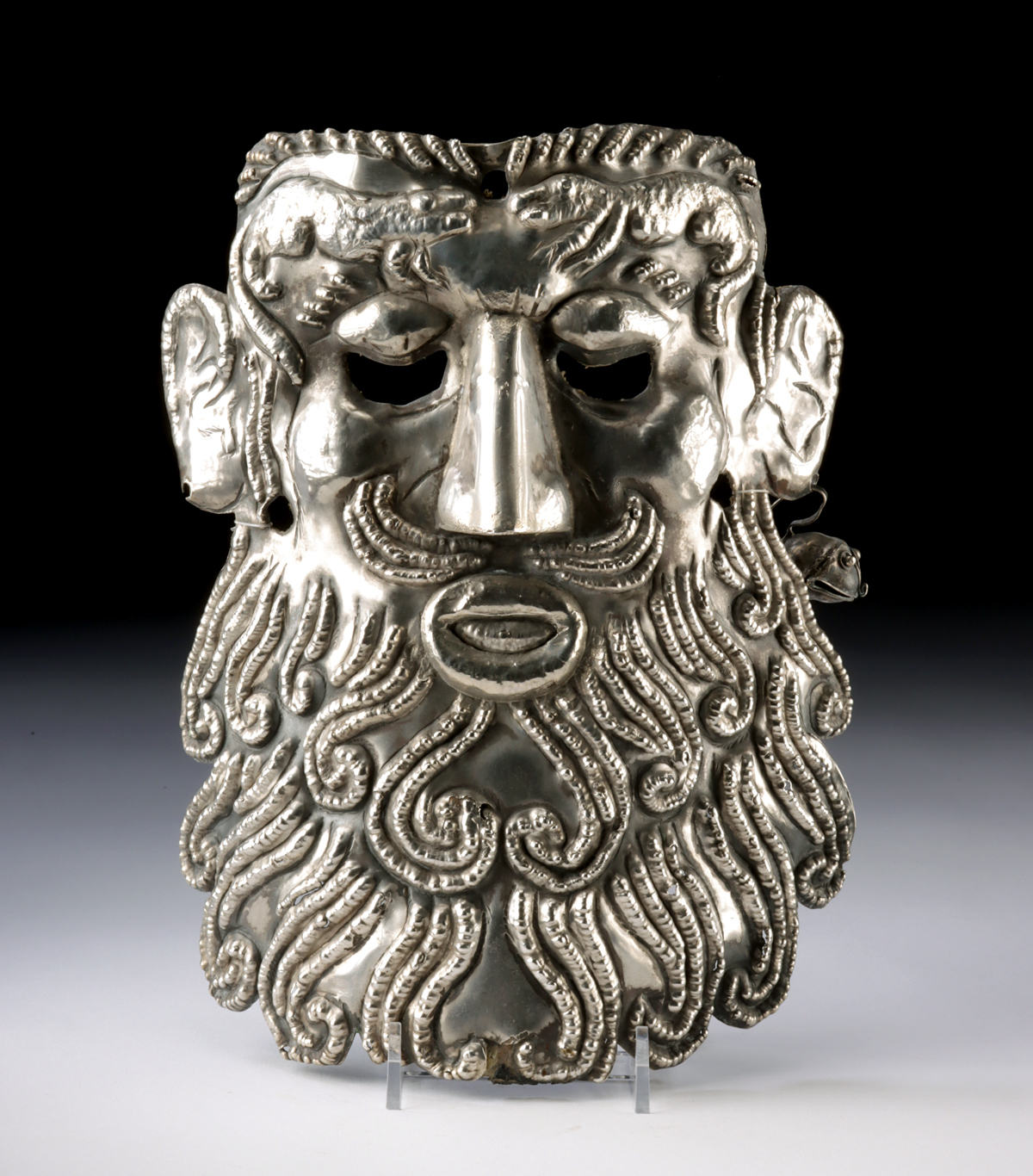
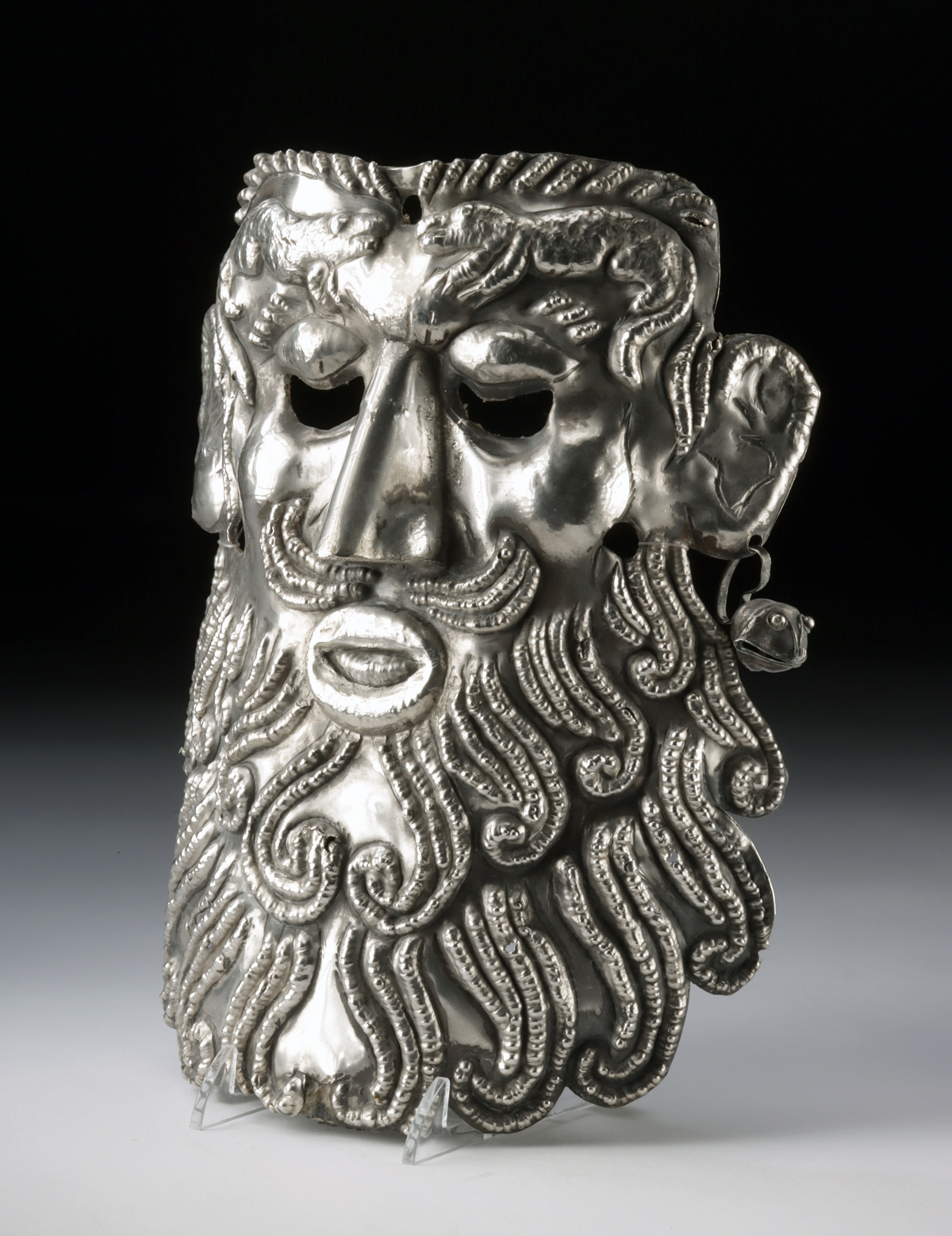
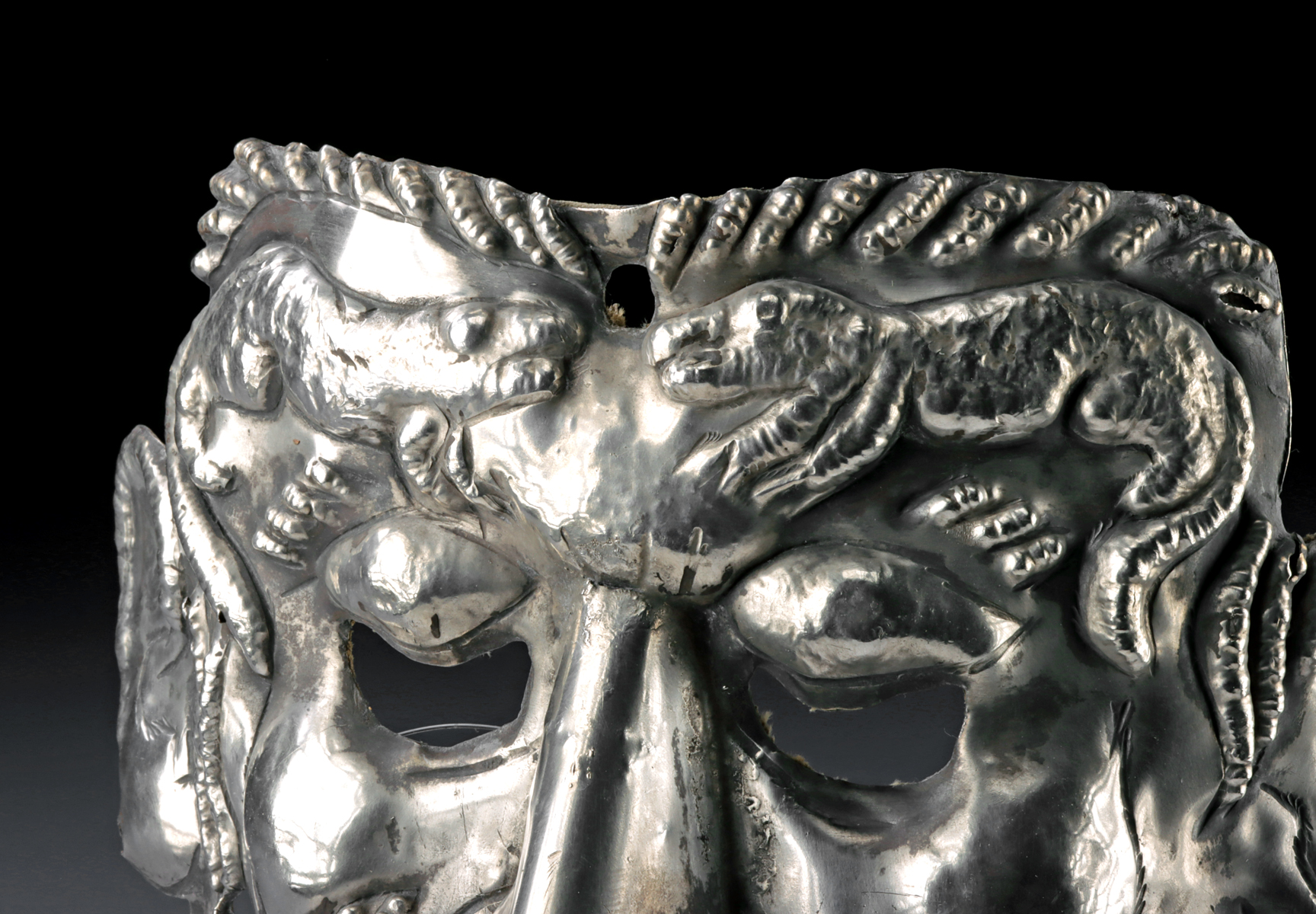
Latin America, Mexico, Guerrero, ca. mid-20th century CE. A commanding silver visage confronts the viewer, its luxuriant beard unfurling in rhythmic curls while two lizards meet in silent tension across the brow. This striking mask, crafted from high-purity silver (95.9%), exemplifies the celebrated “Barbone” type – a form at once theatrical, tactile, and deeply rooted in the visual language of Guerrero metalwork. Hammered from sheet silver using the repoussé technique, the mask reveals remarkable technical control. Each strand of the beard is individually chased into thick, rope-like tendrils, creating a dense, almost cascading field of texture that frames the face. The facial modeling is equally distinctive: convex, almond-shaped eyes rise prominently above crescent-shaped cut openings, creating a layered gaze that feels both watchful and stylized. The pronounced nose and full, curling moustache lend the figure a commanding, almost theatrical authority. Size: 7.5″ W x 10.5″ H (19 cm x 26.7 cm); silver quality: 95.9%; weight: about 400 grams
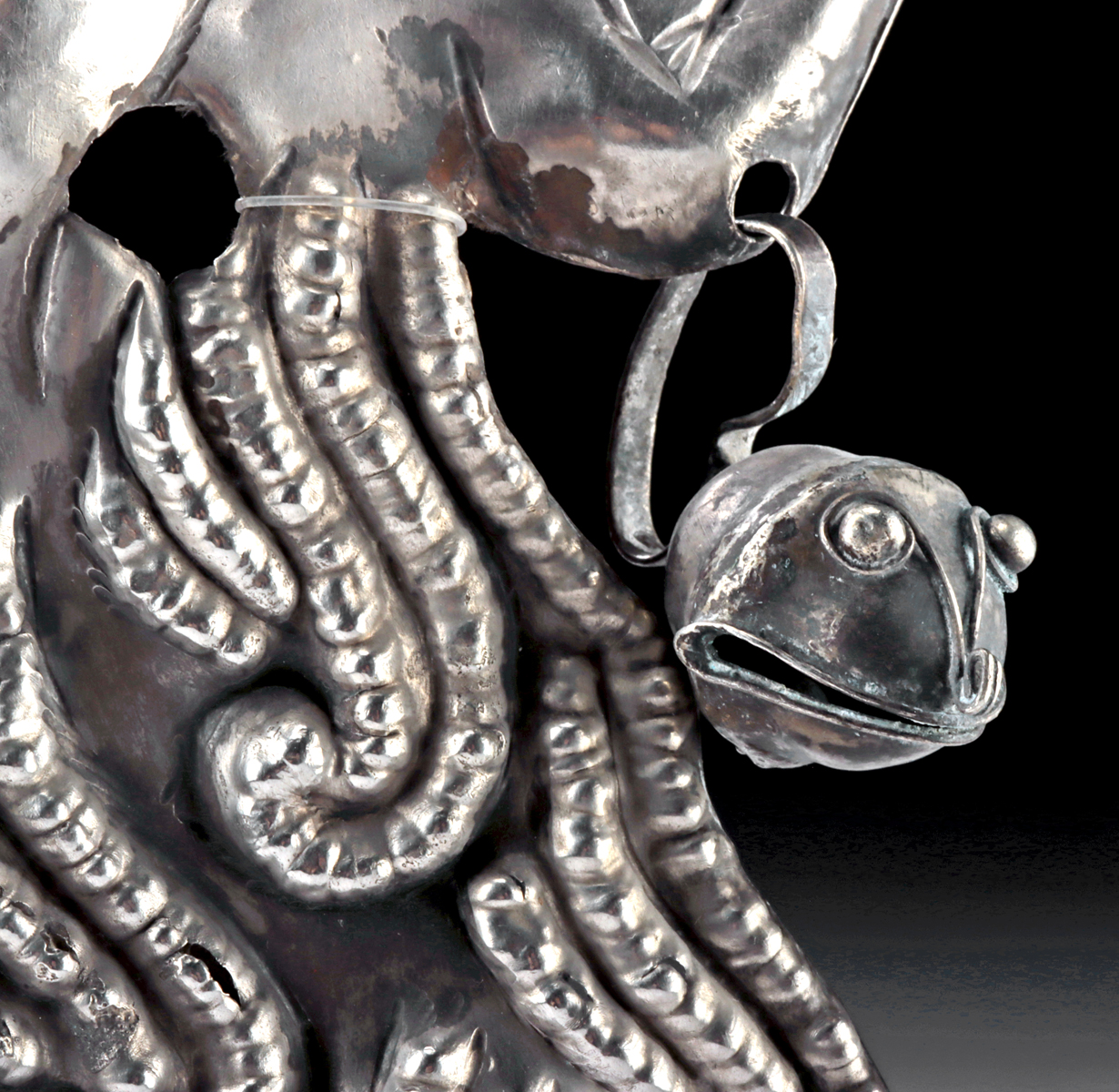
Above, two confronting lizards stretch across the brow in mirrored relief, their bodies rendered with careful attention to contour and movement. These creatures, poised in opposition, may suggest vitality, tension, or protection – motifs frequently embedded in decorative arts of the region. At the ear, a small articulated lizard-form bell dangles freely, introducing a subtle kinetic and auditory dimension, a reminder that such objects were designed to engage more than just the eye.
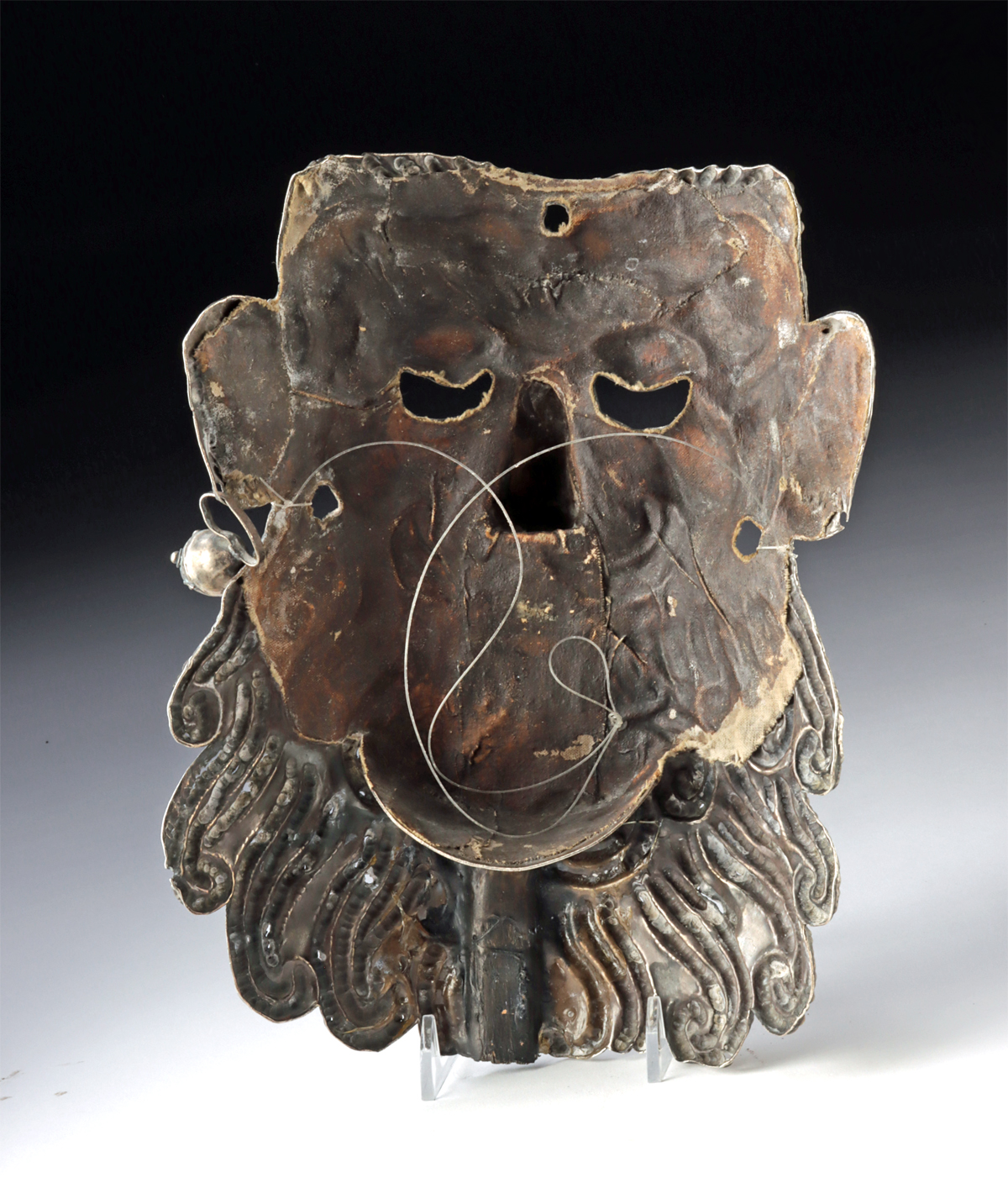
The verso retains a backing of canvas cloth, secured to reinforce the thin hammered metal and provide structural stability – a practical feature commonly seen in masks of this type, underscoring their construction as display objects rather than functional ritual wear.
The bearded face, unmistakably European in character, is central to understanding the mask’s origin. Though once cataloged as a representation of Tlaloc, the Nahua rain deity, this interpretation has been firmly reconsidered. As noted by anthropologist Dr. Fernando Nava, pre-Hispanic rain ceremonies dedicated to Tlaloc did not involve masks of this kind, and certainly not metal examples. In traditional Nahua contexts, dance held sacred importance, often tied to agricultural cycles and appeals for rain, yet the material and physiognomy here point instead to a later, hybridized imagination.
Masks of this type were popularized by Donald Cordry, who referred to them as “Barbones” and believed they were used in rain-petitioning dances in rural Guerrero. His writings sparked widespread interest, though many of his conclusions relied heavily on local narratives rather than verifiable ethnographic evidence. In truth, these masks were produced in the mid-20th century by Guerrero artisans for the tourist and collector market, continuing a tradition that began in the 19th century when foreign visitors sought ornate metalwork souvenirs from mining towns such as La Parota.
What makes the Barbone enduring is not authenticity in the ritual sense, but authenticity of craft and story. Once misunderstood as sacred relics, they now stand as compelling objects of cultural exchange – where indigenous tradition, European imagery, and market demand converge. Their history is one of imagination as much as manufacture, shaped by collectors, scholars, and artisans alike. Today, examples such as this remain highly collectible, admired for their craftsmanship, their visual drama, and the curious narrative they carry. A face in silver, equal parts invention and inheritance, it continues to gaze outward – steady, enigmatic, and impossible to ignore.
Condition: Tear to suspension hole on proper right ear. A few small losses and perforations in areas, as well as minor tears and light indentations. Otherwise, very nice presentation with good remaining detail. Bell earring still functions as a musical instrument. Suspension string on verso for display.
Provenance: private collection of S. Saunders, Nogales, Arizona, USA collection
All items legal to buy/sell under U.S. Statute covering cultural patrimony Code 2600, CHAPTER 14, and are guaranteed to be as described or your money back.
A Certificate of Authenticity will accompany all purchases.
We ship worldwide and handle all shipping in-house for your convenience.
Related Products
-


Lot 291, Auction 3/19/2026: Central African Kwele Wood & Kaolin Painted Mask
Add to cart -


Lot 289, Auction 3/19/2026: African Lega Wood Bwami Mask & Lozi Wood Figure
Add to cart -


Lot 284, Auction 3/19/2026: Mali Bamana Wood Monkey Initiation Mask
Add to cart -


Lot 226, Auction 3/19/2026: Exceptionally Rare Ancient Hopewell Mica Sheet Mask
Add to cart -


Lot 201a, Auction 4/3/2026: Vintage Mexican Guerrero Conquistador Mask w/ Helmet
Add to cart -


Lot 200c, Auction 4/3/2026: Mexican Nahua Mask – Iron-Crowned Moorish King
Add to cart -


Lot 200b, Auction 4/3/2026: 3 Vintage Mexican Cojo Masks, Danza Correr del Pocho
Add to cart -


Lot 146, Auction 3/19/2026: Pre-Columbian Teotihuacan Jade Maskette Pendant
Add to cart -


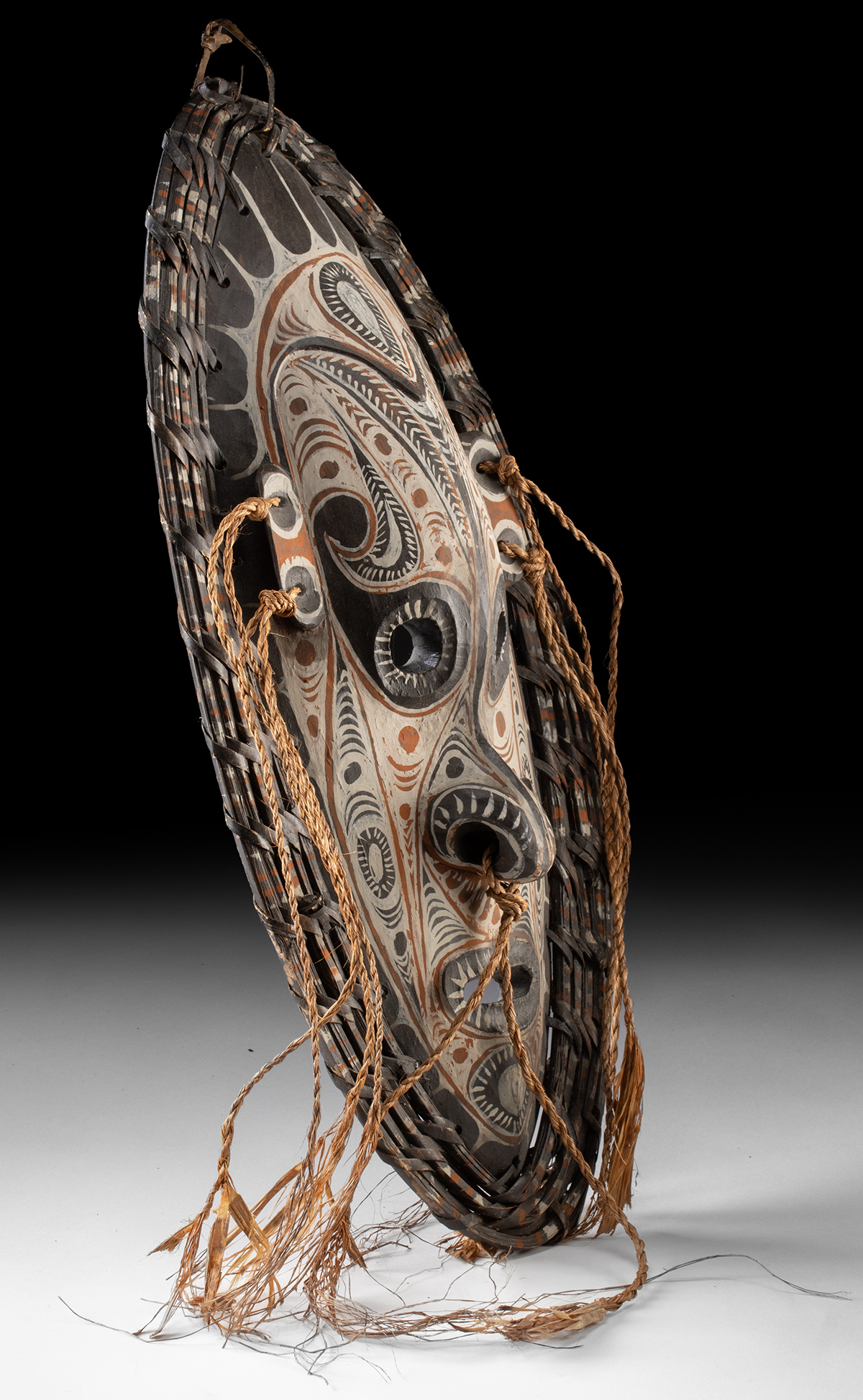
Lot 123, Auction 4/3/2026: Sepik River Tambanum Wood Spirit Mask w/ Cane Rim
Add to cart -


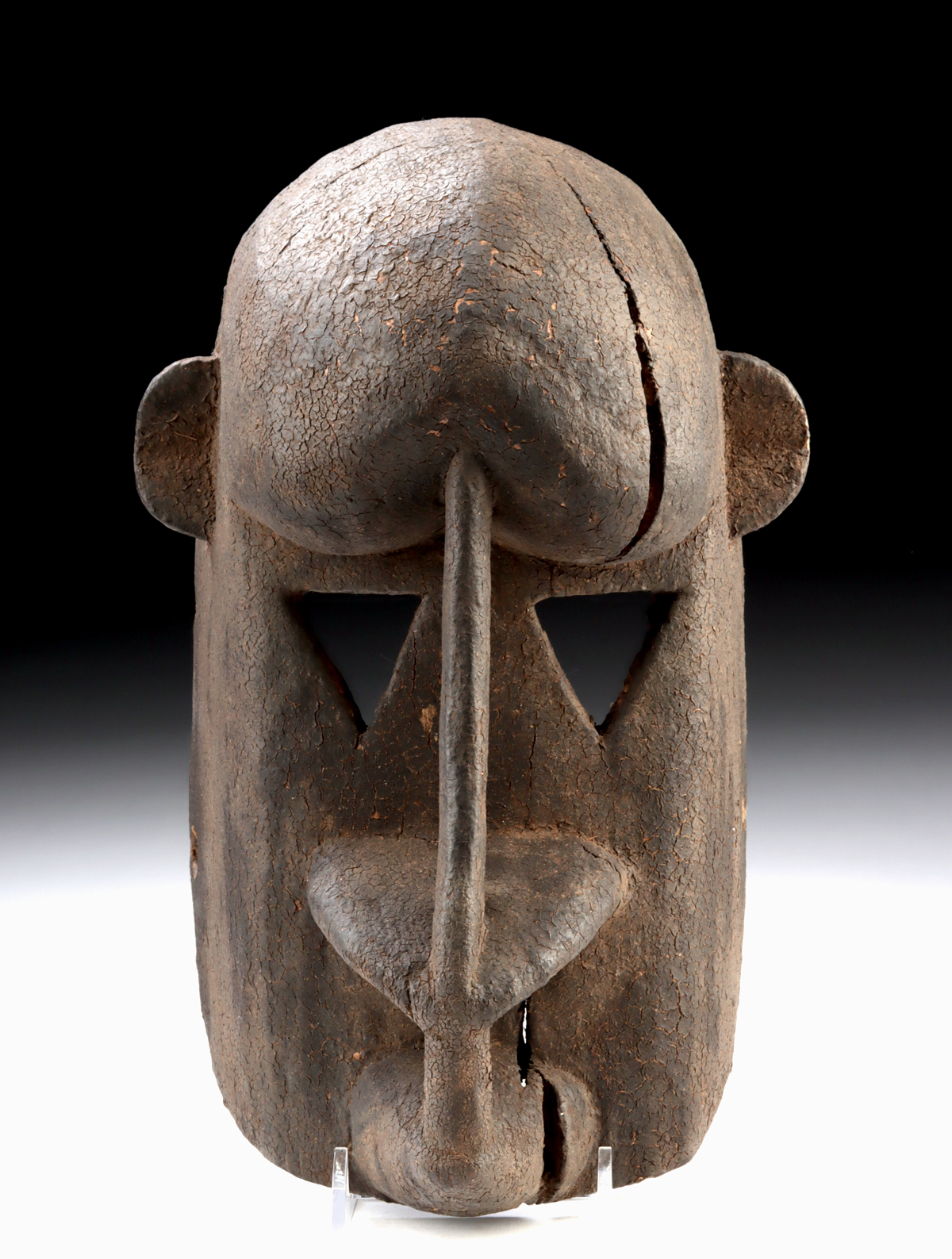
Lot 111, Auction 4/3/2026: West African Dogon Carved Wood Monkey Mask
Add to cart