Lot 201a, Auction 4/3/2026: Vintage Mexican Guerrero Conquistador Mask w/ Helmet
$1,560.00
In stock
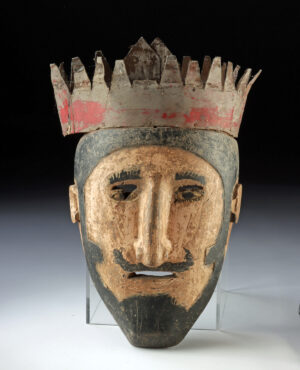
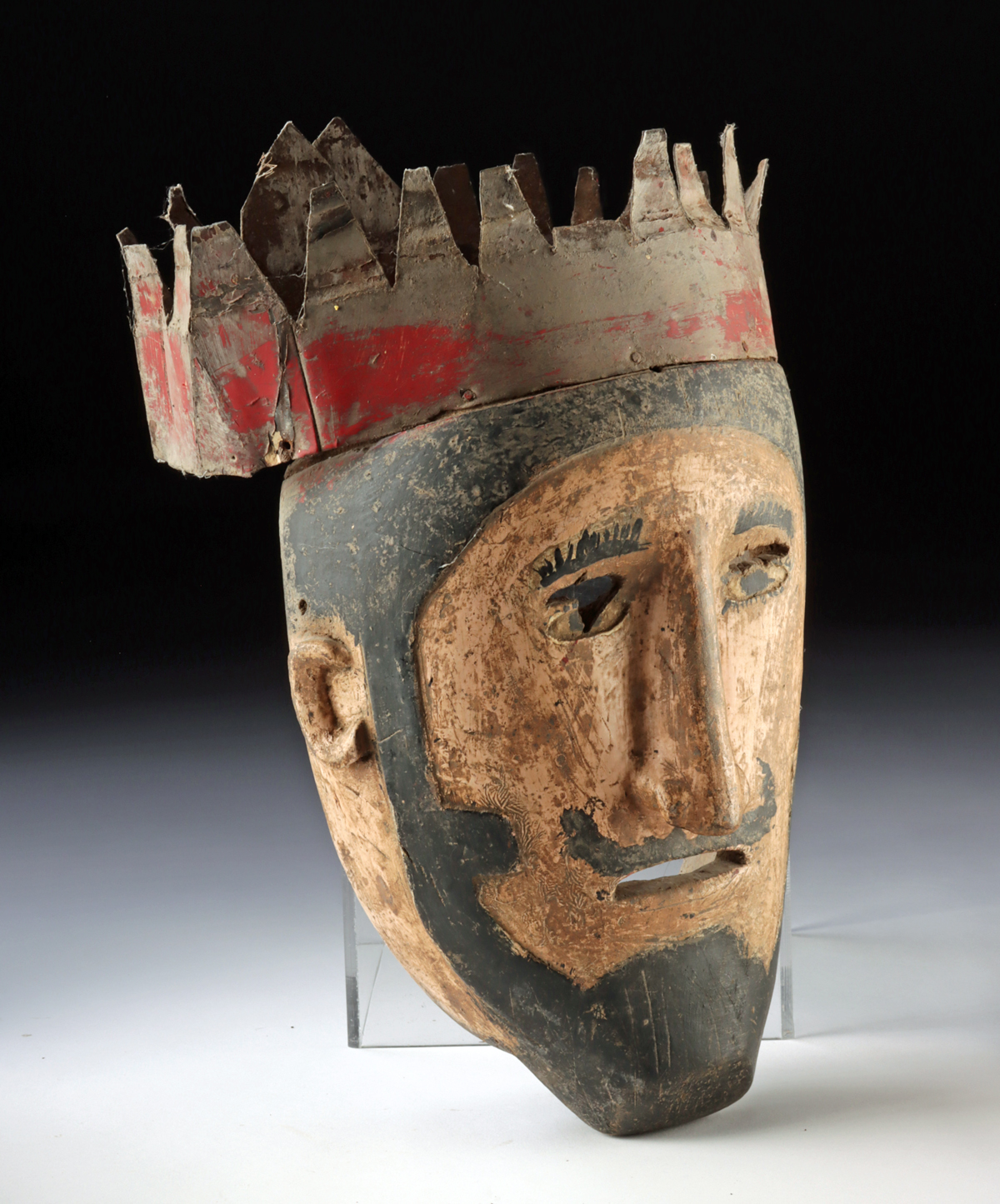
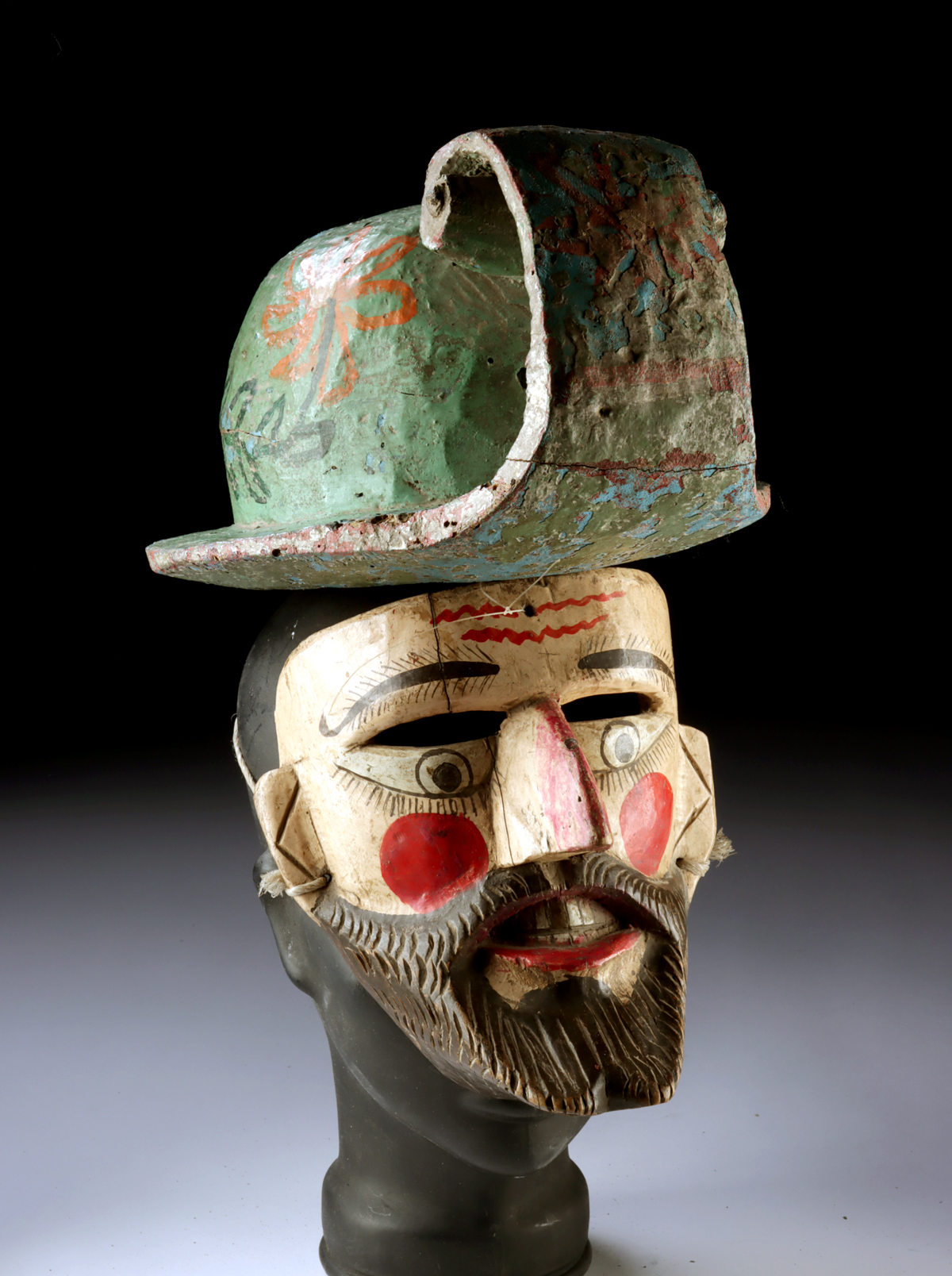
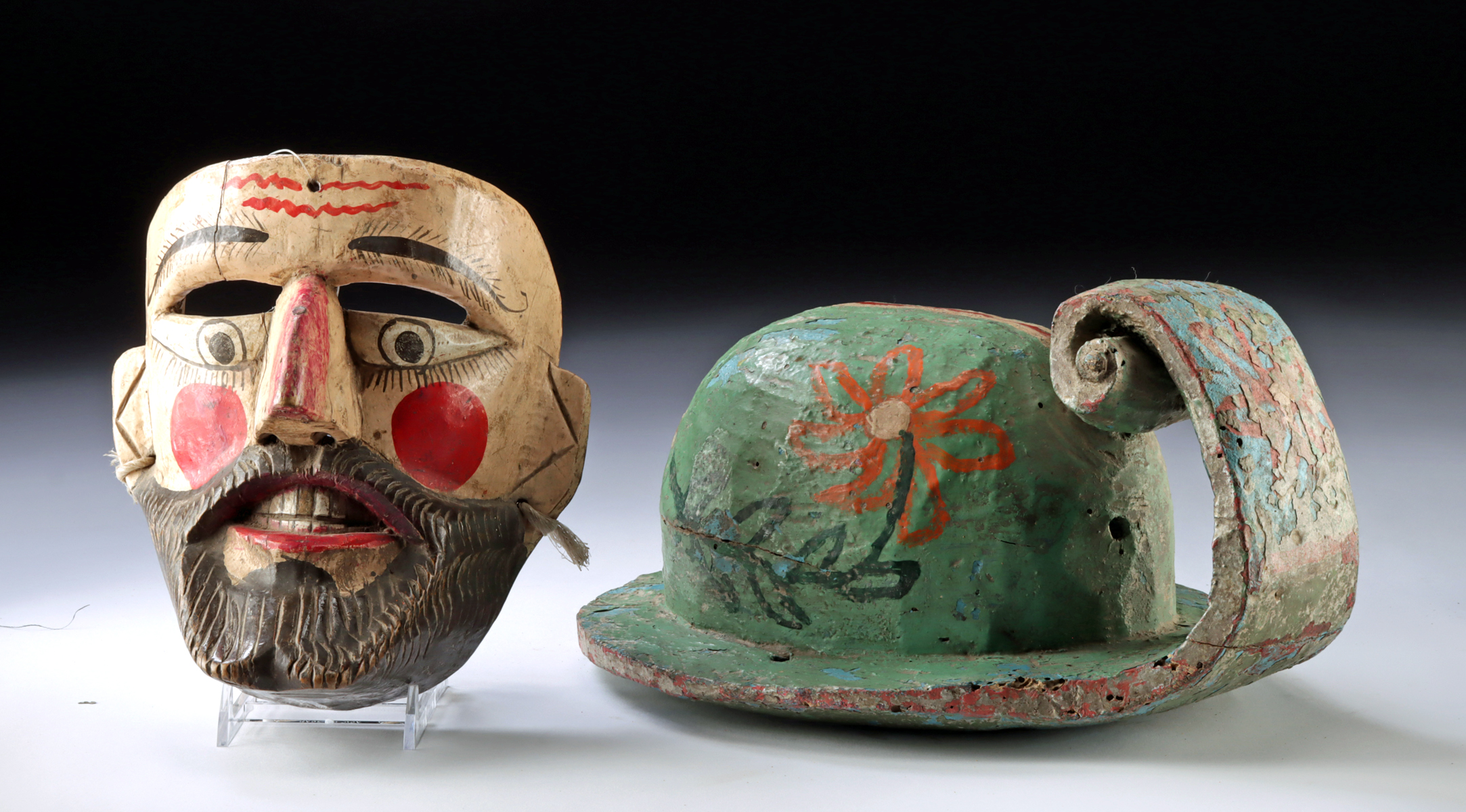
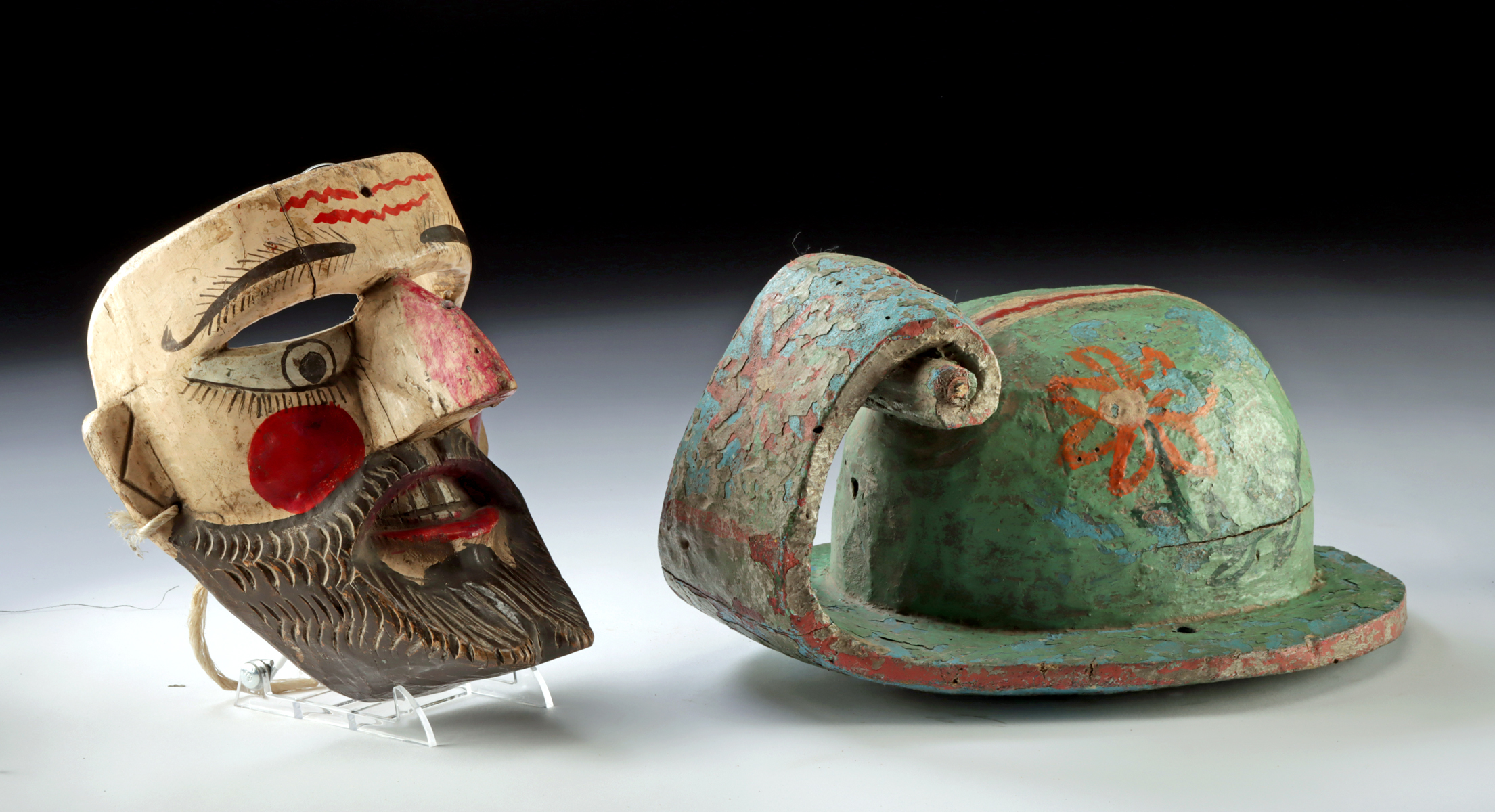
Latin America, Mexico, Guerrero, ca. mid-20th century CE. A vividly painted face, crowned by a sweeping helmet and marked with a subtle cross upon the forehead, stares outward with theatrical authority. This carved wooden mask, complete with its original polychrome helmet, represents a Spanish conquistador figure from the enduring Danza de la Conquista – a performance where history is not merely remembered, but staged, contested, and transformed. Carved from wood and painted in bold tones, the mask presents a highly animated visage. Wide, alert eyes framed by incised lashes sit beneath arched brows, while a long, sharply defined nose descends between circular red cheeks that heighten the mask’s expressive intensity. A carved moustache and full beard, rendered in dark pigment, identify the figure as European. The mouth, slightly parted to reveal teeth, suggests speech or command. Size (mask with helmet): 11.5″ L x 9.4″ W x 14.5″ H (29.2 cm x 23.9 cm x 36.8 cm)
At the center of the forehead, a carved cross serves as a potent emblem, reinforcing the Christian identity of the character and the ideological framework of the performance itself. The accompanying helmet, also carved and painted, features a flared brim and exaggerated crest, its surface decorated with floral motifs and bands of color. The form transforms the wearer into a recognizable conquistador, amplifying both stature and presence within the dance.
This mask belongs to the tradition of the Baile de la Conquista, a colonial-era performance introduced in the 16th century by Dominican friars as a didactic tool. Adapted from the Spanish “Dance of the Moors,” it reenacts the invasion led by Pedro de Alvarado and the confrontation with the K’iche’ leader Tecun Uman. The narrative culminates in the defeat of indigenous forces and their conversion to Christianity, reinforcing the message that Spanish conquest was divinely sanctioned.
Although most closely associated with Guatemala, the dance spread widely across colonial Latin America, including regions of Mexico such as Guerrero, where local communities adopted and reinterpreted the tradition. Masks like this allowed performers to embody Spanish officers, indigenous leaders, and other figures, each distinguished through costume and facial type. Conquistador masks are typically marked by lighter skin tones, facial hair, stern expressions, and, as seen here, overt Christian symbols such as the cross.
The mask’s lively carving and bold coloration reflect both its performative function and the enduring creativity of Nahua artisans, who absorbed and reshaped colonial narratives through their own visual language. What was once a tool of conversion became, over time, a shared cultural performance layered with meaning, memory, and identity. Today, such masks are valued not only as artifacts of dance but as objects that hold within them a complex and often uneasy history – one carved in wood, painted in bright color, and worn in the telling of a story that continues to echo across generations.
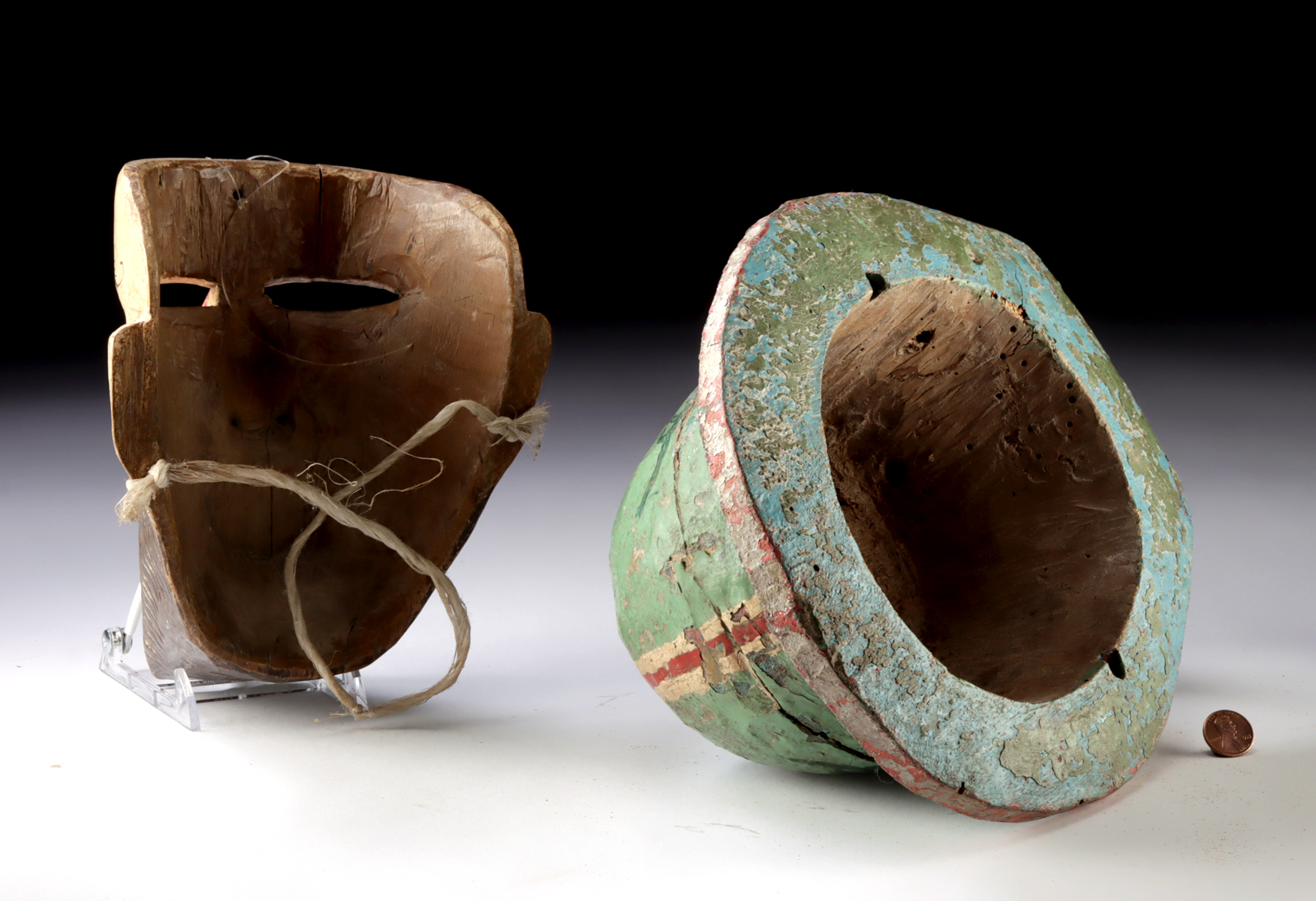
Condition: Areas of old, inactive insect damage. Chips, nicks, and abrasions throughout. Good remaining pigments and detail with rich patina to surface. Suspension wire on verso of mask for display.
Provenance: private collection of S. Saunders, Nogales Arizona, USA collection
All items legal to buy/sell under U.S. Statute covering cultural patrimony Code 2600, CHAPTER 14, and are guaranteed to be as described or your money back.
A Certificate of Authenticity will accompany all purchases.
We ship worldwide and handle all shipping in-house for your convenience.
Related Products
-


Lot 291, Auction 3/19/2026: Central African Kwele Wood & Kaolin Painted Mask
Add to cart -


Lot 289, Auction 3/19/2026: African Lega Wood Bwami Mask & Lozi Wood Figure
Add to cart -


Lot 284, Auction 3/19/2026: Mali Bamana Wood Monkey Initiation Mask
Add to cart -


Lot 226, Auction 3/19/2026: Exceptionally Rare Ancient Hopewell Mica Sheet Mask
Add to cart -


Lot 200c, Auction 4/3/2026: Mexican Nahua Mask – Iron-Crowned Moorish King
Add to cart -


Lot 200b, Auction 4/3/2026: 3 Vintage Mexican Cojo Masks, Danza Correr del Pocho
Add to cart -


Lot 200a, Auction 4/3/2026: Mexican Guerrero Silver Mask w/ Lizard Motif Bell
Add to cart -


Lot 146, Auction 3/19/2026: Pre-Columbian Teotihuacan Jade Maskette Pendant
Add to cart -


Lot 123, Auction 4/3/2026: Sepik River Tambanum Wood Spirit Mask w/ Cane Rim
Add to cart -


Lot 111, Auction 4/3/2026: West African Dogon Carved Wood Monkey Mask
Add to cart