


18th C. Indian Brass Shrine – Virabhadra, Daksha & Sati
$5,495.00
In stock
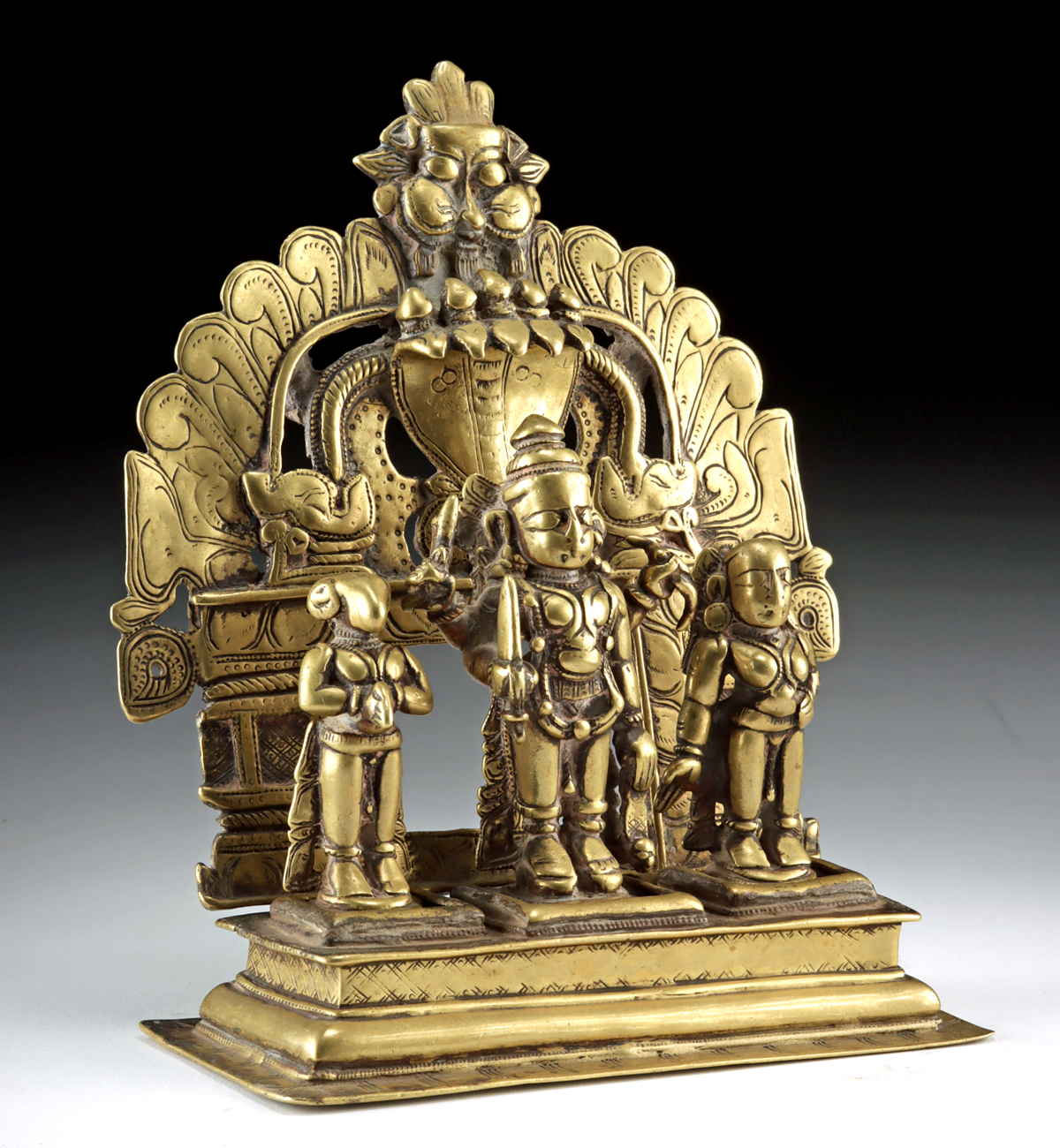
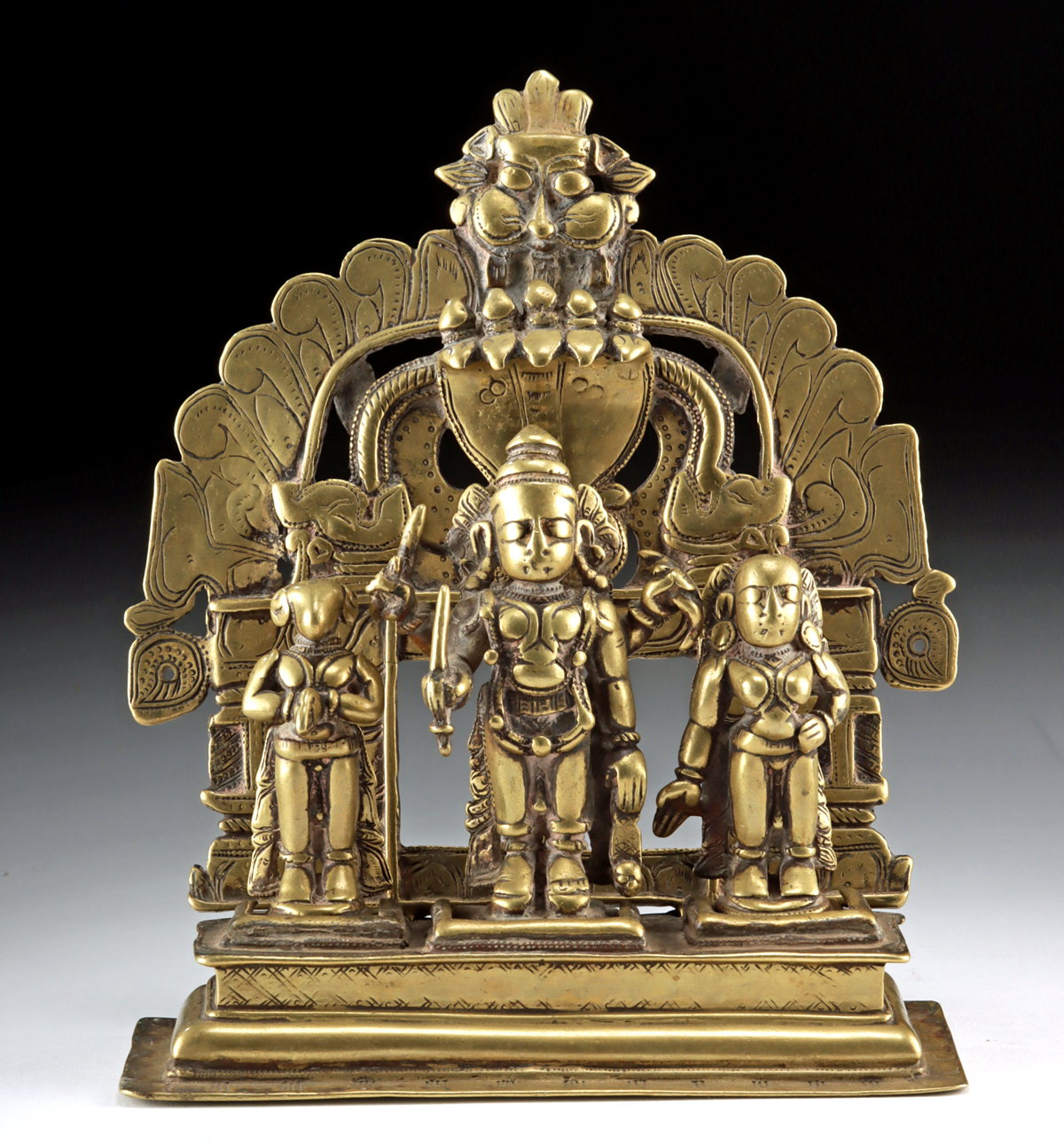
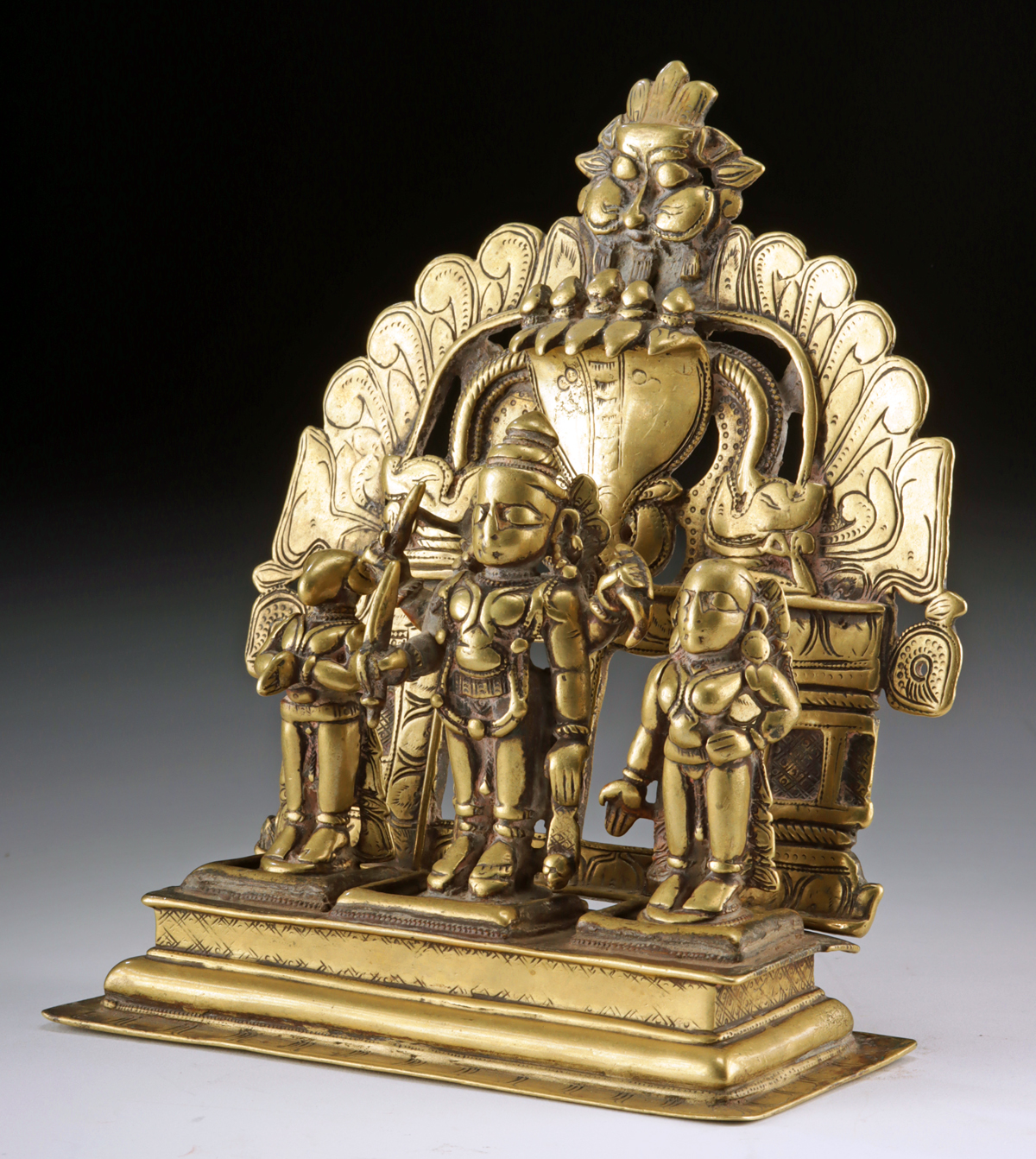
South Asia, India, ca. 18th to 19th century CE. A rare five-piece freestanding brass shrine depicting Virabhadra, the fierce emanation of Shiva, flanked by Daksha and Sati. The central crowned figure of Virabhadra stands with four arms, holding a sword and rectangular shield in his lower hands and a bow and arrow in the upper pair, his robust form accentuated with ornaments and sacred thread. To his proper right is Daksha, the goat-headed figure shown with hands in anjali mudra (gesture of devotion), and to his proper left stands Sati, Shiva’s wife and daughter of Daksha. The three figures are slotted individually into a tiered South Indian base engraved with geometric detailing. Behind them rises the elaborately cast prabhavali (arch), topped by a fearsome kirtimukha mask and crowned with a five-headed naga canopy, symbolic of divine protection.
Size: 2.8″ L x 6″ W x 7.4″ H (7.1 cm x 15.2 cm x 18.8 cm)
Though the figures fit somewhat loosely, they appear to have been conceived as a unified ensemble, a format that is far less common than the cast or beaten plaques of Virabhadra. The iconography recalls the dramatic Puranic episode of Daksha’s sacrificial rite (yagna), in which Daksha insulted Shiva by excluding him from the ceremony. In despair, Shiva’s consort Sati immolated herself, prompting Shiva to manifest Virabhadra as his avenger. Virabhadra beheaded Daksha in battle, and though the gods intervened to restore him to life, his head was replaced with that of a goat, giving rise to his distinctive iconography. The presence of Sati here emphasizes her tragic role in the myth, though in Karnataka, Virabhadra’s consort is often identified as Mahakali.
This shrine, worn from ritual handling and worship, captures both the ferocity and the reconciliation embedded in the legend. It stands as an eloquent testament to South Indian devotional practice and the enduring power of myth translated into sculptural form.
Cf. Victoria and Albert Museum, accession number 880(IS).
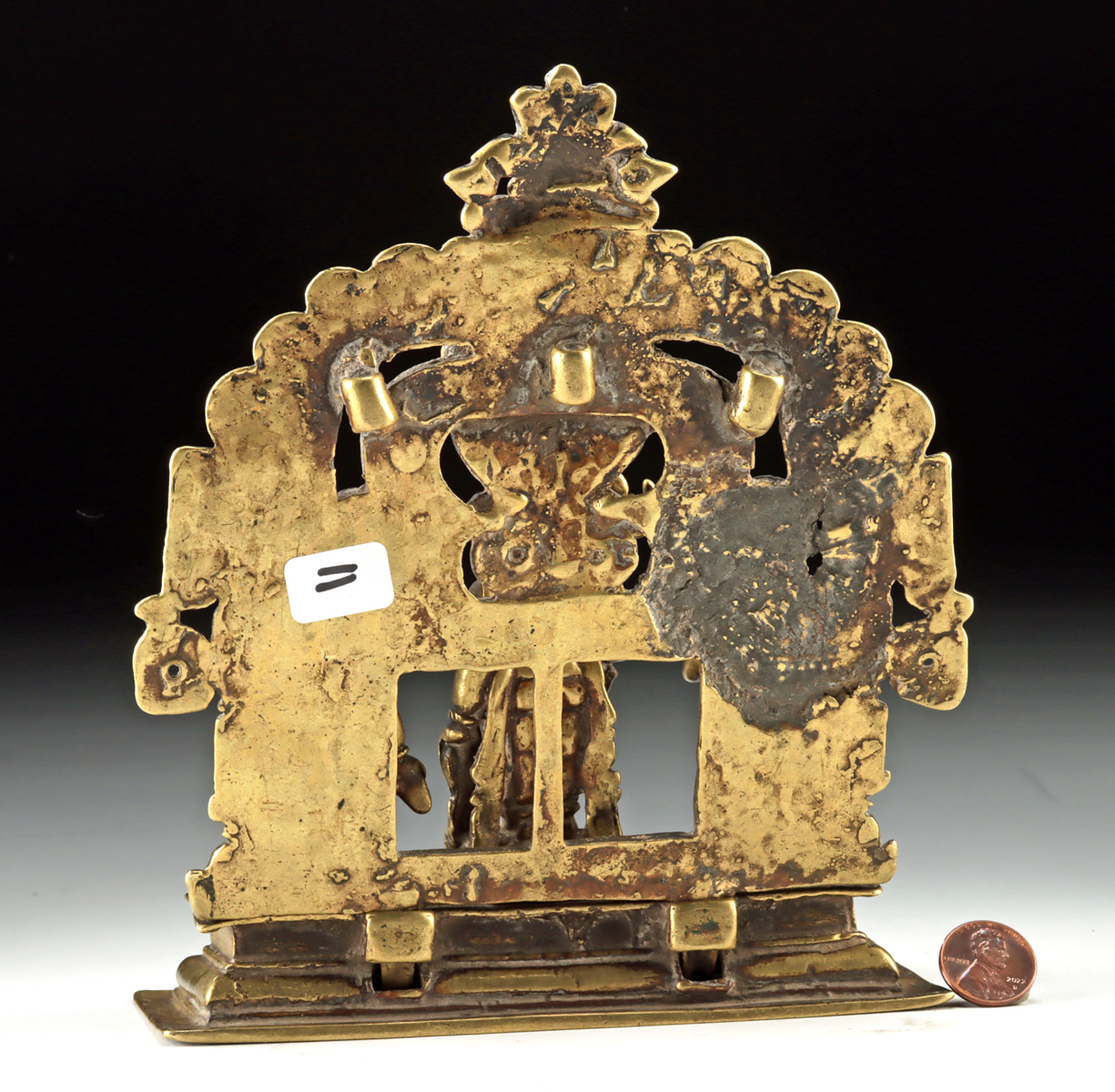
Condition: Comprise of 5 different bronze pieces. Some rubbing and weathering expecting with age. Backing fits loosely in stand. Otherwise, intact and very nice with good remaining detail and light patina.
Provenance: ex-P.T. collection, Queens, New York, USA
All items legal to buy/sell under U.S. Statute covering cultural patrimony Code 2600, CHAPTER 14, and are guaranteed to be as described or your money back.
A Certificate of Authenticity will accompany all purchases.
We ship worldwide and handle all shipping in-house for your convenience.